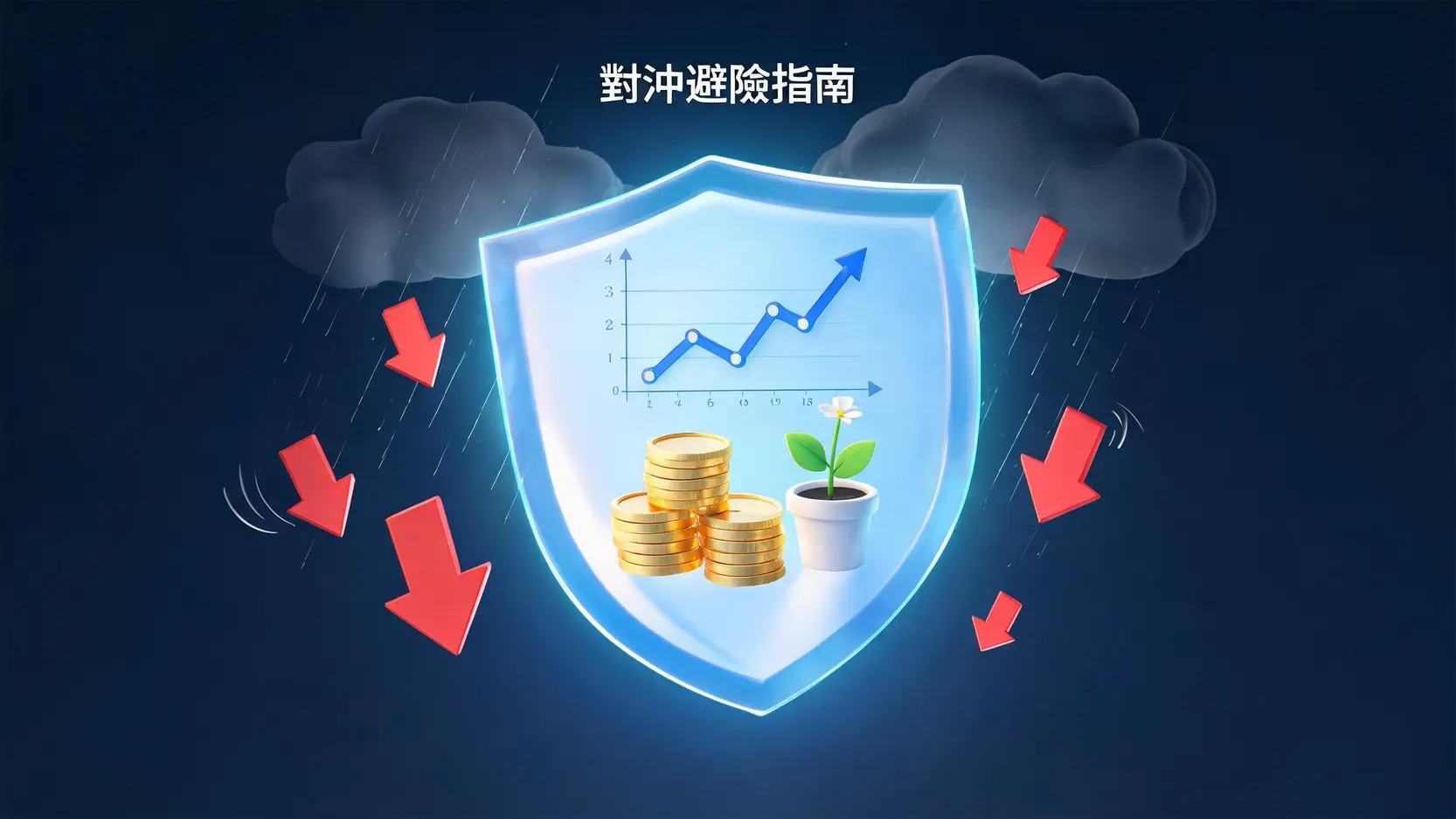
What Is Hedging? A Risk Management Guide Every Financial Beginner Should Read
In the investment market, we often hear the term “hedging”, but what exactly does it mean? Why do professional investors use it? Hedging means adopting strategies to protect assets from adverse price movements. Whether in the stock, foreign exchange, or futures markets, understanding the core concept of hedging is essential for reducing risk. This article explains it in the simplest and clearest way, helping beginners quickly learn this essential investment risk management strategy.
What Is Hedging (Hedging)? Basic Meaning and English Definition
For many people who are new to the financial markets, hedging may sound like a highly complex subject. In reality, however, its core concept is closely related to our daily lives. Imagine purchasing car insurance. This is essentially a form of hedging in everyday life. You pay a small premium to protect yourself against potentially substantial repair costs in the future.
The Origin and Literal Meaning of Hedging
The English term for 对冲 is “Hedging”, derived from “Hedge”. In the agricultural era, farmers planted hedges around their fields to prevent wild animals from damaging their crops. By extension, in the financial sector, hedging means building a protective wall around your assets to prevent severe market fluctuations from “eating away” your principal and profits. This is the most intuitive explanation of what hedging means.
Definition of Hedging and Risk Management Principles in Financial Markets
In financial markets, the standard definition of hedging is: conducting a transaction that is highly correlated with an existing position but moves in the opposite direction to offset or reduce potential losses caused by price fluctuations in the existing asset. For example, if you hold a basket of technology stocks and are concerned that the broader market may decline in the short term, you can hedge by short-selling related index futures or purchasing put options.
Through such a risk management strategy, investors can safely navigate short-term market volatility without selling assets they remain optimistic about over the long term. To learn more about practical applications, refer to this article: 5 Major Investment Risk Management Methods: Understanding Hedging Strategies (with Tool Comparisons).
Why Is Hedging Necessary? Two Major Benefits Every Investor Should Know
Markets are always filled with uncertainty. From geopolitical conflicts to adjustments in central bank monetary policies, black swan events can occur at any time. This is why hedging should be incorporated into an investment portfolio.
Reducing the Risks Caused by Market Volatility
The greatest benefit of hedging is “risk management”. Many investors focus only on potential returns while overlooking downside risk. Through hedging, you can effectively keep potential losses within an acceptable range. For example, when the global economy faces the risk of recession, many institutional investors increase their allocation to safe-haven assets such as gold or the US dollar. For related allocation strategies, refer to 【Safe-Haven Asset Comparison】What Should You Invest in During an Economic Recession?
In addition, hedging can also provide psychological reassurance. When you know that your investment portfolio has appropriate protective measures in place, you are less likely to panic sell during a market crash, allowing you to maintain a rational long-term investment mindset.
Further Reading (Highly Recommended)
What Does Hedging Mean? 5 Major Hedging Strategies to Manage Investment Risk with Ease
Safe-Haven Currency Rotation Strategy: Which Currency Should You Buy During Turbulent Times? A Complete Guide to the US Dollar, Japanese Yen, and Swiss Franc
The Difference Between Hedging and Hong Kong MPF “Offsetting” (Distinctive Highlight)
In the Chinese context, particularly in Hong Kong, searches for “hedging” often bring up another completely different concept: MPF offsetting. This frequently confuses financial beginners. It is essential to clarify the fundamental differences between the two.
Financial Hedging vs Hong Kong Labour Law MPF Offsetting
As explained above, hedging in financial trading is a proactive investment risk management strategy. Hong Kong’s “MPF Offsetting”, however, is a mechanism under labour law that allows employers to use the accrued benefits derived from their mandatory provident fund contributions for employees to offset severance payments or long service payments. Although the same term is used for both, their meanings and applications are entirely different.
How to Avoid Confusion When Searching and Understanding
To avoid confusion, when searching online for investment-related risk management information, it is recommended to use “hedging”, “hedging transactions”, or “risk management strategies” as keywords. If you are looking for information related to labour rights, you should add terms such as “Mandatory Provident Fund” or “MPF”.
Correctly Understanding the Core Value of Financial Hedging
Returning to the fundamentals of financial investment, the core value of hedging lies in pursuing steady asset growth. It is not intended to generate enormous profits, but to ensure survival during adverse conditions. Learning how to use hedging tools flexibly is an essential step in progressing from an amateur retail investor to a mature investor. To broaden your perspective on risk management, you may also refer to 【Investment Guide for Turbulent Times】Rising Geopolitical Risks? A Comparison of 5 Major Safe-Haven Assets and Comprehensive Investment Strategies to understand methods of protecting assets from a macroeconomic perspective.
FAQ
Q: Are Hedging and Risk Management the Same?
A: In finance, hedging and risk management generally refer to the same concept. Both aim to reduce the risk of existing positions. In Taiwan, the term “risk management” is more commonly used, while “hedging” is more commonly used in Hong Kong and Mainland China.
Q: Are Hedging Strategies Suitable for Beginners?
A: Beginners can start with the most basic hedging concepts such as diversified asset allocation (by combining stocks with bonds or gold). As for complex financial derivatives, (such as options and futures), it is advisable to try them only after fully understanding their leverage risks and operating mechanisms.
Q: Will Hedging Reduce My Potential Returns?
A: Yes. A fundamental rule of financial markets is that “risk and return are positively correlated”. The essence of hedging is paying a certain cost (such as an option premium or losses from an opposing position) in exchange for greater security. Therefore, under a perfect hedge, although the risk of substantial losses is avoided, the potential for significant asset appreciation is also limited.
Q: If the Market Keeps Rising, Is Hedging a Waste of Money?
A: It can be viewed as the cost of purchasing insurance. If no accident occurs during the insurance period, the premium may seem to have been “wasted”, but it provides reassurance and protection while you hold the position. Smart investors dynamically adjust their hedge ratio according to market conditions instead of hedging blindly over the long term.
Conclusion
In summary, hedging is an important tool for protecting assets. Understanding what hedging means and how it is applied can help you navigate volatile markets more steadily. It should not be regarded as a means of increasing profits, but as a shield against downside risk. Whether through diversified asset allocation or professional derivative instruments, establishing the correct risk management mindset is essential for achieving long-term investment success.