How Hedging Works: Hedge Fund Strategies & Trading Guide

How Does Hedging Work? Advanced Hedge Fund Strategies and Practical Trading Guide
In the rapidly changing financial markets, relying solely on a “buy-and-hold” strategy often makes it difficult to withstand severe market volatility and achieve stable long-term profits. If you have heard Wall Street leaders discuss risk hedging, you are probably familiar with hedging and hedge funds. Hedging is not exclusively for institutional investors. It is also a risk management tool that modern investors must understand. This article will provide an in-depth explanation of how hedge funds operate and show how retail investors can use common hedging strategies to protect their portfolios in alternating bull and bear markets, reduce risk, and pursue stable returns.
What Is a Hedge Fund?
To understand hedging, we must first become familiar with the market’s major players: hedge funds. A hedge fund is a private investment vehicle that uses complex investment strategies, leverage, and long and short positions to pursue absolute returns.
Definition and Historical Background of Hedge Funds
The term hedge originates from the “fence” built around farmland to protect it from wild animals. In financial markets, it refers to “risk hedging” or “risk avoidance”. The world’s first hedge fund was established by Alfred Winslow Jones in 1949. He combined long positions in undervalued stocks with short positions in overvalued stocks to eliminate the impact of overall market fluctuations. Today, hedge funds have developed a wide variety of strategies, with assets under management reaching trillions of dollars, making them a force that cannot be ignored in global financial markets.
Four Major Differences Between Hedge Funds and Mutual Funds
Many investors easily confuse hedge funds with mutual funds, but there are significant differences in how they operate:
- Investment Threshold: Hedge funds are generally available only to high-net-worth professional investors or institutions and have extremely high entry requirements, while mutual funds are open to the general public.
- Level of Regulation: Hedge funds are subject to relatively less regulation and have greater operational flexibility, while mutual funds are subject to strict regulatory restrictions.
- Investment Strategies: Mutual funds primarily focus on long positions, while hedge funds extensively use short selling, leverage, derivatives, and other tools.
- Fee Structure: Hedge funds generally charge a management fee (such as 2%), and a substantial performance fee (such as 20%), while mutual funds mainly charge management fees.

Core Differences Between Hedge Funds and Mutual Funds
What Are the Common Hedging Strategies?
Hedge funds can generate returns in both bull and bear markets because of their flexible and diversified hedging strategies. Below are several mainstream hedging methods:
Long/Short Equity Strategy
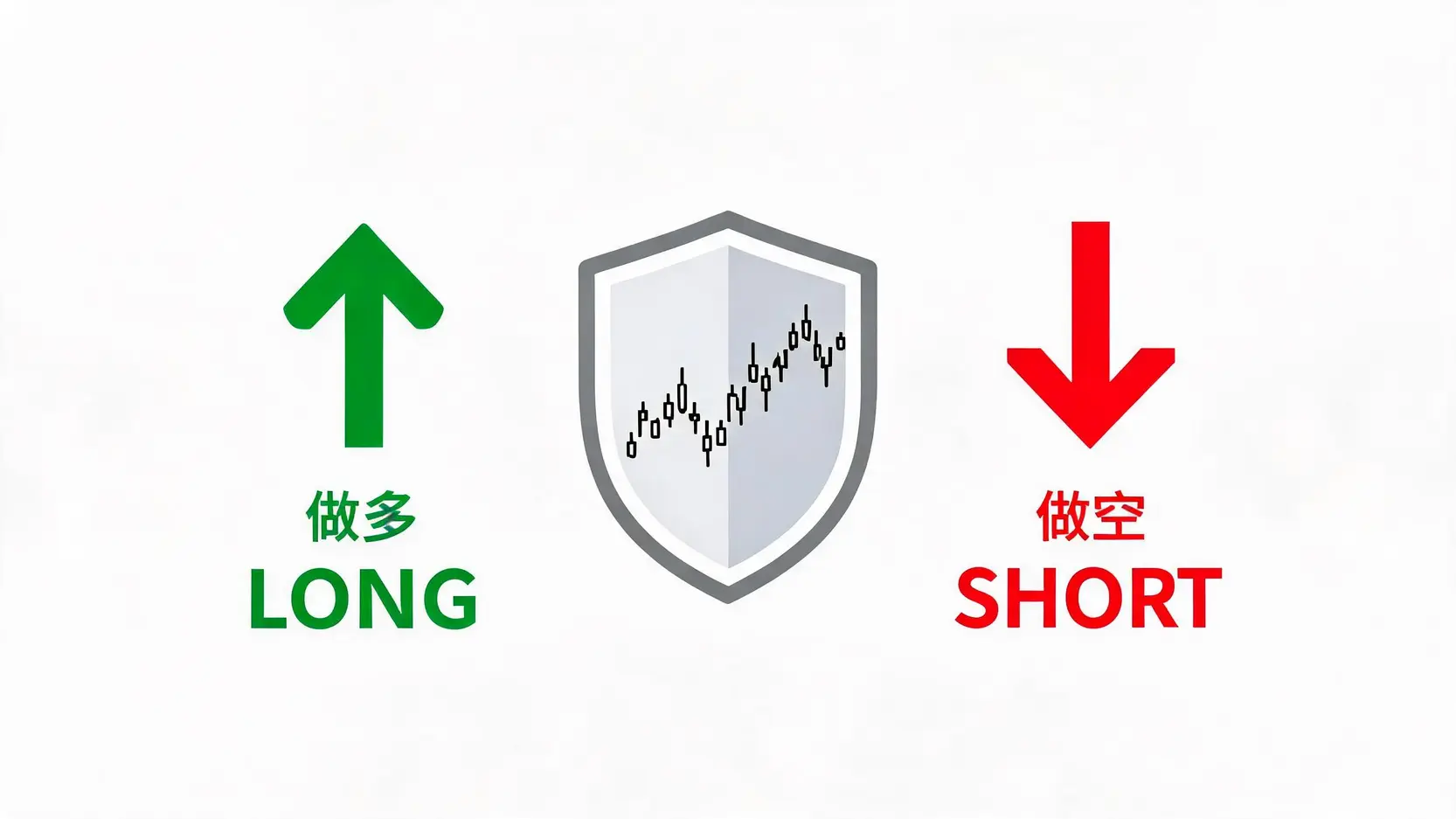
This is the most classic and widely used hedging strategy. Managers simultaneously buy (go long) high-quality stocks that are expected to rise and borrow shares to sell (go short) lower-quality stocks that are expected to fall. The core of this strategy lies in stock-picking ability. By offsetting long and short positions against each other, it significantly reduces the impact of systematic market risk on the portfolio and focuses on generating relative returns (Alpha) from individual stock performance.

Long/Short Equity Strategy: Using Long and Short Positions to Offset Market Risk
Global Macro Strategy
The global macro strategy takes a macroeconomic perspective by analyzing factors such as interest rate policies, monetary easing policies, economic growth rates, and geopolitics across countries to predict price trends in macro assets, including stocks, bonds, foreign exchange, and commodities. These funds usually operate on an extremely large scale. A well-known example is George Soros’s Quantum Fund, which used this strategy to generate remarkable returns in the currency market.
How Can Retail Investors Apply Hedging? Practical Risk-Hedging Guide
Although most retail investors cannot invest directly in hedge funds, they can still learn and apply their hedging principles. Below are several practical risk-hedging techniques suitable for ordinary investors:
Using Options and Futures to Protect Positions
Futures and options are excellent hedging tools. For example, if you hold a large stock position but are concerned that the broader market may experience a short-term pullback, you can purchase put options on the corresponding index or short index futures. If the stock market does decline, profits from the options or futures can offset losses on the stock position. If the stock market rises, you will only lose the premium paid for the options, while the stock position can still benefit from the increase. This is similar to purchasing insurance for your stock position.
Funding Rate Hedging in the Cryptocurrency Market
Hedging also offers significant opportunities in the increasingly active cryptocurrency market. For example, the well-known “cash-and-carry arbitrage” strategy is a low-risk hedging method. Investors can purchase Bitcoin in the spot market while simultaneously shorting an equal amount of Bitcoin in the perpetual contract market. Since the two positions move in opposite directions, gains and losses caused by price fluctuations offset each other. Investors can then steadily earn the “funding rate” paid by long-position holders to short-position holders in the perpetual contract market, generating stable returns regardless of whether cryptocurrency prices rise or fall.

Cryptocurrency Cash-and-Carry Arbitrage: Locking In Funding Rate Returns Through Hedging
Key Rules for Controlling Leverage and Managing Risk
Every hedging strategy involves risk, particularly when derivatives are involved. Investors must maintain strict discipline:
- Capital Management: Never invest all your funds in high-risk or highly leveraged hedging operations.
- Understand the Tools: Before using derivatives such as options and futures, you must fully understand how they work and the risks involved.
- Set Stop-Loss Orders: Even hedging decisions can be wrong. Strictly executing stop-loss orders is the final line of defense for protecting your principal.
Frequently Asked Questions (FAQ)
Q: Is the Entry Threshold for Investing in Hedge Funds High?
A: Yes, traditional hedge funds are generally available only to high-net-worth professional investors or institutional investors, with minimum investment thresholds often reaching hundreds of thousands or even millions of US dollars. However, ordinary retail investors can learn their hedging strategies and conduct their own risk-hedging operations in the market.
Q: Can Hedging Guarantee That You Will Never Lose Money?
A: No trading strategy can guarantee that losses will be completely avoided. The primary purpose of hedging is to “reduce risk”, rather than eliminate it entirely, or to use controllable costs to protect against potentially substantial losses. If hedging is executed improperly, investors may still face losses on both sides.
Q: Can Forex and Taiwan Stocks Be Hedged?
A: Certainly. In the Taiwan stock market, investors can use Taiwan index futures, options, or inverse ETFs to hedge their spot stock positions. In the forex market, investors can also simultaneously take long and short positions in highly correlated currency pairs to reduce the risk of significant exchange rate fluctuations.
Conclusion: Master Hedging Principles and Navigate Bull and Bear Markets With Stability
Hedging is not an inaccessible Wall Street secret, but a risk management mindset that every mature investor should possess. Understanding how hedge funds operate and the strategies they use can help us move beyond a long-only mindset. By flexibly using tools such as futures and options to protect positions or exploring hedging opportunities in emerging markets such as cryptocurrencies, you can also find a balance between profits in bull and bear markets, effectively control risk, and achieve stable long-term asset growth.
Related Articles
-
What Is Hedging? A Risk Management Guide Every Financial Beginner Should Read In the investment market, we often hear the term “hedging”, but what exactly does it mean? Why do professional investors use it? Hedging means adopting strategies to protect assets from adverse price movements. Whether in the stock, foreign...2026 年 7 月 14 日
-
2026 Complete Guide to US Treasury Yields: Trend Analysis, Impact of Surging Yields, and Asset Allocation Strategies In the rapidly changing global financial market, US Treasury yields have long been regarded as the most important benchmark for the risk-free rate. Entering 2026, amid recurring shifts in inflation expectations and dynamic...2026 年 7 月 13 日
-
2026 Gold Investment Tools Comparison: Which Is Better, a Gold Passbook, Gold ETF, or Physical Gold? Once you have determined that you are bullish on gold prices, the next step is “how to buy”. From traditional physical gold jewelry and bank gold passbooks to gold ETFs traded on the stock...2026 年 7 月 13 日