What Does Hedging Mean? 5 Risk Management Strategies

In an uncertain financial market, every investment carries risk. Have you ever worried that sudden market volatility might erode your investment returns? Professional investors use a strategy known as “hedging” to manage such uncertainties. This article explains the meaning of hedging in a clear and accessible way, explores what hedging is, and shows how to use it to manage risk, helping you protect your assets like an expert and achieve more stable wealth growth. Whether you are new to the stock market or an experienced trader, mastering the core techniques of hedging is an essential lesson.
What Is Hedging? Understanding the Core Concept
To learn how to hedge, you must first understand the logic behind it. Hedging is not an unattainable financial magic trick, but a precise risk management approach designed to reduce potential losses.
The Formal Definition of Hedging: Not Only for Profit, but for Risk Protection
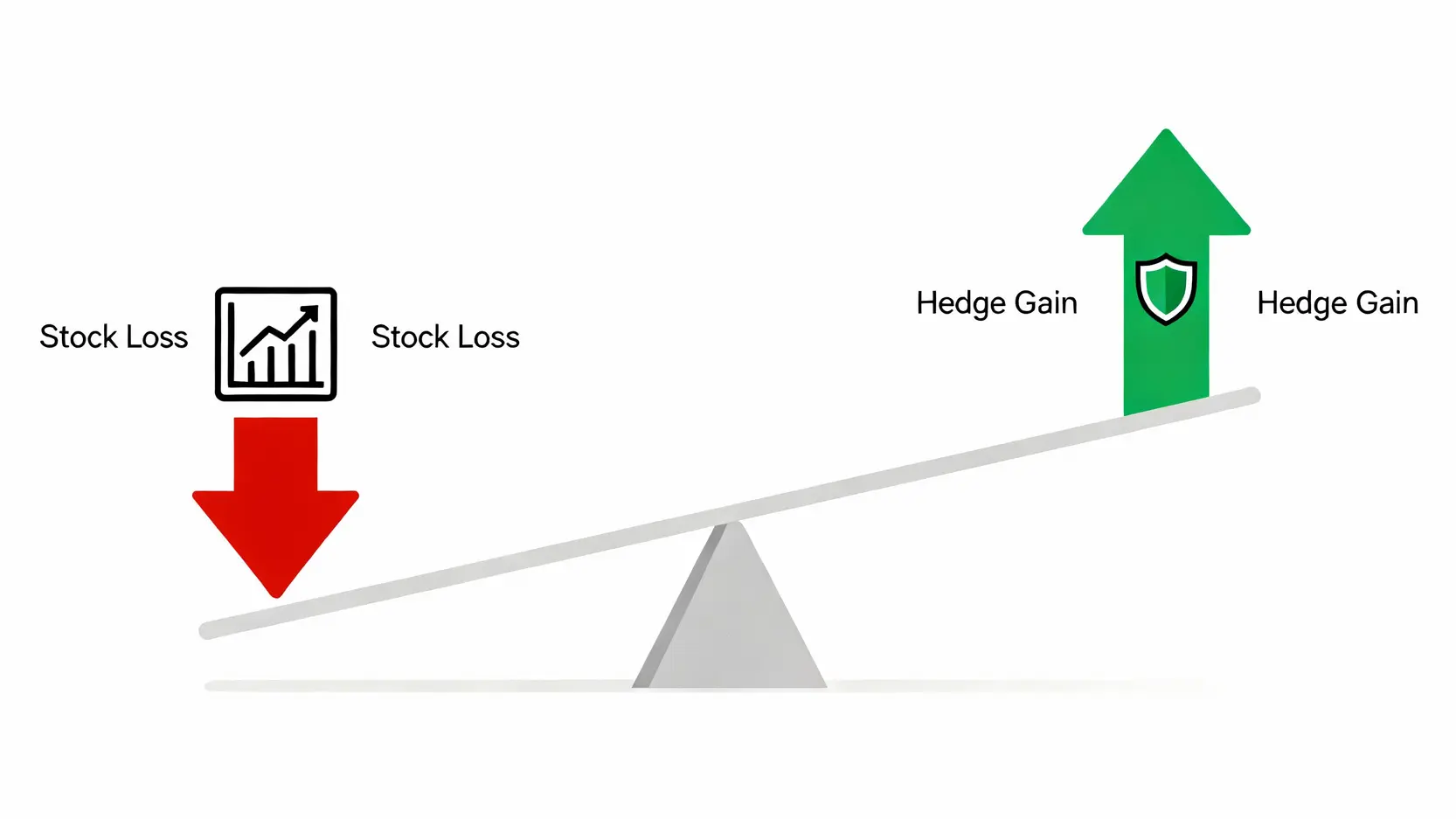
The essence of hedging is to reduce or lock in the adverse impact of future price fluctuations of an asset by taking a related investment position. Simply put, it is like purchasing “insurance” for your investment portfolio. When you hold an asset (such as a stock) and worry that its price may decline, you can establish a position that profits when that asset falls (such as selling stock index futures). In this way, the loss from the original asset can be partially or fully offset by the profit from the hedging position, thereby achieving the purpose of risk mitigation.

The Core Purpose of Hedging: Why You Need to Understand Hedging Risk?
Understanding hedging risk is crucial because the main threat in markets is “uncertainty”. Here are several key reasons why you should understand hedging:
- Protecting against market downturns: During economic recessions or unexpected black swan events, hedging can shield your assets from severe impact.
- Locking in existing profits: If your asset has already generated substantial gains but you do not wish to sell immediately, hedging can help lock in part of the profit and prevent it from being eroded by market corrections.
- Balancing your portfolio: For investors holding diversified assets, hedging specific risks (such as interest rate risk or currency risk) can enhance overall portfolio management stability.
- Enhancing investment discipline: Learning to hedge allows you to view market fluctuations more rationally and avoid making emotional trading decisions driven by panic.
In summary, the core objective of hedging is not to pursue excess returns, but to control downside risk, enabling you to navigate volatile markets with greater stability and resilience.
Five Common Hedging Strategies and Tools
After understanding the basic meaning of hedging, we now explore several commonly used hedging strategies and financial instruments in real world applications. Each tool has its own characteristics and is suitable for different market environments and asset classes.
Strategy One: Using Futures Contracts to Lock in Future Prices
Futures are standardized contracts in which buyers and sellers agree to trade a specific quantity of a commodity or financial asset at a predetermined price on a specified future date. This makes futures an excellent tool for locking in prices and hedging risk.
Example: A farmer expects to harvest wheat in three months and is concerned that wheat prices may decline by then. He can sell wheat futures contracts expiring in three months to lock in the current selling price. In this way, even if the market price of wheat falls in the future, the loss in the spot market can be offset by gains in the futures market.
Strategy Two: Buying Options as Insurance for Assets
Options grant the holder the “right”, but not the “obligation”, to buy or sell an asset at a specified price in the future. Among them, put options are commonly used as a hedging tool.
Example: Suppose you hold 1000 shares of a company currently priced at $100. You are concerned that the share price may decline in the short term, so you purchase a put option that gives you the right to sell the shares at $95 within one month. If the share price drops to $80, although your shares incur a loss, the value of the option will increase, thereby offsetting part of the loss. This is similar to purchasing downside insurance for your shares, effectively limiting your maximum loss.
Strategy Three: Establishing an Opposite Investment Position
This is the most straightforward hedging approach, which involves establishing a position that moves in the opposite direction of the asset you hold. This is typically achieved through short selling.
Example: You hold a basket of technology stocks but expect the entire technology sector to experience a short term correction. You can short an ETF that tracks a technology index. If technology stocks generally decline, the loss in your holdings will be offset by gains from the short ETF position.
Strategy Four: Flexible Application of Contracts for Difference
Contracts for difference are financial derivatives that allow traders to speculate on price movements without actually owning the underlying asset. Because CFDs can easily be used to go long or short, they serve as highly flexible hedging tools.
Example: You hold assets denominated in US dollars but are concerned that the US dollar may weaken against the Hong Kong dollar. Through a CFD trading platform, you can establish a short position in the US Dollar Index. If the US dollar depreciates, the profit from your CFD position can offset the losses in your assets caused by exchange rate fluctuations. To learn more about CFD applications, you may refer to Contracts for Difference Trading Strategies: The Complete 2026 CFD Guide to Avoid Seven Major Risks!.
Further Reading (Highly Recommended)
What Are ETF Risks? A Comprehensive Analysis of ETF Risk Levels and Investment Management Strategies
Contracts for Difference Trading Strategies: The Complete 2026 CFD Guide to Avoid Seven Major Risks!
Strategy Five: Asset Diversification
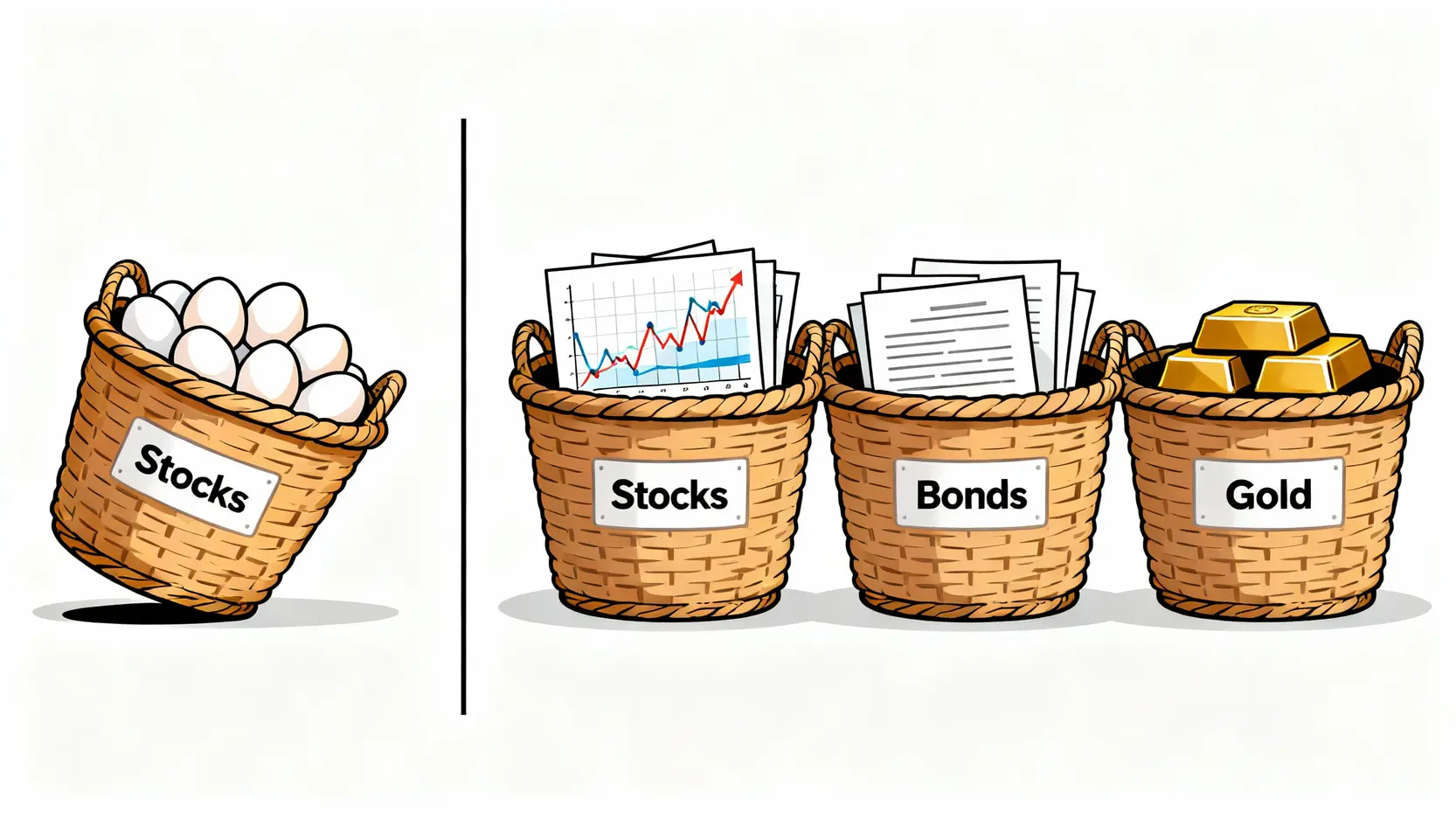
“Do not put all your eggs in one basket” is an old saying that represents the most fundamental and important form of hedging. Diversification means holding different types of assets across various regions with low correlation to spread unsystematic risk from a single asset. Although it cannot completely eliminate market risk, it forms the foundation of a robust investment portfolio.

- Different asset classes: Allocate capital among equities, bonds, commodities (such as gold) and real estate.
- Different geographic regions: Invest across markets such as the US, Europe, and Asia to avoid the impact of economic fluctuations in a single country.
- Different industry sectors: Within equity investments, allocate across sectors such as technology, finance, healthcare, and consumer.
Effective diversification itself is a form of passive hedging and can significantly reduce overall portfolio volatility.
Hedging vs Arbitrage: What Are the Key Differences?
In financial markets, “hedging” and “arbitrage” are two concepts that are often confused. Although both may involve operating multiple positions simultaneously, their fundamental objectives and logic are entirely different. Understanding the difference helps clarify what hedging truly means.
Different Objectives: One for Risk Protection, One for Risk Free Profit
The core distinction lies in motivation:
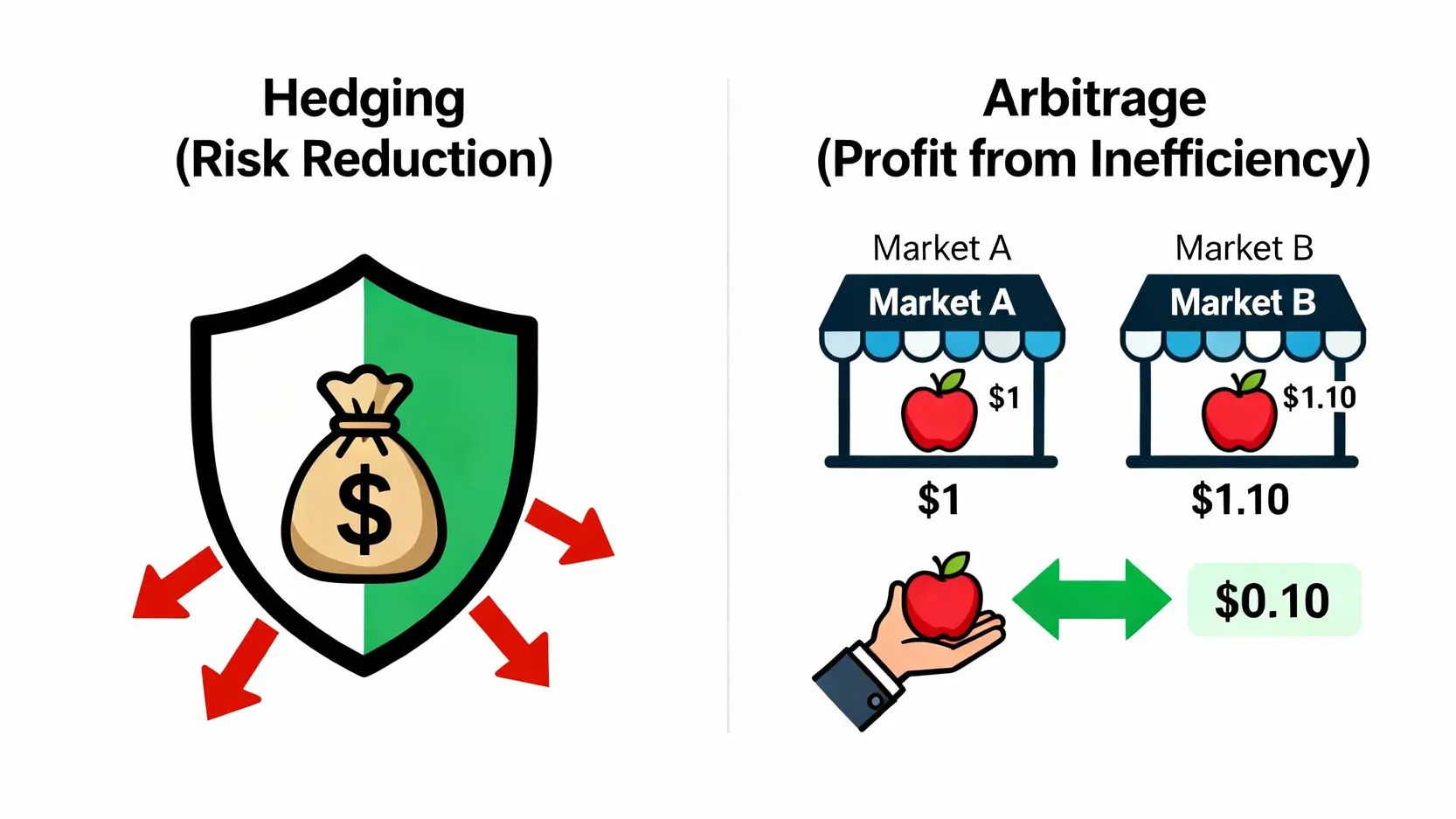
- Hedging: The objective is to “reduce risk”. An investor already holds a risk exposure and establishes another related position to protect against adverse price movements. The focus of hedging is “defense”.
- Arbitrage: The objective is to “earn risk free profit”. An arbitrageur takes advantage of small price differences of the same asset across different markets by buying and selling simultaneously to lock in the spread as profit. The focus of arbitrage is “offense”.
Operational Logic: The Trade Off Between Risk and Return
The operational logic also differs significantly:
Hedging involves cost. Just like purchasing insurance requires paying a premium, executing a hedging strategy usually sacrifices part of the potential upside. For example, when you buy a put option to hedge against a stock price decline, if the stock ultimately rises, the premium paid becomes a cost. Hedging is a trade off between “potential loss” and the “upper limit of potential profit”.
Arbitrage is theoretically “risk free”. Because buying and selling occur simultaneously, the arbitrageur does not bear market price fluctuation risk and instead profits from market inefficiencies. However, pure risk free arbitrage opportunities are extremely rare and short lived in modern efficient electronic markets.

It can be summarized in a simple table as follows:
| Comparison Item |
Hedging |
Arbitrage |
| Primary Objective | Risk management, reducing losses | Exploiting price differences for risk free profit |
| Prerequisite | An existing risk position | Identification of market price discrepancy opportunities |
| Risk Exposure | Reduces existing risk | Theoretically risk free |
| Impact on Profit | May reduce potential maximum profit | Locking in a small but certain profit |
Hong Kong Feature: What Is “MPF Offsetting”?
In Hong Kong, the term “offsetting” also carries a specific meaning closely related to local labor legislation, namely the “MPF Offsetting Mechanism”. This is a key issue concerning the retirement protection of employees across Hong Kong, and understanding the meaning of offsetting is essential.
The Past and Present of the MPF Offsetting Mechanism
Under the previous “Employment Ordinance”, when an employer was required to pay severance payment or long service payment to an employee, the law allowed the employer to use the accrued benefits derived from the employer’s mandatory MPF contributions for that employee (that is the employer contribution portion) to “offset” the payment. Since the implementation of the MPF system, this arrangement had been highly controversial, as it was considered to erode employees’ retirement savings by using funds originally designated for retirement protection to pay termination compensation.
The Impact of Abolishing Offsetting on Employers and Employees
After years of social discussion, the Hong Kong SAR Government has implemented the abolition of the MPF offsetting arrangement, which will take effect on May 1, 2025. This reform brings far-reaching implications:
- For employees: This is a significant benefit. After the abolition of offsetting, the employer contribution portion of an employee’s MPF will be more comprehensively protected and can be fully preserved as retirement savings. Severance payment or long service payment due upon termination will be paid separately by the employer, and the two will no longer be linked.
- For employers: Labor costs will undoubtedly increase, as employers can no longer use MPF contributions to offset severance or long service payments. In response, the government has introduced a subsidy scheme to provide financial support to employers (especially small and medium enterprises) for a period after the policy implementation to alleviate their financial burden. For more official information regarding the abolition of offsetting, please refer to the dedicated website of the Hong Kong Labour Department.
Frequently Asked Questions About Offsetting (FAQ)
Q: Can offsetting guarantee that I will definitely not incur losses?
A: No. The primary purpose of offsetting is to “manage and reduce risk”, not to completely eliminate losses. A perfect hedge (meaning a 100% offset of losses) is difficult to achieve in practice and extremely costly. In most cases, offsetting aims to keep losses within an acceptable range. In addition, hedging strategies themselves may involve costs or introduce new risks (such as basis risk).
Q: Can retail investors engage in offsetting?
A: Absolutely. Although offsetting may sound highly professional, many tools are readily accessible to retail investors. For example, you can use your securities account to trade inverse ETFs to hedge against market declines, or use options to protect individual stock positions. The simplest form of offsetting is proper asset diversification. The key is to first acquire sufficient knowledge and understand the risks involved.
Q: What Is a “Hedge Fund”? How Is It Different From a Traditional Fund?
A: A “hedge fund” is a type of private fund that adopts various complex investment strategies (including extensive use of hedging, short selling, and leverage) to pursue absolute returns. Unlike traditional mutual funds, which can only take long positions, hedge funds employ highly flexible strategies and may profit in both rising and falling markets. However, they usually have high investment thresholds, are subject to less regulation, and carry relatively higher risks, primarily targeting professional investors.
Q: How Much Does Offsetting Cost?
The cost of hedging varies depending on the strategy. Direct costs may include transaction fees, option premiums (the cost of purchasing options), or stock borrowing interest (the interest paid when short selling). Indirect costs include opportunity cost, meaning that part of the potential upside return is sacrificed in order to reduce downside risk. For example, if you hedge your stock position and the market subsequently rises sharply, your overall return will be lower than if you had not hedged.
Conclusion
In summary, mastering the “meaning of hedging” is a compulsory lesson for every mature investor. It is not a magic formula that guarantees profits, but a sophisticated art of risk management, with its core centered on preparing for an uncertain future. Through the various hedging strategies introduced in this article, including the use of futures, options, establishing inverse positions, CFDs, and asset diversification, you can respond to market volatility with greater composure and build a solid line of defense for your investment portfolio. If you want to go further on your investment journey, start by learning how to effectively hedge risks.
Related Articles
-
Practical Applications of Volatility Surfaces: From Options Modeling to Advanced Skew Trading Strategies In options markets, implied volatility is never a flat line. Instead, it forms complex "smile" or "skew" surfaces. For advanced traders, mastering the practical applications of volatility surfaces is equivalent to possessing a lens that reveals market...2026 年 6 月 3 日
-
Building a Foreign Capital Flow Copy Trading Model: A Stock Market Indicator for Accurately Tracking Institutional Positioning In Asia-Pacific stock markets, foreign capital inflows and outflows often determine the direction of the index. However, simply looking at daily net buy and sell data is no longer enough. Only by building...2026 年 6 月 3 日
-
Options Buyer Strategies During Extreme Market Conditions: Black Swan Hedging and Cross-Market Arbitrage During Volatility Surges The most terrifying aspect of financial markets is not a gradual decline, but overnight flash crashes and cross-market capital withdrawals accompanied by volatility surges. In the highly unpredictable global macroeconomic environment of 2026, geopolitical...2026 年 6 月 3 日