2026 Euro Forecast: Is Now the Best Time to Buy Euros?

2026 Euro Exchange Rate Forecast: Is Now the Best Time to Buy Euros?
Planning a trip to Europe or considering foreign currency investments? As the world’s second-largest reserve currency, fluctuations in the euro directly affect your currency exchange costs and investment returns. As we enter 2026 and face changes in the global political and economic landscape, understanding euro exchange rate trends has become essential for investors and savvy travelers. This article provides an in-depth analysis of the latest 2026 euro exchange rate forecast, helps you understand key macroeconomic data, and shares techniques for identifying the best time to exchange foreign currencies, allowing you to avoid exchanging at unfavorable highs and manage your foreign currency assets wisely.
Review of Recent Euro Exchange Rate Trends and the Impact of Major Political and Economic Events
To accurately predict future market movements, we must first learn from history. Over the past few years, the world has experienced surging inflation, rapid interest rate hikes by central banks, and geopolitical turmoil. These factors have all left a profound mark on euro exchange rate candlestick charts. For discerning investors, examining historical fluctuations in EUR/TWD or EUR/USD charts is an important foundation for developing entry and exit strategies.
Historical Fluctuation Ranges of the Euro Against the Taiwan Dollar and Hong Kong Dollar Over the Past Three Years
Over the past three years, the euro exchange rate has experienced significant volatility. Differences in the pace of interest rate hikes and cuts between the European Central Bank (ECB) and the US Federal Reserve (Fed) have caused capital to move rapidly between currencies. Below, we have compiled the approximate fluctuation ranges of the euro against the Taiwan dollar (EUR/TWD) and the euro against the Hong Kong dollar (EUR/HKD) over the past three years for investors’ reference:
| Year | Approximate EUR/TWD Range | Approximate EUR/HKD Range | Key Market Drivers |
| 2024 | 33.20 – 34.80 | 8.35 – 8.65 | Market expectations for US and European interest rate cuts, weak economic recovery in the eurozone |
| 2025 | 34.00 – 35.50 | 8.40 – 8.80 | The ECB begins precautionary rate cuts, while inflation gradually falls back toward the target range |
| 2026 (Year to Date) | 33.80 – 35.20 | 8.45 – 8.75 |
Interest rate policy enters a stable phase, while differences between US and European economic fundamentals emerge |
As the data above shows, the euro exchange rate does not move in a straight line, but offers ample opportunities for swing trading. By making effective use of these fluctuations and placing funds in suitable foreign currency passbook features and account-opening applications, you can improve the overall flexibility and return potential of your assets.
The Substantial Impact of European Central Bank (ECB) Monetary Policy on Exchange Rates
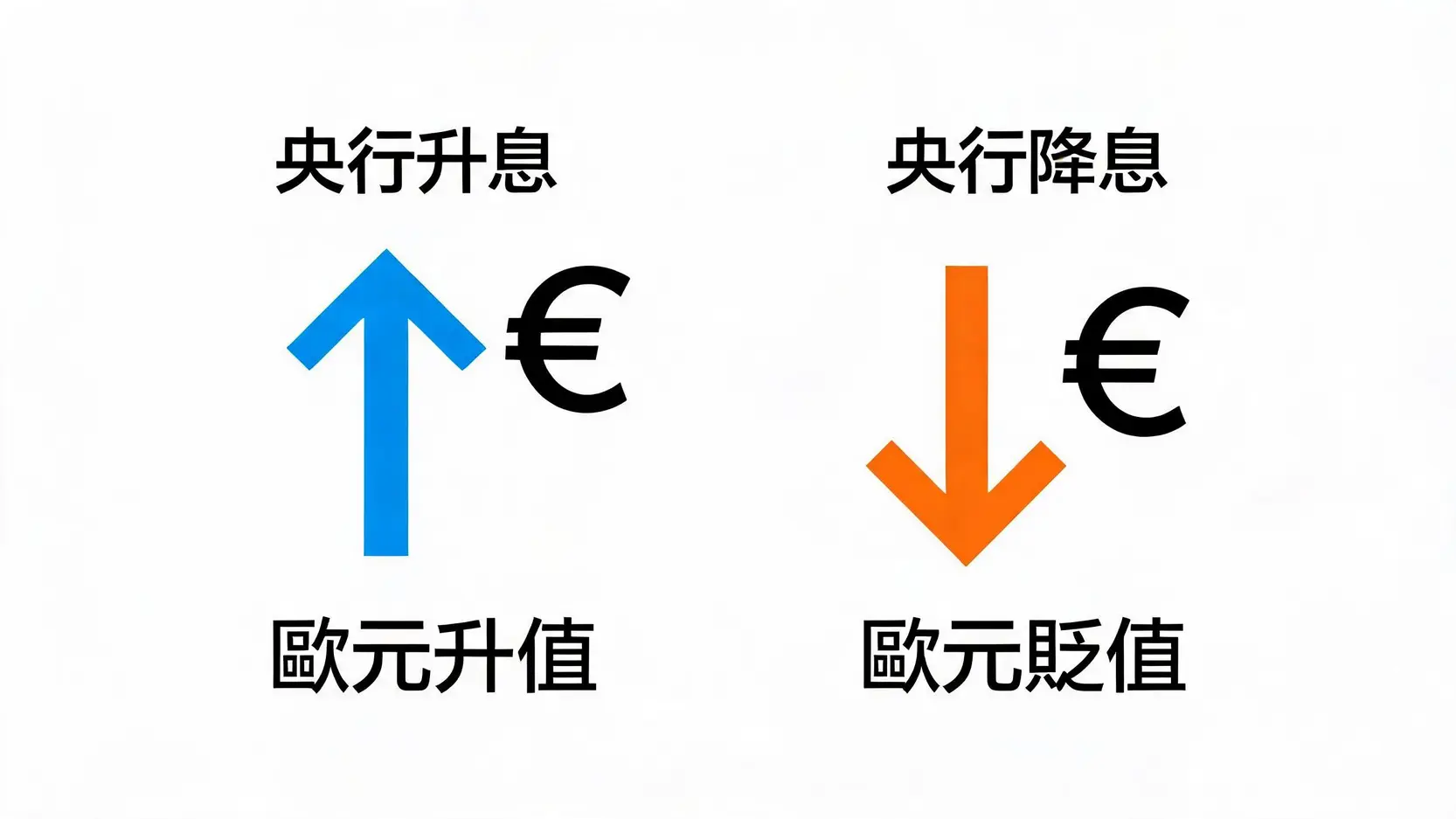
Central bank monetary policy has always been the strongest force driving exchange rate movements. When the European Central Bank adopts a tightening policy by raising interest rates, the euro usually gains support and appreciates. Conversely, when it implements monetary easing by cutting rates to stimulate the economy, the euro is more likely to face depreciation pressure. According to analyses by authoritative financial institutions on the European Central Bank’s 2026 monetary policy outlook, the ECB’s policy focus in 2026 has shifted from actively fighting inflation to “maintaining stable economic growth” and “normalizing interest rates”.
This policy shift means that the European Central Bank is unlikely to implement rapid consecutive rate cuts, providing a certain level of support for the euro exchange rate. For investors intending to buy euros, closely monitoring statements made by ECB President Christine Lagarde after each interest rate decision meeting is essential.

Relationship Between Monetary Policy and Euro Exchange Rate Trends
Three Key Indicators Affecting the 2026 Euro Exchange Rate Forecast
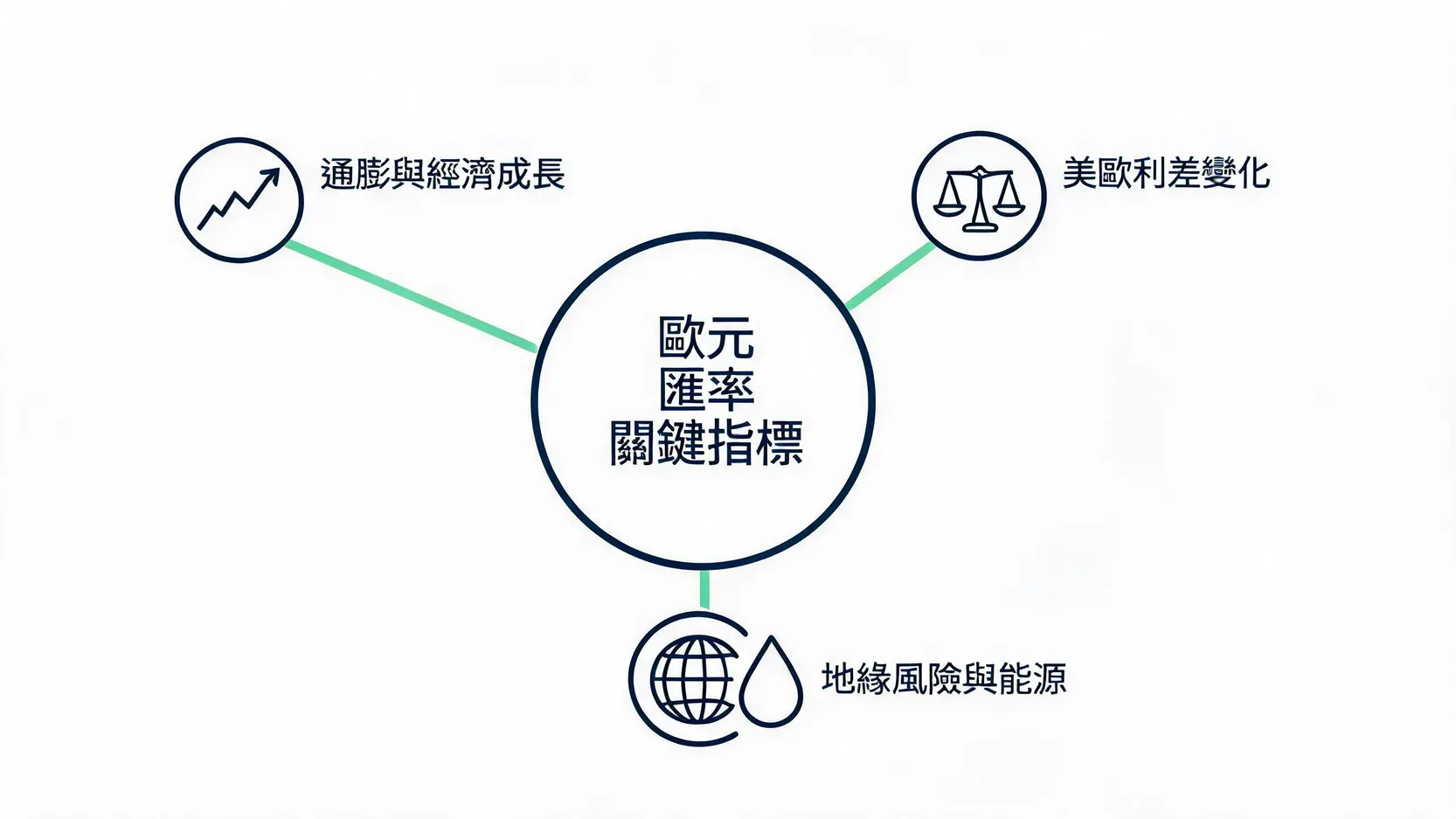
At this point in 2026, how should we assess future euro exchange rate trends? In addition to monetary policy, macroeconomic indicators are also crucial factors affecting market sentiment. Below, we break down the three core factors influencing the 2026 euro exchange rate forecast:

Three Core Indicators for the 2026 Euro Exchange Rate Forecast
1. The Relationship Between Eurozone Inflation Data and Economic Growth
Inflation (represented by CPI data) serves as the ECB’s compass for decision-making. If the eurozone’s core inflation rate remains stable near the 2% target level, the central bank will not need to adopt aggressive interest rate measures. However, we must also examine economic growth, measured by GDP. As Germany is the engine of the European economy, the performance of its manufacturing PMI will directly reflect the health of the eurozone economy. If economic data exceeds expectations, international capital will be attracted back to European assets, thereby driving the euro exchange rate higher.
2. Changes in the US-Europe Interest Rate Differential and the Strength of the US Dollar Index
Foreign exchange rates are relative, and the strength of the euro depends largely on the performance of the US dollar. When the US Federal Reserve’s benchmark interest rate is higher than that of the European Central Bank, capital tends to flow into the US dollar to earn higher interest, placing pressure on the euro. The key focus in 2026 is “whether the US-Europe interest rate differential will continue to narrow”. If the US accelerates rate cuts due to a cooling domestic economy, causing the interest rate gap between the US and Europe to narrow, the euro against the US dollar (EUR/USD) could have significant upside potential.
3. Geopolitical Risks and Energy Price Volatility
Europe’s geographical location and energy structure make it highly sensitive to geopolitical events. Whether it is developments in Eastern Europe or disruptions to the global energy supply chain caused by tensions in the Middle East, these events can affect the euro through “imported inflation” or “safe-haven sentiment”. Typically, when a major global crisis occurs, capital flows into the US dollar or Swiss franc as safe havens, and the euro may weaken in the short term. However, if European integration becomes stronger and policies supporting fiscal unification are introduced, long-term market confidence in the euro could improve significantly.
Further Reading (Highly Recommended)
Advanced Strategies for Accurately Identifying the Best Time to Exchange Foreign Currency
After understanding the logic behind macroeconomic conditions and euro exchange rate trends, practical execution is the only true test. Many people complain that “the euro depreciates every time I exchange it”, often because they lack discipline and the support of suitable tools. Below are three currency exchange strategies commonly used by experienced investors:
Use Bank App “Target Exchange Rate Alerts” to Lock In Low Prices
In the digital finance era, there is no need to monitor the market every day. Major banks such as CTBC, Fubon, and Cathay offer “target exchange rate alerts” through online banking or mobile apps. You can set two to three target buying levels based on historical support levels shown on the EUR/TWD chart. When the system detects that the euro exchange rate has reached your target price, it immediately sends a push notification. This not only saves time, but also helps overcome the tendency to “wait for an even lower price”, allowing you to act decisively.
Regular Fixed-Amount Currency Exchange: Effectively Average the Cost of Holding Euros
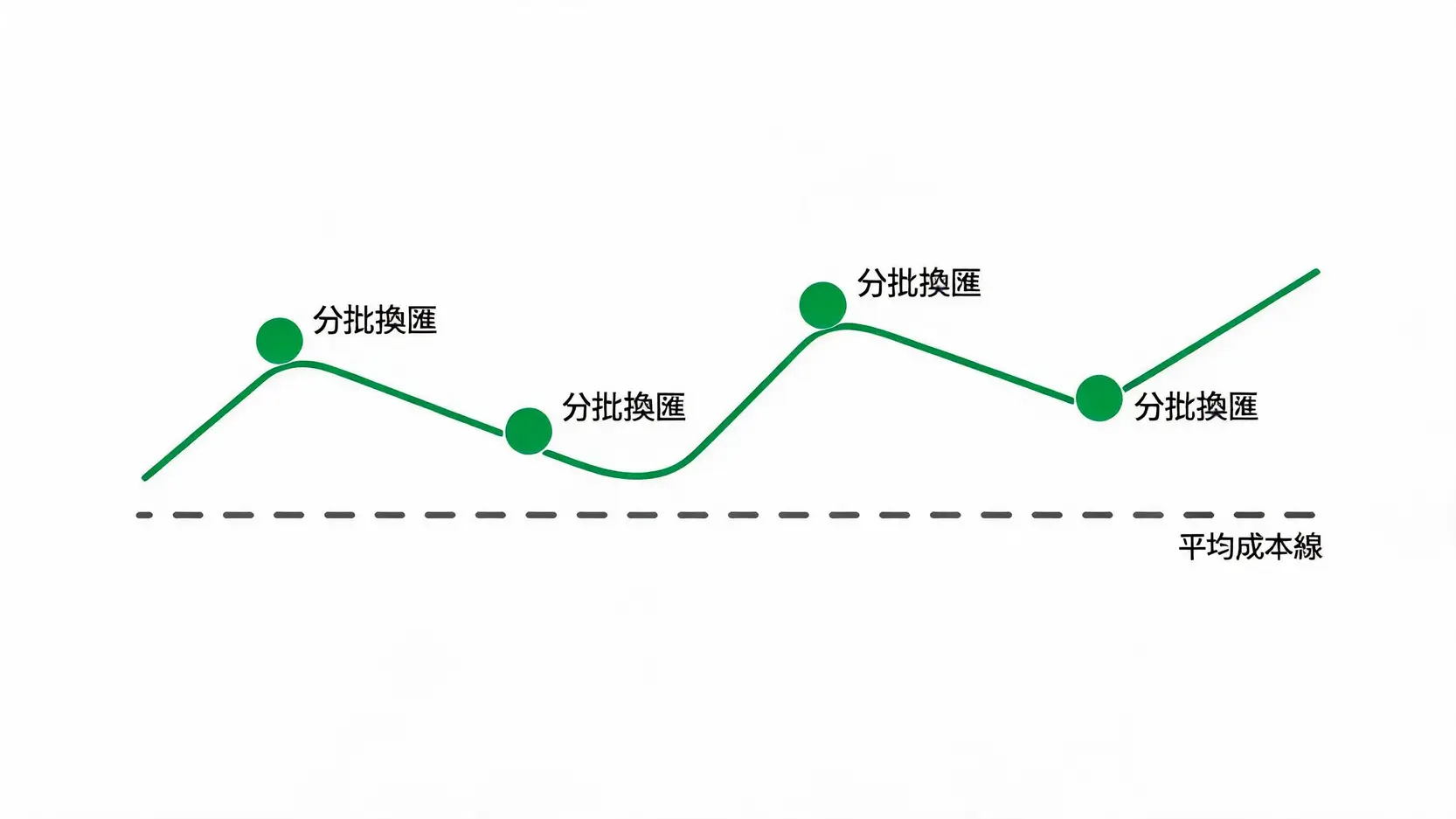
No one can accurately predict the absolute lowest point. If you plan to take a long trip to Europe before the end of the year or intend to hold euro-denominated assets over the long term, the “regular fixed-amount” strategy is highly recommended. For example, divide the total amount you plan to exchange into six equal portions and exchange currency on a fixed date each month. This method effectively spreads exchange rate risk and allows you to buy at an average price, making it an excellent defensive portfolio management technique.

Illustration of the Regular Fixed-Amount Currency Exchange Strategy: Diversifying Risk and Averaging Costs
Combine Overseas Dual-Currency Credit Cards With Foreign Exchange Discount Offers
For travelers, exchanging cash is only one part of the process. Exchange rate calculations for overseas spending are equally important. In recent years, many banks have introduced dual-currency credit cards (such as euro/Taiwan dollar dual-currency cards). If you deposit funds into a euro account when the euro exchange rate is low, overseas euro purchases can be deducted directly from that account, allowing you to avoid the exchange rate risk at the time of the transaction. In addition, be sure to understand the Complete Guide to Visa Exchange Rate Enquiries and Overseas Credit Card Fees, and use high-reward credit cards to offset overseas transaction fees, ensuring that every cent is spent wisely.
Frequently Asked Questions About Historical Euro Exchange Rates and Trends (FAQ)
Q: Is the euro exchange rate expected to rise or fall in 2026?
A: Based on the macroeconomic environment in 2026, the euro exchange rate is generally expected to remain “range-bound with downside support”. If the US Federal Reserve cuts interest rates more than expected, the euro may experience a moderate rise. Conversely, if the European economy recovers slowly, the euro may continue to consolidate weakly within its existing range. It is advisable not to bet on a single direction, but to allocate funds in stages.
Q: When is the most cost-effective time to exchange euros for a trip to Europe?
A: The best strategy is to “prepare in advance and exchange in stages”. During the six months before departure, use online banking to monitor euro exchange rate trends. When the exchange rate falls below its one-year average or reaches your target price, you can begin exchanging euros in stages. When traveling abroad, the most sensible approach is to use a combination of “a small amount of cash + a high-reward credit card/dual-currency card”.
Q: How can I check the latest historical euro exchange rate trends and quotes?
A: Investors can check spot and cash exchange rates through the “posted exchange rates” sections on major commercial banks’ official websites. For more professional candlestick charts and technical analysis indicators, financial websites such as TradingView and Anue are recommended, or you can download a professional forex market app that provides historical euro exchange rate charts covering up to ten years for review and analysis.
Q: Besides holding cash, what other euro-related investment instruments are available?
A: In addition to regular and fixed foreign currency deposits, you can also consider euro-denominated mutual funds (such as European large-cap equity funds and European bond funds, euro ETFs) or forex margin trading for flexible long and short positions. However, be sure to assess your own risk tolerance and fully understand the characteristics and fee structures of each investment instrument.
Conclusion: Understand Euro Exchange Rate Trends and Build a Stable Foreign Currency Portfolio
Understanding euro exchange rate trends and the underlying macroeconomic factors is the first step toward smarter currency exchange and stable investing. No matter how unpredictable the market becomes in 2026, the euro’s position as a major international currency remains secure. Investors and travelers are advised to abandon the mindset of “taking a gamble”, make good use of digital banking tools, compare fees across different platforms, and strictly follow the discipline of regular fixed-amount and staged currency exchange to spread risk. Open your online banking now, set a personalized target exchange rate alert, and easily seize the next best opportunity to buy euros, taking your foreign currency asset allocation to the next level!
Related Articles
-
Binance Margin Trading Guide: Differences Between Cross and Isolated Margin Modes and Illustrated Borrowing Instructions Short on funds but expect a particular cryptocurrency to surge? Besides the commonly used futures trading, you can also use “Binance Margin” to borrow funds and purchase spot assets, amplifying your investment returns. This Binance...2026 年 7 月 14 日
-
【2026 In-Depth Analysis】Trump’s Major Shift in Middle East Policy: How Will It Trigger a New Round of Correlated Oil and Gold Price Movements? In 2026, global markets are once again focusing on the Middle East. As the Trump administration makes a significant shift in foreign policy, from maximum pressure on...2026 年 7 月 14 日
-
2026 US-Iran Conflict Escalates: Can Gold Really Serve as a Safe Haven? Understanding the True Relationship Between Gold Prices and War in One Article As geopolitical tensions continue to escalate in 2026, global financial markets are once again overshadowed by uncertainty, instantly igniting investors’ demand for safe-haven assets. The classic...2026 年 7 月 14 日