How geopolitical risk creates ripple effects across the global economy
Definition: How Wars and Trade Disputes Impact the Global Economy
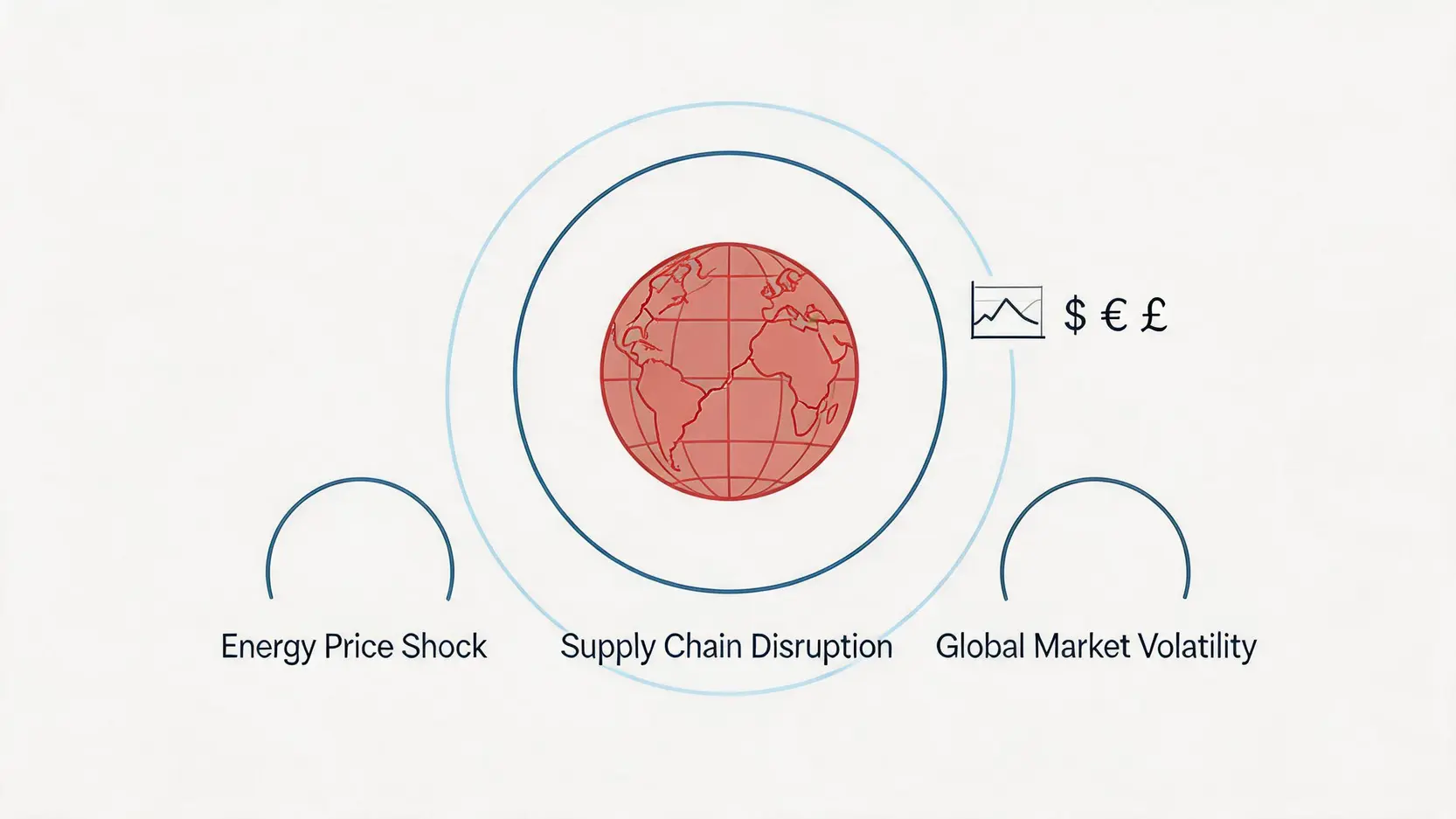
War is the most extreme form of geopolitical risk. A regional conflict can cause sharp increases in key raw material prices such as oil, intensifying global inflationary pressure. For example, the conflict in Eastern Europe has directly affected global natural gas and wheat supplies. Trade disputes, on the other hand, function like a war without gunfire. Tariff barriers between two major economies may force companies to restructure global supply chains. The resulting cost increases are ultimately passed on to consumers and affect corporate stock performance.
Current Hotspots: Analyzing the Potential Market Impact of Conflicts in the Middle East, Eastern Europe, and Other Regions
Entering 2026, global geopolitical hotspots remain highly unstable:
- Eastern Europe stalemate: The prolonged conflict continues to affect energy and food supply chains, raising concerns about a potential recession in Europe and placing significant pressure on the euro and British pound.
- Middle East powder keg: Any new conflict in the region could trigger a surge in oil prices and a new wave of global inflation. This directly increases costs for aviation and transportation industries while also boosting demand for safe-haven assets such as gold.
- Asia-Pacific competition: Strategic competition among major powers in technology and trade continues to impact key industries such as semiconductors and rare earths, creating high uncertainty in related supply chains.
In such an interconnected global economy, any “black swan” event in one region can quickly escalate into a global financial shock. Therefore, learning how to assess geopolitical risks and incorporate them into investment decisions is no longer exclusive to professional investors but a necessary skill for everyone. This is also why a structured investment strategy for turbulent times is essential.
Safe Havens in Turbulent Times: Comparison of 5 Major Safe-Haven Assets
When markets become unstable, capital naturally seeks “safe havens”. These safe-haven assets tend to remain relatively stable or even rise during periods of market panic. However, each asset has different characteristics and use cases. Below is a comprehensive comparison of five major safe-haven assets.
| Safe-haven assets |
Advantages |
Disadvantages |
Suitable scenarios |
| Gold |
A long-established store of value, inflation-resistant, and carries no credit risk |
Does not generate interest, high storage costs, and price volatility |
High inflation, currency depreciation, wartime conditions |
| US dollar |
The world’s primary reserve currency, highly liquid, and in strong demand as a safe haven |
Affected by US monetary policy and subject to long-term depreciation pressure |
Global economic recession, financial crisis |
| US Treasuries |
Considered risk-free assets, providing fixed interest income |
Highly exposed to interest rate risk, and real returns may turn negative during high inflation periods |
Market panic, sharp stock market declines |
| Bitcoin |
Decentralized, limited supply, and high potential returns |
Extremely high volatility, regulatory risk, and highly sensitive to market sentiment |
Hedge against currency debasement, regions with capital controls |
| Defensive stocks |
Provide stable dividends and operate in stable-demand businesses (such as utilities and food) |
Limited growth potential and can still decline during extreme market panic |
Economic slowdown, high market uncertainty |
Gold: Analysis of Traditional Value and Inflation-Hedging Capability
Since ancient times, gold has been a symbol of wealth and the ultimate means of payment. When people lose confidence in paper currency, or when geopolitical risks rise sharply, gold’s safe-haven appeal becomes evident. Its core value lies in being “borderless” and “credit-risk free”, it does not belong to any single country, and its value does not depend on any government’s promise. During high inflation periods, gold is commonly used to counter the decline in currency purchasing power, making it an indispensable component of investment strategies in turbulent times.
US Dollar: Strengths and Risks of the World’s Reserve Currency
When global crises erupt, investors often sell high-risk assets and move into US dollar cash or dollar-denominated assets, a phenomenon known as “cash is king”. As the primary currency for global trade and reserves, the US dollar has unparalleled liquidity. However, holding US dollars is not without risk. The monetary policy of the Federal Reserve (including interest rate hikes or cuts), directly affects its exchange rate, and in the long run, high levels of US national debt may also pose challenges to the dollar’s dominant position.
US Treasuries: Attractiveness and Challenges Under High Interest Rates
US Treasuries are issued by the US government and are widely regarded as one of the safest financial assets in the world. During periods of sharp stock market volatility, capital often flows into US Treasuries as a safe haven. In the current high interest rate environment, the fixed income offered by US Treasuries has become more attractive. However, investors need to pay attention to “interest rate risk”, if interest rates continue to rise in the future, the price of existing bonds will fall. You can track the latest yield movements through authoritative websites such as MacroMicro.
Bitcoin (Digital Gold): Volatility and Potential of an Emerging Safe-Haven Tool
Bitcoin is often referred to as “digital gold” due to its limited supply (21 million coins) and decentralized nature, and is viewed by some investors as an emerging tool to hedge against fiat currency inflation. In certain countries facing hyperinflation or capital controls, Bitcoin has demonstrated its unique value storage function. However, Bitcoin is extremely volatile and faces global regulatory uncertainty. Before including it in a geopolitical risk investment portfolio, its high-risk, high-reward nature must be fully understood. For beginners, it is recommended to start with the Cryptocurrency Investment Beginner Guide: 5 Steps to Buying and Selling Ethereum in Hong Kong to understand the basics of crypto investing.
Defensive Stocks: Stable Cash Flow Value From Utilities and Essential Consumer Sectors
Defensive stocks refer to shares of companies whose demand for products or services remains relatively stable regardless of economic conditions. Examples include utilities such as water, electricity, and gas providers, as well as essential consumer goods companies producing food and pharmaceuticals. These businesses typically generate stable cash flow and consistent dividend payouts, making their stock performance more resilient than the broader market during economic downturns or market turmoil, and an ideal choice for conservative investors.
Practical Deployment: 3 Investment Strategies for Coping With Geopolitical Risks
After understanding safe-haven assets, the next step is how to effectively allocate them within your investment portfolio. In a highly uncertain market, a simple “buy and hold” approach may not be sufficient. The following three investment strategies for turbulent times can help you build a stronger defensive framework.
Strategy 1: Barbell Strategy – Core Capital Protection and Satellite Growth Capture
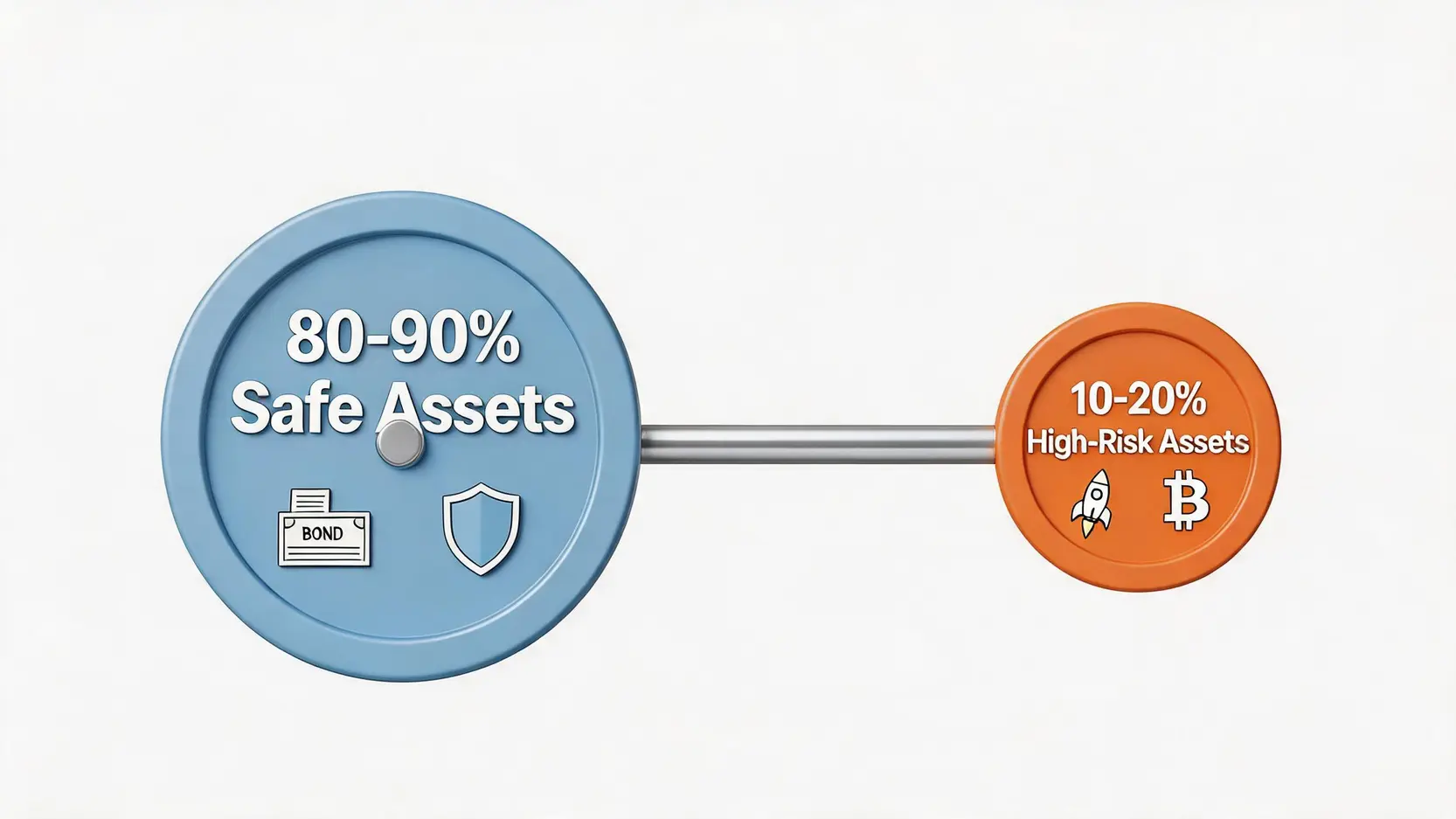
Imagine a barbell, with weight concentrated at both ends and nothing in the middle. This strategy polarizes your investment portfolio:
- One end (around 80–90%): Allocated to extremely safe assets such as short-term US Treasuries, high-grade bonds, or cash. The core objective of this portion is capital preservation and stable cash flow, ensuring that your core wealth is not severely impacted even in the worst market scenarios.
- The other end (around 10–20%): Allocated to high-risk, high-growth potential assets such as growth technology stocks, emerging market equities, or even a small allocation to Bitcoin. The objective of this portion is to capture excess returns during market recoveries.
This strategy avoids the middle ground of assets with unclear risk-return profiles, allowing you to preserve capital while still maintaining exposure to potential upside opportunities.