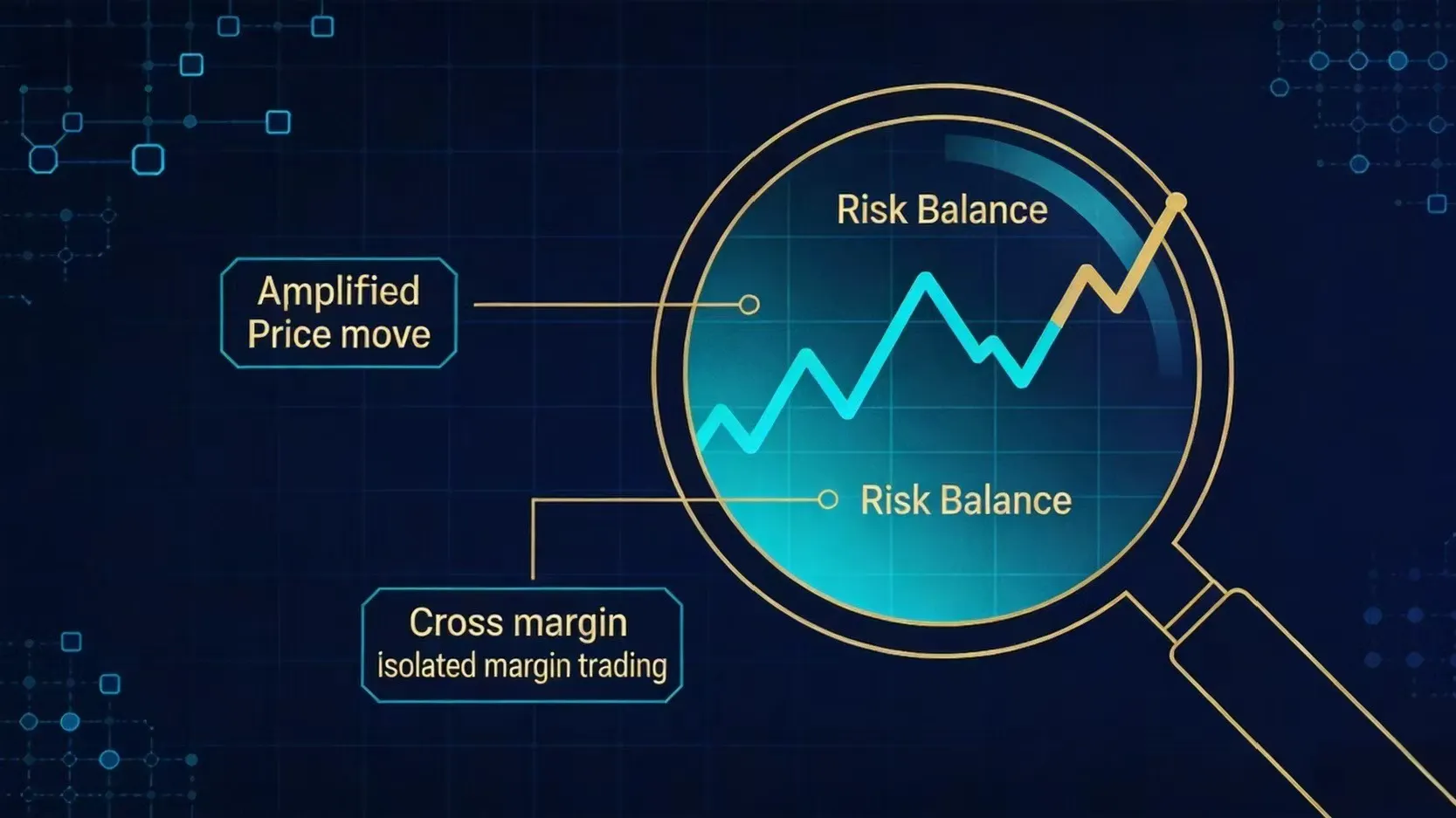
Binance Margin Trading Guide: Differences Between Cross and Isolated Margin Modes and Illustrated Borrowing Instructions
Short on funds but expect a particular cryptocurrency to surge? Besides the commonly used futures trading, you can also use “Binance Margin” to borrow funds and purchase spot assets, amplifying your investment returns. This Binance margin trading guide explains the principles of margin trading for beginners and uses illustrations to walk you through the complete borrowing and repayment process, as well as how to control risk and avoid unnecessary losses. Whether you are an investor from Taiwan or Malaysia, mastering this tool can make your capital allocation more flexible.
What Is Binance Margin Trading?
Many beginners who have just entered the cryptocurrency market often confuse spot trading, margin trading, and futures trading. To understand how Binance Margin works, you must first clarify its underlying logic.
The Fundamental Principle of Borrowing Money From an Exchange to Buy Cryptocurrency
Simply put, margin trading means “borrowing money from an exchange to invest”. If you only have 1,000 USDT in your account but want to purchase 3,000 USDT worth of Bitcoin, you can use the 1,000 USDT as “margin” pledged to the exchange, then borrow an additional 2,000 USDT to complete the trade.
On the Binance platform, you can open a margin account once your account has completed the relevant identity verification (If you have not yet completed it, please first refer to the Complete Guide to Binance Official Website Registration, Account Opening, and Identity Verification). After earning a profit, you only need to repay the principal and a small amount of borrowing interest, while the remaining profit belongs entirely to you. Conversely, if the market moves against you, your losses will also be magnified proportionally. This is the double-edged sword effect of amplifying your principal.
Three Core Differences Between Spot Margin and Perpetual Futures
Many people ask: Since both involve leverage, what is the difference between spot margin and perpetual futures?
- Asset ownership: After purchasing through spot margin trading, you actually hold the spot cryptocurrency and can transfer it to another wallet. With perpetual futures, you are only trading a “price contract” and do not actually own the cryptocurrency.
- Interest calculation method: In a Binance margin account, borrowing generates “borrowing interest”, which is usually calculated hourly. Futures trading does not involve borrowing interest, but instead uses a “funding rate” to balance long and short positions.
- Maximum leverage: The maximum leverage for Binance spot margin is generally between 3x and 10x (depending on whether cross or isolated margin is used). Futures trading, however, can offer leverage of more than 100x.
Understanding the Two Types of Binance Margin Accounts
Before you begin trading, you must first understand the two core Binance Margin modes. This affects the security of your funds and the efficiency of margin utilization.
Cross Margin: Shared Margin and Leverage Limits
Under cross margin mode, all funds in the margin account can be used as shared margin. In other words, if you borrow funds to purchase both BTC and ETH, the two positions share the same risk.
Advantage: Funds can be used flexibly, and losses from one cryptocurrency can be covered by the balances of other cryptocurrencies in the account. This makes it less likely that a single cryptocurrency’s sharp fluctuations will cause immediate liquidation.
Disadvantage: Once the risk ratio of the overall account falls below the maintenance margin level, all assets in the account will be forcibly liquidated. On Binance, cross margin leverage is generally limited to 3x.
Isolated Margin: Independent Interest Calculation and Higher Leverage
Isolated margin mode creates a separate account for each trading pair. For example, BTC/USDT has its own isolated margin account, while ETH/USDT has a separate account.
Advantage: Risk is completely isolated. Even if the BTC/USDT position is forcibly liquidated, it will not affect the margin in ETH/USDT. Isolated margin also supports higher leverage, up to 10x.
Disadvantage: Margin must be transferred separately for each trading pair, making fund allocation more complicated. If margin is not added to a specific trading pair in time, forced liquidation may be triggered. Beginners concerned about liquidation risk can first read 【Liquidation Guide】5 Ways to Respond.
Further Reading (Highly Recommended)
Binance Futures Guide: From Account Opening to Practical Trading, Master Leveraged Futures Strategies and Risk Control
【Liquidation Guide】How Is the Liquidation Price Calculated? What Are the Consequences of Forced Liquidation? 5 Ways to Respond
Four Steps for Binance Margin Trading: From Borrowing to Repayment (Differentiating Insight)
After understanding the basic concepts, the next step is practical execution. Follow the four steps below to master the core operations in this Binance margin account guide.
Step 1: Transfer Margin Into the Margin Account
Binance spot accounts and margin accounts are separate. You must first transfer funds (such as USDT), from your “spot account” to your “margin account”.
Open the “Funds” page in the Binance App or website, select “Transfer”, and transfer the cryptocurrency you want to use as margin into the cross margin account or a specific isolated margin account. This transfer is free of charge and can be completed at any time.
Step 2: Place Orders Using “Auto Borrow” Mode to Avoid Manual Borrowing
In the past, investors had to manually select “Borrow” before placing a trade. The Binance system is now highly automated. You only need to select “Auto Borrow” in the margin trading interface, and the system will automatically calculate and borrow any additional funds required based on the order amount you enter.
Example: Your account has 1,000 USDT, and you want to purchase 3,000 USDT worth of Bitcoin. When you submit a buy order using “Auto Borrow”, the system will instantly borrow 2,000 USDT for you and complete the trade. Please note that interest begins accruing as soon as the borrowing is completed.
Step 3: How to Monitor the Margin Level at Any Time
The most important indicator in margin trading risk management is the “Margin Level”. Margin Level = Total Account Assets / Total Liabilities (including borrowed principal and interest).
- Safe level: Margin Level above 1.5.
- Margin Call: When the Margin Level falls to 1.3, Binance will send a notification reminding you to add margin. To protect your account, it is recommended that you enable the Binance Anti-Phishing Code to avoid missing important official risk alert emails.
- Liquidation: If the Margin Level falls to 1.1, the system will automatically take over the position and sell it at market price to repay your borrowing.
Step 4: Closing Positions and Using the Correct “Repayment” Process (to Avoid Ongoing Interest Charges)
After taking profit and selling the purchased cryptocurrency back into USDT, the borrowing does not disappear automatically! You must complete the “repayment” process.
Select “Auto Repay” in the trading interface, and the funds received from selling the asset will first be used to repay the borrowed principal and interest. If you forget this step, borrowing interest will continue to be charged hourly and may significantly erode your profits over time. Ensuring that repayment is completed is one of the most important steps in Binance margin trading.
Binance Margin Trading Guide Frequently Asked Questions (FAQ)
How Is Interest on Binance Margin Borrowing Calculated, and How Often Is It Charged?
Interest on Binance margin borrowing is calculated “hourly”. Once you successfully borrow funds, one hour of interest is charged immediately, followed by another charge at the end of each full hour. The benchmark interest rate varies by cryptocurrency and fluctuates according to market supply and demand for funds. You can check the latest rates at any time on Binance’s “Borrowing Interest Rates” page.
What Happens if I Forget to Repay?
If you close your position without manually repaying the loan or using the “Auto Repay” function, the system will determine that you are still borrowing funds. This means interest will continue to accumulate hourly and be deducted from your account balance, potentially resulting in insufficient margin and forced liquidation. Therefore, after completing your trade, be sure to confirm that your liabilities have been reduced to zero.
Are Leveraged Tokens (Such as BTCUP/BTCDOWN), the Same as Margin Trading?
No. Leveraged tokens are spot investment instruments with built-in leverage. They do not require you to pledge margin and do not carry a direct liquidation risk, but they include internal management fees and rebalancing mechanisms, making them suitable for short-term swing trading. Margin trading, however, involves actual borrowing and requires strict management of margin and the Margin Level.
How Can I Avoid Margin Liquidation During Extreme Market Conditions?
During periods of severe market volatility, the most effective approach is to set strict stop-loss orders or transfer additional funds into the margin account in advance to raise the Margin Level. Never blindly hold losing positions during a downturn. Maintaining rational risk management awareness is essential for long-term survival.
Conclusion
Through the guidance provided in this Binance margin trading guide, you should now understand the differences between cross and isolated margin modes and have mastered the core operational steps for automatic borrowing and manual repayment. Margin trading can indeed provide investors with greater flexibility in allocating funds, whether adding to bullish positions or short selling during bearish conditions. However, remember that borrowing incurs hourly interest charges. After completing a trade, be sure to confirm that the “repayment” process has been completed to prevent interest from eroding your profits. Assess your own risk tolerance before entering the market and closely monitor the Margin Level at all times to achieve stable profits in a rapidly changing market.