Japan Investment Risks: 5 Hidden Risks Beyond the Yen

Updated: 2026/06/23  |  CashbackIsland

japan-investment-risks

Essential Reading on Japan Investment Risks: Five Potential Risks You May Not Know Besides Yen Depreciation

Driven by the historic depreciation of the yen, global capital is flowing into Japan with unprecedented enthusiasm. Both the stock market and the real estate market are showing a thriving picture. The market is filled with various optimistic voices, as if one could make money even by buying with eyes closed. However, any mature investor understands that when the market becomes one-sidedly optimistic, it is often the moment when risks are quietly accumulating. This article will play the role of “devil’s advocate”, providing an in-depth analysis of several major potential challenges that must be faced when chasing Japan investment risks at present, especially the potential risk of a yen rebound and the structural problems behind Japan’s property market that the market has collectively ignored. It will help you stay clear-headed during this market frenzy and make more prudent decisions. 


Risk One: Exchange Rate Risk From a Yen Rebound (Black Swan)

The biggest appeal of investing in Japan today comes from the “cheap yen”, but this also means the biggest risk comes from the same source. The foreign exchange market changes rapidly. Once the core factors driving yen depreciation reverse, they may form a perfect storm and erode the value of your assets.


If the US Cuts Rates or Japan Turns Hawkish, the Yen May Appreciate Rapidly

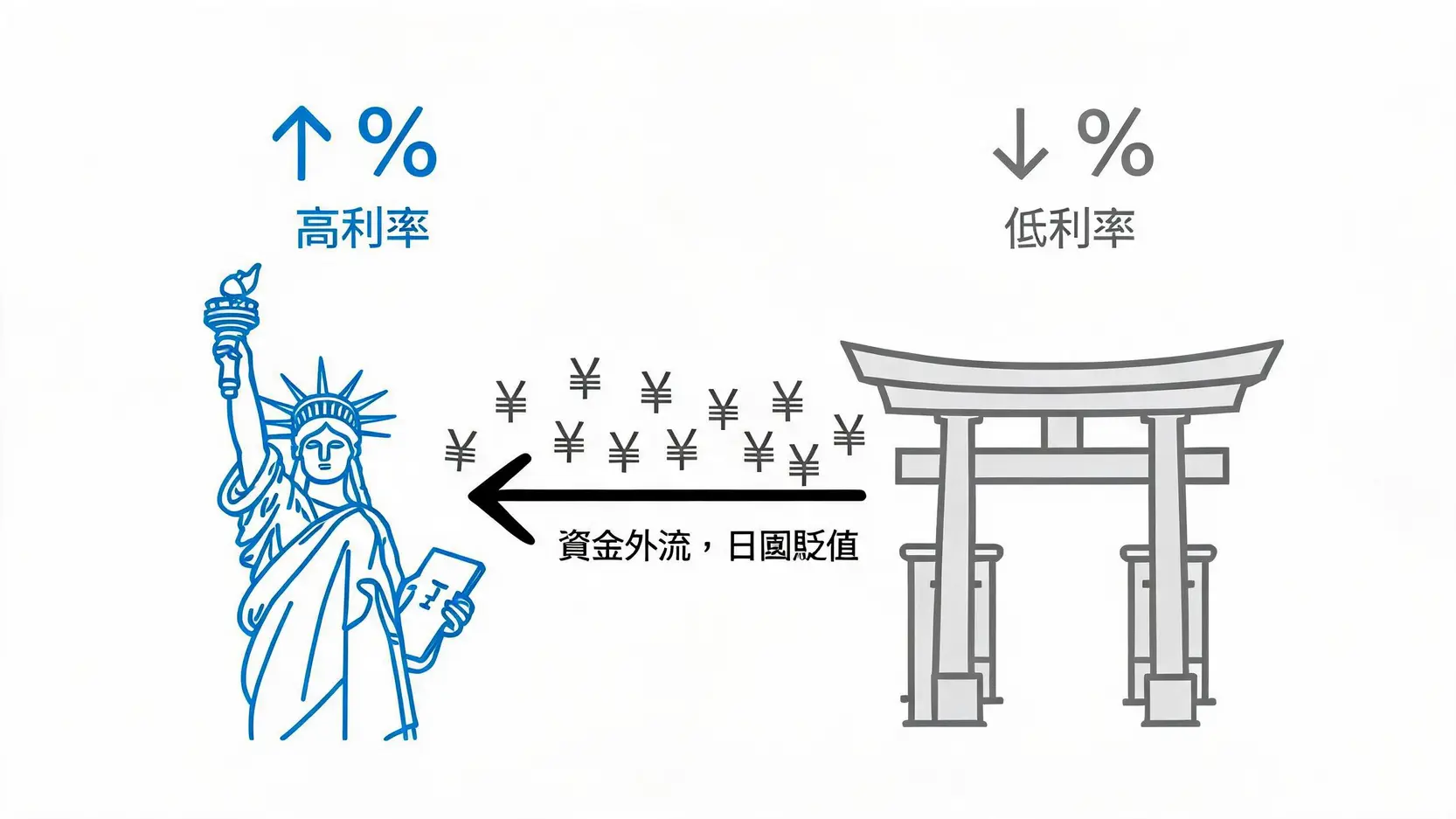
For a long time, the huge interest rate differential between the US and Japan has been the core driver of yen depreciation. In pursuit of higher returns, capital has flowed from Japan to the US, causing the yen to be heavily sold. However, this trend is not eternal. According to MacroMicro’s analysis, the market generally expects the US Federal Reserve (Fed) to begin a rate-cutting cycle in the second half of 2026, while the Bank of Japan (BOJ) is slowly moving toward monetary policy normalization. Once the US begins cutting rates, and Japan even merely hints at a possible future rate hike, the interest rate differential between the two countries will quickly narrow. This will completely reverse investor expectations and trigger a retaliatory rebound in the yen. This shift may happen very quickly, and for overseas investors holding large amounts of yen assets, it is undoubtedly a lurking “black swan”.

示意圖解釋美日利差如何導致資金從日本流出,造成日圓貶值。

The US-Japan interest rate differential is the core driver of the yen exchange rate.


Scenario Analysis: When Economic Headwinds Arrive, an Exchange Rate Rebound May Erode Property Value

Many people believe that yen appreciation is good for overseas investors because the value of assets denominated in US dollars or Taiwan dollars will rise accordingly. In theory, this is correct, but reality is far more complex. Imagine that if the yen appreciates rapidly because the Bank of Japan is forced to raise rates sharply and repeatedly to fight severe domestic inflation, this will directly affect Japan’s mortgage rates and corporate borrowing costs, potentially cooling the Japanese property market and even causing prices to fall. In this scenario, you may face the awkward situation of “gaining from exchange rates but losing from price differences”. In other words, although your yen assets may be worth more when converted back into your home currency, the yen price of the asset itself may have fallen. After the two effects offset each other, the actual profit may be far below expectations, or even turn from profit into loss. 

Response Strategy: How to Use Financial Tools for Risk Hedging

Facing the risk of a yen rebound, mature investors will not simply wait passively. Instead, they will actively adopt hedging strategies. Common tools include:

  • Forward Foreign Exchange Contracts: Agree with a bank to buy or sell yen at a fixed exchange rate at a certain point in the future. This can lock in your future currency exchange cost or return and is suitable for investors with large capital inflow or outflow needs.
  • Currency ETFs: ETFs that move inversely with the yen exchange rate can be traded in the stock market. For example, when you expect the yen to appreciate, you can buy an ETF that goes long on the yen (such as FXY). Conversely, you can use an ETF that shorts the yen for hedging.
  • Diversified Currency Allocation: If your investment in Japan (such as rental income), generates continuous cash flow, you may consider converting part of the funds into US dollars or other strong currencies to avoid exposing all assets to a single currency.


Further Reading (Highly Recommended)

Complete Guide to the Yen Exchange Rate: Understand Real-Time Quotes, Trend Forecasts, and the Best Currency Exchange Timing in One Place

Is Bank of Japan Intervention in the Yen Useful? Understand the Impact of Intervention and the 2026 Yen Outlook in One Article


Risk Two: Irreversible Demographic Challenges

Beyond short-term exchange rate fluctuations, investing in Japanese real estate also requires facing a far deeper structural issue, an irreversible population decline. This is a long-term and highly certain factor among Japan investment risks

Low Birthrate and Aging Population: Long-Term Impact on Real Estate Demand

Japan is one of the countries with the most severe low birthrate and aging population problems in the world. According to forecasts by Japan’s National Institute of Population and Social Security Research, Japan’s total population will fall below 100 million by 2050. Population is the foundation supporting real estate demand. When a country’s population remains in long-term negative growth, overall housing demand will inevitably decline. This means that, apart from a few core metropolitan areas, properties in most regions will face pressure from shrinking demand, creating long-term challenges for both property prices and rental returns.


The Potential Threat of “Vacant House Tax”: The Liquidity Trap of Non-Metropolitan Properties

The direct consequence of population decline is the increasingly serious issue of “vacant houses” (akiya). Japan’s nationwide vacant house rate has already exceeded 13%. To address this issue, many local governments have begun studying or even imposing a “vacant house tax” to penalize owners of idle properties. For overseas investors, if you unfortunately buy a property in a non-core area, you may not only be unable to rent it out or sell it in the future, but also have to pay additional vacant house tax and high maintenance costs every year, becoming completely trapped in a liquidity trap.


Response Strategy: Why Investment Should Be Highly Concentrated in Core Metropolitan Areas Such as Tokyo

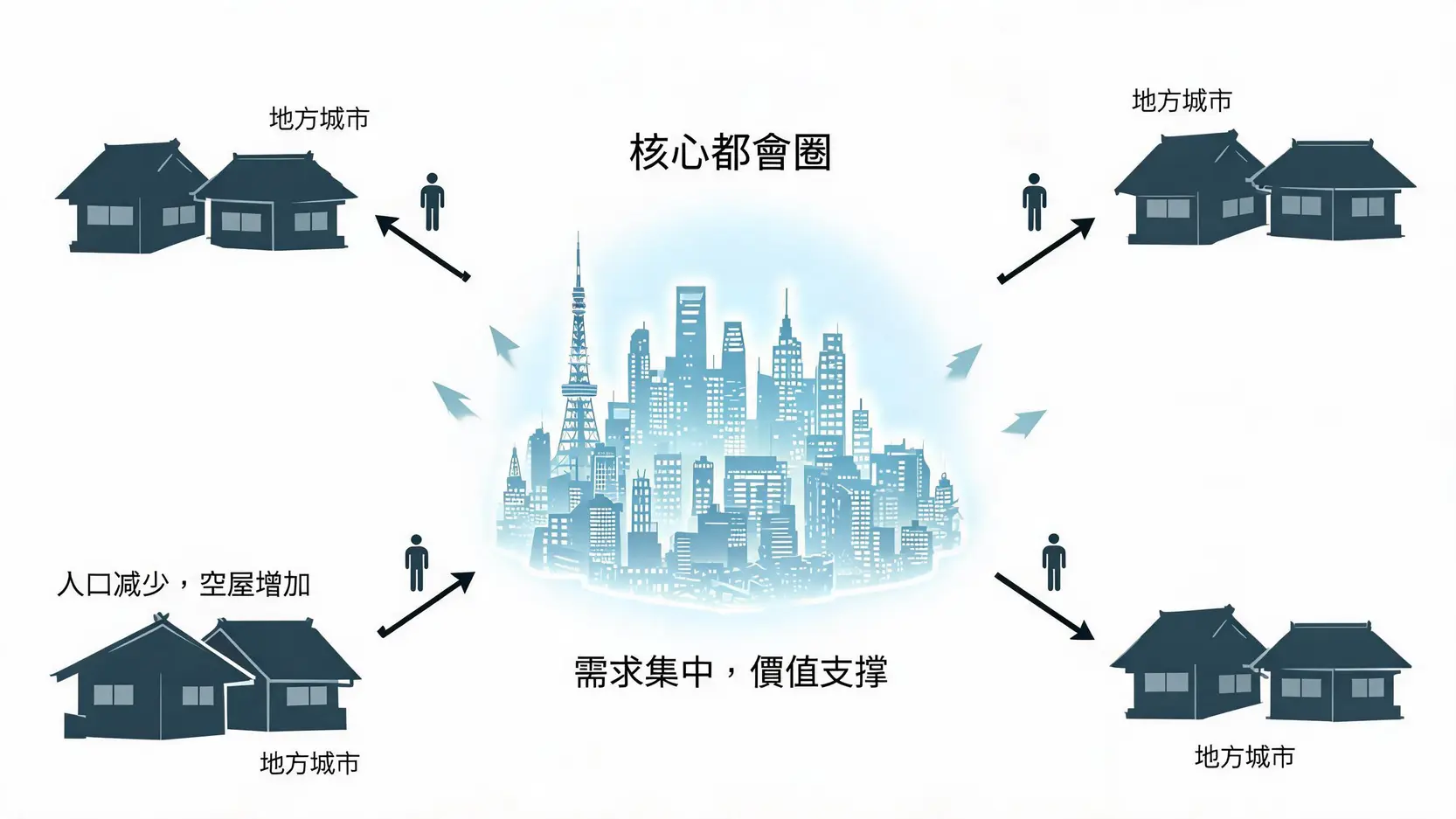
Facing demographic challenges, the only solution is “Location, Location, Location”. Capital and population will continue to concentrate in only a few core metropolitan areas with strong economic vitality and job opportunities. Therefore, when overseas investors allocate funds to Japan’s property market, they should focus heavily on the following areas:

示意圖展示日本人口從地方城市向東京等核心都會圈集中的趨勢。

Population flow trends determine the “K-shaped” future of Japanese real estate.


  • Tokyo’s Core Five Wards: Chiyoda, Chuo, Minato, Shinjuku, and Shibuya. These areas are Japan’s political, economic, and cultural centers, with the most stable high-end rental demand and asset value preservation.
  • Areas Along the Yamanote Line: As Tokyo’s major transportation artery, areas surrounding stations along the Yamanote Line have strong appeal due to their convenience, making them a solid guarantee in the rental market.
  • Core Areas of Second-Tier Cities Such as Osaka and Fukuoka: Although they are smaller in scale than Tokyo, Osaka’s commercial vitality and Fukuoka’s population growth potential also give their core commercial areas investment value, but selection must be more cautious.

Avoiding suburbs, rural areas, and third and fourth tier cities with continuous population outflow is the golden rule for avoiding Japan’s demographic risk.


Risk Three: Hidden Costs and Policy Risks Ignored by the Market

Many first-time investors in Japanese real estate often only see the book price and expected rental returns, while seriously underestimating the various hidden costs and policy variables involved in holding and eventually selling the property. These are where the real devils hide.


High Holding Costs: Repair Reserve Fund, Management Fees, and Fixed Asset Tax

In Japan, the cost of holding a property is far higher than imagined. In addition to the book price, you must also pay the following each year:

  • Repair Reserve Fund (shuzen tsumitatekin): Japanese apartment buildings usually have a large-scale maintenance plan every 10 to 15 years. This cost is shared by all owners and can be substantial.
  • Management Fees: Used for daily cleaning, security, elevator maintenance, and other services. This is a fixed monthly expense.
  • Fixed Asset Tax and City Planning Tax: These are property taxes levied annually by local governments, with a tax rate of about 1.7% of the property’s assessed value. Whether your property is rented out or not, this tax must be paid. According to explanations by Japanese tax experts, foreigners and local residents are subject to the same tax rate standards.

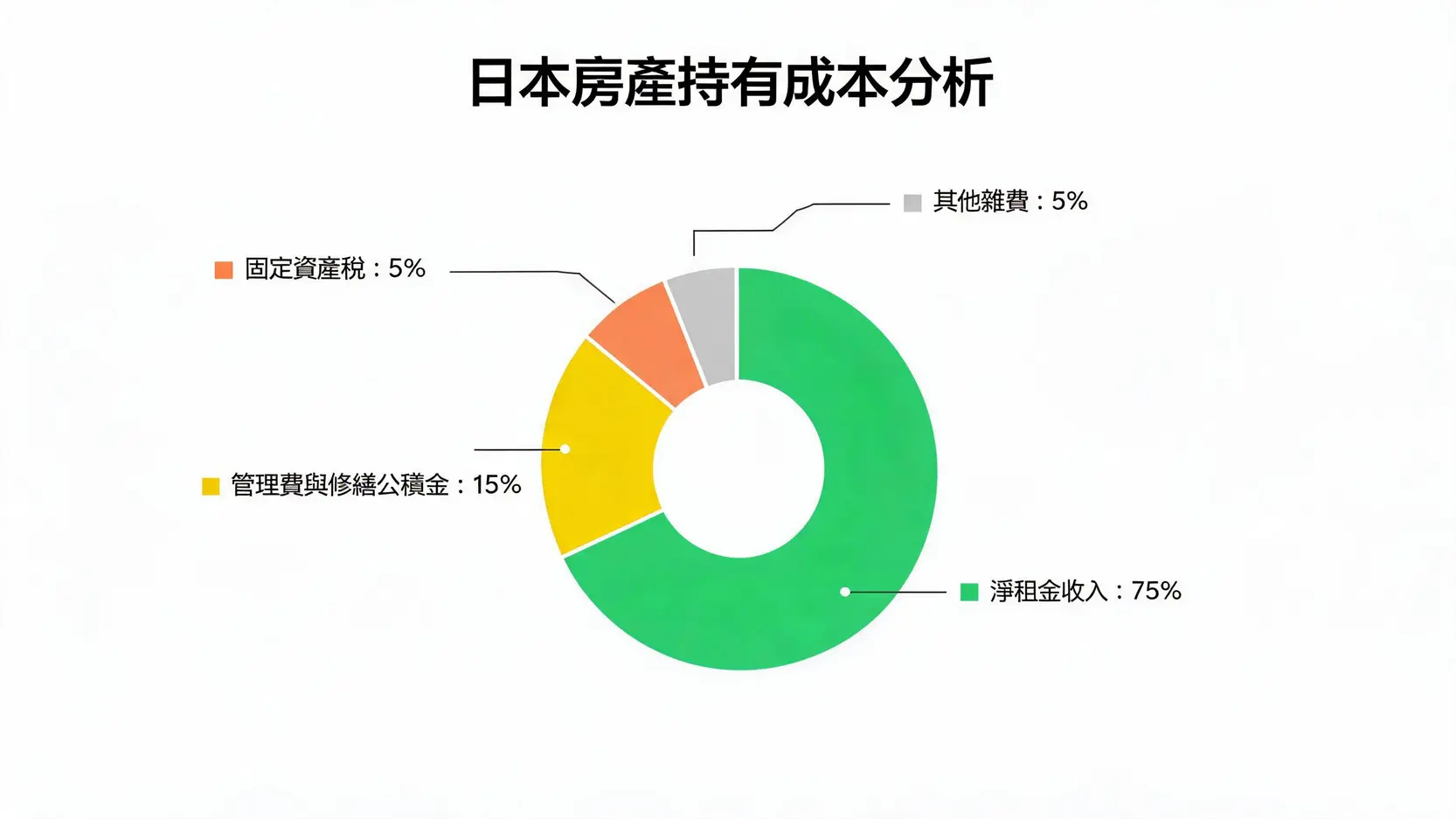
Altogether, these expenses may consume 15% to 25% of your rental income each year. If your rental yield is not high to begin with, the actual net return after deducting these costs may be quite thin.

圓環圖顯示日本房產的持有成本,包括管理費、修繕公積金和稅費等佔租金收入的比例。

The Invisible Killer of Rental Yield: Holding Costs That Cannot Be Ignored


Policy Uncertainty: The Impact of Inheritance Tax and Gift Tax on Foreigners

For foreign investors planning to hold properties long term and pass them on to the next generation, Japan’s high inheritance tax is a major risk that must be faced. Japan’s inheritance tax adopts a progressive tax rate, with the highest rate reaching 55%. Although there is a basic exemption, high-value properties may face a heavy tax burden upon inheritance. Tax determinations for foreigners are relatively complex. It is strongly recommended to consult a professional tax advisor before purchasing property and make proper tax planning.


Natural Disaster Risk: Assessing the Substantial Impact of Earthquakes and Tsunamis on Real Estate Value

Japan is a country with frequent natural disasters, and earthquakes, tsunamis, and typhoons are all potential threats. Although Japan’s building regulations have extremely high requirements for earthquake resistance, natural disasters may still cause substantial damage to properties. Therefore, when investing in Japanese real estate, two points are crucial:

  1. Be sure to purchase sufficient fire and earthquake insurance: This cost cannot be saved, as it is the basic line of defense for protecting your asset.
  2. Conduct a detailed regional disaster risk assessment: Check the “hazard map” (ハザードマップ) of the property’s location to understand whether the area has risks of flooding, landslides, or tsunamis, and avoid high-risk areas.


Further Reading (Highly Recommended)

Review of Yen Leverage Liquidation Cases: Understanding Carry Trade Risks Through the Tragedy of Mrs. Watanabe

Complete Analysis of Taiwan Dollar Trends: Understand the Five Major Reasons for Appreciation and Currency Exchange Timing


Frequently Asked Questions (FAQ)

Q: What is the biggest risk of investing in Japanese real estate?

A: Overall, the biggest risk comes from the double pressure of “exchange rates” and “demographic structure”. In the short to medium term, the biggest variable is the risk of a yen rebound. Once the US-Japan interest rate differential narrows, it may trigger a sharp rise in the yen. Although the book value of assets may increase, the economic turbulence behind it (such as Japan raising rates to fight inflation) may affect property prices themselves. In the long term, continued population decline is an irreversible trend and will create fundamental pressure on property demand and value in non-core areas.

Q: What if I buy property now and the yen appreciates in the future?

A: Yen appreciation is essentially positive for investors who already hold yen assets, because your assets will appreciate when converted back into your home currency. The real risk lies in the “reason for the appreciation”. If it is due to a strong recovery in Japan’s economy, that would be the best scenario of “gaining from both exchange rates and price differences”. But if the appreciation is passive (such as during a global economic crisis when the yen plays its safe-haven role) or if Japan is forced to raise rates to suppress imported inflation, then you need to be alert to the impact on the real economy and the real estate market. You can use tools such as forward foreign exchange contracts to partially lock in profits, or maintain healthy cash flow to cope with market volatility.

Q: Will Japan’s low birthrate really cause property prices to fall?

A: This question cannot be generalized. Instead, it will show an extreme “K-shaped divergence”. For rural areas and small cities with continuous population outflows, falling property prices or even a collapse are already happening. However, for places such as Tokyo’s core areas, which continue to attract domestic and international elites, companies, and capital inflows, real estate prices remain relatively resilient and may even have upside potential due to scarcity and strong demand support. Therefore, the impact of the low birthrate is structural. The key lies in which market you choose.

Q: How high are the tax costs for foreigners buying property in Japan?

A: Taxes are a hidden cost that must be carefully calculated. At the time of purchase, you need to pay one-off fees such as “Real Estate Acquisition Tax” and “Stamp Tax”. During the holding period, you need to pay “Fixed Asset Tax” and “City Planning Tax” every year, totaling about 1.7% of the property’s assessed value. If there is rental income, you must also declare “income tax”. If you sell the property in the future and make a profit, you must pay “capital gains tax”. In the event of death, you may face an “inheritance tax” of up to 55%. It is recommended that you hire a professional certified tax accountant for comprehensive planning and not take this lightly.


Conclusion

Investing in Japan is undoubtedly one of the important options in global asset allocation today, and the transparency and stability of its market remain quite attractive. However, opportunities are always accompanied by risks of the same magnitude. Fully understanding the uncertainty of yen rebound risk, the long-term challenges of demographic structure, and the various hidden holding costs and policy risks overlooked by the market is a necessary prerequisite for successful investing. A mature investor must not only see the upside potential brought by yen depreciation, but also make full preparations for potential risks, assess rationally, select locations precisely, and make good use of financial tools to manage risks. Only then can they move steadily and go further in this Japanese investment boom.

If you liked this article, please share it!

Related Articles

  • Gold Price Outlook 2026: Will the Bull Market Continue?
    Will the Gold Price Bull Market Continue? 2026 XAUUSD Trend Analysis, Experts Reveal Three Key Drivers Recently, gold prices have repeatedly hit new highs, and the market is actively debating whether gold has entered a new historic gold price bull market. Many investors are both excited and concerned, wondering how...
    2026 年 6 月 23 日
  • XAUUSD Trading Guide: Trends & Beginner Strategies
    Ultimate Guide to Trading XAUUSD Trends: From Candlestick Teaching to Practical Strategies for Stable Profits for Beginners XAUUSD (spot gold against the US dollar), as one of the world’s most popular trading instruments, offers abundant profit opportunities through its sharp price fluctuations, but also comes with considerable risk. Many beginners...
    2026 年 6 月 23 日
  • Gold Investment Guide: Compare 4 Gold Investment Options
    How Does Gold Preserve Value? Understand the Pros and Cons of 4 Major Gold Investment Channels in One Article (Physical Gold/ETFs/Futures/Stocks) Faced with global inflationary pressure and market uncertainty, more and more people are turning their attention to gold, using it as a core tool for gold value preservation and...
    2026 年 6 月 23 日
返回顶部