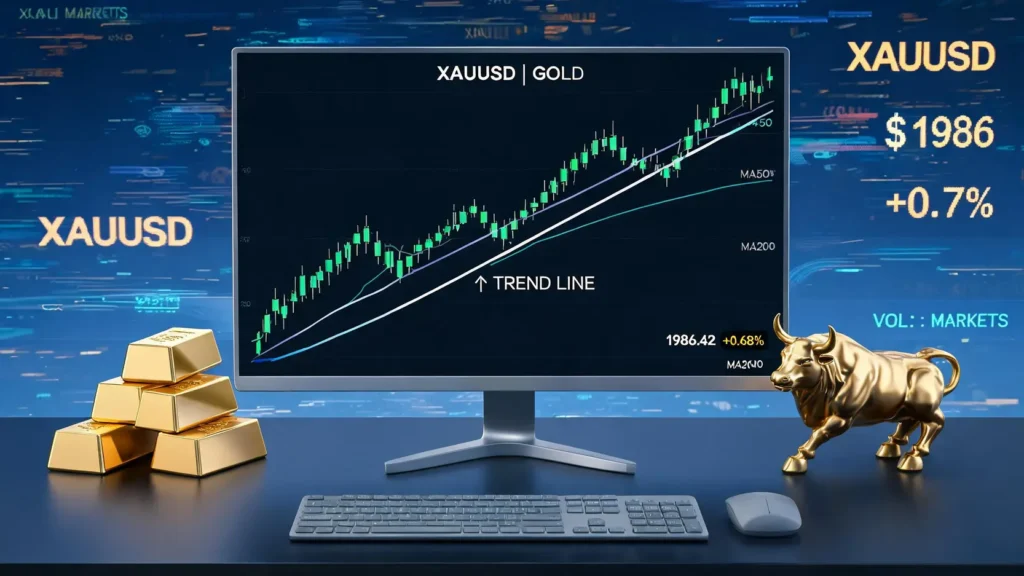
Gold Price Outlook 2026: Will the Bull Market Continue?

Will the Gold Price Bull Market Continue? 2026 XAUUSD Trend Analysis, Experts Reveal Three Key Drivers
Recently, gold prices have repeatedly hit new highs, and the market is actively debating whether gold has entered a new historic gold price bull market. Many investors are both excited and concerned, wondering how long this rally can last. Is it too late to enter the market now? Discussions around XAUUSD trends continue nonstop. This article provides an in-depth analysis of the core drivers behind this round of the gold price bull market, and combines the latest gold future trend forecasts with technical analysis to help you seize opportunities and avoid potential risks in this golden feast.
The Gold Bull Market Under the Global Macroeconomic Landscape: Three Core Drivers
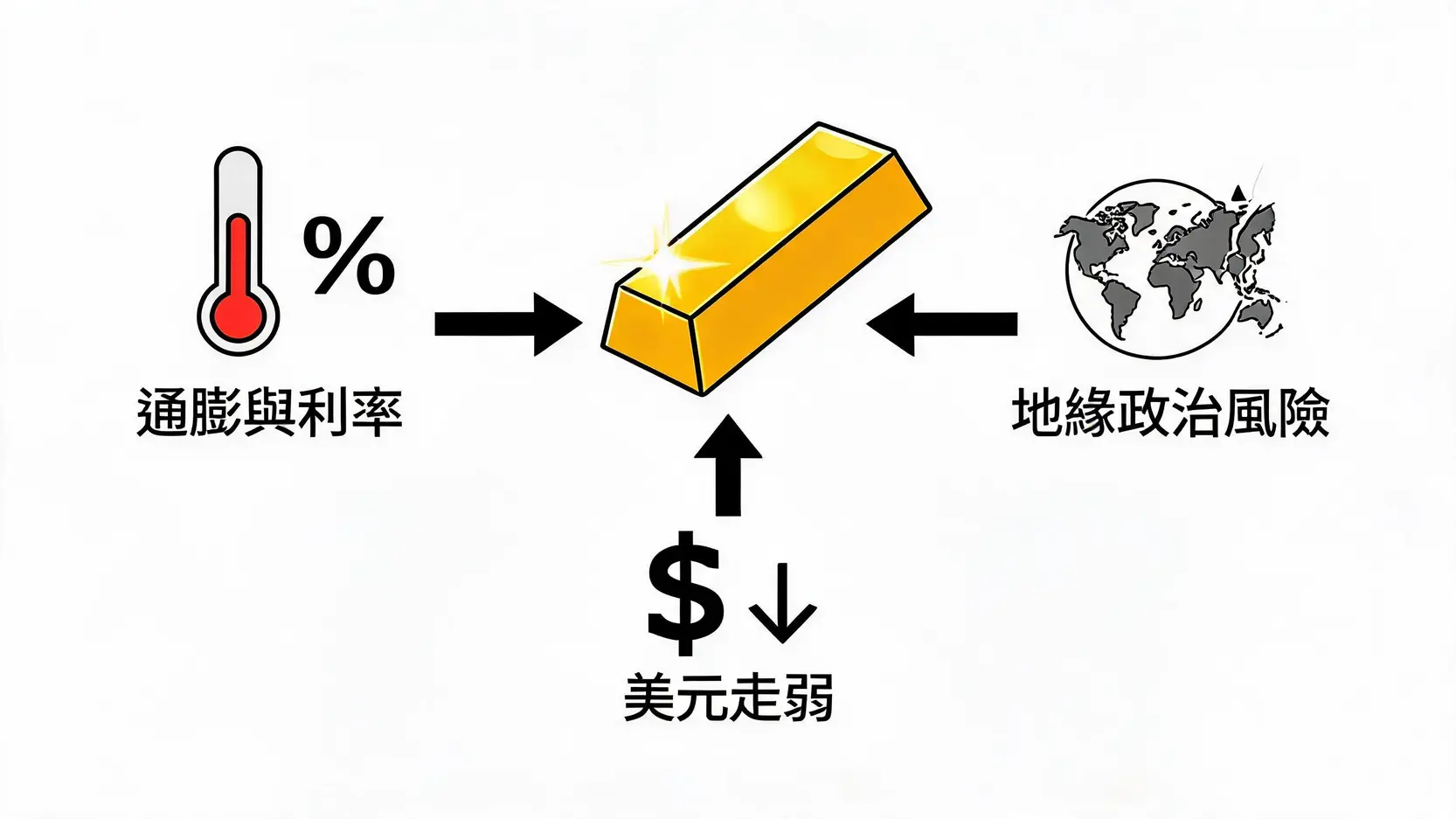
To understand the staying power of this gold bull market, we cannot look only at candlestick charts. We must approach it from the broader global macroeconomic perspective. The current rise in gold prices is not accidental, but the result of several powerful forces working together. These three core drivers will be key to assessing future XAUUSD trends.

Three Core Drivers Jointly Push Gold Prices Higher
The Impact of Inflation Expectations and Central Bank Interest Rate Policies
After the intense inflation of previous years, although inflation rates in major global economies have eased, market concerns about “high inflation” have not completely disappeared. Price levels in many countries remain above the 2% target set by central banks, which has significantly increased gold’s appeal as a traditional inflation-hedging asset.
- Real Interest Rate Environment: The current key lies in “real interest rates” (nominal interest rates minus inflation rates). Even if central banks in various countries, especially the US Federal Reserve, keep interest rates at high levels, as long as inflation expectations remain stubborn, real interest rates may stay low or even negative. This lowers the opportunity cost of holding non-yielding assets (such as gold) and capital will naturally flow into the gold market in search of value preservation.
- Policy Uncertainty: In 2026, the market continues to focus on when major central banks will begin a rate-cut cycle. Any dovish signal from the Federal Reserve may be interpreted as concern over the economic outlook or greater tolerance for inflation, which would be highly bullish for gold prices. Conversely, if rate cuts are delayed due to a resurgence in inflation, gold prices may face short-term pressure. This uncertainty caused by policy swings is itself one of the factors supporting gold prices in a high-level consolidation range.
How Geopolitical Risks Drive Safe-Haven Demand
The old investment wisdom of “buy gold in troubled times” still applies in 2026. Global geopolitical tensions are another major engine driving gold prices higher.
From ongoing regional conflicts to trade and technology frictions between major powers, these unstable factors act like catalysts, continuously strengthening gold’s safe-haven attributes. When investors’ confidence in traditional financial assets (such as stocks and bonds) is shaken, they seek a “safe haven” that can preserve value even under extreme conditions. According to reports from the World Gold Council, central banks around the world have continued to significantly increase their gold reserves in recent years. Behind this is not only the consideration of diversifying foreign exchange reserve risks, but also a reflection of deep distrust in the current international political and economic landscape. The collective actions of central banks have undoubtedly provided solid bottom support for gold prices.
The Negative Correlation Between a Weaker US Dollar Index and Gold Prices
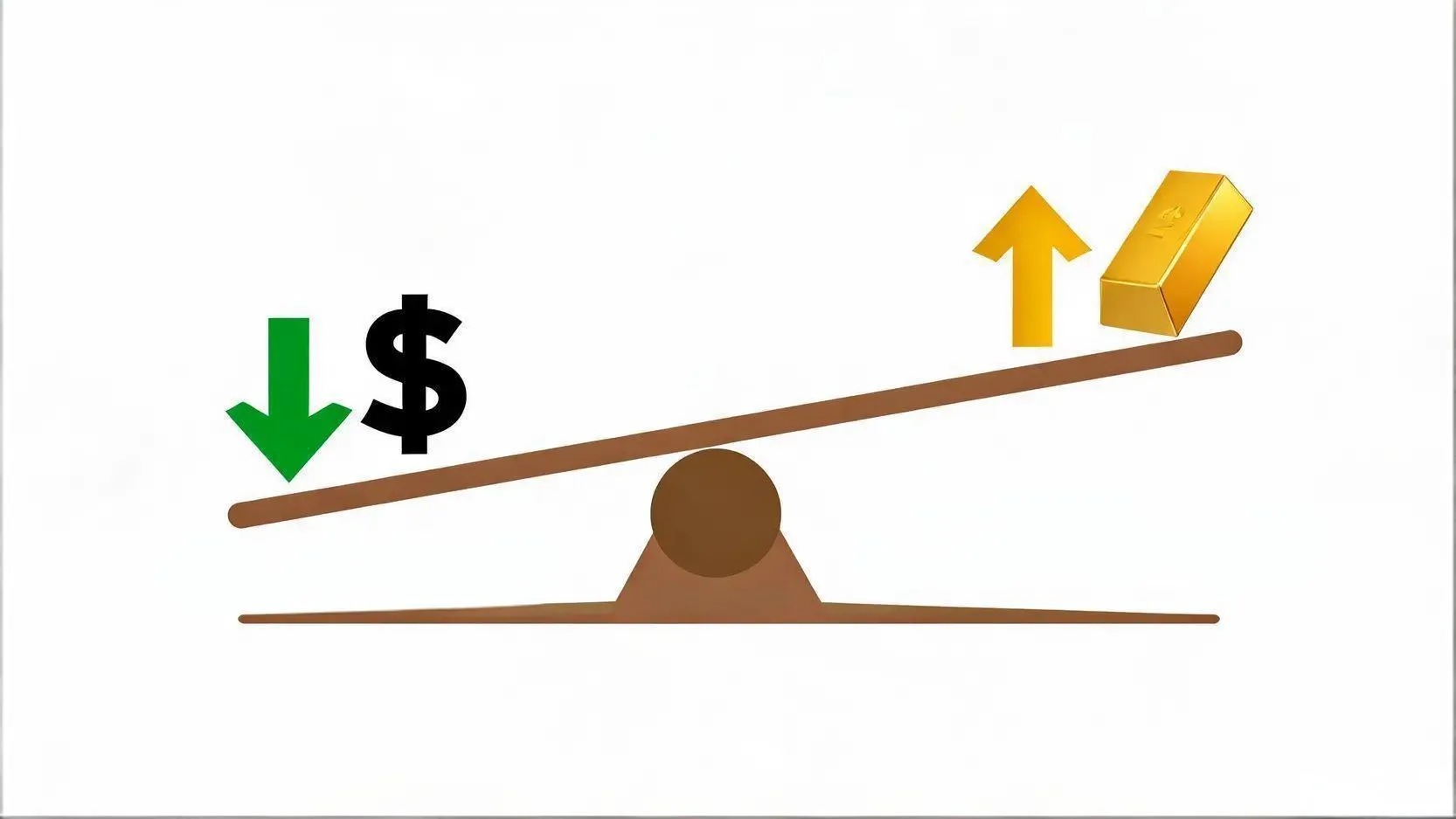
International gold prices are denominated in US dollars, so the strength of the US dollar directly affects gold prices. Generally speaking, the US Dollar Index (DXY) has a significant negative correlation with XAUUSD trends.

The Seesaw Effect Between the US Dollar and Gold
- Pricing Effect: When the US dollar weakens, the cost of buying gold becomes cheaper for investors holding other currencies. This stimulates global gold demand, thereby pushing gold prices higher.
- Substitution for Reserve Status: The continued expansion of the US fiscal deficit and national debt has, over the long term, shaken the absolute status of the US dollar as the world’s leading reserve currency. More countries and institutional investors are beginning to seek alternatives to the US dollar to diversify risk, and gold is the most favored option. Therefore, the long-term structural weakness of the US dollar is an important foundation supporting the gold bull market.
Further Reading (Strongly Recommended)
XAUUSD Technical Overview
After understanding the strong support from macro fundamentals, we need to use XAUUSD technical analysis to identify specific entry and exit timing. For traders, price action and technical indicators are the most direct reflections of market sentiment.
Key Support and Resistance Level Analysis
Prices do not rise in a straight line. Instead, they spiral upward through rallies, consolidation, and pullbacks. Identifying key support and resistance levels is the foundation for developing a trading strategy.
As of Q2 2026, the XAUUSD trend shows the following important price ranges:
- Major resistance levels: $2,800 and the $3,000 psychological level. These round-number levels are not only technical resistance, but also important anchors for market participants’ psychological expectations. Breaking through these levels often requires the stimulus of major positive news.
- Key support levels: $2,550 and $2,400. These levels are previous highs or dense trading zones. When prices pull back to these areas, they usually attract new buying interest and form effective support. If key support is broken, traders should be alert to the possibility of a short-term trend reversal.
Viewing Bullish and Bearish Trends Through Moving Averages and MACD Indicators
Technical indicators can help us judge the balance of bullish and bearish forces in the market more objectively.
- Moving Average: Currently, both the daily and weekly charts of XAUUSD show a typical “bullish alignment”, meaning that short-term moving averages, (such as the 20MA) are above long-term moving averages (such as the 60MA). This indicates that the market is in a strong uptrend. As long as the price remains above the long-term moving average, the bull market structure has not been broken.
- MACD indicator: If the fast and slow MACD lines (DIF and DEA) continue to run above the zero line and form a “golden cross” (with the fast line crossing above the slow line from below), this is a clear bullish signal. Investors should watch for signs of “bearish divergence” (where the price reaches a new high but the MACD indicator does not). This may be a warning sign that upward momentum is weakening.
Historical Backtesting: Typical Price Action Patterns in Bull Markets
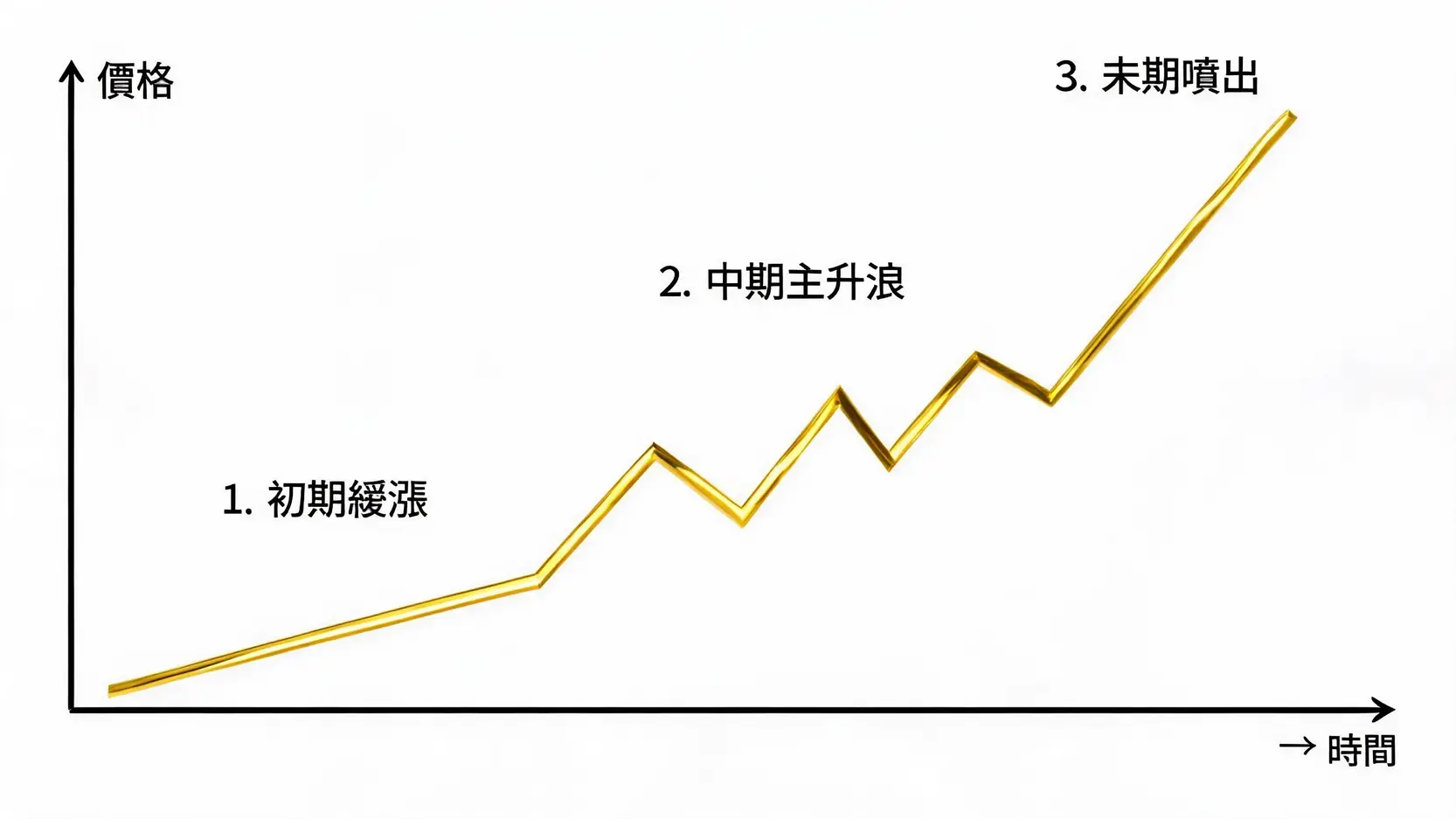
Looking back at several major gold bull markets in the past (such as the 1970s and 2008-2011), some common patterns can be observed:
- Slow rise in the early stage: The early stage of a bull market usually involves a slow climb, with the market remaining skeptical.
- Main rally in the middle stage: As fundamental positive factors develop, prices begin to rise faster, accompanied by several pullbacks. However, the pullbacks usually do not exceed 50% of the previous rally.
- Final surge: When market sentiment reaches its most euphoric point, prices may rise almost vertically, with trading volume expanding sharply. This is often a signal that the bull market is nearing its end.

The Typical Three-Stage Pattern of Gold Bull Markets in History
The current XAUUSD trend is more like the middle-stage main rally. This means that although the long-term outlook remains positive, severe volatility and pullbacks are inevitable along the way. Investors need to maintain strong risk control awareness.
Institutional and Expert Views: Gold Price Outlook Forecast
In addition to conducting your own analysis, referring to the views of mainstream investment institutions and market experts can also help build a more comprehensive market perspective.
Summary of Target Prices from Mainstream Investment Banks
Based on the latest reports from multiple authoritative institutions, the market generally holds an optimistic view on gold prices from 2026 to 2027.
| Investment Bank | End-2026 Target Price (USD/oz) | Core View |
| Bank of America (Bank of America) | $3,000 | Continued central bank buying and expectations of Fed rate cuts |
| UBS Group (UBS) | $2,850 | Geopolitical risk premium and strong physical demand |
| Goldman Sachs (Goldman Sachs) | $2,900 | Strong demand from emerging markets, especially in Asia |
Note: The above data is compiled from market information and does not constitute investment advice. Actual target prices may be adjusted as market conditions change.
Market Sentiment Analysis: Interpreting Positioning Reports From Retail Investors and Institutions
Usually, when institutional investors (regarded as “smart money”), hold positions in the opposite direction from retail investors, it is an important reference signal. For example, in the Commitments of Traders report from the US Commodity Futures Trading Commission (CFTC), if large speculators’ net long positions in gold continue to increase while retail sentiment becomes overly optimistic, investors should instead be alert to the risk of a short-term pullback. Currently, institutional net long positions remain at a healthy level, indicating that large capital still has a positive outlook on the market.
Risk Warning: What Are the Potential Market Reversal Signals?
While benefiting from the gold bull market, it is crucial to stay clear-headed. The following signals may indicate a market reversal:
- Rapid cooling of global inflation: If inflation is effectively brought under control and the economy achieves a “soft landing”, central banks may accelerate the normalization of monetary policy, which would significantly weaken gold’s appeal.
- Unexpected sharp strengthening of the US dollar: If US economic data continues to exceed expectations, or if other major economies fall into recession, safe-haven capital may flow back into the US dollar, weighing on gold prices.
- Significant easing of geopolitical tensions: A peaceful resolution of major conflicts would reduce market safe-haven sentiment.
- Serious technical warning signs: Examples include the price falling below key long-term support (such as the 200-day moving average) or the emergence of a sustained bearish divergence structure.
Extended Reading (Strongly Recommended)
Conclusion
In summary, the current gold bull market is a structural trend driven by multiple macro factors, including inflation concerns, geopolitical risks, and the long-term weakening of the US dollar. Although the XAUUSD trend may experience short-term volatility or pullbacks due to uncertainty over interest rate policy, its long-term structural support remains strong. For investors, this is both an opportunity and a challenge. Rather than guessing the top, it is better to closely monitor the Fed’s policy direction, the evolution of global risk events, and key technical price levels, and develop a flexible investment strategy with phased allocation. This is how investors can move steadily through this gold bull market and pursue stable gains.
Frequently Asked Questions About the Gold Bull Market and XAUUSD Trend
Q: With gold prices curently high, is it still possible to chase the rally?
A: This is the most common question in a gold bull market. Directly “chasing the rally” does carry relatively high risk, especially after prices have risen rapidly. A more prudent strategy is to use “phased buying” or “regular fixed investment”. You can wait for the price to pull back near a key support level (such as the previously mentioned $2,550) before entering, or invest a fixed amount every month regardless of price level (such as through passbook gold or gold ETFs). This can average out holding costs and avoid locking all funds at a single high point.
Q: What is the main factor affecting the XAUUSD trend?
A: Many factors affect the XAUUSD trend, but the core drivers can be summarized into three points: first, “real interest rates”, especially US real interest rates, which determine the opportunity cost of holding gold; second, “safe-haven sentiment”, triggered by geopolitical conflicts or financial market turbulence; third, the “US Dollar Index”, because gold is priced in US dollars, and the two usually have a negative correlation. These three factors form the basis for analyzing future gold price forecasts.
Q: How long will the gold bull market last?
A: Predicting the exact duration of a bull market is extremely difficult. Historically, gold bull markets have lasted as short as 2-3 years and as long as nearly a decade. Their duration depends on the persistence of the underlying driving factors. As long as the current global macro trends, such as high debt levels, deglobalization, and geopolitical tensions, do not fundamentally reverse, the foundation supporting gold’s long-term strength remains in place. Investors should focus on the trend itself rather than becoming fixated on predicting an exact time point.
Q: Besides directly buying and selling XAUUSD, what other ways are there to invest in gold?
A: Ordinary investors have many channels to participate in the gold market. In addition to trading XAUUSD through forex brokers (which falls under contracts for difference (CFDs)), common methods also include: 1. Physical gold (such as gold bars and gold coins); 2. Bank passbook gold; 3. Gold ETFs (such as GLD and IAU); 4. Gold futures; 5. Stocks of gold mining companies. Each method has different risks, costs, and levels of convenience, and investors can choose according to their own circumstances.
Related Articles
-
Essential Reading on Japan Investment Risks: Five Potential Risks You May Not Know Besides Yen Depreciation Driven by the historic depreciation of the yen, global capital is flowing into Japan with unprecedented enthusiasm. Both the stock market and the real estate market are showing a thriving picture. The market is...2026 年 6 月 23 日
-
Ultimate Guide to Trading XAUUSD Trends: From Candlestick Teaching to Practical Strategies for Stable Profits for Beginners XAUUSD (spot gold against the US dollar), as one of the world’s most popular trading instruments, offers abundant profit opportunities through its sharp price fluctuations, but also comes with considerable risk. Many beginners...2026 年 6 月 23 日
-
How Does Gold Preserve Value? Understand the Pros and Cons of 4 Major Gold Investment Channels in One Article (Physical Gold/ETFs/Futures/Stocks) Faced with global inflationary pressure and market uncertainty, more and more people are turning their attention to gold, using it as a core tool for gold value preservation and...2026 年 6 月 23 日