Japan Ends Negative Rates: Why Is the Yen Still Weak?

Updated: 2026/06/23  |  CashbackIsland

japan-inflation-yen-depreciation

Farewell to Negative Interest Rates! The Truth Behind Japan Meeting Its Inflation Target: Why Has Yen Depreciation Pressure Increased Instead of Easing?

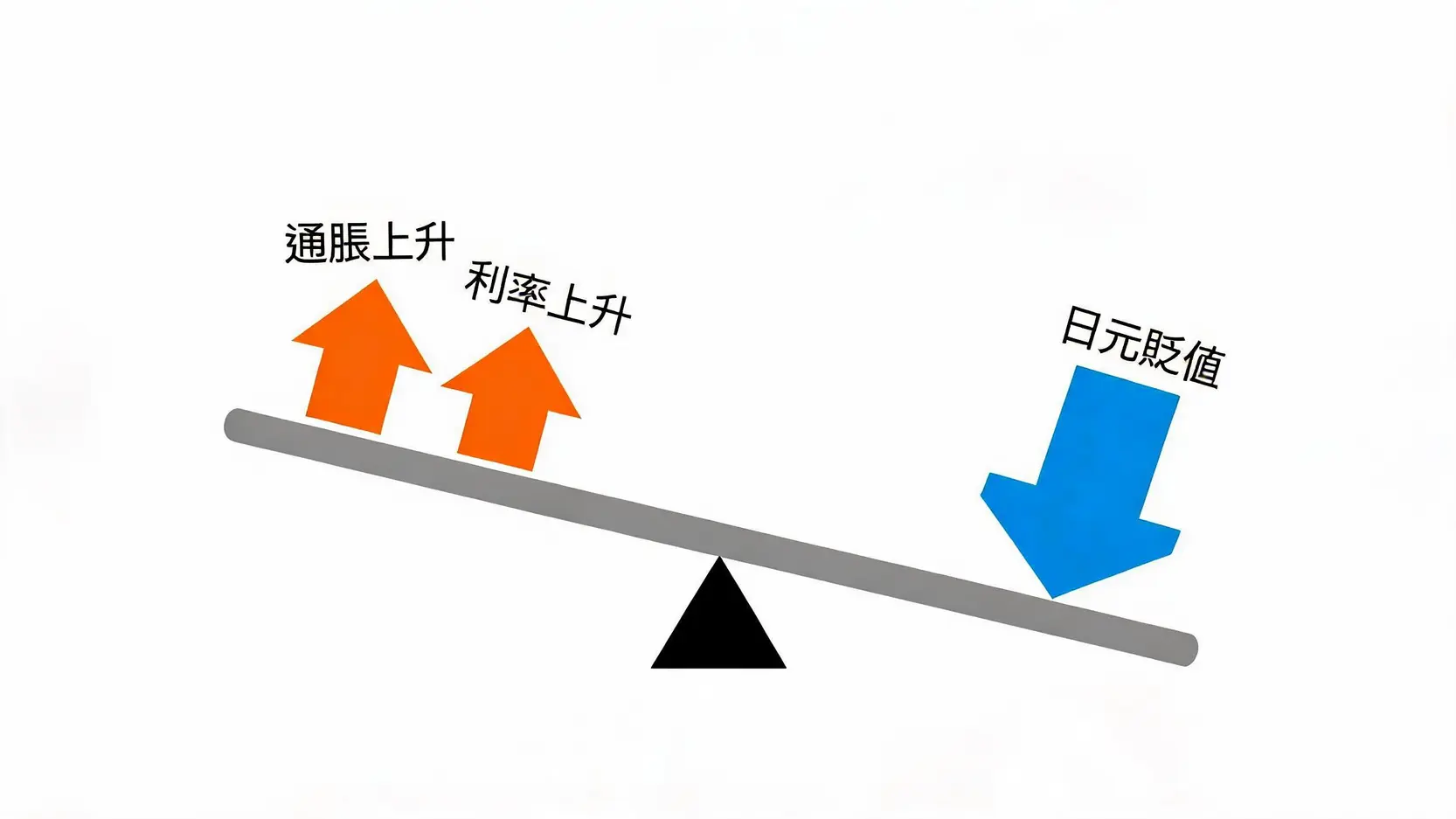
The Japanese economy is staging an extremely contradictory drama: after waiting for thirty years, it has finally welcomed the long-awaited Japan inflation, yet the market’s response has been a continued slide in the yen, with yen depreciation pressure increasing instead of easing. As the Bank of Japan (BOJ) gradually bids farewell to negative interest rates and interest rate levels reach their highest point since 1995, why is it still unable to reverse the yen’s weakness? Behind this shift lies a complex game involving global capital flows, structural changes, and market expectations. This article provides an in-depth analysis of Japan’s current economic phenomenon, breaks down the triangular relationship between inflation, interest rates, and exchange rates, and helps you see clearly the opportunities and challenges behind this once-in-a-century shift.

概念圖展示日本經濟矛盾:通脹和利率上升,但日元匯率卻在貶值。

The Contradiction in Japan’s Economy: Why Have Inflation and Rate Hikes Failed to Boost the Yen?


Are the Lost Three Decades Over? Decoding the Core Causes of Japan Inflation

In the past, Japan was long shrouded in the shadow of deflation. Prices did not rise, wages stagnated, and the economy was lifeless. Today, the spark of inflation has finally been ignited, but its causes are not singular. Instead, they are the result of multiple factors overlapping.


Imported Inflation: How Energy and Raw Material Prices Push Up Costs

The starting point of this wave of inflation largely comes from external pressure. After the Russia-Ukraine conflict, global energy prices surged, while international commodity prices remained high. For a country highly dependent on resource imports, cost pressure came first. From gasoline and electricity to food, price increases quickly passed through to consumers, becoming the first force driving up Japan’s CPI (Consumer Price Index).

  • Energy Costs: Rising international crude oil and natural gas prices directly led to higher electricity and gas costs in Japan.
  • Food Prices: Rising prices of wheat, corn, and other grains, combined with higher transportation costs, pushed up the prices of daily necessities such as bread and instant noodles.
  • Supply Chain Bottlenecks: Supply chain disruptions after the global pandemic also intensified the costs of various imported goods.


Structural Shift: From “Cheap Japan” to Rising Prices in Domestic Demand Services

If imported inflation is the “external threat”, then price increases in domestic demand services are the “internal cause” that deserves more attention. In the past, due to yen depreciation, Japan became a “shopping paradise” in the eyes of foreign tourists. The tourism boom drove demand in hotels, restaurants, retail, and other industries. More importantly, this demand began to drive price increases, breaking the deflationary mindset that “things will only get cheaper”.

At the same time, companies have also begun passing rising costs on to consumers. Many “national brands” that had not dared to raise prices for decades, such as gyudon chain stores, snacks, and beverages, have also announced price increases. This marks a fundamental shift in the mindset of Japanese companies and consumers, laying the foundation for sustainable inflation.


Can Wages Keep Up? The Race Between “Shunto” Wage Increases and Inflation

Whether inflation can continue depends on whether wages can keep up and form a virtuous “wage-price” cycle. The closely watched annual labor-management wage negotiation “Shunto” has become an important indicator for observing the health of Japan’s economy.

According to data from the Japanese Trade Union Confederation (RENGO), the average wage growth rate in the 2026 “Shunto” exceeded 5%, reaching a new high in more than 30 years. This is a very positive signal, showing that companies are willing to retain talent through wage increases amid labor shortages and inflationary pressure. However, whether “real wages” after deducting inflation can turn positive remains the focus of market attention. Only when people’s wallets truly become thicker can consumption power continue to support economic growth and help Japan break free from the Lost Three Decades.


Further Reading (Highly Recommended)

How Do Stocks Make Money? Investment Beginner’s Guide: From Market Trend Analysis to Judging Bull and Bear Markets

2026 US Stock Market Beginner’s Guide: The Ultimate Guide for New Investors, Understand Account Opening in One Article


Central Bank Dilemma: Why Is It Still Difficult for Rate Hikes to Stop Yen Depreciation Pressure?

In theory, rate hikes should attract capital inflows and drive appreciation of the domestic currency. However, after the Bank of Japan ended its negative interest rate policy, the yen moved in the opposite direction and continued to depreciate. Behind this lies the dilemma facing the Bank of Japan under the broader global monetary policy environment.


US-Japan Interest Rate Differential: The Global Influence of US Federal Reserve Policy

The most important factor currently affecting the yen exchange rate is undoubtedly the huge “US-Japan interest rate differential”. Although the Bank of Japan raised its policy rate from negative territory to the 0-0.1% range, compared with the US Federal Reserve’s (Fed) high interest rate of over 5%, there remains a huge interest rate gap between the two. This makes capital in the market more inclined to flow into US dollar assets to earn higher interest income.

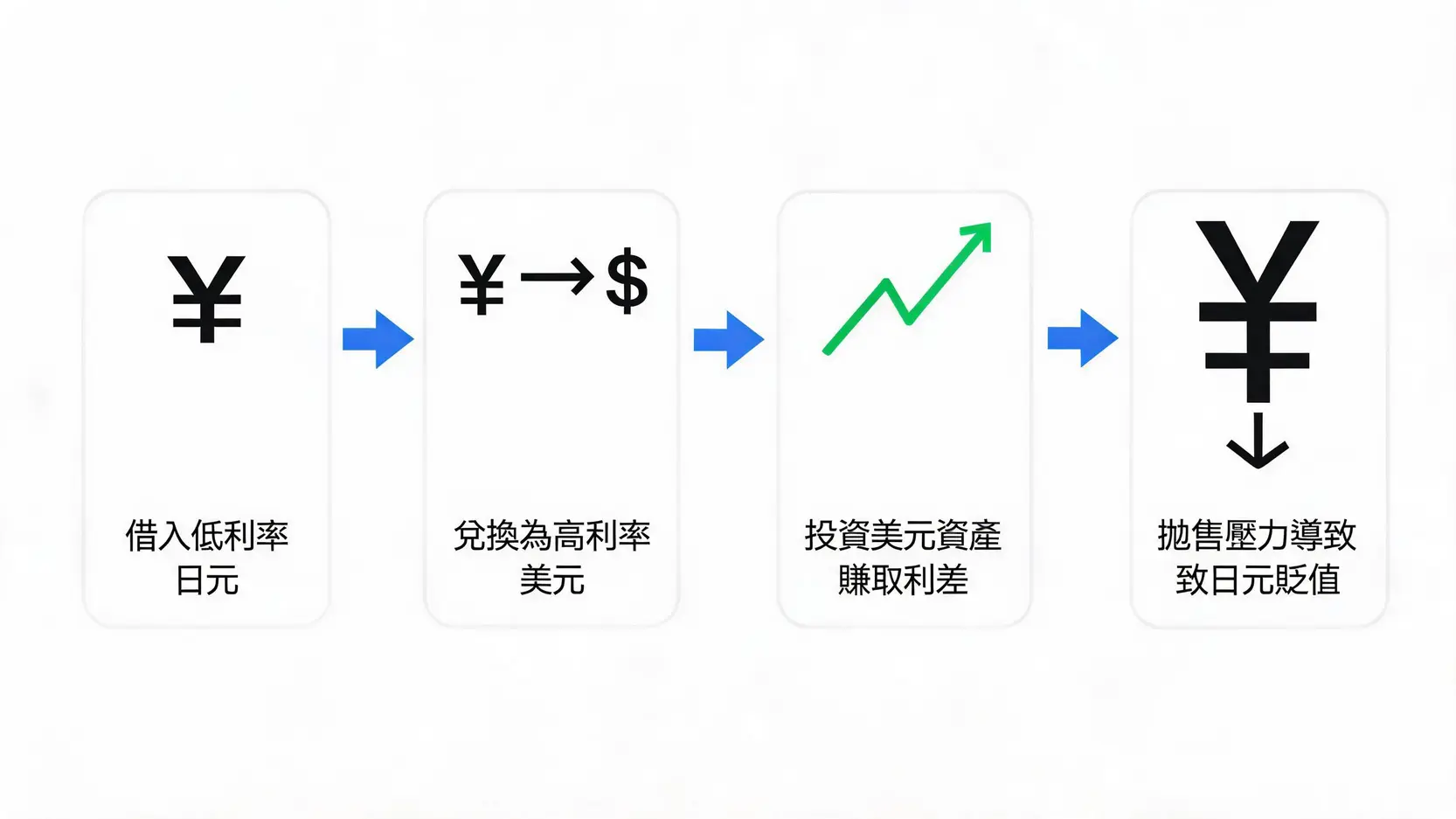
This interest rate differential has also given rise to a large number of carry trades. Investors borrow yen at extremely low interest rates, convert them into high-interest US dollars or other currencies, and invest. As long as the interest rate differential exists, the pressure to sell yen and buy US dollars will continue, thereby creating depreciation pressure on the yen exchange rate.

流程圖解釋美日利差如何引發套利交易,並導致日元貶值。

The Operating Process of Carry Trade Under the US-Japan Interest Rate Differential


Market Expectations: How Carry Trades and Investor Confidence Influence Exchange Rates

Financial markets are a battlefield of expectations. Although the Bank of Japan has begun tightening monetary policy, the market generally expects its pace of rate hikes to be very slow and cautious. By contrast, market speculation over when the US Federal Reserve will cut rates and by how much has an even greater impact on exchange rates. As long as the market does not believe the Bank of Japan will take aggressive rate hike measures to narrow the interest rate differential, investors will lack confidence in holding yen over the long term, making it difficult to reverse expectations of yen depreciation.


The Bank of Japan’s Dovish Rate Hike: Why Does the Market See It as “Not Strong Enough”?

The Bank of Japan’s policy shift this time has been widely interpreted by the market as a “dovish rate hike”. There are three reasons:

  1. Small Rate Hike: It merely ended negative interest rates, while the interest rate level remains close to zero.
  2. Vague Forward Guidance: The central bank did not clearly provide a future rate hike path, emphasizing that it would maintain an accommodative financial environment.
  3. Continued Bond Purchases: Although Yield Curve Control (YCC) was abolished, the central bank still said it would continue buying government bonds, sending the market a signal of continued liquidity injection.

This cautious attitude stems from the Bank of Japan’s concern that tightening policy too quickly could choke off the just-emerging economic recovery and inflation expectations. However, this “hesitant stance” appears insufficient against the backdrop of a strong US dollar and cannot effectively support the yen exchange rate.


Back to 1995? Key Differences Between the Current Economy and the Bubble Era

Interest rates reaching their highest level since 1995 can easily remind people of the era when Japan’s bubble economy burst. However, deeper analysis shows that Japan’s current economic fundamentals are vastly different from those of that period, and the probability of repeating the “Lost Three Decades” is extremely low.

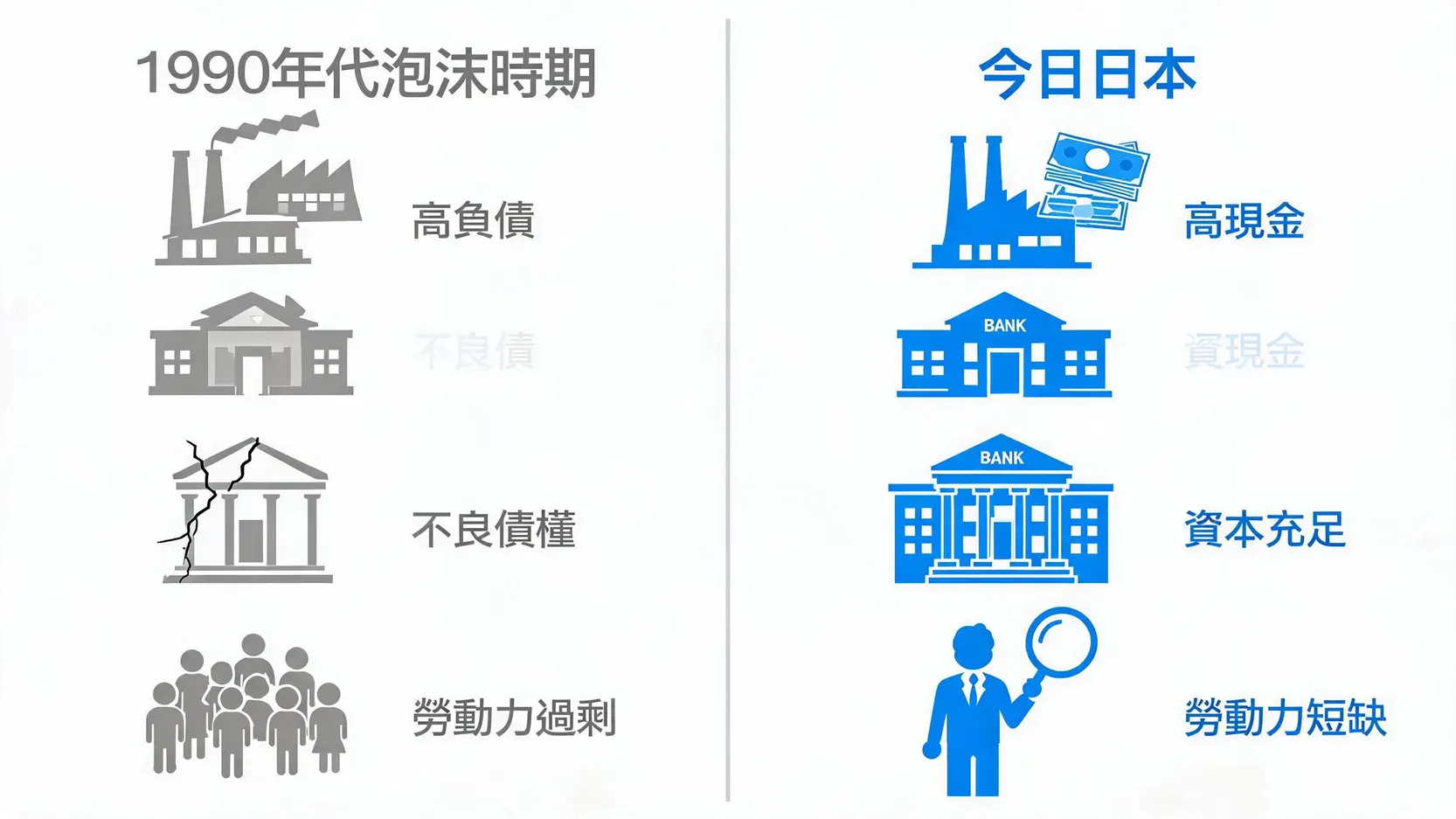
對比圖顯示1990年代與今日日本經濟在企業體質、銀行健康度和勞動力市場方面的差異。

Not the Same as Before: A Comparison of Japan’s Economic Fundamentals in the 1990s vs. Today


Balance Sheets: Companies and Banks Today Are Much Stronger Than Before

The core problem behind the bursting of the bubble in the 1990s was the extreme fragility of corporate and bank balance sheets. At the time, companies had borrowed excessively to invest in real estate and the stock market. Once asset prices plunged, they fell into massive losses and debt trouble. Banks were also on the brink of bankruptcy because they held large amounts of non-performing loans.

Today, after thirty years of “deleveraging”, Japanese companies generally hold large amounts of cash and are in extremely healthy financial condition. The banking system has also moved beyond the burden of non-performing loans, with capital adequacy ratios far above international standards. Healthy balance sheets mean Japan’s economy is better able to withstand external shocks, while also providing a solid foundation for companies to raise wages and invest.


Demographic Structure: How Labor Shortages Change Deflation Expectations

In the past, population aging was seen as a burden on Japan’s economy. In the current environment, however, it has unexpectedly become a catalyst for breaking the deflationary cycle. Severe labor shortages force companies to raise wages in order to recruit enough employees, fundamentally changing the decades-long situation of wage stagnation. A tight labor market has become an important structural factor driving service price increases and forming positive inflation expectations.


Global Environment: The Shift From Globalization to Regional Alliances

The 1990s were an era when globalization advanced rapidly, and companies could easily move production to low-cost countries. Today, however, the world is undergoing a shift from globalization to supply chain restructuring. Rising geopolitical risks have prompted companies to place greater emphasis on supply chain resilience and security. Many Japanese companies have begun moving production lines back home (reshoring), which not only increases domestic employment and investment, but also makes production costs harder to reduce, helping to support price levels. 

Further Reading (Highly Recommended)

Beginner’s Guide to Hong Kong Stock Investment: Learn From Scratch How Stocks Make Money (With Popular Hong Kong Stock Accounts in 2026)

How to Buy Apple Stock? A Five-Step Beginner’s Guide: From Converting to US Dollars to Placing an AAPL Order


Conclusion

In summary, the current coexistence of Japan inflation and yen depreciation pressure is a complex phenomenon shaped by multiple intertwined factors. The spark of inflation was ignited by external imported pressures, but whether it can continue burning depends on structural shifts in wage growth and domestic demand recovery. Although the Bank of Japan has been raising rates slowly, with interest rates reaching their highest level since 1995, the huge interest rate differential with the US and the market’s dovish expectations have greatly weakened the policy effect, making it difficult to reverse the yen’s weakness in the short term.

However, compared with the bubble economy era, Japanese companies and banks today are in healthier condition, while structural changes in the labor market and the restructuring of global supply chains have provided favorable conditions for Japan’s long-term economic recovery. For investors, understanding this macro background is the first step to grasping future global asset repricing and Japan investment opportunities (such as the stock market and real estate). This global economic experiment has only just begun.


Frequently Asked Questions About Japan Inflation and Yen Depreciation

Q: How is this round of Japan inflation different from the past?

A: The biggest difference lies in structural factors. In the past few decades, brief periods of inflation were mostly triggered by a single factor, such as consumption tax hikes, and could not be sustained. This round of Japan inflation, however, is not only driven by global increases in energy and raw material prices, but more importantly, is accompanied by significant wage growth not seen in decades (as reflected in the “Shunto” results), as well as broad-based price increases in the service sector driven by labor shortages and demand recovery. This means the foundation of inflation is broader and more solid, and it is more likely to form a positive “price-wage” upward spiral rather than being short-lived.

Q: What direct impact does yen depreciation have on ordinary people?

A: The impact is two-sided. For people living in Japan, the most direct negative impact is that imported goods become more expensive. From energy and food to electronics, the cost of living rises significantly. But for overseas tourists and investors, yen depreciation means traveling to Japan, shopping, or buying Japanese assets (such as real estate and stocks), becomes cheaper. For people in Taiwan and Malaysia, the appeal of traveling to Japan increases significantly, but they should also note that prices of imported Japanese goods may rise.

Q: Will the Bank of Japan continue raising rates in the future?

A: The market generally expects the Bank of Japan to continue raising rates, but the process will be very slow and gradual. According to analyses by multiple authoritative institutions, the next possible rate hike may take place in the second half of 2026 or early 2027. The central bank’s decision will depend heavily on future economic data, especially whether inflation can remain stable above the 2% target and whether wage growth can continue. Before confirming that the economy has entered a steady recovery path, the central bank will make every effort to avoid hurting the economy through overly rapid tightening.

Q: How long will yen depreciation last? Is a reversal in the exchange rate possible?

A: When the yen exchange rate reverses depends on two key factors: changes in the US-Japan interest rate differential and a shift in market expectations. When the US Federal Reserve (Fed) clearly starts a rate-cutting cycle and the Bank of Japan (BOJ) continues raising rates gradually, the interest rate differential between the two will narrow, easing depreciation pressure on the yen. In addition, if Japan’s inflation and wage growth data remain strong, convincing the market that the Japanese economy has fully escaped deflation and restoring investor confidence, only then may a trend reversal in the yen become visible.

编者
Evan Lin

Evan Lin

我是Evan Lin,从大学时期开始接触外汇交易,至今已有多年实战经验,熟悉技术分析与EA策略,热衷于研究市场脉动与风险管控,喜欢分享实战经验和交易技巧,和大家一起学习、一起进步!

If you liked this article, please share it!

Related Articles

  • Why Japan Property Is Attracting Global Investors
    Global Asset Repricing: Why Has Japan’s Property Market Become a Safe Haven for Smart Money Amid Yen Depreciation? What Is “Global Asset Repricing”? Why Has Japan Become the Main Focus? While investment forums around the world are heatedly discussing yen depreciation pressure, the real smart money has already begun positioning...
    2026 年 6 月 23 日
  • YCC to QT: BOJ & Fed Policy Shift Analysis
    A Complete Analysis of Central Bank Policy Shifts: From YCC to QT, Decoding the BOJ and the Fed’s Next Move The Bank of Japan (BOJ) and the US Federal Reserve (Fed), two giants of the global financial markets, are seeing their diverging monetary policy directions become the core force driving...
    2026 年 6 月 23 日
  • Will the Yen Appreciate? 2026 Forecast & Key Turning Point
    Have Yen Appreciation Expectations Been Established? A Complete Analysis of 2026 Investment Bank Forecasts, Revealing the Key Turning Point Mainstream View: Why Does the Market Generally Expect the Yen to Appreciate in 2026? After a long period of historic depreciation, the market has seen a significant shift in expectations for...
    2026 年 6 月 23 日
返回顶部