US Stock Market Hours 2026: Hong Kong Time Guide

Updated: 2026/03/02  |  CashbackIsland

us-stock-market-hours-hk-2026-hant

US Stock Market Opening Hours 2026 Quick Guide: Hong Kong Time Reference, Standard and Daylight Saving Time, Pre-Market and After-Hours Trading, and Holiday Closures Complete Overview

For Hong Kong investors, accurately understanding how US stock market hours align with Hong Kong time is the first step in building a US stock trading strategy. However, the time difference, the annual switch between US standard time and daylight saving time, and US-specific public holidays often cause confusion. If you are not careful, you may miss key trading windows. This article provides a complete guide to “US stock market opening hours in Hong Kong”. It not only covers US pre-market trading hours and after-hours trading, but also explains the rules for switching between standard time and daylight saving time, and includes a complete 2026 US market holiday closure calendar. This will help you plan with ease and never miss an investment opportunity again. 


Core US Stock Market Trading Sessions: Standard Time, Daylight Saving Time, and Hong Kong Time Reference

The regular trading hours for the US stock market are Monday through Friday, 9:30 a.m. to 4:00 p.m. US Eastern Time (ET). However, when converted into Hong Kong time, the schedule differs depending on whether it is “standard time” or “daylight saving time”. This small shift has a significant impact on Hong Kong investors who are used to trading at night.


See at a Glance: Regular, Pre-Market, and After-Hours Trading Sessions (Hong Kong Time)

To help you understand more intuitively, the following aligns the three major US trading sessions (pre-market, regular, and after-hours) with Hong Kong time, so you can see everything clearly at a glance.

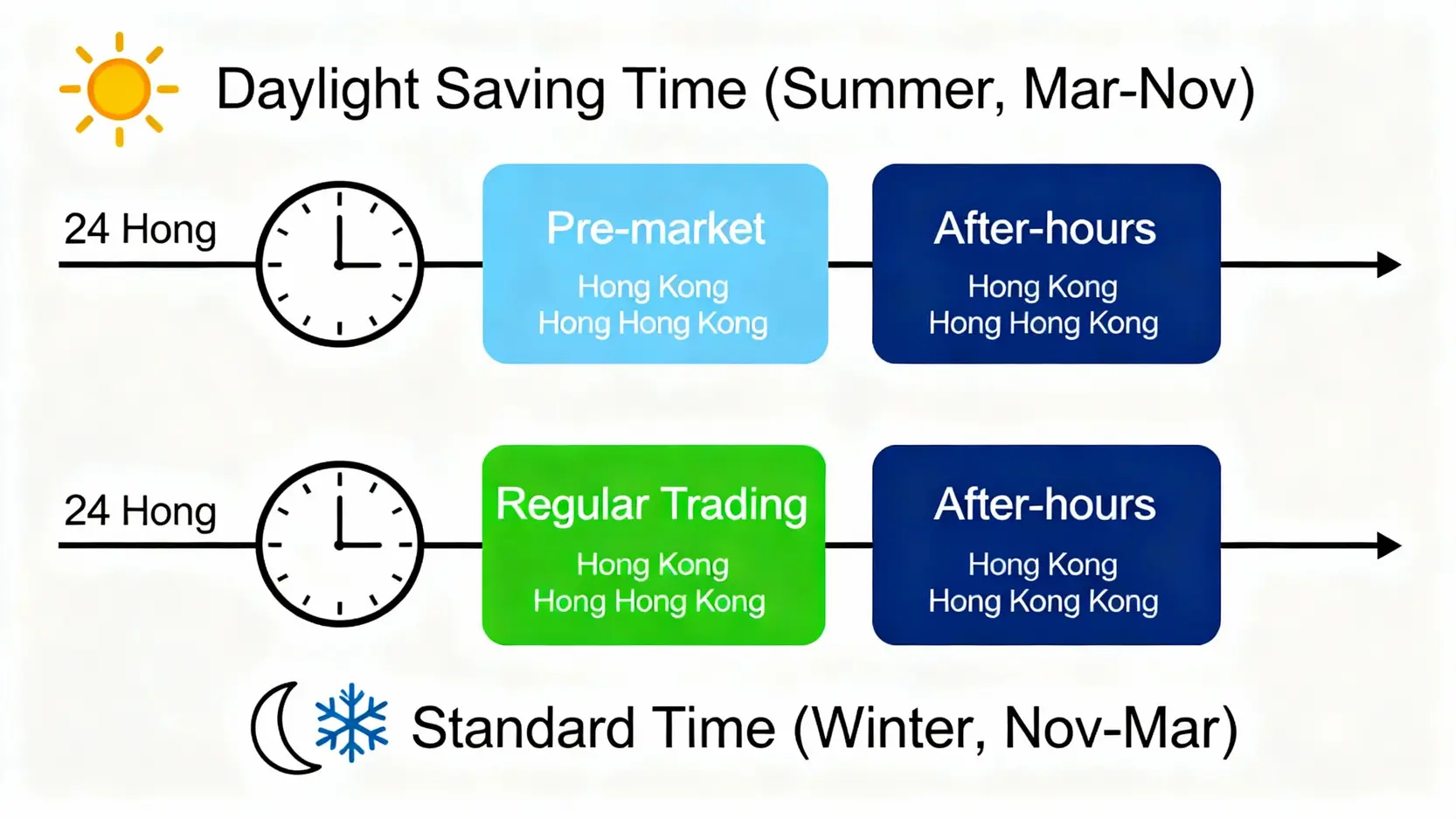
美股開市時間與香港時間對照圖,包含夏令及冬令時間的盤前、常規和盤後交易時段。

See at a Glance: Daylight Saving Time vs Standard Time, Trading Hours Reference for Hong Kong Investors.

Trading Sessions US Eastern Time (ET)

Hong Kong Daylight Saving Time (March to November)

Hong Kong Standard Time (November to March)
Pre-Market Trading (Pre-market) 4:00 AM – 9:30 AM 16:00 – 21:30 17:00 – 22:30
Regular Trading (Regular) 9:30 AM – 4:00 PM 21:30 – 04:00 (next day) 22:30 – 05:00 (next day)
After-Hours Trading (After-hours) 4:00 PM – 8:00 PM 04:00 – 08:00 (next day) 05:00 – 09:00 (next day)

*Note: Pre-market and after-hours trading hours may vary slightly depending on the US stock broker. Please refer to the trading platform you use for the most accurate information.


What Are US Stock Market Standard Time and Daylight Saving Time? When Do They Change in 2026?

US Daylight Saving Time (DST) is a system designed to conserve energy by setting clocks forward by one hour during the summer months. This results in changes to the time difference between Hong Kong and the US.

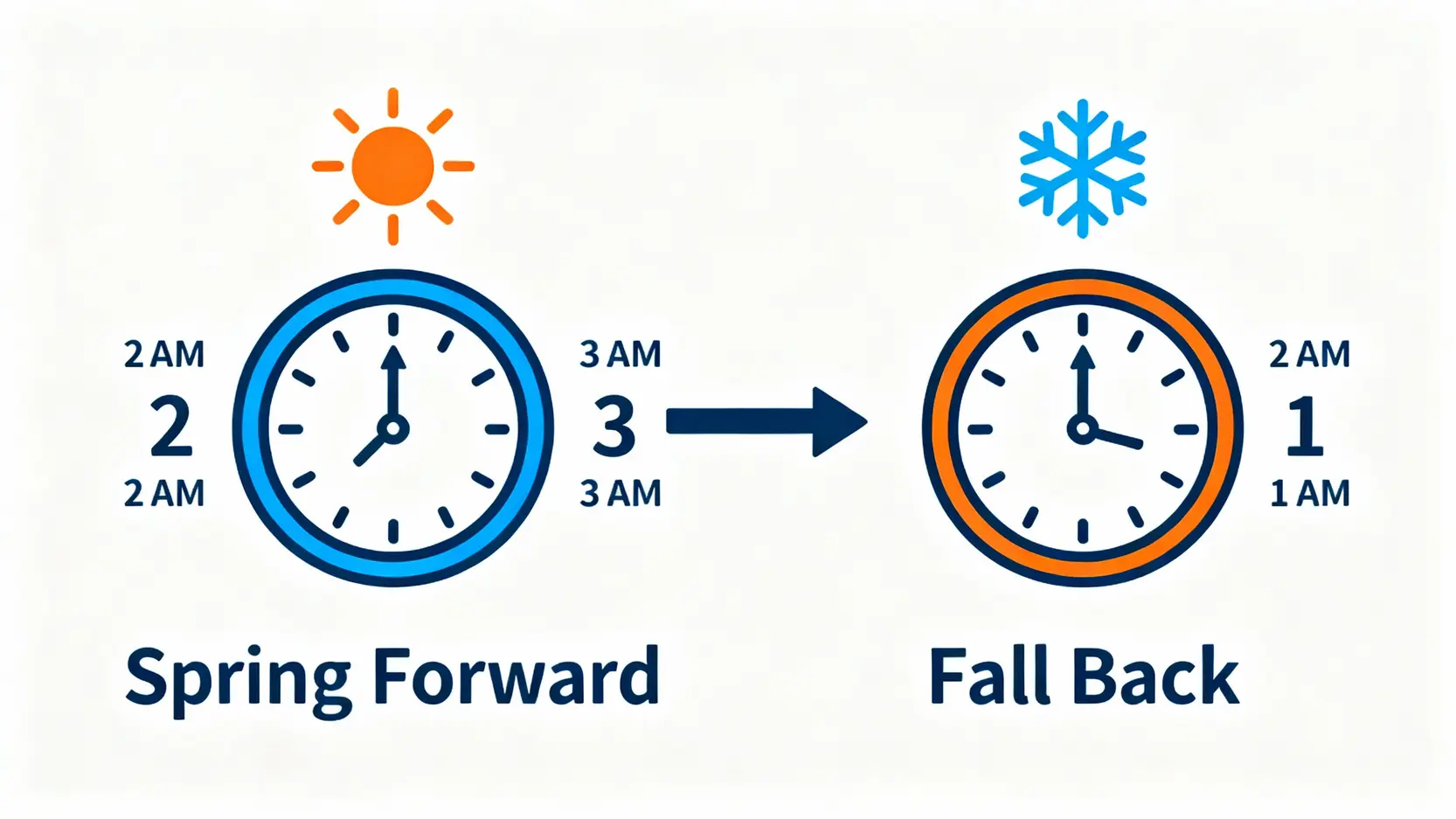
美股夏令與冬令時間轉換示意圖,顯示時鐘向前撥快一小時和向後撥慢一小時。

Daylight saving time “moves clocks forward by one hour”, while standard time “moves clocks back by one hour”.

  • Daylight Saving Time: Usually begins on the second Sunday of March each year. At this point, US clocks are set forward by one hour, and the time difference with Hong Kong is reduced to 12 hours.
  • Standard Time: Daylight saving time ends on the first Sunday of November each year. Clocks are set back by one hour, returning to standard time, and the time difference with Hong Kong reverts to 13 hours.

2026 US Stock Market Standard Time and Daylight Saving Time Change Dates:

  • Start of Daylight Saving Time: March 8, 2026 (Sunday)
  • Start of Standard Time: November 1, 2026 (Sunday)

Investors should take special note of these two dates to ensure trading time accuracy. You may refer to official US time information for more detailed explanations.


Further Reading (Highly Recommended)

[2025 US Stock Options Tutorial] Understand Options in One Article! From Firstrade Account Opening to Four Major Trading Strategies

[US Stock Broker Comparison] Interactive Brokers, Firstrade, Charles Schwab Feature Overview


Complete List of US Stock Market Holiday Closures in 2026

In addition to regular weekend closures, US stock markets also close or close early on specific federal holidays. Understanding these US market holiday closure dates in advance can help you better plan fund allocation and trading schedules, and avoid disruptions caused by market closures. 

Plan Ahead: 2026 US Stock Market Full-Year Closures and Half-Day Trading Dates Overview

Below is the 2026 holiday schedule for the New York Stock Exchange (NYSE) and Nasdaq (NASDAQ). Please note that some holiday dates are fixed each year, while others may vary.

Date

Holiday Name

Market Closure Arrangement

January 1, 2026 (Thursday) New Year’s Day Full-Day Market Closure
January 19, 2026 (Monday) Martin Luther King, Jr. Day Full-Day Market Closure
February 16, 2026 (Monday) Washington’s Birthday Full-Day Market Closure
April 3, 2026 (Friday) Good Friday Full-Day Market Closure
May 25, 2026 (Monday)

Memorial Day

Full-Day Market Closure
June 19, 2026 (Friday) Juneteenth National Independence Day Full-Day Market Closure
July 3, 2026 (Friday) Independence Day Observed Full-Day Market Closure
September 7, 2026 (Monday) Labor Day Full-Day Market Closure
November 26, 2026 (Thursday) Thanksgiving Day Full-Day Market Closure
November 27, 2026 (Friday) Day After Thanksgiving Early Close at 13:00 ET
December 25, 2026 (Friday) Christmas Day Full-Day Market Closure


Further Reading (Highly Recommended)

[2025 US Stock Options Tutorial] Understand Options in One Article! From Firstrade Account Opening to Four Major Trading Strategies

[US Stock Broker Comparison] Interactive Brokers, Firstrade, Charles Schwab Feature Overview


Frequently Asked Questions About US Stock Market Opening Hours (FAQ)

Q: Does the US stock market close at midday?

A: No. Unlike the Hong Kong stock market, the US stock market trades continuously during regular trading hours (ET 9:30 AM – 4:00 PM), with no midday break. Investors can trade throughout the entire session.

Q: Is trading volume low during pre-market and after-hours sessions? What are the risks?

A: Yes, trading volume during pre-market and after-hours sessions is usually much lower than during regular trading hours. This leads to several risks:
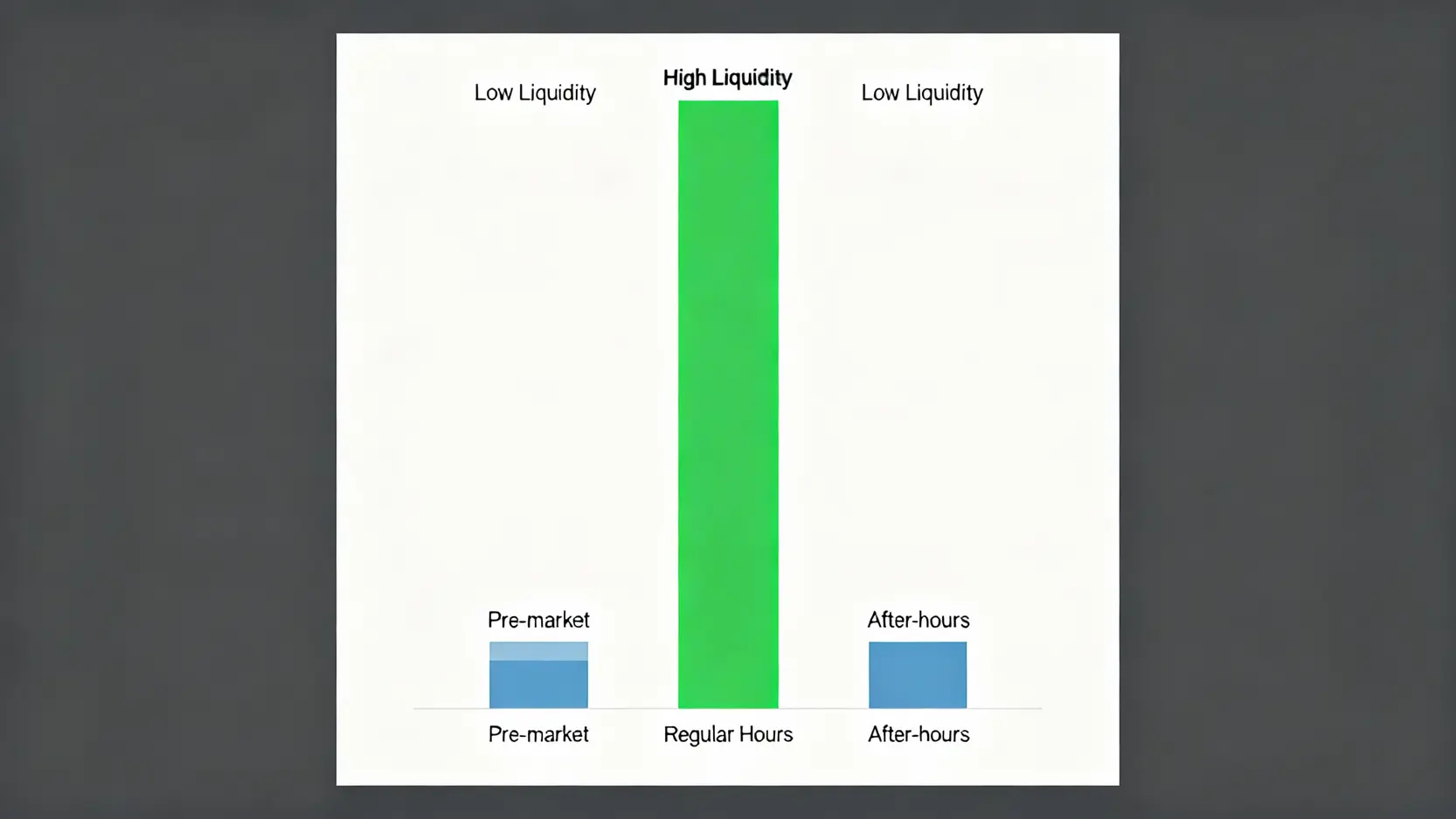
美股常規交易時段與盤前盤後時段的交易量對比圖,顯示常規時段的交易量遠高於其他時段。

Trading volume disparity: Liquidity during regular hours is far higher than during pre-market and after-hours sessions.

  1. Lower liquidity: The bid-ask spread may widen, meaning higher transaction costs.
    2. Higher price volatility: Lower trading volume means a single large order can cause sharp price movements.
    3. Limited participants: The main participants are institutional investors and professional traders, and retail investors may be at an informational disadvantage.

Therefore, trading during these periods requires extra caution.

Q: Why should US market holiday closures be monitored?

A: There are three main reasons to pay attention to market closure dates:
1. Avoid failed trades: Orders submitted on market holidays will not be executed until the next trading day.
2. Fund flow planning: If you plan to move funds before or after holidays, you need to consider the impact of market closures on settlement timing.
3. Market sentiment analysis: Trading volume and volatility may change before and after long holidays. Understanding this in advance helps with strategy adjustment.

Q: How can Hong Kong investors make use of pre-market and after-hours trading?

A: Pre-market and after-hours trading provide Hong Kong investors with significant flexibility. Many major price-moving events, such as corporate earnings releases, economic data announcements, or breaking news, are often released outside regular trading hours. By using these sessions, investors can:
1. React immediately: Based on the latest information, establish or close positions ahead of other investors who are still waiting for the market to open.
2. Capture opportunities: Some stocks may surge due to positive earnings released after hours, and entering early may help secure more favorable prices.


Conclusion

In summary, becoming familiar with US stock market opening hours, understanding the differences between standard time and daylight saving time, and noting US market holiday closure dates in advance are fundamental skills for every Hong Kong investor. Mastering this information not only helps you avoid missing trading opportunities, but also allows you to stay one step ahead and develop a more comprehensive investment plan. Making good use of pre-market and after-hours trading sessions also enables you to respond flexibly to sudden market news and face various market changes with confidence. We hope this detailed guide helps you plan your US stock investment strategy more efficiently and capture more market opportunities.

If you liked this article, please share it!

Related Articles

  • How Hedging Works: Hedge Fund Strategies & Trading Guide
    How Does Hedging Work? Advanced Hedge Fund Strategies and Practical Trading Guide In the rapidly changing financial markets, relying solely on a “buy-and-hold” strategy often makes it difficult to withstand severe market volatility and achieve stable long-term profits. If you have heard Wall Street leaders discuss risk hedging, you are...
    2026 年 7 月 14 日
  • What Is Hedging? A Beginner’s Risk Management Guide
    What Is Hedging? A Risk Management Guide Every Financial Beginner Should Read In the investment market, we often hear the term “hedging”, but what exactly does it mean? Why do professional investors use it? Hedging means adopting strategies to protect assets from adverse price movements. Whether in the stock, foreign...
    2026 年 7 月 14 日
  • 2026 US Treasury Yield Guide: Trends & Strategies
    2026 Complete Guide to US Treasury Yields: Trend Analysis, Impact of Surging Yields, and Asset Allocation Strategies In the rapidly changing global financial market, US Treasury yields have long been regarded as the most important benchmark for the risk-free rate. Entering 2026, amid recurring shifts in inflation expectations and dynamic...
    2026 年 7 月 13 日
返回顶部