US Airstrikes on Iran Trigger Oil Price Surge: Tomahawk Missiles and Global Economic Impact
Did the World Change Overnight? In July 2026, news of US airstrikes on Iran shocked the world, triggering severe volatility in international crude oil prices. Brent crude futures briefly surged above US$120, causing oil prices to soar. This sudden military action not only sent financial markets into a sea of green, but also directly ignited concerns over global inflation. What caused the US-Iran conflict to escalate once again? How far-reaching will the impact of these airstrikes be on the global economy? From the perspective of an experienced investor, this article provides a complete analysis of the origins and development of the US-Iran conflict, as well as the actual impact of this crisis on the global economy and your daily life.
[Timeline] Complete Chronology of the US Airstrikes on Iran
This conflict was not accidental, but the result of accumulated tensions between the US and Iran over multiple issues, including the nuclear agreement, regional influence, and proxy wars. Understanding how the situation developed is the crucial first step in assessing future market movements.
The Trigger for the Conflict: How Did US-Iran Tensions Escalate Step by Step?
Since late 2025, the Iran-backed Houthi armed group in Yemen has frequently attacked shipping routes in the Red Sea, placing pressure on global supply chains. In 2026, US intelligence agencies repeatedly accused Iran’s Islamic Revolutionary Guard Corps of directly participating in planning drone attacks against oil facilities belonging to US allies in the Persian Gulf region, causing casualties among several US contractors. Although Tehran categorically denied the allegations, Washington believed it had obtained conclusive evidence and regarded this as an uncrossable “red line”. A series of incidents completely destroyed the foundation of mutual trust between the two sides, severely limited the scope for diplomatic mediation, and ultimately pushed the situation to the brink of military conflict.
Operation Midnight Hammer: Which Targets Did the US Military Strike? Which Advanced Weapons Were Used?
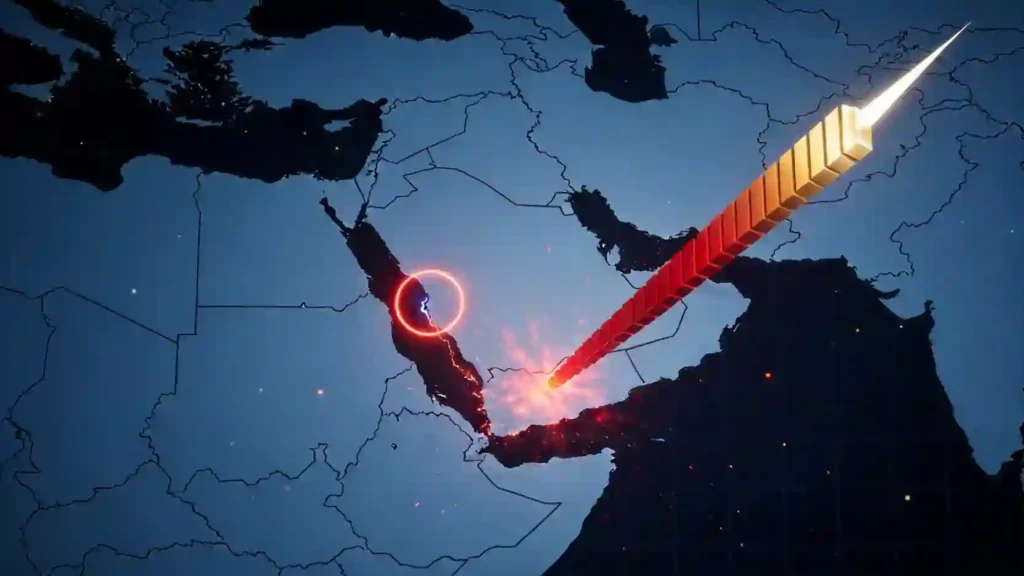
The military operation, code-named “Midnight Hammer”, began in the early hours of the morning, Iran time. According to information released by the Pentagon, the US military deployed B-2 stealth bombers and launched dozens of “Tomahawk cruise missiles” from Arleigh Burke-class destroyers patrolling the Persian Gulf. The strikes primarily targeted:
- Islamic Revolutionary Guard Corps Training Camps: Several Quds Force training bases and command centers in western Iran.
- Drone and Missile Facilities: Military factories accused of producing attack drones and short-range ballistic missiles.
- Intelligence Surveillance Stations: Radar and communications nodes located in coastal areas and used to monitor shipping in the Strait of Hormuz.
The operation demonstrated the US military’s precision-strike and surgical warfare capabilities. It was intended to weaken Iran’s asymmetric warfare capabilities while avoiding large-scale civilian casualties and limiting the risk of further escalation.
Official Statements: Responses and Positions of the US, Iran, and the International Community
Following the airstrikes, all parties responded swiftly:
- US: The White House issued a statement describing the operation as a necessary defensive measure taken “to protect US personnel and defend national interests”. It emphasized that the US does not seek a full-scale war with Iran, but is prepared to respond to any retaliatory action.
- Iran: Iran’s Supreme Leader Ayatollah Ali Khamenei strongly condemned the move through official media as an “act of rogue aggression”, vowing that the US would “pay a heavy price”. Large-scale anti-US demonstrations erupted on the streets of Tehran.
- International Community: UN Secretary-General António Guterres urged both sides to exercise maximum restraint. China and Russia expressed serious concern and opposed the use of force in international relations. The European Union convened an emergency meeting of foreign ministers in an effort to de-escalate the situation.
Why Did Oil Prices Surge? Understanding the Geopolitical and Economic Links Behind the Rally
The military conflict itself did not directly damage any major oil-producing facilities, yet oil prices surged by more than 15% overnight. This reflects the market’s extreme fear of future supply disruptions, with the core concern pointing directly to the chokepoint of global oil transportation: the Strait of Hormuz.
Iran’s Ultimate Weapon: Controlling the Global Oil Chokepoint, “the Strait of Hormuz”
The Strait of Hormuz is the only waterway connecting the Persian Gulf and the Gulf of Oman, measuring only about 33 kilometers at its narrowest point. According to data from the US Energy Information Administration (EIA), approximately one-fifth of the world’s oil supply and more than one-third of its liquefied natural gas (LNG) must pass through this route. If Iran were to take extreme measures to block the strait, even a brief disruption could paralyze global energy markets. This makes the Strait of Hormuz Iran’s most powerful geopolitical deterrent and the market’s most sensitive pressure point.
Market Panic Spreads: How Did Expectations of Supply Disruptions Push Oil Prices Higher Overnight?
Financial markets trade on “expectations”. After the airstrikes, traders were not concerned about the immediate losses, but about the worst-case scenarios that could unfold in the future:
- Retaliatory Blockade by Iran: The market expects that Iran may use naval mines, anti-ship missiles, or small speedboats to harass oil tankers and disrupt shipping through the Strait of Hormuz.
- Soaring Insurance Costs: War risk insurance premiums for oil tankers traveling through the region could rise severalfold or even dozens of times overnight, causing transportation costs to surge.
- Supply Chain Disruptions: Global buyers fear that they may be unable to secure crude oil from major producers such as Saudi Arabia, Iraq, and the United Arab Emirates, prompting frantic buying in the spot market and pushing oil prices even higher.
This fear-driven market reaction caused oil prices to rise far more sharply than the actual changes in supply and demand fundamentals. Investors seeking a deeper understanding of crude oil trading mechanisms can refer to How to Buy Crude Oil Futures? 2026 Beginner’s Guide to Oil Futures Investing, Oil Price Trend Analysis, and Global Impact for more professional insights.
Global Economic Shockwaves: Beyond Oil Prices, How Will Your Life Be Affected?
Rising oil prices involve far more than simply feeling the pain when filling up your car. As the lifeblood of the modern economy, fluctuations in crude oil prices ripple through every corner of the economy, ultimately affecting everyone’s wallet.
Financial Market Volatility: US Stocks Fall for Consecutive Sessions, How Should Investors Hedge Their Risks?
With the threat of war hanging over the market, risk-aversion has risen rapidly. The Dow Jones Industrial Average has suffered sharp declines for several consecutive sessions, while oil-sensitive sectors such as airlines, tourism, and automobiles have been hit particularly hard. Capital has poured into traditional safe-haven assets, including gold, the US dollar, and US Treasury bonds. In this highly uncertain environment, investors should reassess their asset allocation and consider how to address geopolitical risks. Historical experience shows that remaining calm and positioning investments according to a clear strategy during turbulent times is far wiser than panic selling.
Related Reading (Highly Recommended)
How Significant Is the Impact of the Geopolitical Risk Premium on Taiwan Stocks? Understanding Risks, Opportunities, and Investment Strategies
Investment Strategies for Turbulent Times: Understand Geopolitical Risks and Deploy Five Major Wartime Investment Strategies
Inflation Alarm Sounds: Rising Costs Emerge Across Transportation and Daily Consumption
The transmission path of rising oil prices is clear, and this inflationary storm is approaching step by step:
- Transportation Costs: Whether commuting by car, taking public transportation, or paying delivery fees for online shopping, costs will increase as oil prices rise.
- Production and Manufacturing Costs: Petroleum is a raw material for many industrial products (such as plastics and synthetic fibers), as well as an important energy source. Rising costs will be directly reflected in product prices.
- Pressure on Daily Consumption: From food to everyday necessities, the production and transportation of nearly all goods depend on energy. Ultimately, these increased costs will be borne by consumers, resulting in broad-based inflation.
Asia’s Hardest-Hit Economies: How Are Japan, South Korea, and Thailand Responding to the Energy Crisis?
For Asian economies such as Taiwan, Japan, South Korea, and Thailand, which are highly dependent on imported energy, the impact of this oil price shock is particularly severe. These economies must not only contend with imported inflation, but may also see the export competitiveness of their manufacturing sectors weakened by rising energy costs. Governments are closely monitoring the situation and may introduce measures such as electricity subsidies and lower energy taxes to ease the impact on people’s livelihoods. However, in the long term, transforming and diversifying their energy structures will become an even more urgent priority.
Future Scenario Analysis: Will the Conflict Expand? Will Oil Prices Continue to Rise?
The market’s attention is focused on the next 48 hours. Iran’s response will determine whether this crisis can be contained within a limited scope. Several key factors deserve close attention from investors.
Analysis of Iran’s Potential Retaliatory Measures and the Next Conflict Hotspots
Iran is well aware that it has little chance of prevailing in a direct confrontation with the US military. Therefore, its retaliatory measures may be more “asymmetric” and involve greater use of “proxies”. In addition to the previously mentioned blockade of the Strait of Hormuz, potential retaliatory measures include:
- Proxy Attacks: Launching attacks against US military bases or allies in the Middle East through proxies such as Hezbollah in Lebanon and Shiite militias in Iraq.
- Cyberattacks: Launching cyberwarfare against critical infrastructure in the US or allied countries (such as financial systems and power grids).
- Accelerating the Nuclear Program: Announcing its withdrawal from the Treaty on the “Non-Proliferation of Nuclear Weapons” (NPT) and enriching uranium to weapons-grade levels to exert maximum pressure on the international community.
The Cards Available to Other Countries: Can Releasing Strategic Petroleum Reserves Effectively Contain Oil Prices?
To stabilize market confidence, the US president has announced plans to coordinate with allies on the release of Strategic Petroleum Reserves (SPR). Under the International Energy Agency (IEA) mechanism, member countries collectively maintain substantial emergency reserves that can be released into the market during severe supply disruptions. In the short term, releasing SPR can effectively fill market shortages and help cool prices. However, this remains a temporary measure that addresses the symptoms rather than the root cause. The ultimate direction of oil prices will still depend on how the US-Iran conflict develops and whether navigation through the Strait of Hormuz can remain unobstructed.
Related Reading (Highly Recommended)
[Investment Guide for Turbulent Times] Geopolitical Risks Rising? Comparison of Five Major Safe-Haven Assets and Comprehensive Investment Strategies
How to Buy Crude Oil Futures? 2026 Beginner’s Guide to Oil Futures Investing, Oil Price Trend Analysis, and Global Impact
Conclusion
The US airstrikes on Iran once again highlight the enormous influence of geopolitics on the global economy. This was not merely a military operation, but a perfect storm affecting global energy supplies, financial markets, and the direction of inflation. From the precision strikes of Tomahawk missiles and market fears surrounding the Strait of Hormuz to the response strategies adopted by governments, every link is closely interconnected. The future remains highly uncertain. Both professional investors and ordinary consumers need to remain highly vigilant, closely monitor subsequent developments, and prepare for the potential economic impact.
Frequently Asked Questions (FAQ)
Q: What was the official reason for the US airstrikes on Iran?
A: According to official US statements, the airstrikes were a “self-defensive counterattack” in response to a series of recent attacks planned and supported by Iran’s Islamic Revolutionary Guard Corps against US personnel and facilities in the Middle East. The US stated that it had conclusive evidence of Iran’s direct involvement and regarded the operation as necessary to protect US citizens and national interests.
Q: How can ordinary people cope with the rising cost of living caused by higher oil prices?
A: Ordinary people can respond to rising oil prices in several ways. First, they can conserve energy by using public transportation more frequently, reducing unnecessary driving, and choosing energy-efficient appliances. Second, they can plan their spending by allocating more of their budget to essential expenses and reducing non-essential consumption. Finally, they can review their personal finances and consider allocating some funds to inflation-resistant assets, such as gold or Treasury Inflation-Protected Securities (TIPS).
Q: Besides crude oil, which other financial instruments or stock sectors will be affected?
A: In addition to crude oil futures themselves, the stocks most severely affected are typically those of fuel-intensive industries such as airlines, cruise tourism, and automobile manufacturing. Conversely, traditional safe-haven assets such as gold, the US dollar, the Swiss franc, and US Treasury bonds are likely to attract demand. Stocks related to alternative energy sources (such as solar and wind power) as well as defense companies, may also rise as the market anticipates an acceleration in the energy transition and increased demand for military equipment.
Q: How Long Will High Oil Prices Persist?
A: This depends on the scale and duration of the conflict. If the situation de-escalates quickly without materially affecting shipping through the Strait of Hormuz, the “risk premium” driven by market panic may fade within a few weeks. However, if the conflict expands and causes prolonged supply chain disruptions, high oil prices could persist for several months or even longer, until global supply and demand reach a new equilibrium.