How Do Oil Prices Trigger Inflation? Understand the Butterfly Effect of the “Oil Price Transmission Chain”
Every time you refuel and see oil prices continuing to rise, do you worry that this is only the beginning? From international crude oil prices to everyday consumer prices, an invisible “oil price transmission chain” is quietly affecting your assets and living costs, ultimately creating persistent “inflation expectations”. How oil price fluctuations ultimately affect inflation and everyday prices is an issue that concerns everyone. This article will thoroughly break down this process, analyse the key variables behind it, and provide response strategies.
What Is the Oil Price Transmission Chain? Breaking Down the Four Major Stages From Oil Wells to Consumption
The oil price transmission chain refers to how changes in crude oil prices spread like ripples, moving from upstream to midstream and downstream sectors before eventually expanding across the entire economy and affecting the prices of various goods and services. Understanding how this transmission chain operates and its different stages is the first step towards understanding inflation. It can be simplified into the following four main stages:
Stage One: Upstream (Crude Oil Extraction): The Starting Point of Geopolitics and Production Decisions
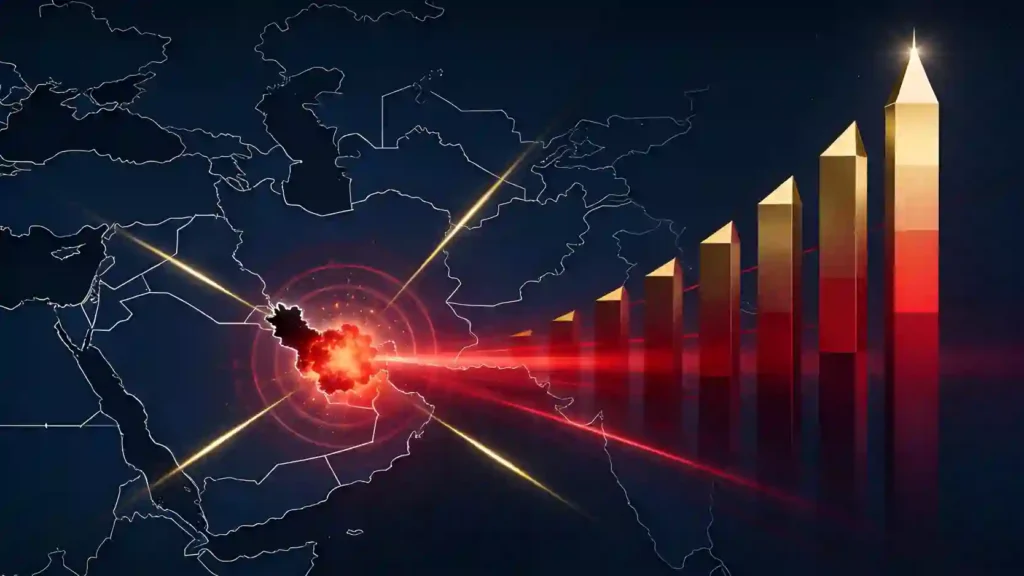
Everything begins with crude oil extraction. Prices at this stage are primarily determined by global supply and demand fundamentals. Supply is heavily influenced by geopolitics. Conflicts in the Middle East and decisions by major oil-producing countries (such as OPEC+ members) to increase or reduce production can directly affect international crude oil prices (including Brent crude oil and WTI crude oil). Demand is closely linked to global economic conditions. Oil demand increases during periods of economic expansion and decreases during downturns.
Stage Two: Midstream (Transportation and Refining): The Impact of Transportation Costs and Refining Margins
After crude oil is extracted, it must be transported to refineries around the world through giant oil tankers or pipelines. This process generates transportation costs, including freight and insurance expenses, which are added to the price of crude oil. After purchasing crude oil, refineries process it into products such as gasoline, diesel, and aviation fuel. Refining margins (known as the “crack spread”), and the operating costs of refineries are the key factors affecting prices at this stage.
Stage Three: Downstream (Final Sales): Direct Costs for Petrol Stations, Industry, and Aviation
Once refined, petroleum products enter the final sales stage. The most direct impact on the public comes from gasoline and diesel prices at petrol stations. The costs of fuel oil used by industrial sectors and aviation fuel used by airlines also become evident at this stage. This is the part of the oil price impact that consumers can feel most directly.
Stage Four: Cost Diffusion: A Chain Reaction From Transportation to Agriculture That Raises the Price of Everything
This is the most far-reaching and easily overlooked part of the oil price transmission chain. Rising oil prices do not merely make driving more expensive. They comprehensively increase “transportation costs”.
- Logistics Industry: Higher freight costs mean that the transportation costs of all physical goods increase.
- Agriculture: Agricultural machinery requires diesel, while producing fertilisers and pesticides also consumes large amounts of energy, raising the production costs of agricultural products.
- Manufacturing: Many factories require electricity or directly use fuel during production, making energy costs an important part of their operations.
- Aviation and Tourism: Aviation fuel accounts for a very high proportion of airline operating costs, and rising costs are directly reflected in airfares.
Ultimately, these increased costs are passed on to consumers through higher prices. From food on the dining table to products purchased online, almost nothing is unaffected. This is the fundamental reason why “when oil prices rise, everything becomes more expensive”.
The End of the Transmission Chain: How Do Oil Prices “Anchor” Public Inflation Expectations?
The impact of oil prices is not limited to higher physical costs. Their deeper influence lies in their ability to shape people’s “psychology”, namely “inflation expectations”. As the effects of the oil price transmission chain spread, they profoundly influence public views about future prices.
When Costs Are Passed on to Consumers: Why Do CPI and Core CPI Diverge?
When discussing inflation, we often hear about two indicators: what is CPI (the Consumer Price Index) and “core CPI”. CPI covers most goods and services required in daily life, while core CPI excludes the more volatile prices of “food” and “energy” to observe longer-term inflation trends. For this reason, when oil prices surge, the year-on-year CPI growth rate rises rapidly, while core CPI may change very little, creating a “divergence”. However, policymakers and analysts cannot ignore the surge in CPI because energy prices are precisely the starting point that triggers broader inflation.
From Rising Prices to Psychological Expectations: How Do Expectations Accelerate the Self-Fulfilment of Inflation?
Oil prices have the characteristic of “high visibility”. People drive every day and pass petrol stations, where they can see prices changing. This frequent and direct impact strongly influences how people judge future price trends. When the public generally expects that “everything will become more expensive in the future” (meaning inflation expectations have formed), what happens?
- Consumers: They may spend earlier or stockpile goods, further increasing demand and intensifying upward price pressure.
- Companies: Expecting future raw material and labour costs to rise, they may increase product prices in advance to maintain profits.
- Workers: They may demand higher wages to cope with rising living costs, potentially triggering a “wage-price spiral”.
Once these psychological expectations form, they accelerate the self-fulfilment of inflation and make the situation even more difficult.
Further Reading (Highly Recommended)
Crude Oil ETF Investment Guide: Understand Oil Funds, Fees, and Popular ETF Recommendations
Your Money Is Shrinking! Understand How Inflation Affects the Purchasing Power of the New Taiwan Dollar and Your Assets
Interpreting Key Indicators: Why Does the Market Closely Watch the “University of Michigan Inflation Expectations” Data?
To measure these elusive “psychological expectations”, the market relies heavily on several key survey indicators. Among them, the University of Michigan Inflation Expectations is one of the indicators most closely monitored by the Federal Reserve (Fed). This monthly report surveys consumers’ inflation expectations for the next one year and five years. If the data continues to rise, it indicates that public inflation expectations are becoming “unanchored”. This would force central banks to adopt more aggressive monetary policies to suppress inflation, making it a key data point affecting global financial markets.
Who Intervenes in the Transmission Chain? In-Depth Analysis of Three Key Variables
The oil price transmission chain does not operate in a vacuum. Many external forces can intervene in or even reverse its path and intensity. Understanding these variables helps us assess future trends more accurately.
Variable One: US Dollar Exchange Rate: The “Buffering” and “Amplifying” Effects of a Strong or Weak US Dollar
International crude oil is primarily priced in US dollars. Therefore, the strength of the US dollar exchange rate has a major impact on import costs for non-US-dollar economies (such as Taiwan and Malaysia).
- Strong US Dollar: When the US dollar appreciates, those using the New Taiwan dollar or Malaysian ringgit can exchange relatively less local currency for the same amount of US dollars and then purchase crude oil. To some extent, this can “buffer” the impact of rising international oil prices.
- Weak US Dollar: Conversely, when the US dollar depreciates, more local currency is required to purchase crude oil. This “amplifies” the rise in oil prices and creates “imported inflation”.
Variable Two: Monetary Policies Around the World: How Do Rate Hikes and Rate Cuts Affect Expectations?
The monetary policies of central banks around the world are the main tools used to manage inflation expectations. When oil-driven inflationary pressure becomes excessive, central banks usually adopt tightening policies through “rate hikes”. Rate hikes have two main purposes. The first is to increase borrowing costs, suppress corporate investment and household consumption, and cool an overheated economy. The second is to demonstrate a commitment to fighting inflation, stabilising public inflation expectations and preventing them from becoming unanchored. Conversely, if the economy enters a recession, central banks may cut rates to stimulate growth.
Variable Three: The Energy Transition: Can Green Energy Break the Traditional Transmission Chain?
This is a major structural question facing the global economy. Developing green energy sources such as solar and wind power has the potential to reduce dependence on fossil fuels over the long term, thereby “breaking” or at least weakening the traditional oil price transmission chain. However, the energy transition also presents short-term challenges:
- Investment Crowding-Out Effect: Large amounts of capital flowing into green energy may result in insufficient investment in traditional oil and gas exploration, potentially creating supply shortages during the transition period and pushing oil prices higher.
- Stability Issues: Renewable energy generation is intermittent and still requires traditional energy sources or energy storage facilities to ensure grid stability, which also creates additional costs.
Therefore, although the energy transition is inevitable, the difficulties and uncertainties during the process have also become new variables affecting oil prices and inflation.
A Guide for Investors and the Public on Responding to Oil Price Fluctuations
Faced with this transmission chain that affects the entire world, both investors and the public should develop appropriate strategies to reduce the impact and even identify opportunities.
Investment Strategies: Which Industries Benefit, and Which Should Be Avoided?
In an environment of rising oil prices, the performance of different industries will diverge:
-
-
- Upstream Energy: The most direct beneficiaries, such as oil exploration and refining companies.
- Alternative Energy: High oil prices highlight the economic benefits of green energy and stimulate the development of related industries.
- Currencies of Commodity-Exporting Countries: Commodity currencies such as the Canadian dollar and Australian dollar may strengthen as commodity prices rise.
- Potentially Affected Industries:
-
- Transportation/Aviation: Fuel costs are a major expense, directly eroding profits.
- Automobile Manufacturing: High oil prices reduce consumers’ willingness to purchase fuel-intensive vehicles.
- Consumer Discretionary: When the prices of daily necessities rise, consumers reduce spending on non-essential areas such as travel and entertainment.
Lifestyle Strategies: How Can Personal Budgets and Consumption Habits Be Adjusted to Reduce the Impact?
For the general public, actively managing personal finances is the only effective way to cope with an era of inflation:
- Review the Household Budget: Clearly distinguish between “needs” and “wants”, and prioritise essential living expenses during periods of high inflation.
- Plan Energy-Efficient Transportation: Make greater use of public transportation, electric vehicles, or shared bicycles, and reduce unnecessary driving.
- Shop Wisely: Compare prices between different retailers and use membership discounts or credit card rewards to reduce shopping costs.
- Allocate Assets to Hedge Against Inflation: Avoid holding all funds in cash or demand deposits because inflation will erode purchasing power. An appropriate allocation to assets that can resist inflation is essential, and this is a core financial planning issue in an inflationary era.
Frequently Asked Questions (FAQ)
Q: Why Do Everyday Goods Not Immediately Become Cheaper When Oil Prices Fall?
A: This is known as “downward rigidity”. There are several reasons. First, raw material contracts signed by companies when oil prices were high may be long-term agreements. Second, companies may want to recover profits that were previously eroded. Finally, if companies expect the decline in oil prices to be temporary, they have little incentive to reduce prices. Wage costs are also difficult to lower once they have increased, which is another reason.
Q: Apart From Oil Prices, What Other Important Factors Affect Inflation Expectations?
A: Many different factors influence inflation expectations. In addition to oil prices, they include food prices, another highly visible everyday expense; wage growth, (including whether wages can keep pace with prices); the credibility of central bank policies (including whether the public believes that central banks have the ability and determination to control inflation); and changes in property prices.
Q: How Do Government Energy Subsidies or Tax Policies Affect the Oil Price Transmission Chain?
A: Government intervention can temporarily distort the final effects of the transmission chain. For example, providing fuel subsidies or reducing fuel taxes can directly lower final selling prices and temporarily ease pressure on the public. However, this does not change the upstream and midstream cost structure and may instead stimulate demand, making overall market supply and demand even tighter. In the long term, such policies impose a substantial fiscal burden and are not a sustainable solution.
Q: What Is a “Wage-Price Spiral”?
A: It is a vicious cycle in which inflation becomes self-fulfilling. It begins with rising prices (such as those driven by higher oil prices) which increase the cost of living. Workers then demand higher wages as compensation. To cope with rising labour costs, companies are forced to raise the prices of goods again. Higher prices then trigger another round of wage demands, creating a continuously rising spiral.
Conclusion
In summary, the oil price transmission chain is a complex path that runs from oil wells directly to our wallets. It not only pushes up the prices of all goods through layers of accumulated costs, but more importantly, it can profoundly “anchor” public inflation expectations, thereby triggering broader and more persistent inflationary pressure. Throughout this process, the strength of the US dollar, the monetary policies of central banks around the world, and even the long-term trend of the energy transition all play key regulatory roles. In the current era of 2026, which is filled with geopolitical risks and economic uncertainty, gaining an in-depth understanding of how the oil price transmission chain operates is not only essential for professional investors, but also crucial knowledge for every ordinary person seeking to protect their assets and make informed consumption and financial decisions.