Strait of Hormuz Closure: Is a Fourth Oil Crisis Coming?
Complete Event Timeline: From Iran’s Announcement to the Surge in International Oil Prices
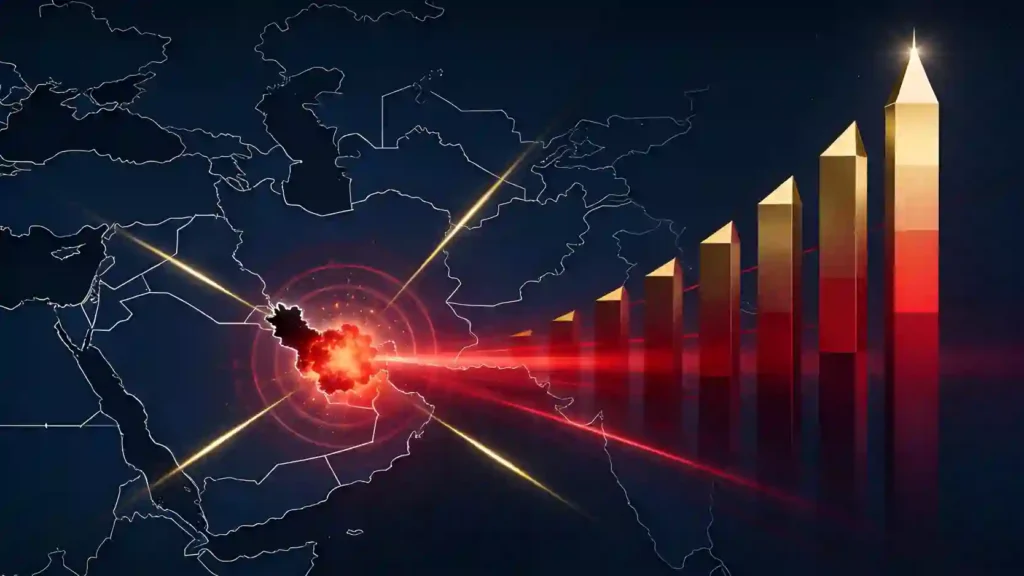
In July 2026, shocking news reverberated around the world: Iran’s Islamic Revolutionary Guard Corps announced through an official statement that it would “indefinitely close” the Strait of Hormuz, widely regarded as the chokepoint of global oil transportation. The move was equivalent to dropping a bombshell on the geopolitical chessboard. The indefinite closure of the Strait of Hormuz quickly ignited market panic, sending international oil prices soaring and casting a heavy shadow over the global economic outlook. Is this sudden storm a genuine military action or part of a complex political power struggle? Could it evolve into the fourth oil crisis? This article provides a comprehensive analysis of the entire event, the responses from all parties, and how it will affect the global economy and your wallet.
Why Did Iran Announce an “Indefinite Closure”? A Full Analysis of the Key Statement
According to a statement released by Iran’s state media, the action was taken in response to increasingly frequent military activities by “hostile forces” in the region and a new round of economic sanctions. The statement used forceful language, warning that any vessel attempting to cross the strait without authorization would face a “decisive” response. Analysts generally believe that the move represents a high-risk showdown by Iran amid immense external pressure. It is intended to demonstrate to the international community, particularly the US and its allies, Iran’s ability to control a vital artery of global energy supplies and gain leverage at the negotiating table. However, this “brinkmanship strategy” also carries a significant risk of accidental escalation, potentially casting the entire Middle East under the shadow of war.
International Oil Prices React Instantly: Brent and New York Crude Futures Surge
The market’s reaction was immediate and severe. Within just a few hours of Iran announcing the closure of the strait, futures prices for the world’s two major crude oil benchmarks, Brent crude and West Texas Intermediate (WTI), both opened sharply higher, with intraday gains at one point exceeding 15%. Panic among traders was instantly ignited, and the energy market experienced its most dramatic single-day volatility since the 2008 global financial crisis. This reaction in international oil prices reflected not only market concerns over an immediate supply disruption, but also a premium for prolonged geopolitical risks in the future.
US Central Command Issues Urgent Rebuttal: Are Commercial Vessels Still Passing Through? The Truth Remains Unclear
Just as panic gripped the market, the US Central Command (CENTCOM), which oversees operations in the Middle East, issued an urgent statement disputing Iran’s claims. The US stated that despite the threats, commercial vessels had still been observed “cautiously passing through” the strait, and emphasized that the US military and its allies would remain committed to maintaining the freedom and openness of international waterways. These conflicting messages have made the truth increasingly difficult to determine. Is Iran merely bluffing, or is the US military deliberately downplaying the situation? What is certain is that the situation in the Strait of Hormuz has entered a state of extreme uncertainty, and any miscalculation could trigger catastrophic consequences.
The Strait of Hormuz: Why Is It the Chokepoint of the Global Economy?
To understand the severity of this disruption to global supply chains, it is first necessary to recognize the irreplaceable strategic importance of the Strait of Hormuz.
The Lifeline of Global Oil Transportation: Daily Transit Volumes and Key Data
The Strait of Hormuz connects the Persian Gulf with the Gulf of Oman and is the world’s busiest and most important oil transportation route. According to data from the US Energy Information Administration (EIA), approximately 21 million barrels of crude oil and petroleum products pass through the strait each day, equivalent to around one-fifth of global oil consumption. Most exports from major oil-producing countries such as Saudi Arabia, Iraq, the United Arab Emirates, and Qatar depend on this waterway. If the strait were completely blocked, a massive shortfall would immediately emerge in global oil supplies, with an impact that could not be offset by alternative transportation routes or strategic reserves. For related data, refer to Wikipedia’s list of countries by oil production to understand the extent of each country’s dependence on this route.
Historical Strait Crises: Reviewing the Impact of Past Blockades
This is not the first time the Strait of Hormuz has become a geopolitical flashpoint. Over the past several decades, from the “Tanker War” during the Iran-Iraq War to numerous recent confrontations, this narrow waterway has witnessed countless crises. Every threat of closure has inevitably caused oil prices to surge and markets to fluctuate. Looking back at historical oil crises, we can see that energy security has always been one of the most sensitive factors affecting the global economy.
Related Reading (Highly Recommended)
Complete Analysis of Brent Crude Oil Prices: Live Trends, Historical Highs and Lows, and Comparison With WTI
Oil Price Surge Alert! How Could the US-Iran Conflict Trigger a Global Economic Crisis? 2026 Latest…
Shockwave Analysis: More Than Oil Prices, Global Supply Chains Face a Breakdown Crisis
Many people believe that the Strait of Hormuz crisis only concerns oil prices, but in reality, its shockwaves are shaking the global supply chain system with unprecedented breadth and depth. For the modern economy, which depends on globalization, this is undoubtedly a perfect storm.
Energy Security Threats to Asian Manufacturing (in China, Japan, and South Korea)
East Asia is the center of global manufacturing, while countries such as China, Japan, and South Korea are highly dependent on Middle Eastern oil. Any disruption in the strait directly threatens these countries’ energy security. If crude oil supplies are disrupted, this will not only drive up production costs, but may also lead to factory shutdowns and reduced production capacity, affecting industries ranging from electronics to automobile manufacturing. For Asian countries already dealing with the challenge of an economic slowdown, this would undoubtedly make matters worse.
The Chain Reaction of Soaring Global Shipping Costs and Cargo Delays
The threat of a blockade has forced global shipping companies to consider alternative routes, such as diverting around the Cape of Good Hope in Africa. This would not only add several weeks to shipping times, but also cause fuel costs, insurance premiums, and labor costs to surge. These additional costs will ultimately be passed on to consumers, creating global inflationary pressure. More seriously, large-scale cargo delays will disrupt companies’ precise Just-in-Time inventory management, leaving industries ranging from retail and manufacturing to healthcare exposed to the risk of shortages and supply chain disruptions.
From Daily Life to Industry: Potential Impact on End-Consumer Markets
Ultimately, the effects of this crisis will reach our everyday lives. Rising gasoline prices are only the first step, followed by broad price increases across a range of goods and services, including airfares, logistics, food, and plastic products. Facing cost pressures, companies may reduce investment and suspend hiring, which could affect the labor market. This geopolitical crisis unfolding far away in the Middle East is quietly eroding everyone’s wallet in a way that cannot be ignored.
Future Scenario Analysis: War, Negotiations, or a Prolonged Standoff?
Faced with a complex and rapidly changing situation, the question of greatest concern to the market is: what will happen next? How will this crisis, which affects the lifeline of the global economy, evolve?
Analysis of International Responses and the Prospects for Diplomatic Mediation
The international community is currently engaged in active diplomatic mediation. On one hand, the US is demonstrating its military strength by deploying a carrier strike group to patrol the region and ensure freedom of navigation. On the other hand, it is also communicating indirectly with Iran through third-party channels, including its European allies. Countries such as China and Russia have called on all parties to exercise restraint and resolve the dispute through dialogue. The future direction of the crisis will depend on the political judgment of all sides. Whether they choose to move toward the abyss of war or return to the negotiating table may become clearer within the next few weeks.
How Do Market Experts Assess Short-Term and Long-Term Oil Price Trends?
Most market experts believe that oil prices will remain volatile at elevated levels in the short term. Any sign of military escalation could easily push oil prices to record highs. Even if the crisis temporarily eases, the geopolitical risk premium is unlikely to disappear in the near term. In the long term, oil price trends will depend on how the crisis is ultimately resolved. If a new agreement can be reached, oil prices may stabilize. However, if the situation develops into a prolonged standoff, the world will have to adapt to an era of persistently high oil prices, which will also accelerate countries’ exploration of alternative energy sources.
Related Reading (Highly Recommended)
[Investment Guide for Turbulent Times] Rising Geopolitical Risks? A Comprehensive Comparison of Five Major Safe-Haven Assets…
Investment Strategies for Turbulent Times: Understand Geopolitical Risks and Deploy Five Major Wartime Investment Strategies
Worst-Case and Best-Case Scenarios: Full-Scale War vs. Rapid Reconciliation
- Worst-Case Scenario (Full-Scale War): If diplomatic efforts fail, a military miscalculation by either side could trigger direct conflict. Once war breaks out, the Strait of Hormuz would be completely blocked, oil prices could surge above US$200 per barrel, and the global economy would fall into a severe recession, with an impact far exceeding that of previous oil crises.
- Best-Case Scenario (Rapid Reconciliation): Under intense pressure from the international community, the US and Iran reach some form of temporary agreement or understanding. Iran withdraws its threat to close the strait in exchange for a partial easing of sanctions. Under this scenario, oil prices would fall rapidly, market panic would ease, and the global economy could avoid a major disaster.
However, a “prolonged standoff” scenario between these two extremes is more likely, with tensions periodically emerging in the strait, oil prices gradually rising amid volatility, and global supply chains remaining under sustained pressure.
FAQ: Frequently Asked Questions About the Strait of Hormuz Crisis
Q: How long will the closure of the Strait of Hormuz last?
A: This depends on geopolitical developments. At present, “indefinite” appears to be more of a political stance than an established reality. A complete blockade would benefit no party, and Iran’s own economy would also suffer severe damage. Intermittent disruptions or threats are more likely, serving as bargaining leverage. The duration of the crisis will depend on the progress of diplomatic mediation.
Q: Besides oil prices, how else will my life be affected?
A: The impact will be comprehensive. First, transportation costs will increase, including airfares and shipping expenses. Second, the prices of all goods that depend on oil as a raw material or for transportation, from plastic products to imported food, may rise, intensifying inflation. If the crisis continues, greater cost pressures on businesses could affect wage growth and employment opportunities, which may then impact the stock market and your investment portfolio.
Q: Could this event cause a global economic recession?
A: The possibility certainly exists, particularly if the situation escalates into military conflict. Based on historical experience, every severe oil crisis has been accompanied by a global economic recession. If oil prices double within a short period, consumption and investment would be significantly suppressed, bringing the already fragile global economic recovery to an abrupt halt. Therefore, countries are making every effort to prevent the worst-case scenario.
Q: Should I buy or sell energy stocks now?
A: This is a complex decision. In the short term, rising oil prices are positive for energy stocks. However, high oil prices could also trigger an economic recession, which would in turn weaken long-term energy demand. In addition, the risk of war would cause market volatility to increase sharply. Investors are advised to make decisions based on their own risk tolerance. They may consider building positions in stages or using instruments such as crude oil ETFs to diversify risk, rather than allocating all their funds to a single stock.
Conclusion
In summary, the indefinite closure of the Strait of Hormuz is not merely an isolated regional military confrontation. Its ripple effects have rapidly spread to global energy security, supply chain stability, and even everyone’s daily life. The future remains subject to multiple variables involving war and peace, confrontation and negotiation. Regardless of how the final scenario unfolds, it is foreseeable that this event will dominate global markets in the coming months. For investors, remaining calm, closely monitoring developments, and reassessing their asset allocation to address potential geopolitical risks are crucial priorities at this time.