How Trump’s Remarks Move Markets & the Economy

How Trump’s Remarks Shake the Markets: An Analysis of the Politics of Tweets and Their Impact on the Stock Market and the Economy
The Core Characteristics of Trump’s Remarks and the Market’s Response Pattern
To understand how Trump’s remarks affect the markets, it is essential to first grasp the key characteristics of his communication style. Together, these traits form a unique “politics of tweets” capable of triggering significant market volatility.
Unpredictability: Breaking the Traditional Model of Political Communication
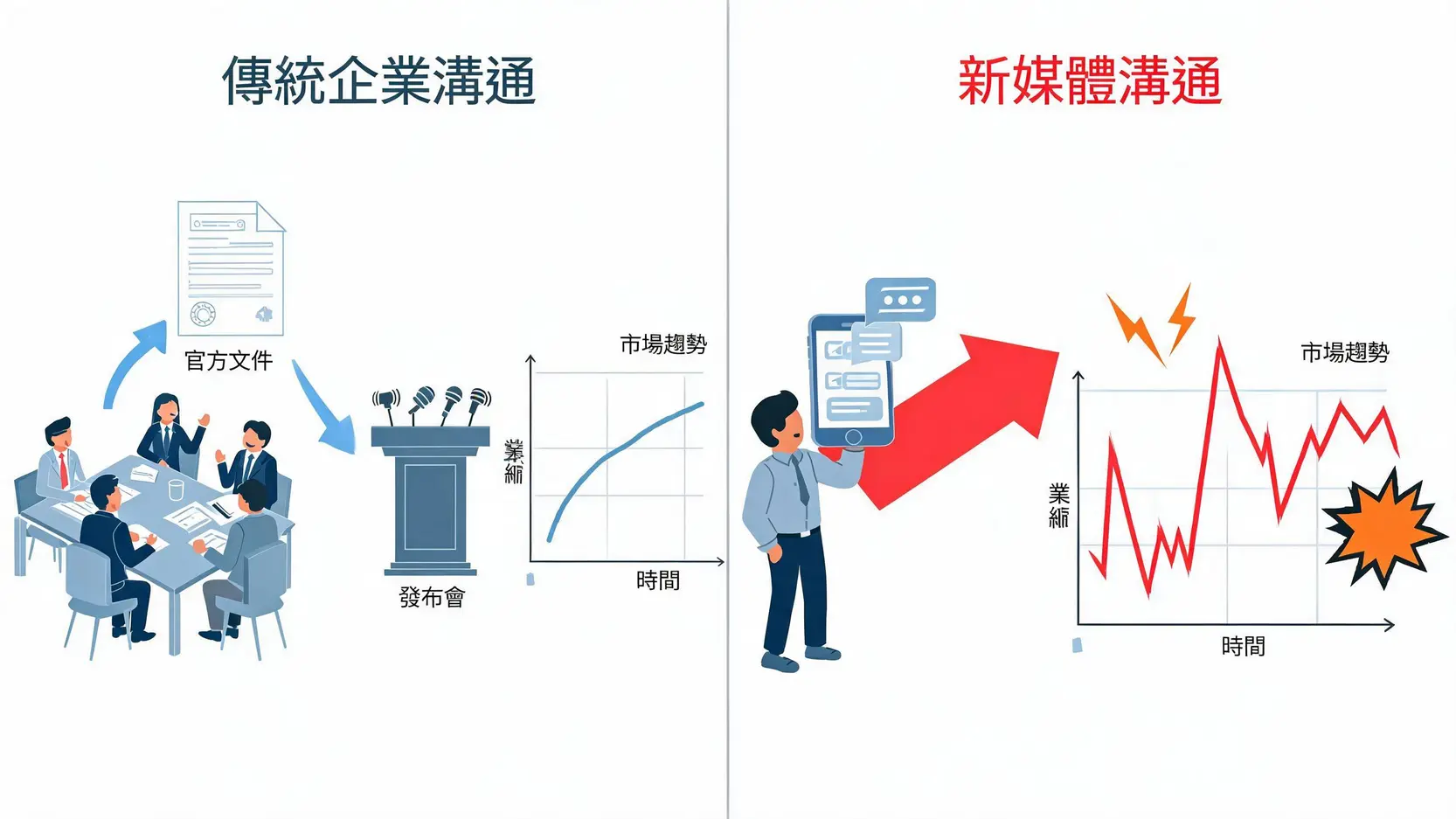
Traditional political statements are generally carefully crafted and refined by teams to stabilize market expectations. Trump, however, took the opposite approach. He preferred using social media platforms such as Twitter (now X) and Truth Social to communicate directly with the public, bypassing traditional media channels. This communication style introduced a high degree of unpredictability. Instead of looking for clues in official statements or press conferences, market participants found themselves monitoring his social media accounts around the clock, knowing that any single post could become the next market-moving event. This “say whatever comes to mind” approach made it difficult for markets to price in policy risks, amplifying market volatility.

Traditional Communication vs. Trump’s Communication Style: A Comparison of Their Market Impact
Policy Surprises: Using Public Remarks to Signal or Pressure Trade and Foreign Policy
Trump frequently used social media as a platform to preview policy decisions or apply political pressure. During the US-China trade war, when the impact of Trump’s tariffs was at its peak, he repeatedly caught markets off guard by announcing tariffs on hundreds of billions of dollars’ worth of Chinese imports or threatening additional tariff increases through a single tweet. This pattern of “policy surprises” repeatedly rendered traditional economic models and analytical frameworks ineffective. Corporate supply chain planning and investors’ asset allocation strategies often had to be completely reassessed following an unexpected social media post.
A Market Sentiment Amplifier: The Relationship Between the VIX Fear Index and Trump’s Remarks
Trump’s remarks are a powerful amplifier of market sentiment. The volatility index, known as the “VIX Fear Index”, is a key indicator that measures the market’s expectations for stock market volatility over the next 30 days. Studies have shown that during Trump’s presidency, the VIX frequently experienced sharp spikes whenever he made negative remarks about the trade war, the Federal Reserve, or specific companies. This indicates that his statements directly fueled risk aversion, prompting investors to sell risk assets and move into safe-haven assets, thereby intensifying market sell-offs. At one point, his social media account effectively became a “leading indicator” for the VIX.
Further Reading (Highly Recommended)
Market Sentiment Analysis Tools: Five Fear and Greed Indicators Every Retail Investor Should Learn
Four Ways Trump’s Remarks Affect the Economy: Understanding Their Impact on the Stock Market
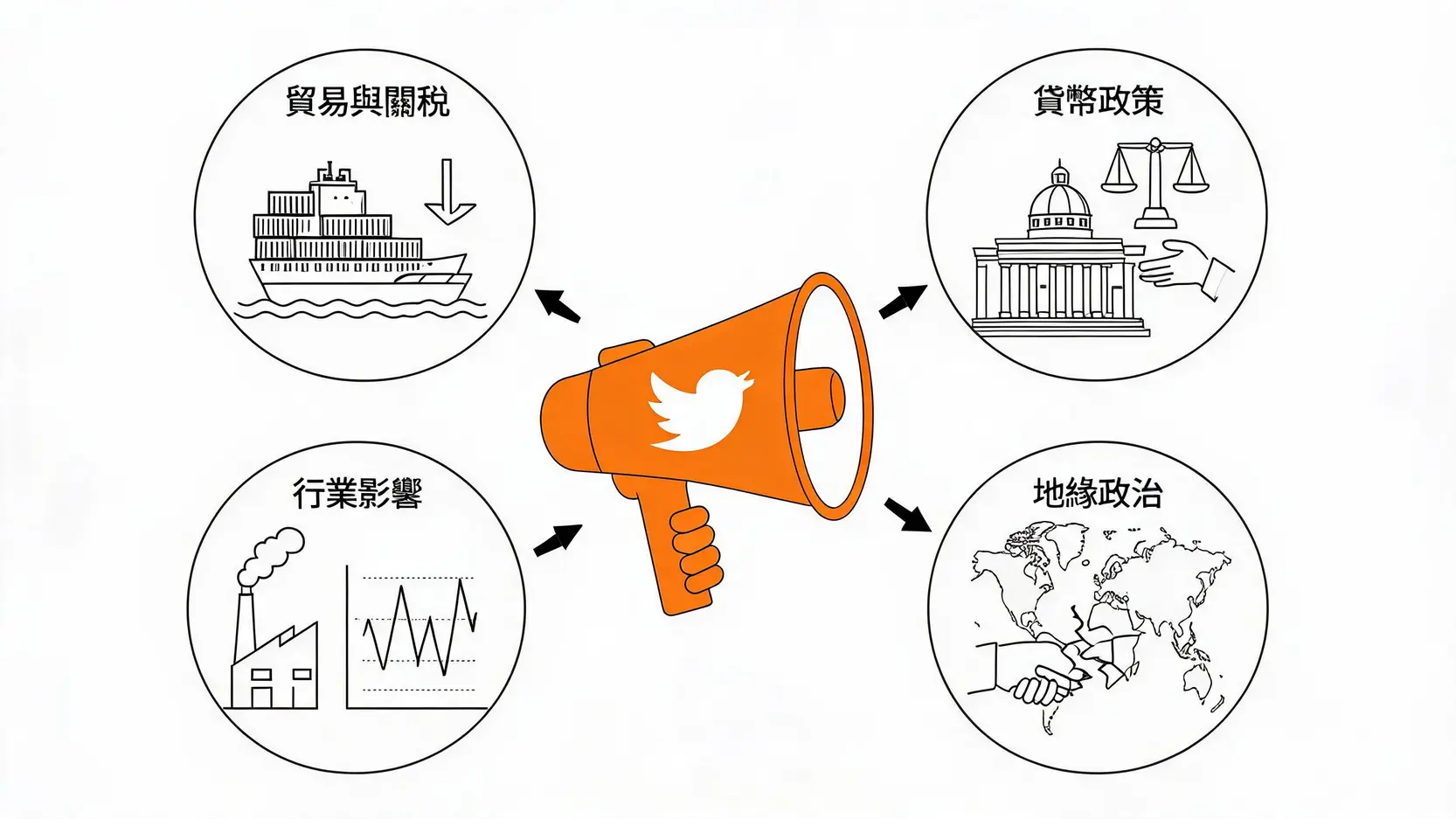
Trump’s remarks do not simply remain political rhetoric. They are transmitted through multiple channels that have tangible effects on the global economy and financial markets. Understanding these transmission mechanisms allows investors to better assess Trump’s impact on the stock market.

The Four Main Channels Through Which Trump’s Remarks Affect the Economy
Trade and Tariffs: A Direct Impact on Global Supply Chains
The most immediate impact comes through trade and tariffs. Trump’s “America First” agenda led him to use tariffs frequently as a policy tool. His tariff threats against major trading partners, including China, the European Union, and Mexico, directly disrupted global supply chains that had developed over decades. Companies were forced to consider relocating production out of China or passing higher costs on to consumers. This not only raised inflation expectations but also significantly reduced the profitability of multinational corporations. Whenever trade war rhetoric intensified, sectors closely tied to global trade, such as shipping, manufacturing, and technology hardware, typically experienced immediate declines.
Monetary Policy: Public Pressure on the Federal Reserve and Its Impact on the US Dollar
Unlike previous US presidents, who generally respected the Federal Reserve’s (Fed) independence, Trump repeatedly criticized the Federal Reserve’s interest rate policy in public. He frequently accused then-Chair Jerome Powell of raising interest rates too aggressively and undermining economic growth. Although these remarks could not directly influence Federal Reserve decisions, they successfully shaped market expectations for interest rates. When markets anticipated continued political pressure for a more accommodative monetary policy, the US dollar often weakened while precious metals such as gold received support.
Industry Impact: Volatility in Companies and Sectors Mentioned by Trump
“Calling out” specific targets is another hallmark of Trump’s rhetoric. On one day, he might criticize Amazon over taxation and postal service costs, sending its share price sharply lower during trading. On another, he might praise Boeing or Ford for bringing jobs back to America, lifting their share prices in the short term. Such targeted remarks exposed individual stock investors to significant “Trump risk”. Industries heavily dependent on government policy or procurement, particularly defense, technology, and automobiles, became especially sensitive to Trump’s comments.
Geopolitics: Safe-Haven Demand Triggered by Foreign Policy Remarks
Trump’s remarks also had a highly disruptive impact on international relations. His criticism of NATO allies over defense spending, his fluctuating relationship with North Korean leader Kim Jong Un, and his withdrawal from the Iran nuclear agreement all contributed to heightened geopolitical tensions. Whenever these remarks increased the perceived risk of international conflict, investors rapidly shifted toward safe-haven assets. Capital flowed out of higher-risk markets, including many emerging markets, and into traditional safe-haven currencies such as the US dollar, Japanese yen, and Swiss franc, as well as assets such as gold.
Historical Review: Examples of Market Volatility Triggered by Trump’s Tweets
Real-world examples demonstrate the power of the politics of tweets more effectively than theory alone. Looking back over the past several years, numerous episodes of sharp market volatility were triggered by a single Trump tweet. These cases clearly demonstrate the power of “Twitter politics”.
Case Study One: Trade War Tweets and the Chinese Stock Market’s Response
On August 1, 2019, shortly after US-China trade negotiations concluded in Shanghai, markets generally expected tensions to ease temporarily. However, Trump unexpectedly announced on Twitter that the remaining US$300 billion of Chinese imports would face an additional 10% tariff starting September 1. The tweet completely shattered market optimism.
Following the announcement:
- Global stock markets: Markets fell sharply, with the Dow Jones Industrial Average dropping more than 300 points intraday.
- Chinese and Hong Kong stock markets: On the following trading day, August 2, the Shanghai Composite Index opened sharply lower and eventually closed down 1.41%, while Hong Kong’s Hang Seng Index plunged 2.35%.
- Chinese yuan: The offshore renminbi depreciated rapidly against the US dollar, falling below the 6.95 level.
This example perfectly illustrates the “surprise” nature of Trump’s remarks and their direct impact on global markets, particularly those closely tied to China. Numerous research studies have confirmed this relationship.
Case Study Two: Criticism of Amazon and Volatility in Technology Stocks
Trump repeatedly criticized e-commerce giant Amazon, accusing the company of taking advantage of the US Postal Service while paying too little tax. During March and April 2018, he published multiple posts criticizing Amazon. Investors feared that the government might launch antitrust investigations or alter postal pricing policies, triggering panic selling.
- Stock price reaction: During Trump’s sustained criticism, Amazon’s (AMZN) share price declined by more than 10%, wiping out hundreds of billions of dollars in market value.
- Sector-wide impact: Because Amazon was one of the largest components of the Nasdaq Index, its sharp decline also weighed on the broader technology sector, raising concerns about excessive technology stock valuations.
Can “Trump Risk” Be Quantified?
Financial analysts have even attempted to quantify this unique form of “Trump risk”. For example, J.P. Morgan created the “Volfefe Index” (combining “volatility” with “covfefe”, a reference to one of Trump’s famous misspellings), to track the impact of Trump’s tweets on volatility in the US interest rate market. The research found that Trump’s tweets significantly increased short-term market volatility, particularly when they contained keywords such as “China”, “trade”, or “tariffs”.
These data and case studies all point to the same conclusion: Trump’s remarks are far more than political noise. They have become an observable and, to some extent, measurable market risk factor.
Further Reading (Highly Recommended)
How Should Investors Respond if Trump Is Elected?
As the 2028 US presidential election approaches, the question of “what if Trump is elected” has become a scenario that global investors must seriously consider. Based on his previous governing style and communication patterns, markets generally expect that if he returns to the White House, financial market volatility will increase significantly. How should investors adjust their strategies to prepare for a potential “Trump 2.0” era?

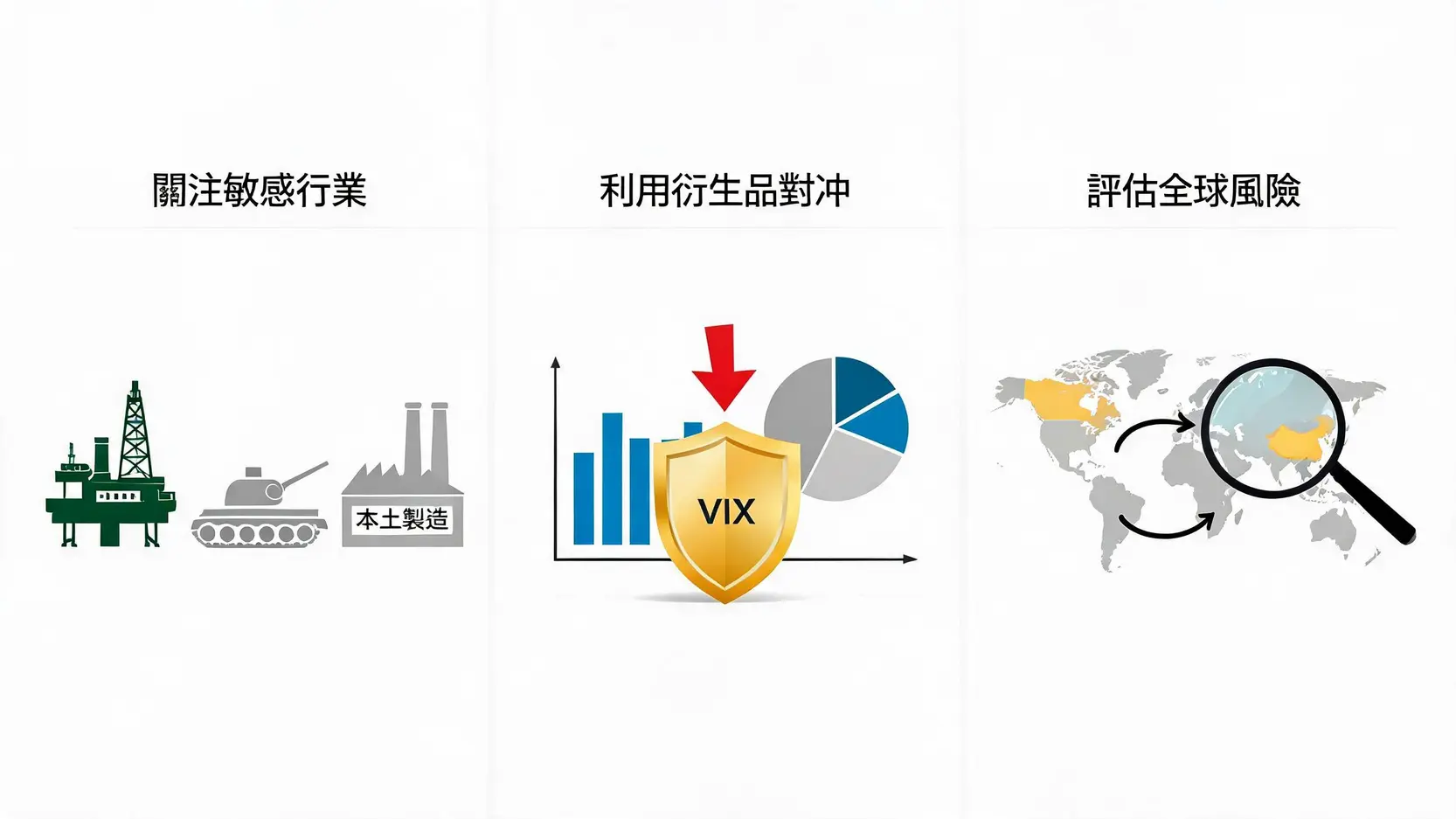
Three Key Investment Strategies for the “Trump 2.0” Era
Increase Focus on Policy-Sensitive Sectors
Trump’s policies are highly targeted, meaning certain industries could clearly emerge as winners or losers. Investors should pay closer attention to these policy-sensitive sectors.
- Traditional energy: Trump has consistently supported traditional fossil fuel industries. His return could bring deregulation for oil, natural gas, and coal producers, benefiting related energy companies. In contrast, subsidies for renewable energy and electric vehicles could face policy changes.
- Defense: Under the “America First” agenda and a more assertive foreign policy, defense spending could increase, potentially benefiting defense contractors (such as Lockheed Martin and Raytheon).
- US domestic manufacturing: Policies designed to bring supply chains back to the US or penalize overseas production could benefit manufacturers and infrastructure-related companies focused on the domestic US market.
Use Volatility Derivatives for Hedging
It is reasonable to expect Trump’s remarks to once again become a major source of market volatility. For investors seeking greater portfolio stability, learning how to hedge with derivatives is increasingly important.
- Buying put options: When market risks appear elevated, investors can purchase put options on broad market index ETFs (such as SPY) to serve as portfolio insurance.
- Monitoring VIX-related products: Long positions in VIX futures or related ETFs (such as VXX and UVXY) may generate gains during panic-driven market declines, helping offset losses in equity portfolios. However, these products are designed to capture short-term volatility and are generally unsuitable for long-term holding.
Reassess Exposure to China and Emerging Markets
If Trump is elected again, renewed tensions between the US and China are widely expected, making Trump’s China policy a major market focus once again. This would present direct challenges for investors with significant exposure to China and other emerging markets.
- Review Chinese assets: Investors holding substantial positions in Chinese equities, (including A-shares, Hong Kong-listed stocks) or US-listed Chinese companies, should reassess their resilience to an escalation in tariff disputes and technology restrictions.
- Supply chain diversification beneficiaries: Look for companies positioned to benefit from the trend of “reducing reliance on China” or diversifying supply chains. Manufacturers with production facilities in Southeast Asia (such as Vietnam and India) or in Mexico, may receive new orders and growth opportunities as companies seek alternatives to China.
Conclusion
In summary, Trump’s remarks have evolved from political expression into a powerful non-economic risk factor that financial markets can no longer ignore. Their high degree of unpredictability, direct influence on policy expectations, and ability to amplify market sentiment have all contributed to significantly greater volatility across global financial markets. Whether Trump is in office or not, understanding how his remarks are transmitted through financial markets and incorporating this unique political risk into everyday investment decision-making remains a critical strategy for protecting capital and potentially generating excess returns in today’s increasingly complex environment.
Frequently Asked Questions (FAQ)
Q: Which Stocks Are Most Affected by Trump’s Remarks?
A: The stocks most affected generally fall into the following categories: 1. Technology and manufacturing companies that rely heavily on international supply chains such as Apple, as well as many automobile manufacturers, which are vulnerable to tariff policies. 2. Companies specifically mentioned by Trump. Whether he criticizes them (such as Amazon) or praises them, (such as Boeing), their share prices tend to react immediately. 3. Policy-sensitive industries, including defense, traditional energy (oil and coal), and renewable energy, whose development is closely tied to government policies and subsidies.
Q: How Can You Tell Which of Trump’s Remarks Are Serious and Which Are Simply Verbal Threats?
A: This is challenging, but there are several factors to consider: 1. Repetition: If he repeatedly raises the same issue across different occasions (such as imposing tariffs on China), it is more likely to become actual policy. 2. Support from his core team: Watch whether key White House advisers, trade representatives, and other senior officials express similar views, as this often signals that a policy is taking shape. 3. Market reaction: At times, he may adjust the intensity of his remarks based on the market’s initial response. Overall, however, treating all of his remarks as potential risks and preparing accordingly is the more prudent approach.
Q: Do Trump’s Remarks Affect the Cryptocurrency Market?
A: Yes, indirectly. Trump has generally expressed a negative view of cryptocurrencies and stated during his previous presidency that Bitcoin was a “scam” and “based on thin air”. If he returns to office and pursues stricter regulatory policies, this could put pressure on the cryptocurrency market. On the other hand, the broader financial uncertainty created by his policies may encourage some investors to seek refuge in assets such as Bitcoin, which some view as “digital gold”, potentially driving prices higher. As a result, the impact is both two-sided and complex.
Q: How Do Trump’s Remarks Affect the US Dollar?
A: The impact is relatively complex. On one hand, his criticism of the Federal Reserve’s rate hikes and his calls for a weaker US dollar to support exports can put downward pressure on the currency. On the other hand, the trade wars and geopolitical risks associated with his policies can increase global risk aversion, prompting capital to flow into the US dollar as the safest asset, thereby strengthening it. Overall, the direction of the US dollar depends on which of these forces dominates at the time.
Related Articles
-
Global Asset Repricing: Why Has Japan’s Property Market Become a Safe Haven for Smart Money Amid Yen Depreciation? What Is “Global Asset Repricing”? Why Has Japan Become the Main Focus? While investment forums around the world are heatedly discussing yen depreciation pressure, the real smart money has already begun positioning...2026 年 6 月 23 日
-
Farewell to Negative Interest Rates! The Truth Behind Japan Meeting Its Inflation Target: Why Has Yen Depreciation Pressure Increased Instead of Easing? The Japanese economy is staging an extremely contradictory drama: after waiting for thirty years, it has finally welcomed the long-awaited Japan inflation, yet the market’s response has been...2026 年 6 月 23 日
-
A Complete Analysis of Central Bank Policy Shifts: From YCC to QT, Decoding the BOJ and the Fed’s Next Move The Bank of Japan (BOJ) and the US Federal Reserve (Fed), two giants of the global financial markets, are seeing their diverging monetary policy directions become the core force driving...2026 年 6 月 23 日