Shipping Stocks Outlook: Freight Surge & Strategy

Shipping Stock Outlook Analysis: Container Freight Index Surges, Understanding Investment Strategies Amid the Global Supply Chain Crisis
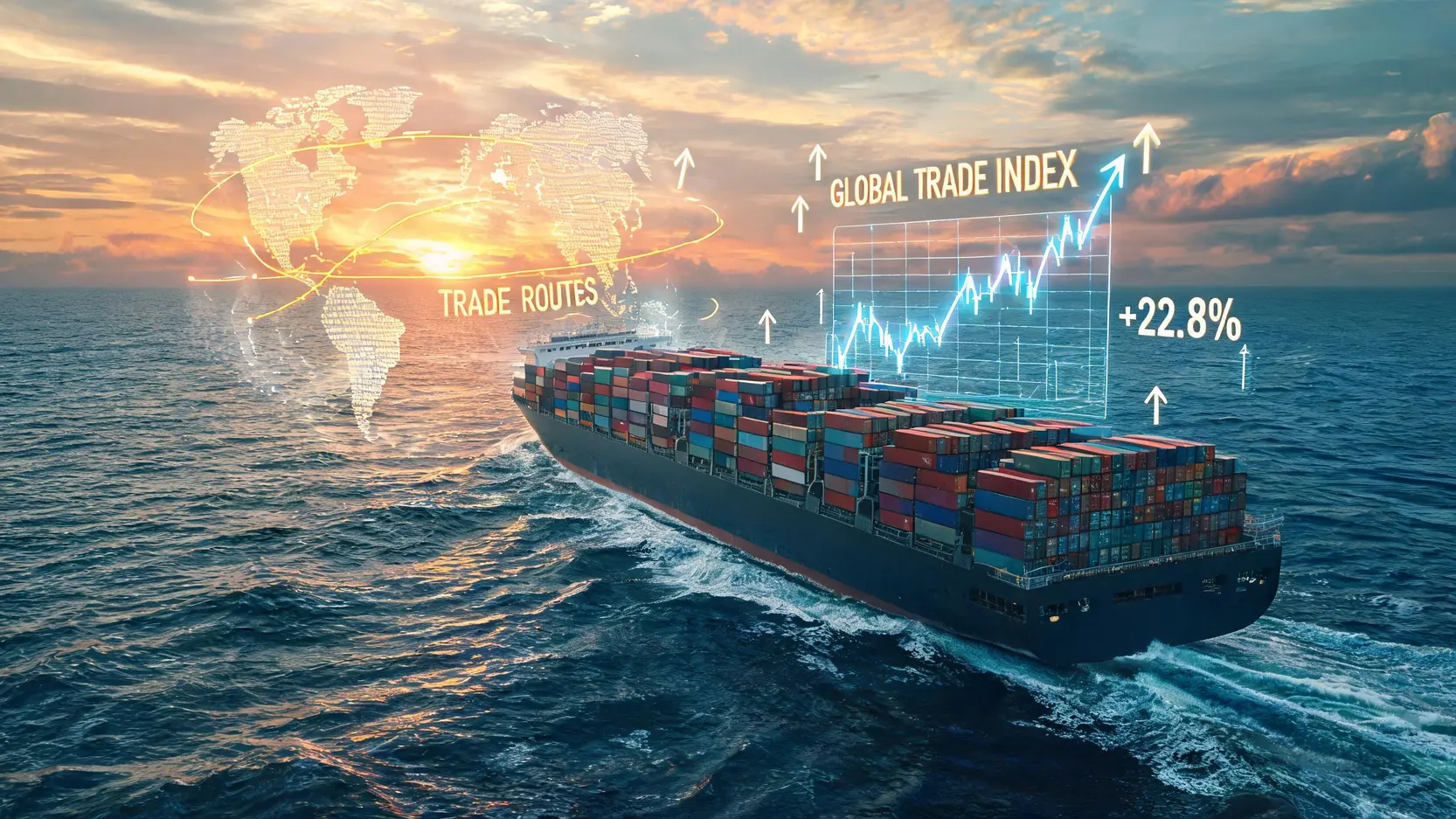
Recently, geopolitical factors such as the Red Sea crisis have once again triggered alarms across the global supply chain. Freight rates continue climbing, pushing shipping stocks into the market spotlight. Many investors are confused about the outlook for shipping stocks: is this the perfect opportunity to chase rising prices, or a trap hiding massive risks? This article will provide an in-depth breakdown of the key indicator, the Container Freight Index, explain the impact of the global supply chain crisis, and offer comprehensive 2026 investment strategies and outlook analysis.
What Is the Container Freight Index (EC)? The Thermometer of the Shipping Market Outlook
To understand shipping stock movements, you must first understand the “Container Freight Index” (EC, short for Containerized Freight Index (Europe Service) Futures). This indicator acts like a thermometer for the shipping market, instantly reflecting market conditions and sentiment.
Definition and Background: Why Is It a Key Indicator for Monitoring European Route Freight Rates?
Container Freight Index futures are financial derivatives listed on the Shanghai International Energy Exchange (INE). They track spot container shipping rates from Shanghai to major European ports (such as Hamburg, Rotterdam, and Antwerp). Since European routes are among the world’s most important trade corridors, fluctuations in freight rates are highly representative. As a result, the EC Index has become:
- A price discovery tool: It provides shipping companies, cargo owners, and investors with a transparent reference for future freight rate expectations.
- A risk management tool: Related businesses can use futures contracts to hedge against severe freight rate volatility.
- An investment observation indicator: For stock market investors, EC Index trends directly signal shipping companies’ earnings expectations and serve as a leading indicator for evaluating shipping stock outlooks.
Interpreting Index Volatility: The Geopolitical and Market Factors Behind the Recent Surge
The recent explosive rally in the EC Index did not happen without reason, but was instead driven by multiple overlapping factors:
- Red Sea crisis: Attacks on merchant vessels in the Red Sea by Yemen’s Houthi armed group have forced many container ships to reroute around the Cape of Good Hope in Africa. Voyage times have increased significantly (by roughly 10-14 days), directly driving up transportation time and fuel costs.
- Tight shipping capacity supply: Rerouted voyages occupy substantial effective shipping capacity, making available vessels and containers increasingly scarce. Under supply-demand imbalances, freight rates naturally surge.
- Market sentiment: Fears of supply chain disruptions have pushed cargo owners to ship goods earlier and aggressively secure shipping space, further driving up spot freight rates. This sentiment has also been fully reflected in EC futures prices.

Illustration: The Chain Reaction Triggered by the Red Sea Crisis
Further Reading (Highly Recommended)
Recommended US Stock ETFs 2026: The Complete Guide to Broad Market and Gold ETFs With Risk Analysis
How Does the Global Supply Chain Crisis Affect the Outlook for Shipping Stocks?
The current global supply chain crisis is a double-edged sword for shipping stocks. Understanding the breadth and depth of its impact is the foundation for conducting accurate shipping stock outlook analysis.
The Root of the Crisis: From Pandemic After Effects to the Chain Reaction of the Red Sea Crisis
The seeds of this crisis were planted during the COVID-19 pandemic. Port congestion, labor shortages, and the sharp rebound in demand after an initial collapse disrupted the stable rhythm of the global supply chain. Just as the market was attempting to recover from the aftereffects of the pandemic, the outbreak of the Red Sea crisis further worsened the situation, triggering a new wave of chain reactions:
- Shipping delays and uncertainty: Shipping schedules have become severely disrupted, with arrival times increasingly unpredictable, placing the global manufacturing industry’s “Just-in-Time” production model under serious pressure.
- Comprehensive rise in transportation costs: Beyond ocean freight rates, additional expenses such as fuel costs and insurance premiums (including war risk insurance) have risen significantly due to rerouted voyages.
- Global inflationary pressure: Elevated transportation costs are ultimately passed on to end consumers, potentially triggering or worsening global inflation.
Winners and Losers During the Crisis: How Soaring Freight Rates Are Reshaping the Shipping Industry Profit Landscape
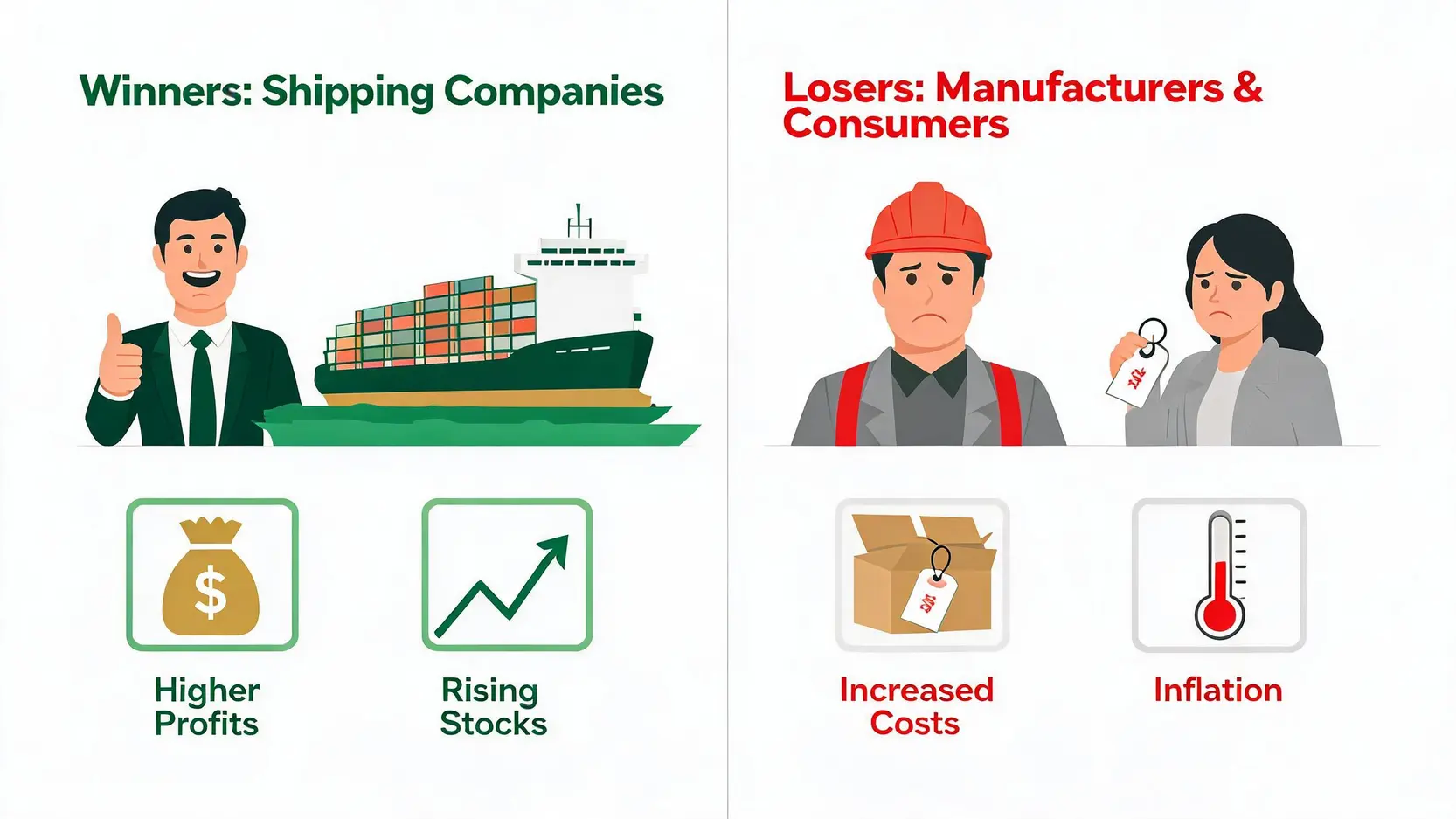
Against the backdrop of surging freight rates, shipping companies are undoubtedly the most direct “winners” in the short term.
- Significant profitability growth: Freight rate increases have far exceeded rising costs, driving explosive growth in shipping companies’ gross margins and net profits, while share prices have rallied accordingly.
- Abundant cash flow: Strong profits have generated substantial cash reserves for companies, allowing them to upgrade fleets, repay debt, or reward shareholders through high dividend payouts.
However, not everyone benefits from this situation. Manufacturers, retailers, and consumers who rely on imports and exports are the “losers” in this crisis, as they must bear higher costs and rising product prices.

Two Contrasting Outcomes During the Supply Chain Crisis: Shipping Companies vs. Consumers
2026 Shipping Stock Outlook Analysis: Full Evaluation of Opportunities and Risks
Looking ahead, the outlook for shipping stocks remains highly uncertain. While investors are attracted by the potential profits created by elevated freight rates, they must also rationally evaluate the underlying risks. This is the mindset of a mature investor.

Balancing Advantages and Risks: Opportunities and Challenges in the Shipping Stock Outlook
Bullish Factors: Sustainability of High Freight Rates and Corporate Earnings Forecasts
The market’s biggest concern at present is how long elevated freight rates can continue. As long as geopolitical conflicts such as the Red Sea crisis remain unresolved and rerouting becomes the norm, tight shipping capacity conditions are unlikely to ease in the short term. This means shipping companies may continue delivering strong earnings reports over the next several quarters, supporting their share prices. In addition, annual long-term contracts signed by some companies may also rise accordingly, locking in profits for a certain period ahead.
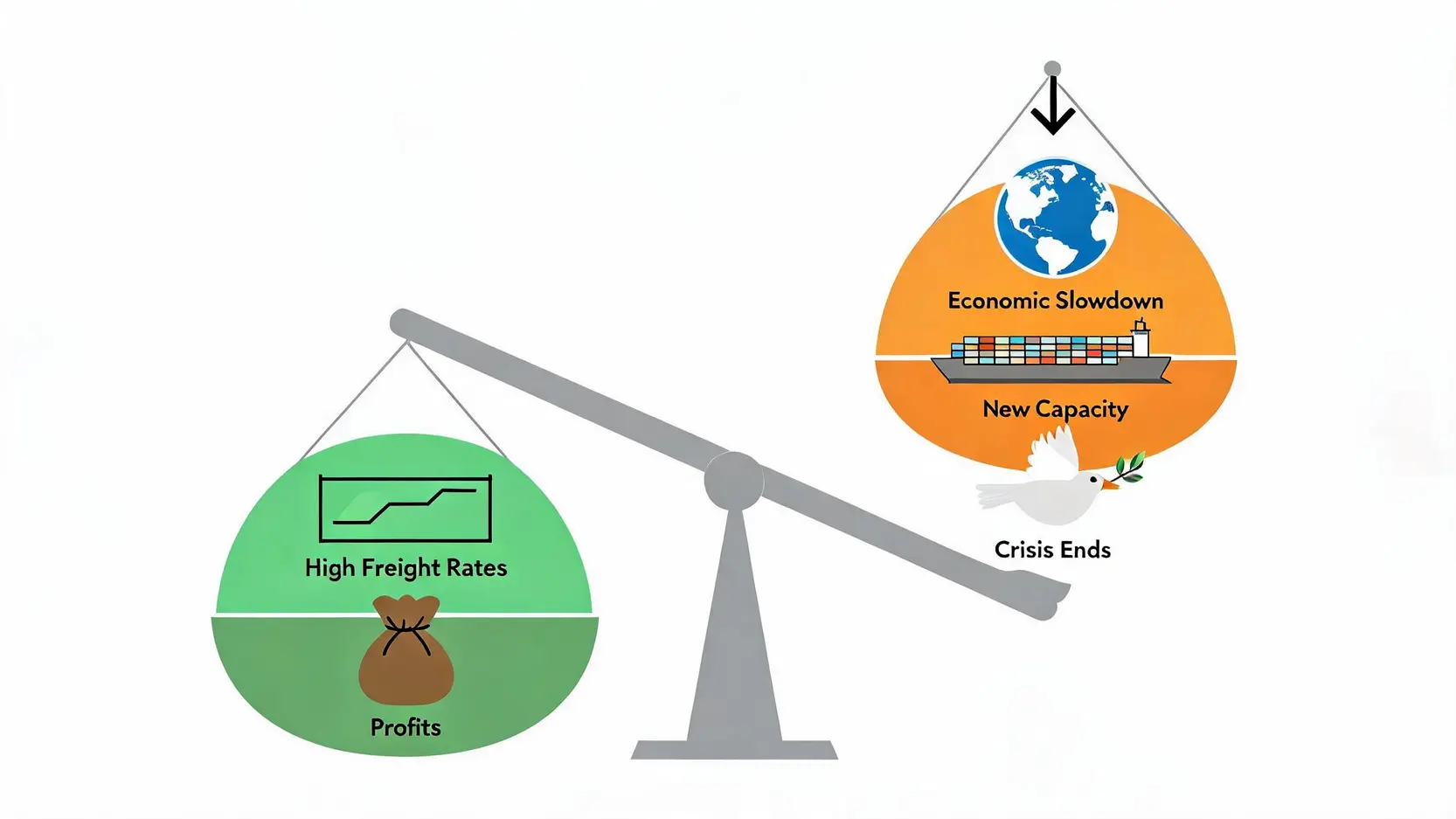
Potential Risks: Global Economic Slowdown, Demand Uncertainty, and New Capacity Challenges
Despite the optimism, potential storms are also forming:
- Global economic headwinds: High interest rate environments and inflationary pressures may suppress global consumer demand. Once demand weakens, even tight supply conditions may fail to support elevated freight rates.
- Deployment of new shipping capacity: It is important to remember that during the pandemic, global shipping companies earned extraordinary profits and placed a large number of shipbuilding orders. According to statistics from authoritative institution Alphaliner, a substantial number of new vessels will enter service over the next one to two years. At that point, concerns about overcapacity may resurface and place long-term pressure on freight rates.
- Easing geopolitical risks: If the Red Sea crisis unexpectedly ends quickly and ships resume using the Suez Canal, freight rates could collapse rapidly within a short period, exposing shipping stocks to severe correction risks.
Investment Strategies: 3 Key Indicators for Determining Shipping Stock Entry and Exit Timing
When dealing with highly volatile shipping stocks, investors should avoid blindly chasing rising prices and instead establish their own observation indicator system. For beginners, it is recommended to first familiarize themselves with basic stock investment tutorials and understand market rules.
- Closely monitor the Container Freight Index (EC): Treat the EC Index as the most important leading indicator. When the index experiences consecutive sharp increases or begins showing signs of peaking and weakening, it often signals a turning point in stock prices.
- Pay attention to financial reports and earnings calls from industry leaders: Regularly review the financial statements and management outlooks of companies such as Maersk, COSCO Shipping Holdings, and Taiwan’s three major container shipping companies (Evergreen Marine, Yang Ming, and Wan Hai). Their perspectives on the market are often more valuable than news reports.
- Evaluate the Price-to-Book Ratio (P/B Ratio): The shipping industry is a classic cyclical sector, making Price-to-Earnings (P/E) valuations easily distorted. During periods of market euphoria, P/B ratios are often pushed excessively high, while during industry downturns, they may fall below 1. Observing historical P/B ranges can help determine whether current stock prices are relatively high or low.
Conclusion
In summary, the current shipping market presents a combination of high returns and high risks. Geopolitical tensions have driven extraordinary freight rate increases, creating substantial profit opportunities for related companies. This is a key point that must be understood when conducting shipping stock outlook analysis. However, investors must clearly recognize that the foundation supporting this market rally is relatively fragile and highly vulnerable to changes in international developments, global economic demand, and future shipping capacity expansion. By deeply understanding what the Container Freight Index represents and continuously monitoring changes in the impact of the global supply chain crisis, investors can make more informed decisions in this turbulent market and navigate toward long-term wealth opportunities. Establishing a comprehensive risk management strategy is far more important than simply attempting to predict stock price movements.
Frequently Asked Questions About the Shipping Stock Outlook (FAQ)
Q: Where Can I View Real-Time Quotes for the Container Freight Index?
A: You can search for “EC” or “Container Freight Index (Europe Service) Futures” on major financial information websites or apps (such as TradingView, Futu, and Anue) as well as futures trading platforms to view real-time quotes and price charts.
Q: Besides Freight Rate Indices, What Other Indicators Should Investors Monitor When Investing in Shipping Stocks?
A: In addition to the EC Index, investors should also monitor the Baltic Dry Index ((BDI), which reflects conditions in the bulk shipping market for raw materials), international crude oil prices (which affect fuel costs), PMI data from major global economies (which reflects manufacturing activity and demand) as well as shipping companies’ fleet sizes, debt ratios, and cash flow conditions.
Q: When Is the Global Supply Chain Crisis Expected to Ease?
A: This is a complex question that depends on multiple factors. The key issue is whether geopolitical conflicts such as the Red Sea crisis can be effectively resolved. If conflicts persist and rerouting becomes the norm, supply chain tensions may continue for several months or even longer. Conversely, if shipping routes return to normal operations, the recovery process could happen relatively quickly.
Q: Are All Shipping Stocks the Same?
A: No. Shipping stocks are mainly divided into three categories: container shipping (such as Evergreen Marine and Yang Ming), bulk shipping (such as Wisdom Marine and U-Ming Marine) and tanker shipping (such as Shin Yang Shipping). Recently, container shipping stocks have been the most heavily affected by the Red Sea crisis and have experienced the most severe share price volatility. Different types of shipping companies operate under different industry cycles and are driven by different factors, so investors should carefully distinguish between them before investing.
Related Articles
-
2026 Gold Price Forecast Roundup: Where Do Goldman Sachs and Bank of America See It? The Gold Bull Market Is Not Over Yet! Wall Street Consensus: Gold Prices Are Generally Bullish in 2026, Where Is the Target Price Range? After an epic rally, gold’s recent high-level volatility has left many...2026 年 6 月 24 日
-
Global Asset Repricing: Why Has Japan’s Property Market Become a Safe Haven for Smart Money Amid Yen Depreciation? What Is “Global Asset Repricing”? Why Has Japan Become the Main Focus? While investment forums around the world are heatedly discussing yen depreciation pressure, the real smart money has already begun positioning...2026 年 6 月 23 日
-
Farewell to Negative Interest Rates! The Truth Behind Japan Meeting Its Inflation Target: Why Has Yen Depreciation Pressure Increased Instead of Easing? The Japanese economy is staging an extremely contradictory drama: after waiting for thirty years, it has finally welcomed the long-awaited Japan inflation, yet the market’s response has been...2026 年 6 月 23 日