2026 Global Outlook: Inflation, HK Rate Cuts & Stocks

2026 Global Economic Outlook Analysis: How Cooling Inflation Affects Hong Kong’s Rate Cut Timeline and Stock Market Positioning?
Global Economic Outlook Analysis: Will 2026 Head Toward Recession or a Mild Recovery?
As 2026 begins, the biggest concern for global investors is the ultimate direction of the economy. After experiencing several years of high inflation and rapid interest rate hikes, the market is now standing at a critical turning point. Is this the calm before another storm, or the beginning of a mild recovery cycle? The answer largely depends on how several core factors evolve.
Interpreting US Core Inflation Data and the Direction of Federal Reserve Interest Rate Policy
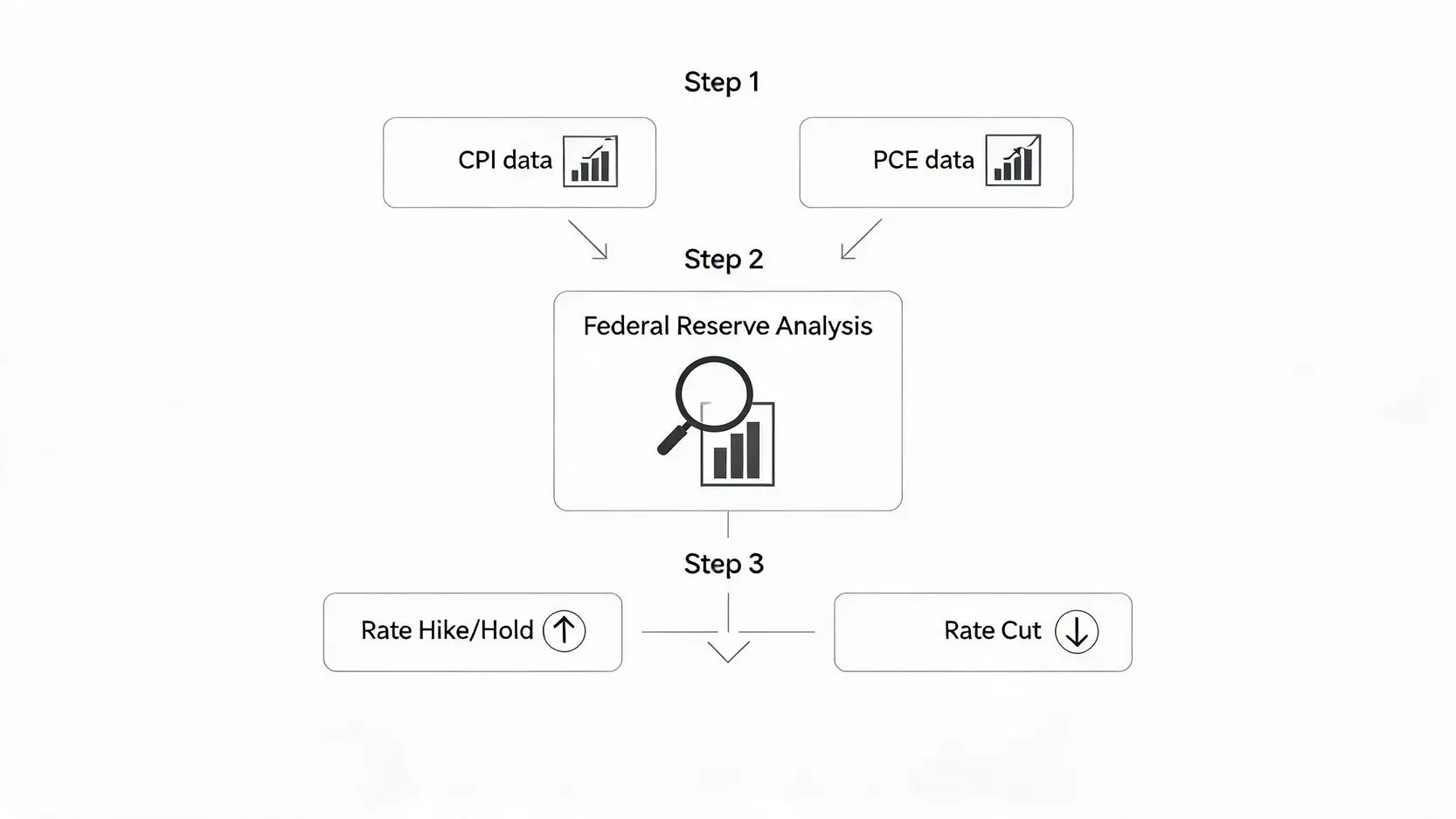
Market attention remains firmly focused on US inflation data, especially the Consumer Price Index (CPI) and the Personal Consumption Expenditures (PCE) Price Index, which is more heavily favored by the Federal Reserve. Even small changes in these two sets of data directly affect expectations surrounding Federal Reserve interest rate policy. Trends in 2026 show that although overall inflation has retreated from previous highs, the path downward has not been smooth, particularly in service sector inflation, which continues to demonstrate significant stickiness.
- CPI (Consumer Price Index): Reflects changes in the prices of a basket of consumer goods and services and is the market’s most direct inflation indicator. When CPI data exceeds expectations, it usually raises concerns that the Federal Reserve may delay rate cuts.
- PCE (Personal Consumption Expenditures) Price Index: This is the indicator the Federal Reserve relies on more heavily when formulating monetary policy because its calculation scope is broader and better reflects actual changes in consumer spending behavior. The trend of Core PCE (which excludes food and energy) is particularly critical for assessing underlying inflationary pressure.

Figure 1: US Inflation Data and the Federal Reserve Interest Rate Decision-Making Process
Federal Reserve officials have repeatedly emphasized that inflation must return “sustainably” to the 2% target before they will consider initiating rate cuts. Therefore, investors must closely monitor every economic data release to search for clues regarding a potential shift in Federal Reserve policy. The market generally expects that if the cooling inflation trend continues, the first rate cut could arrive as early as the second half of 2026, although the exact timing and scale remain highly uncertain.
How Economic Conditions in Europe and China Affect Global Supply Chains and Demand
Beyond the US, the performance of Europe and China is also crucial to global economic outlook analysis. Europe’s economic recovery has appeared relatively weak due to the combined impact of the energy crisis and the Russia-Ukraine war. Although the European Central Bank (ECB) has shown signs of loosening monetary policy, weak domestic demand remains an issue, which will affect global end-consumer demand. Meanwhile, China, as the “world’s factory”, directly influences the stability and costs of global supply chains through its economic data. Although the Chinese government has introduced a series of stimulus measures, challenges in the real estate market and the recovery of consumer confidence still require time. Uncertainty surrounding these two major economies adds further complications to the prospect of a stable global recovery and also affects multinational corporate earnings outlooks.
Geopolitical Risks: The Market’s Unignorable Black Swan
Beyond macroeconomic data, geopolitical risks represent the market’s largest “black swan” risk in 2026. From ongoing regional conflicts and trade relations between major powers to election outcomes during key political years, any of these events could trigger severe market volatility. These developments not only affect energy prices and supply chain security, but also influence global safe-haven sentiment. For example, if risk aversion intensifies, capital may flow from emerging markets into traditional safe-haven assets such as the US dollar and gold, creating capital outflow pressure on open economies such as Hong Kong. Therefore, when constructing investment positioning strategies, these potential political risks must be fully considered alongside comprehensive risk management planning.
Core Topic: How Does Cooling Inflation Precisely Affect the Hong Kong Stock Market?
As the global macroeconomic narrative shifts toward “cooling inflation”, Hong Kong’s stock market faces a complex and profound transformation. Expectations of rate cuts are theoretically positive for equities, but the actual impact varies by sector and capital flows, creating both opportunities and challenges.
Changing Interest Rate Expectations: The Crossroads for Technology Stocks, Growth Stocks, and Income Stocks
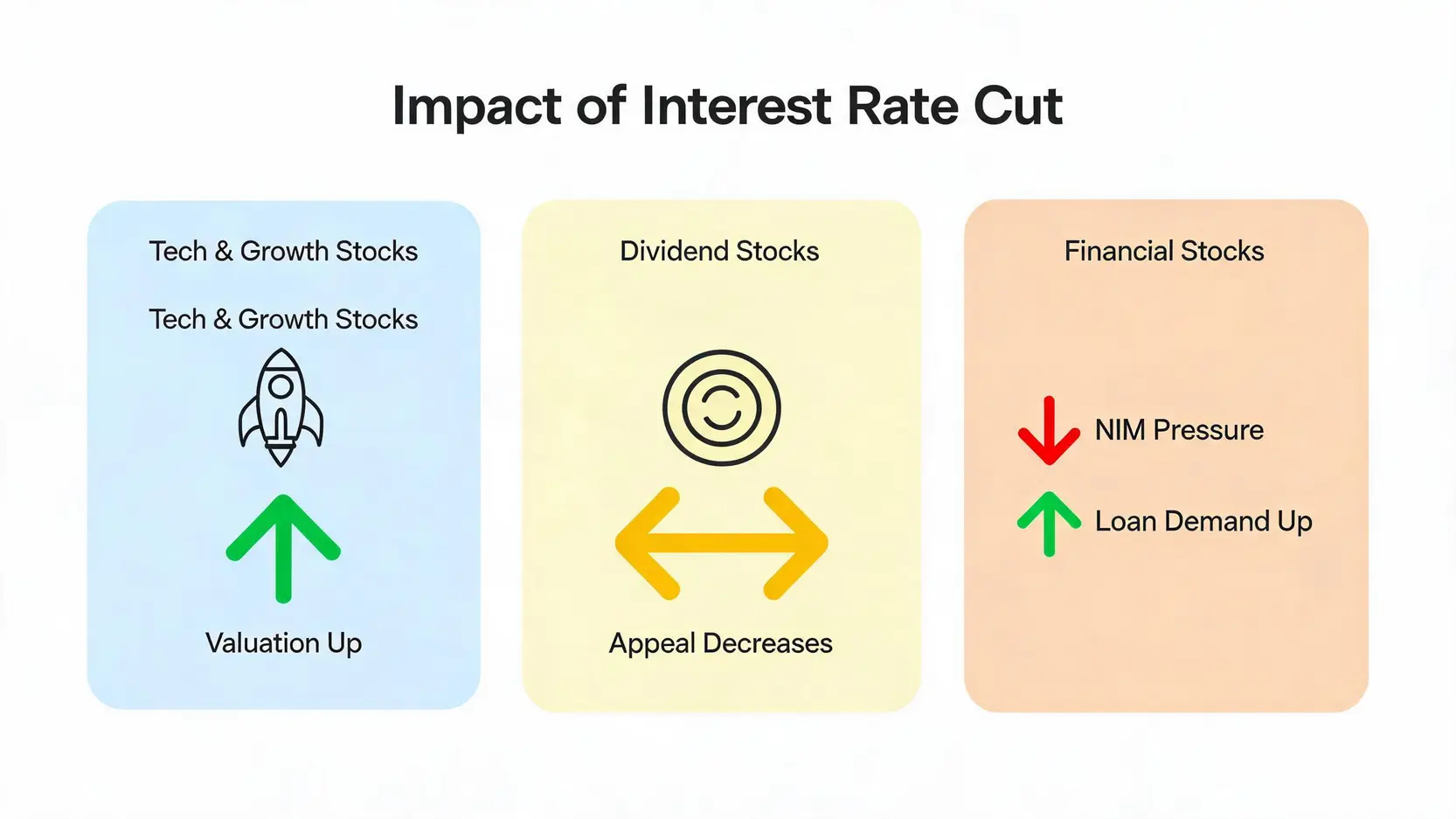
Interest rates are the most important “gravitational force” in stock valuation. When interest rates decline, the valuation logic for different categories of stocks changes significantly:

Figure 2: The Crossroads for Different Types of Stocks During a Rate Cut Cycle
- Technology stocks and growth stocks: Most of the value of these companies comes from expectations surrounding future cash flows. When calculating present value, lower discount rates (or interest rates), significantly increase valuations. Therefore, rate cut cycles are generally regarded as “springtime” for technology stocks. Investors seeking high-growth potential may consider related investment tools, such as ETFs tracking the Nasdaq Index. Readers who want a deeper understanding may refer to “Complete Analysis of the Nasdaq ETF QQQ: From Beginner Basics to Advanced Strategies, Fully Understanding How to Invest in Technology Giants!”.
- Income stocks (such as utilities and Real Estate Investment Trusts (REITs)): In high interest rate environments, these assets are favored for their stable dividend payouts. However, once the market enters a rate cut cycle, their dividend yields become less attractive relative to risk-free assets (such as bank deposits). Investors may shift capital toward assets with stronger growth potential, placing pressure on income stock prices.
- Financial stocks (especially bank stocks): Rate cuts usually compress banks’ Net Interest Margins (NIM), placing pressure on profitability. On the other hand, lower interest rates help stimulate loan demand and improve economic activity, thereby reducing bad debt risks. As a result, the impact on bank stocks tends to be mixed.
Further Reading (Highly Recommended)
Capital Flow Forecast: How Northbound Capital and Foreign Fund Movements Shape Hong Kong Stock Performance
As a free capital hub, Hong Kong stocks are heavily influenced by capital flows. “Northbound capital” (mainland southbound capital) and foreign funds are the two most important forces. Under rate cut expectations:
- Northbound capital movements: Mainland China is also currently in a relatively loose monetary policy environment. When the RMB exchange rate remains stable and Hong Kong stocks show valuation advantages compared with A-shares, northbound capital tends to continue flowing in, seeking high-quality value opportunities, especially leading technology and consumer stocks that are scarce in the mainland market.
- Foreign fund movements: Foreign fund movements are more complex. On one hand, Federal Reserve rate cuts reduce the appeal of the US dollar, and some capital may flow back into emerging markets, including Hong Kong. On the other hand, foreign investors’ concerns over China’s economic outlook and geopolitical risks may also limit the scale of inflows. The final decision of foreign investors will depend on weighing the benefits of rate cuts against macro risks.
2026 Investor Strategy: How to Adjust Stock and Bond Allocation to Respond to Market Volatility
Facing the upcoming interest rate shift, investors should re-examine and adjust their stock and bond allocation strategies. The previous simple strategy of “cash is king” may no longer apply. Below is a simple reference for strategic adjustments:
| Investor Type | High Interest Rate Environment Strategy | Suggested Adjustments During a Rate Cut Cycle |
| Conservative | Hold Large Amounts of Cash, High-Interest Deposits, and Short-Term Government Bonds |
Gradually Increase Allocation to Medium- and Long-Term High-Quality Corporate Bonds to Lock In Higher Yields; Moderately Allocate to Defensive High-Dividend Stocks. |
| Balanced | Balanced Allocation Between Stocks and Bonds, With Stocks Tilted Toward Value Stocks and Utility Stocks | Increase Equity Allocation, Especially Industry Leaders Benefiting From Economic Recovery and Reasonably Valued Growth Stocks. |
| Aggressive | Hold Limited Cash and Primarily Invest in Stocks Capable of Withstanding Economic Cycles | Increase Allocation to Technology Stocks and Innovative Industries to Benefit From Valuation Expansion Driven by Lower Interest Rates; However, Attention Must Still Be Paid to Risk Diversification. |
The key lies in maintaining flexibility and dynamically adjusting based on changes in macroeconomic data. The impact of cooling inflation on the stock market is not a one-way positive effect, but rather a structural transformation. Capturing the core trend is the best strategy.
Highly Anticipated: Full Forecast of Hong Kong’s Rate Cut Timeline
For Hong Kong property owners and investors, the biggest question is undoubtedly: “When exactly will rate cuts arrive?” The answer is closely tied to Hong Kong’s unique financial system and the broader global economic environment. A deep understanding of the logic behind forecasts for Hong Kong’s rate cut timeline is the key to capturing future opportunities.
Under the Linked Exchange Rate System: The Inevitability and Potential Timing of Hong Kong Following US Rate Cuts
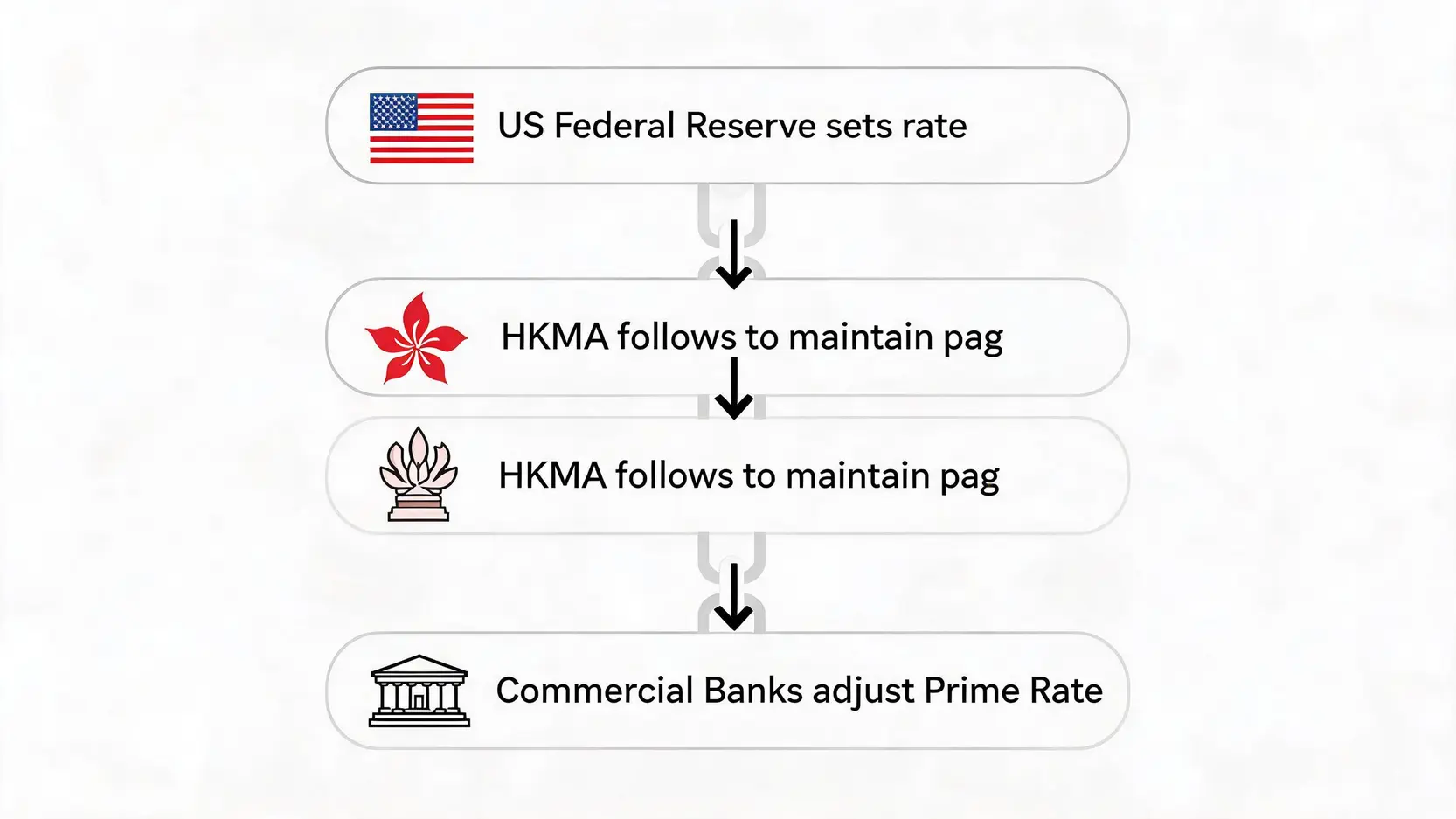
Hong Kong has implemented the Linked Exchange Rate System since 1983, pegging the Hong Kong dollar to the US dollar. Under this system, the Hong Kong Monetary Authority’s (HKMA) primary objective is to maintain the Hong Kong dollar exchange rate within the 7.75 to 7.85 range. To achieve this goal, Hong Kong’s benchmark interest rate direction must closely follow movements in the US federal funds rate. If Hong Kong interest rates fall significantly below US rates, arbitrage activity would emerge, leading to capital outflows from the Hong Kong dollar system and threatening the stability of the currency peg. Therefore, from a macro perspective, as long as the Federal Reserve does not cut rates, the HKMA has almost no room to independently reduce rates. Historical data shows that Hong Kong’s rate hike and rate cut cycles have remained highly synchronized with the US, although short-term lags may occur. To learn more about the impact of interest rate changes, readers may refer to “Complete Analysis of the Impact of US Interest Rate Hikes: 5 Major Effects on Hong Kong’s Stock and Property Markets and Response Strategies”

Figure 3: Interest Rate Transmission Mechanism Under the Linked Exchange Rate System
Expert Forecasts: Full Analysis of Hong Kong Prime Rate (P) Trends in 2026
Although the HKMA’s Base Rate closely follows the US, what the public cares about more is the commercial banks’ Prime Rate (P), which is directly linked to mortgage and loan costs. Prime Rates are independently determined by commercial banks and are mainly divided into “Large P” and “Small P”.
- Timing of adjustments: When deciding whether to adjust Prime Rates, commercial banks consider not only the HKMA’s benchmark rate, but also their own funding costs, the aggregate balance of the banking system, and market loan demand. Therefore, even if the US announces a rate cut, Hong Kong’s Prime Rate may not “immediately follow”. Banks may wait for a period of observation or for cumulative rate cuts to reach a certain level before making adjustments.
- Forecast direction: The market generally expects that once the US begins a rate cut cycle, Hong Kong’s Prime Rate will also move lower. Forecasts suggest that if the US cuts rates by 25 to 50 basis points in the second half of 2026, Hong Kong’s Prime Rate may also be reduced accordingly, although the magnitude may not fully match the US adjustment.
The Actual Impact of a Rate Cut Cycle on Hong Kong’s Property Market and Household Mortgage Burdens
The impact of rate cuts on Hong Kong’s property market is direct and significant. Lower interest rates mean lower monthly mortgage payments, directly reducing the financial burden on homeowners. This is referred to as an improvement in “mortgage affordability”.
- Stimulating buying demand: Lower mortgage burdens help improve the willingness and affordability of potential buyers to enter the market, supporting transaction volumes in the property market.
- Stabilizing asset prices: Lower borrowing costs help support asset prices, easing downward pressure on property prices and potentially driving a recovery if market sentiment improves.
- Releasing consumer spending power: For existing homeowners, lower monthly mortgage payments effectively increase disposable income. This additional capital may flow into the retail and consumer sectors, supporting the local economy.
In summary, although Hong Kong’s rate cut timeline remains passive, once rate cuts begin, the positive impact on the stock market, property market, and overall economy is worth anticipating. Investors and the public should closely monitor US interest rate developments in order to prepare and plan ahead.
Further Reading (Highly Recommended)
Frequently Asked Questions (FAQ)
Q: If the US Cuts Interest Rates, Will Hong Kong Immediately Follow?
A: Not necessarily “immediately”. Under the Linked Exchange Rate System, the HKMA’s benchmark interest rate (or Base Rate) closely follows movements in the US federal funds rate in order to maintain Hong Kong dollar stability. However, the commercial banks’ Prime Rate (P), which is of greater concern to the public, is determined by banks based on their own funding costs and market conditions, and usually involves a certain lag. Banks may wait until the US has accumulated a certain level of rate cuts before reducing Prime Rates.
Q: What Specific Benefits Do Rate Cuts Bring to My Stock Investment Portfolio?
A: Rate cuts mainly provide three major benefits: First, they reduce corporate borrowing costs, helping improve profitability. Second, for technology stocks and growth companies, lower interest rate environments increase the present value of future cash flows, supporting valuation expansion. Third, increased market liquidity and stronger risk appetite help attract more capital into the stock market, supporting broader market gains.
Q: Besides Rate Cuts, What Other Factors Will Affect Stock Market Performance in 2026?
A: Beyond interest rate policy, key factors affecting stock market performance in 2026 include whether corporate earnings growth meets expectations, the strength of the global macroeconomic recovery (especially in the US, China, and Europe), geopolitical risks (such as regional conflicts and major national elections) as well as technological innovation in specific industries (including the development and application of artificial intelligence). Rate cuts only provide a favorable macroeconomic environment, while the long-term performance of the stock market still depends on fundamental factors.
Q: How Will Gold Prices React if Inflation Continues Cooling?
A: Traditionally, gold is viewed as a hedge against inflation, so cooling inflation may weaken its attractiveness. However, gold also functions as an alternative to the US dollar and as a safe-haven asset. If cooling inflation is accompanied by US rate cuts, the US dollar may weaken, which would benefit gold prices denominated in US dollars. In addition, if geopolitical instability persists, safe-haven demand for gold may also rise. Therefore, gold price movements are the result of multiple factors interacting, and cannot be judged solely based on inflation.
Q: During a Rate Cut Cycle, Should All Capital Be Invested Into the Stock Market?
A: No. At any time, diversification remains the golden rule of risk management. Although rate cut cycles are generally favorable for equities, markets still contain significant uncertainty. Investors are advised to allocate assets reasonably according to their own risk tolerance. For example, before rate cuts begin, investors may lock in yields from high-quality medium- and long-term bonds, while also allocating part of their capital into stocks with growth potential and retaining a certain proportion of cash to respond to sudden market volatility.
Conclusion
In summary, the core themes shaping the 2026 investment market revolve around cooling inflation, interest rate shifts, and the pace of economic recovery. Clearly understanding the structural impact mechanism of cooling inflation on different stock market sectors, closely monitoring Federal Reserve policy direction to forecast Hong Kong’s rate cut timeline, and combining this with broader global economic outlook analysis are key factors for investors seeking to outperform the market during the current cycle. From valuation recovery in technology stocks to the positive effects of rate cuts on Hong Kong’s property market, potential opportunities exist throughout the market. Facing the coming changes in market conditions, investors should immediately review and flexibly adjust their portfolios in order to secure stronger positioning and capture the next wave of growth potential.
Related Articles
-
2026 Gold Price Forecast Roundup: Where Do Goldman Sachs and Bank of America See It? The Gold Bull Market Is Not Over Yet! Wall Street Consensus: Gold Prices Are Generally Bullish in 2026, Where Is the Target Price Range? After an epic rally, gold’s recent high-level volatility has left many...2026 年 6 月 24 日
-
Global Asset Repricing: Why Has Japan’s Property Market Become a Safe Haven for Smart Money Amid Yen Depreciation? What Is “Global Asset Repricing”? Why Has Japan Become the Main Focus? While investment forums around the world are heatedly discussing yen depreciation pressure, the real smart money has already begun positioning...2026 年 6 月 23 日
-
Farewell to Negative Interest Rates! The Truth Behind Japan Meeting Its Inflation Target: Why Has Yen Depreciation Pressure Increased Instead of Easing? The Japanese economy is staging an extremely contradictory drama: after waiting for thirty years, it has finally welcomed the long-awaited Japan inflation, yet the market’s response has been...2026 年 6 月 23 日