How to Choose a Forex Platform? 5 Key Criteria to Avoid Scam Broker Traps
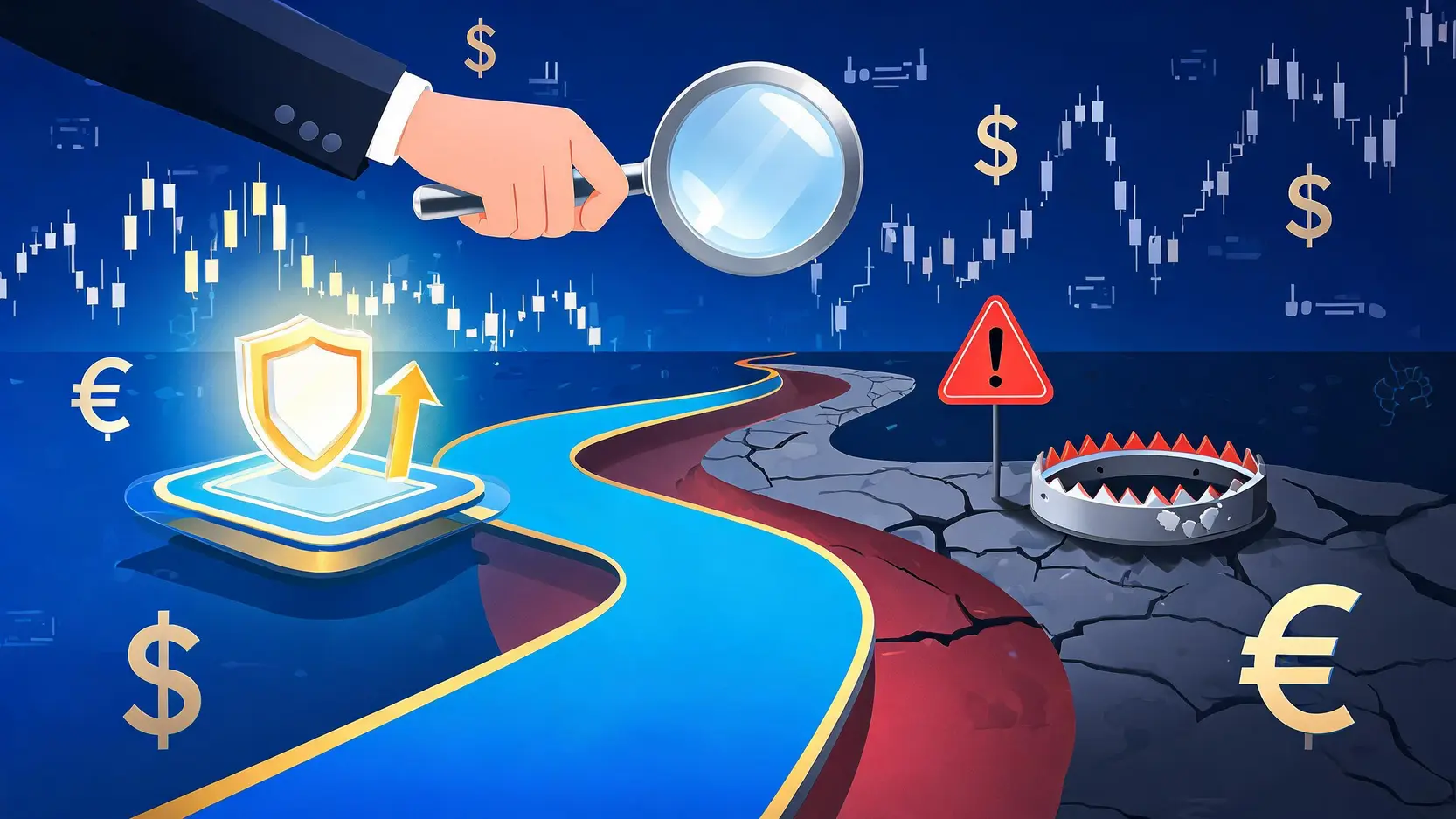
When entering the fast-changing forex market, the first and most critical step is making the right forex platform selection. A good broker is your solid support in the market. Conversely, choosing the wrong platform may not only cause losses, but even leave you with nothing. There is a wide range of complex forex broker comparison information in the market. From regulatory qualifications to trading costs, every detail involves knowledge and potential traps. Want to know how to choose a forex platform for safe trading? This article will provide you with a clear screening framework. Through 5 key criteria, it will teach you how to comprehensively evaluate a forex broker, ensure the safety of your funds, and find the trading partner that can best help you succeed. Ready? Let’s begin!
Criterion One: Regulation and Security – The Cornerstone of Fund Safety
Before considering any attractive offers (such as ultra-low spreads or ultra-high bonuses), make sure to put regulation and security first. This is the most non-negotiable part of all evaluations. A platform without credible regulation is like an opponent that is not legally constrained, leaving the safety of your funds completely unprotected.
Why Is Regulation So Important? Understanding the World’s Top Regulatory Authorities
Authoritative financial regulators act as market gatekeepers. They establish strict rules that brokers must follow in order to protect investors’ rights and interests. This includes capital adequacy, client fund segregation, fair trading practices, and many other aspects. If a broker violates the rules, it may face heavy fines or even have its license revoked.
When choosing a forex platform, make sure to confirm whether it is authorized by at least one of the following top-tier regulatory authorities:
- Financial Conduct Authority (FCA): Recognized as one of the strictest regulators in the world, with extremely demanding requirements for brokers.
- Australian Securities and Investments Commission (ASIC): Also a globally reputable regulator, with a well-established investor protection system.
- Cyprus Securities and Exchange Commission (CySEC): As a gateway for many brokers entering the EU market, its regulatory standards have also become increasingly strict.
- Other trustworthy regulators include Switzerland’s FINMA, Germany’s BaFin, and others.
How to Check a Broker’s Regulatory License?
Never simply believe the broker’s official website at face value! Personally verifying the information is an essential step. Every regulated broker will have a unique regulatory number, which you can use to search on the official website of the corresponding regulator.
Taking the FCA as an example, you can go directly to its official Financial Services Register, enter the broker’s name or regulatory number, and check whether its company name, registered address, contact information, and authorized business scope match what the broker claims on its official website. Please pay special attention to verifying the official website URL, as many scam platforms impersonate the names of legitimate brokers.
Segregated Funds Account: Ensuring Your Funds Are Not Misappropriated
This is a mandatory requirement of top-tier regulators. So-called “fund segregation” means that brokers must keep clients’ funds in independent bank accounts that are completely separate from the company’s operating funds. The biggest benefit of doing this is that even if the broker unfortunately goes bankrupt or collapses, your funds will not be used to repay its debts, thereby receiving the maximum level of protection. When choosing a platform, make sure to confirm whether it provides segregated funds accounts.
Criterion Two: Trading Costs – A Direct Factor Affecting Your Profits
Trading costs are a key factor affecting your final profits. Even a small difference can be magnified under high-frequency trading or long-term holding. Understanding and comparing the trading cost structures of different forex brokers is crucial. The main costs consist of the following three parts: spreads, commissions, and swap.
Spread: Choosing Between Fixed Spreads and Floating Spreads
The spread is the difference between the “buy price” and the “sell price”, and it is the most direct cost of every trade. For example, if the euro/US dollar (EUR/USD) quote is 1.0700/1.0701, then the spread is 1 pip (point).
- Floating spreads: Spreads change according to market volatility and liquidity. They are usually extremely low when the market is stable, but may widen instantly during major news releases. This is currently the mainstream market model and is suitable for most traders.
- Fixed spreads: Spreads remain unchanged regardless of market fluctuations. This is more attractive to traders who prefer predictable costs or scalping strategy users, but fixed spreads are usually slightly higher than the average level of floating spreads.
When comparing spreads, do not only look at the “minimum spread” promoted by brokers. Instead, pay attention to the “average spread”, as it better reflects actual trading costs. You can read Forex Broker Comparison: Spreads, Regulation, and Fees, a Guide to Choosing the Top 10 Forex Platforms in more depth to learn more details about trading costs.
Commission: The Trading Model of ECN Accounts
Commissions are usually linked to specific types of accounts, with the most common being ECN (Electronic Communication Network) accounts. This type of account provides raw spreads from the interbank market (which may be as low as 0) but charges a fixed commission on each trade (such as US$7 per lot traded).
ECN Account + Commission vs. Standard Account (No Commission): For traders with large trading volumes, the total cost of an ECN account (which consists of extremely low spreads plus commission) is often lower than that of a standard account where all costs are included in the spread, and the trading environment is also more transparent.
Swap: The Hidden Cost of Holding Positions Overnight
If you plan to hold positions for more than one trading day, you need to consider swap. This is a fee or income generated by the interest rate difference between the two currencies you trade. If you go long on a high-interest-rate currency and short a low-interest-rate currency, you may receive interest. Conversely, you will need to pay interest.
For long-term traders, swap may become a considerable expense. Some brokers offer “Islamic accounts” (swap-free accounts) to meet specific needs, but may charge management fees in other forms.
Further Reading (Strongly Recommended)
Forex Broker Comparison: Spreads, Regulation, and Fees, a Guide to Choosing the Top 10 Forex Platforms
MT4 vs TradingView Ultimate Showdown: Which Trading Platform Should You Choose in 2026?
Criterion Three: Trade Execution and Platform – The Guarantee of Stability and Efficiency
No matter how good a trading strategy is, without a stable and efficient platform to execute it, it is only empty talk. Platform stability, execution speed, and user experience are directly related to whether your trades can be executed at the expected price.
Mainstream Trading Platforms: MetaTrader 4 (MT4) vs. MetaTrader 5 (MT5)
MT4 and MT5 are the world’s most mainstream third-party trading platforms developed by MetaQuotes, and the vast majority of brokers support them. They are known for their powerful charting functions, rich technical indicators, and support for automated trading (EA, Expert Advisor).
| Feature |
MetaTrader 4 (MT4) |
MetaTrader 5 (MT5) |
| Positioning |
Designed specifically for the forex market, industry standard |
Diversified financial market platform (forex, stocks, futures) |
| Technical Indicators |
30 built-in indicators |
38 built-in indicators, more graphical objects |
| Timeframes |
9 |
21 |
| Programming Language |
MQL4 |
MQL5 (more powerful, but not backward compatible) |
| Market Depth |
Not provided |
Provided (Level II quotes) |
How to Choose? If you are new to forex trading, or if your strategy relies heavily on existing EAs or custom indicators, MT4’s large community and resource library make it a safe choice. If you want to trade more diversified products, or need more in-depth technical analysis tools, the more powerful MT5 is the better choice. Want to learn more details? You can refer to this MT5 download tutorial and comparison of differences with MT4.
Trade Execution Speed and Slippage Issues
Execution speed refers to the time from when you click to place an order to when the order is confirmed and executed by the server. Ideally, this process should be completed within a few milliseconds. Slow execution speed can lead to “slippage”.
Slippage refers to the difference between your final execution price and the expected order price. Slippage can be negative (meaning the execution price is worse) or positive (meaning the execution price is better). During intense market volatility, slippage is almost unavoidable, but a good broker can use high-quality servers and liquidity providers to minimize the frequency and scale of negative slippage.
Convenience and Functions of Mobile Trading Apps
In the modern era, the ability to monitor positions and market movements anytime, anywhere is crucial. A fully functional, stable, and user-friendly mobile trading app is essential. Before choosing a platform, you can first download its app and test whether functions such as placing orders, viewing charts, and managing accounts are smooth.
Criterion Four: Leverage and Margin – The Double-Edged Sword of Risk and Opportunity
Leverage allows you to use a smaller amount of capital (known as margin) to control a larger-value position. This amplifies both potential profits and potential losses equally. Correctly understanding and using leverage is the top priority in forex trading risk management.
Understanding the True Role and Risks of Leverage
Assume the leverage ratio is 100:1. This means you only need US$1,000 in margin to control a trading position worth US$100,000. If the market moves 1% in the direction you expected, your account will make a profit of US$1,000, achieving a 100% return relative to your margin.
However, the risk also exists. If the market moves 1% in the opposite direction, you will also lose US$1,000, which is your entire margin. Therefore, high leverage does not equal high profit. It is only an amplification tool. Misusing high leverage is one of the most common fatal mistakes made by beginner traders.
Margin Call and Forced Liquidation Mechanisms
When your account equity falls below the minimum margin level required to maintain your position due to floating losses, the broker will issue a “margin call”, requiring you to add funds. If your account equity continues to fall to a lower “forced liquidation” level, the broker’s system will automatically close part or all of your positions to prevent your account balance from becoming negative. It is very important to understand the margin call and forced liquidation ratios of your chosen platform.
Choose the Right Leverage Ratio Based on Your Strategy
Beginner traders should start with low leverage (such as 30:1 or 50:1) and focus on learning risk management and trading strategies instead of pursuing overnight wealth. As your experience grows, you can moderately adjust the leverage ratio according to your own risk tolerance and trading style. Remember, professional traders use leverage to improve capital efficiency, not to gamble.
Differentiated Highlights: A Practical Checklist for Choosing a Forex Platform
After meeting the above four core criteria, you may find that several brokers meet the standards. At this point, some differentiated services and highlights will help you make the final choice. This checklist can serve as a reference for your decision:
Customer Service: Does It Provide Chinese Customer Support and Instant Assistance?
When you encounter deposit and withdrawal issues, platform login difficulties, or order execution questions, a customer service team that can respond instantly and communicate in your native language will greatly improve your trading experience. Before opening an account, you may want to try contacting their online customer service first to test their response speed and professionalism.
Deposit and Withdrawal Methods: Does It Support Local Bank Transfers? How Fast Is It and What Are the Fees?
Convenient and low-cost deposit and withdrawal methods are very important. An ideal broker should provide multiple options, including credit cards, e-wallets (such as Skrill and Neteller) as well as bank transfer services that are very user-friendly for local users. You should pay special attention to:
- Deposit speed: Can the funds arrive quickly without missing trading opportunities?
- Withdrawal speed: How long does it usually take to receive the funds? (Usually, 1 to 3 business days is an acceptable range).
- Related fees: Are there any fees for deposits and withdrawals? Wire transfers, in particular, may involve intermediary bank fees.
Education Resources and Market Analysis: Does the Platform Provide Added Value?
An excellent broker does more than provide trading tools. It also strives to help traders grow. Does it provide free online courses, trading education articles, daily market analysis reports, or webinars? These added values are not necessities, but for beginners and traders who want to improve their skills, they are very valuable resources.
FAQ
Q: Are forex trading platforms legal?
A: Yes, but only if the platform is strictly regulated by an authoritative financial institution in its country or region. For example, platforms regulated by the FCA in the UK and ASIC in Australia are legal. What you need to watch out for are “scam platforms”, which are either unregulated or only hold licenses from offshore island jurisdictions.
Q: Is the trading money transferred overseas? Is it safe?
A: Yes. Due to the global nature of forex trading, your funds are usually transferred to the designated bank in the broker’s country. Its safety depends on two key points: first, whether the broker is regulated by a top-tier regulator; second, whether it implements a client fund segregation system. As long as both conditions are met, your funds are highly secure, no different from being deposited in a legitimate overseas bank.
Q: What is the minimum amount needed to start forex trading?
A: Many brokers have very low minimum entry thresholds, with some requiring only US$10 or US$50. However, from a risk management perspective, it is recommended to start with at least US$200 to US$500. Starting capital that is too low makes your account very vulnerable, making it difficult to withstand normal market fluctuations, while also limiting your ability to execute reasonable position management strategies.
Q: Which is better, MT4 or MT5?
A: There is no absolute answer. It depends on your needs. MT4 has the largest user base and the richest resources for automated trading programs (EA), making it very suitable for users focused on forex trading. MT5 is more powerful, supports more product types (such as stocks and futures) and provides more analysis tools, making it more suitable for traders who want diversified trading and in-depth analysis.
Conclusion
Choosing the right forex platform is half the battle in trading success. This selection journey requires patience and rationality. Do not be attracted only by low spreads, high bonuses, or high leverage. Please remember to make “regulation and security” your unwavering first priority. On this basis, comprehensively evaluate “trading costs”, “platform stability”, and other additional services. By using the 5 key criteria and practical checklist provided in this article and taking the time to do your homework, you can find a trustworthy long-term partner for your trading journey and lay the strongest foundation. Wish you smooth trading!