Interest Rate Decision Trading: 3 Key Strategies

Updated: 2026/06/23  |  CashbackIsland

rate-decision-trading-strategy

Interest Rate Decision Trading Guide: Master the Three Key Strategies to Profit From Market Volatility

Faced with the high level of uncertainty and sharp market volatility caused by central bank interest rate decisions, many traders feel both excited and intimidated. Are you looking for a clear trading plan that can minimize risk while capturing potential profit opportunities? Especially for beginners, forex trading risk management is essential. In this article, Hong Kong CBI takes the perspective of an experienced investor to introduce three practical trading strategies covering the entire process before, during, and after an interest rate decision, helping you navigate currency pair volatility during interest rate decision market reactions with confidence.

In the fast-moving financial markets, central bank interest rate decisions are undoubtedly major events that influence the global economy. These decisions not only have a direct impact on currency pair movements, but can also trigger significant market volatility, creating rare trading opportunities for investors equipped with sound trading strategies and strong risk awareness. However, standing out in such a highly volatile environment is far from easy. It requires not only sharp market insight, but also a proven systematic trading approach. Next, we will take an in-depth look at how to navigate the tremendous market impact of interest rate decisions through precise positioning and effective execution to achieve consistent profits

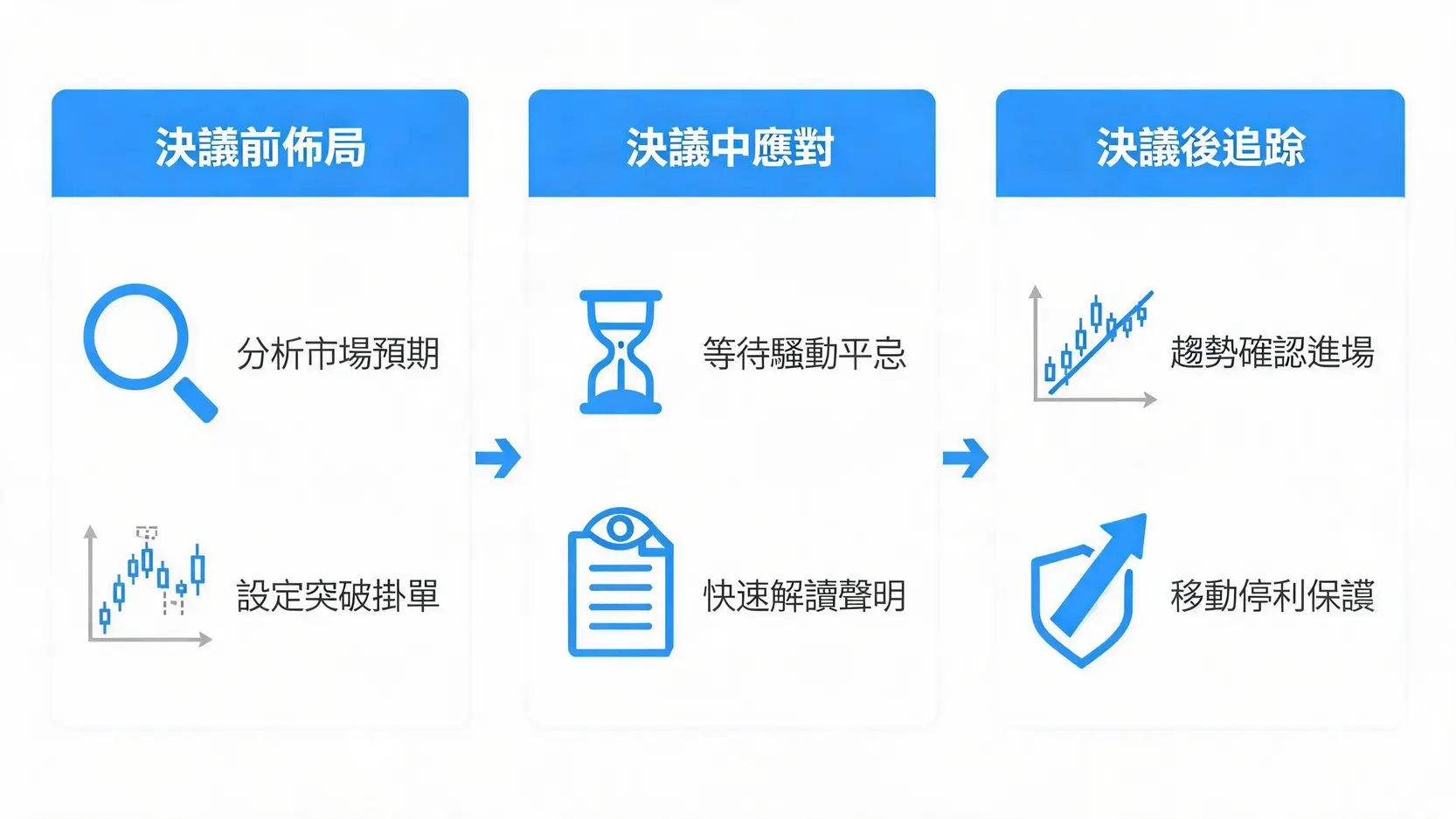
央行利率決議三階段交易策略流程圖,包含決議前佈局、決議中應對與決議後追蹤的關鍵步驟。

A Complete Trading Roadmap for Navigating Interest Rate Decisions


Strategy 1: Positioning Before the Announcement

Positioning trades before an interest rate decision is a crucial moment for professional traders to demonstrate their market insight and forecasting ability. Before the announcement, the market often prices in expectations based on various sources of information, making this the starting point for identifying trading opportunities.


Analyze Market Expectations: Use Futures Market Data to Assess Potential Outcomes

Before an interest rate decision, the market forms various expectations regarding the future direction of interest rates. Experienced traders closely monitor interest rate futures markets, such as US Federal Funds Futures, using price movements to assess the probability of a rate hike, rate cut, or an unchanged decision. The CME Group’s FedWatch Tool is an excellent reference, providing a clear view of market expectations and helping investors understand potential policy outcomes. When market expectations differ from the actual decision, it often becomes the catalyst for sharp currency pair movements. 

Technical Analysis: Set “Breakout Orders” at Key Support and Resistance Levels

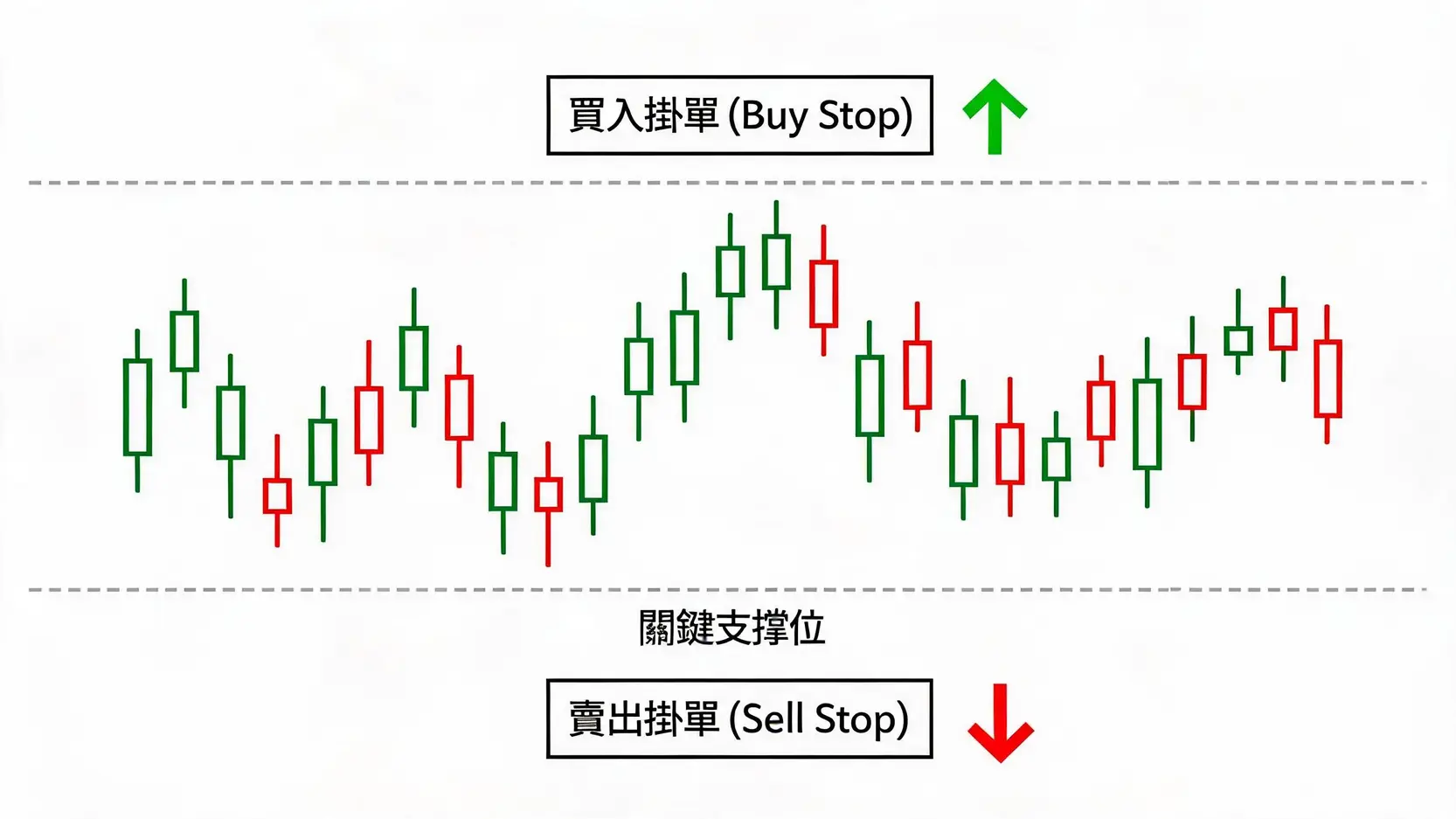
By combining technical analysis, we can identify key support and resistance levels for currency pair prices. Around an interest rate decision, these price levels often become the “critical points” where price movements accelerate. Before the announcement, traders can place “Breakout Orders”, such as a Buy Stop above a key resistance level and a Sell Stop below a key support level. Once the decision is announced and price breaks through these key levels, the pending order is triggered, allowing traders to participate in the trend immediately. However, this strategy must always be paired with strict stop-loss rules to manage the risk of false breakouts.

技術分析中的突破掛單策略示意圖,顯示在價格的關鍵支承位下方設置賣單,在阻力位上方設置買單。

Place “Breakout Orders” at Key Price Levels


Risk Management: Reduce Position Size and Avoid Gambling

The high volatility surrounding interest rate decisions comes with significant risk. Therefore, reducing position size before the announcement is the primary principle for protecting capital. Avoid committing excessive capital to a single trade, as one incorrect judgment can result in substantial losses. Keeping risk within an acceptable range, such as limiting the loss on any single trade to no more than 1-2% of total capital, is the foundation of long-term survival. This is not gambling, but professional trading based on probability and risk-reward ratios. For more comprehensive risk management techniques, we recommend reading our Forex Trading Risk Management Guide.


Strategy 2: Trading the Release

Trading during the moment the data is released tests a trader’s reaction speed, psychological discipline, and ability to distinguish meaningful signals from market noise. These few golden minutes are filled with opportunities, but they also conceal significant risks.


The Challenges of “News Trading”: Spread Widening and Slippage Risk

When major news events such as an interest rate decision are released, market liquidity may dry up instantly, causing spreads to widen rapidly and even resulting in severe slippage. This means your pending orders may be executed at prices far beyond your expectations, significantly increasing trading costs and potential losses. Therefore, for most traders, entering the market immediately after the announcement carries extremely high risk and is generally not recommended.


Wait for the Initial Volatility to Settle: Look for Confirmation on the 5-Minute Candlestick

Rather than blindly chasing the initial market reaction, it is better to wait patiently for the first wave of volatility to settle. Typically, within 5 to 15 minutes after the interest rate decision is announced, the market begins to digest the initial information, and price action gradually becomes clearer. At this point, traders can monitor the 5-minute or 15-minute candlestick chart, looking for price breakouts above key highs or below key lows accompanied by strong trading volume. This helps avoid being misled by false breakouts and provides a more reliable basis for trading decisions. In addition, combining this approach with price and volume analysis allows for a more accurate assessment of the market’s true direction. 

Quickly Interpret the Statement: Identify the Market Direction Through Key Phrases

The central bank’s policy statement or press conference is the key to interpreting its policy direction. Experienced traders quickly scan for phrases such as “inflationary pressure”, “economic outlook”, “labor market”, and “forward guidance” to determine whether the central bank’s future monetary policy stance is “hawkish” (indicating tightening) or “dovish” (indicating easing). These terms provide initial clues about market direction and guide subsequent trading decisions. For example, if the statement emphasizes rising inflation risks while removing “dovish” language, it generally signals that the market will expect a higher probability of future rate hikes.


Strategy 3: Following the Aftermath

The post-interest rate decision trend-following strategy focuses on confirming the market’s true direction and entering once the trend has been established. During this period, market movements are generally more stable, offering a more favorable risk-reward ratio.


Trend Confirmation: Enter When Price Retests Key Levels

After the sharp volatility triggered by an interest rate decision, the market often establishes a new trend. Once price breaks through a key support or resistance level, it will usually perform a Retest, confirming that the previous level has become new support or resistance. This often presents an excellent entry opportunity. During the retest, observe the price action. If reversal candlestick patterns (such as a Hammer or an Engulfing Pattern) appear alongside declining trading volume, it indicates a shift in buying and selling pressure, confirming the validity of the trend. Entering at this stage can effectively improve the probability of success.


Protecting Profits: How to Set a Trailing Stop?

Once you are in a trending market, protecting profits becomes equally important. A Trailing Stop is a dynamic profit-taking mechanism that automatically adjusts the stop-loss level as the price moves in your favor, locking in a portion of your realized profits. For example, you can set the stop at a fixed number of points or a fixed percentage below the current market price. As the price continues to rise (or fall), the stop level automatically moves in the same direction. If the market reverses and reaches the trailing stop, the position is closed automatically, protecting your gains. This allows you to benefit from the ongoing trend while avoiding profit erosion caused by sudden market reversals.
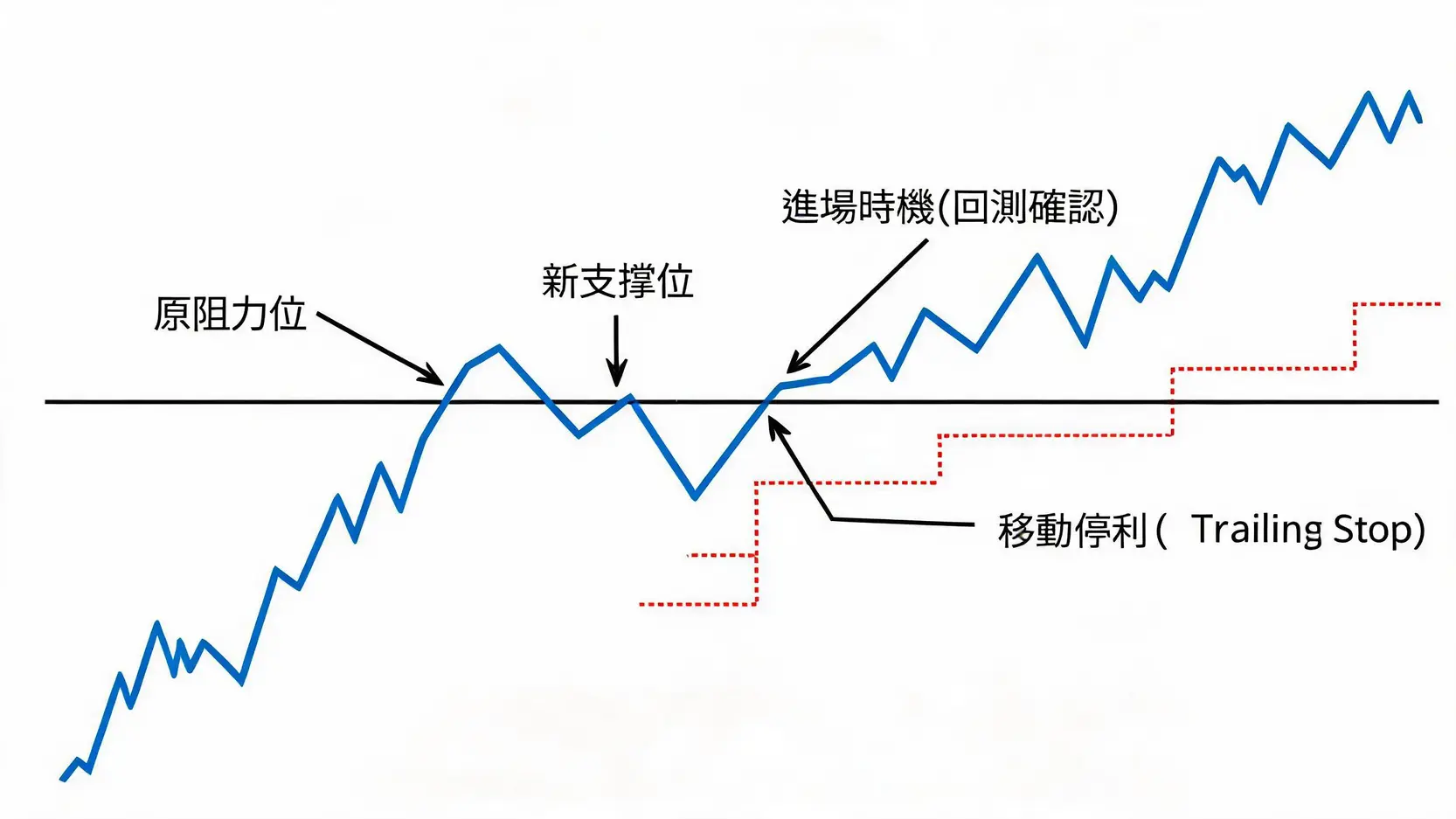
趨勢交易中的回測進場與移動停利策略圖,顯示價格突破阻力後回測支撐時進場,並用移動停利保護利潤。

trading opportunity.

Q: Besides technical indicators, what other tools can help with trading decisions?

A: In addition to technical indicators, traders can use the following tools to support their decision-making:

  • Economic calendar: Track the release schedule of major economic data.
  • News analysis: Read reports and analysis from authoritative financial media.
  • Central bank speeches: Monitor speeches by central bank governors and other officials to interpret policy signals.
  • Market sentiment indicators: Such as the Fear and Greed Index, to understand the market’s overall risk appetite.
  • Futures market data: Such as the CME FedWatch Tool mentioned above, to monitor market expectations for interest rates.

Q: How long do interest rate decision market reactions usually last?

A: Interest rate decision market reactions typically unfold in several stages. The initial sharp volatility may last from several minutes to several hours, representing the market’s immediate reaction to the decision. Afterward, the market gradually digests the information and develops a more stable medium-term trend, which may last for several days or even several weeks, depending on the significance of the decision and the performance of subsequent economic data.

Q: How can I find high-probability trading opportunities during highly volatile interest rate decision market reactions?

A: The key to finding high-probability opportunities in highly volatile markets is:

  • Wait patiently: Avoid entering impulsively immediately after the announcement. Wait for market sentiment to stabilize and for the trend to begin taking shape.
  • Combine multiple forms of analysis: Integrate fundamental analysis (such as the central bank’s statement) with technical analysis (including support and resistance levels) and candlestick patterns.
  • Create a clear trading plan: Define your entry, exit, and stop-loss levels in advance, and follow them strictly.
  • Use smaller position sizes: Reduce your risk exposure on each trade during periods of high uncertainty.
  • Avoid trading against the trend: Unless there is an exceptionally clear reversal signal, trading with the trend generally offers a higher probability of success.


Conclusion

Interest rate decision market reactions are challenging, but they also provide outstanding opportunities for well-prepared traders. Whether you choose to position before the announcement, trade during the release, or follow the market afterward, the core principles remain rigorous risk management and disciplined trading. Precise risk control and a stable trading mindset are the keys to long-term survival and consistent profitability in the currency pair market. Remember, the market will always be there. Only by protecting your capital can you continue to seize opportunities in volatile financial markets. Through continuous learning, practical experience, and regular trade reviews, you will gradually improve your trading skills and become an experienced investor capable of achieving consistent profits even during the turbulence of interest rate decisions.

If you liked this article, please share it!

Related Articles

  • Japan Investment Risks: 5 Hidden Risks Beyond the Yen
    Essential Reading on Japan Investment Risks: Five Potential Risks You May Not Know Besides Yen Depreciation Driven by the historic depreciation of the yen, global capital is flowing into Japan with unprecedented enthusiasm. Both the stock market and the real estate market are showing a thriving picture. The market is...
    2026 年 6 月 23 日
  • Gold Price Outlook 2026: Will the Bull Market Continue?
    Will the Gold Price Bull Market Continue? 2026 XAUUSD Trend Analysis, Experts Reveal Three Key Drivers Recently, gold prices have repeatedly hit new highs, and the market is actively debating whether gold has entered a new historic gold price bull market. Many investors are both excited and concerned, wondering how...
    2026 年 6 月 23 日
  • XAUUSD Trading Guide: Trends & Beginner Strategies
    Ultimate Guide to Trading XAUUSD Trends: From Candlestick Teaching to Practical Strategies for Stable Profits for Beginners XAUUSD (spot gold against the US dollar), as one of the world’s most popular trading instruments, offers abundant profit opportunities through its sharp price fluctuations, but also comes with considerable risk. Many beginners...
    2026 年 6 月 23 日
返回顶部