Hong Kong Crypto Trading Guide: Buy Ethereum in 5 Steps

Updated: 2026/03/06  |  CashbackIsland

【香港虛擬貨幣買賣】加密貨幣投資入門指南:5步教你買賣以太幣

Hong Kong Cryptocurrency Trading: Beginner’s Guide to Crypto Investment, 5 Steps to Buy and Sell Ethereum

In recent years, cryptocurrency investment has become a global hot topic. However, in Hong Kong, many investors remain confused about how to begin cryptocurrency trading in the Hong Kong market, especially regarding the specific process of buying and selling mainstream coins such as Ethereum. This article provides a beginner’s guide to crypto investment tailored for newcomers in Hong Kong. From selecting a compliant exchange to completing your first transaction, it helps you take the first step toward safe investing and avoid common pitfalls. 


Before You Start: Essential Knowledge for Cryptocurrency Investment in Hong Kong

Before committing any funds, spend a few minutes establishing the correct foundational concepts. This will help you navigate your investment journey more steadily. Understanding basic definitions, local regulations, and potential risks is the first step to becoming a prudent investor.


What Is Cryptocurrency? Why Is It Worth Investing In?

Cryptocurrency is a digital or virtual currency based on blockchain technology that uses cryptography to secure transactions. Unlike traditional currencies issued by central banks (such as the Hong Kong dollar or US dollar), most cryptocurrencies are decentralized. The most well-known examples include Bitcoin and Ethereum.

The appeal of investing in cryptocurrency lies in:

  • High Growth Potential: As an emerging asset class, certain cryptocurrencies have demonstrated remarkable price growth in the past, attracting investors seeking high returns.
  • Decentralization and Transparency: Transaction records are publicly recorded on the blockchain and cannot be altered, reducing reliance on traditional financial intermediaries.
  • Technological Innovation: Cryptocurrency is not just a form of money. Its underlying blockchain technology (such as smart contracts) is driving innovative applications including decentralized finance and non-fungible tokens.

Of course, high potential is accompanied by high risk, and careful evaluation is essential before investing.


Current Regulatory Landscape of Virtual Currency in Hong Kong: The Importance of SFC Licensed Exchanges

As the cryptocurrency market has developed, the Hong Kong government and regulators have gradually established a regulatory framework to protect investors. The most important authority is the Securities and Futures Commission of Hong Kong (SFC).

Since June 1, 2023, the SFC has formally implemented the “Anti-Money Laundering and Counter-Terrorist Financing Ordinance Amendment”, requiring all centralized virtual asset exchanges operating in Hong Kong to obtain a license. This means that selecting an SFC licensed exchange is the primary safeguard for your funds.

Why Insist on Choosing a Licensed Exchange?

  • Asset Protection: The SFC requires licensed platforms to provide adequate insurance coverage for user assets and to segregate client assets from platform assets.
  • Compliant Operations: Platforms must comply with strict Anti-Money Laundering (AML) and Know Your Customer (KYC) requirements to reduce the risk of illegal activities.
  • Regulatory Transparency: Under ongoing SFC supervision, platforms are subject to oversight regarding operations, security, and financial conditions, providing better protection for investors.

Investors can check the official SFC website at any time for the list of licensed virtual asset trading platforms to ensure their chosen platform is compliant. 


Three Major Risks You Must Understand Before Investing

Before beginning any cryptocurrency investment, it is crucial to understand the potential risks:

  1. Price Volatility: The cryptocurrency market is known for significant volatility, and prices may rise or fall sharply within a short period. Only invest funds that you can afford to lose.
  2. Cybersecurity Risk: Exchanges may be subject to hacking, and personal wallets may be compromised through phishing websites or malware. Learning how to securely store assets is essential.
  3. Regulatory Uncertainty: Although Hong Kong has established regulations, global regulatory policies continue to evolve, and new rules may significantly impact the market.


Five Steps: Easily Buy and Sell Your First Ethereum in Hong Kong (ETH) 

With the theoretical knowledge in place, it is time for practical execution. The following uses Ethereum (ETH) as an example to break down the complete process of cryptocurrency trading in Hong Kong, enabling even beginners to follow along easily.

香港虛擬貨幣買賣五步驟流程圖,從選擇交易所到安全保管資產。

Five Step Process for Cryptocurrency Trading in Hong Kong, Beginner Friendly.


Step One: Choose the Most Suitable Licensed Virtual Asset Exchange in Hong Kong

Emphasizing again, select an exchange from the SFC licensed list. Currently, the main licensed exchanges in Hong Kong include HashKey Exchange and OSL. You may compare them based on:

  • Fee Structure: What are the trading fees, such as taker and maker fees? What are the deposit and withdrawal charges?
  • User Interface: Is the website or mobile app intuitive and user friendly?
  • Customer Service: Is prompt and effective customer support available?
  • Token Selection: Besides Ethereum, what other cryptocurrencies are available for trading?

For beginners in cryptocurrency investment, a clear and user friendly interface is particularly important.

Step Two: Complete Account Registration and Identity Verification Within Minutes

After selecting an exchange, proceed to register an account. According to SFC requirements, all users must complete the Know Your Customer verification process. This typically includes:

  1. Providing Basic Information: Name, email address, and mobile number.
  2. Uploading Identification Documents: Usually a Hong Kong Permanent Identity Card.
  3. Submitting Proof of Address: For example, a utility bill or bank statement issued within the past three months.
  4. Facial Recognition: Completing a simple selfie verification through your mobile device.

The entire process is generally completed online, with approval times ranging from a few minutes to one or two days.


Step Three: How to Deposit Funds? (Support for HKD FPS and Credit Card)

Once your account is approved, the next step is to deposit funds. Licensed exchanges in Hong Kong typically provide convenient Hong Kong dollar funding options:

  • FPS: This is the most recommended method. Funds are usually credited almost instantly, and fees are low or even free.
  • Bank Transfer or Wire Transfer: Traditional bank transfer methods, which may require one to two working days for processing.
  • Credit Card Purchase: Some platforms support direct cryptocurrency purchases via credit card. The advantage is convenience, but fees are typically higher.

Beginners are advised to prioritize FPS for the smoothest experience.


Step Four: Place Your First Order and Successfully Purchase Ethereum (ETH)

After funds are credited, you can proceed with your first trade!

  1. Locate the Trading Pair: In the exchange’s market section, search for “ETH” and select the Hong Kong dollar trading pair, typically displayed as “ETH/HKD”.
  2. Select Order Type:
    • Market Order: Executes immediately at the best available market price, suitable for investors prioritizing speed.
    • Limit Order: Set your desired purchase price, and the order will execute only when the market reaches that level, suitable for investors seeking cost control.
  3. Enter Purchase Amount: Input the quantity of Ethereum you wish to buy or the total Hong Kong dollar amount you intend to spend.
  4. Confirm the Order: Carefully review the order details and submit once confirmed.

After the transaction is completed, your Ethereum will appear in your account assets. Congratulations! You have successfully completed a full cryptocurrency trade.


Step Five: Learn to Safely Store Your Crypto Assets (Introduction to Hot and Cold Wallets)

Keeping all assets on an exchange for the long term is not the safest approach, as exchanges carry hacking risks. Learning to use cryptocurrency wallets for self custody is essential. Wallets are generally divided into two types:

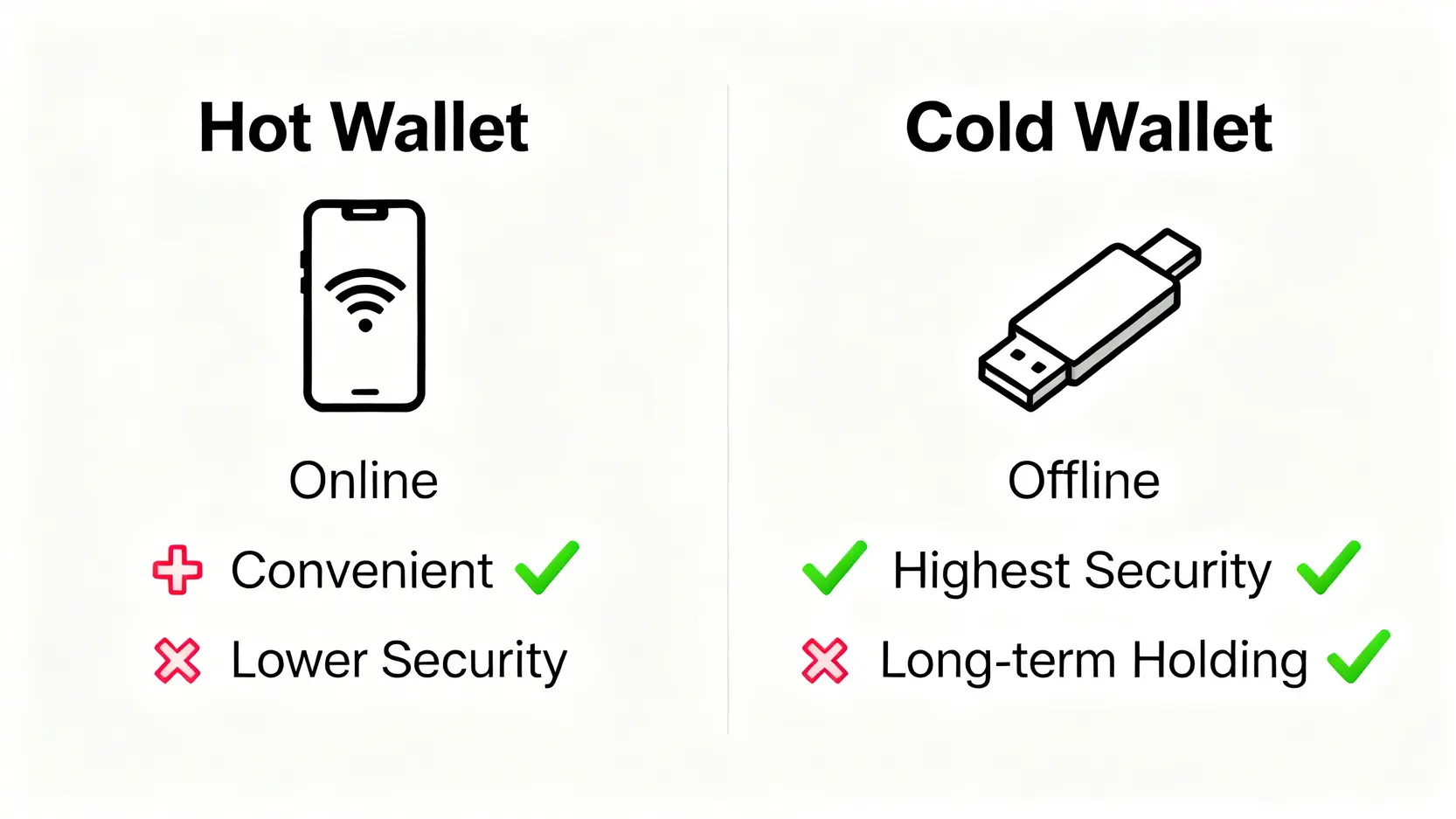
  • Hot Wallet: Any wallet connected to the internet, such as a mobile app or browser extension wallet. The advantage is convenience for frequent transactions, while the disadvantage is relatively lower security.
  • Cold Wallet: A hardware device not connected to the internet, often resembling a USB device. The advantage is high security and effective protection against online attacks, while the disadvantage is more complex operation and additional purchase cost.

熱錢包與冷錢包的對比圖,展示兩者在連線狀態、便利性和安全性上的主要區別。

Hot Wallet vs. Cold Wallet: Choose the Best Asset Storage Method Based on Your Needs.

For beginners or small scale investors, keeping assets on a reputable licensed exchange may be acceptable initially. For larger investments or long term holding, it is strongly recommended to research and use cold wallets alongside hot wallets to enhance security. 

Further Reading, Highly Recommended

2026 Hong Kong Bitcoin Investment Guide: Key Drivers of Price Movements and Related Concept Stocks

2025 Hong Kong Virtual Asset Exchange Recommendations: SFC Compliant Exchange Guide


Comparison and Recommendations of Mainstream Virtual Currency Exchanges in Hong Kong

To help you make a more informed choice, below is a brief comparison of the two major SFC licensed exchanges currently operating in Hong Kong.


HashKey Exchange: Analysis of Features, Fees, and User Experience

HashKey Exchange is one of the first exchanges in Hong Kong to receive an SFC license, focusing on serving both retail and professional investors.

  • Advantages:
    • User interface design is beginner friendly, with clear and intuitive operation flow.
    • Provides fiat deposit and withdrawal services, supporting Hong Kong dollars and US dollars.
    • Regularly launches promotional campaigns and account opening offers.
  • Disadvantages:
    • The selection of listed tokens is relatively smaller compared with major international platforms, although they are all mainstream coins.
  • Fees: Trading fees are generally around 0.2 percent, with specific rates subject to promotional adjustments.


OSL Exchange: Overview of Advantages, Disadvantages, and Account Opening Offers

OSL, as an established digital asset platform in Hong Kong, is also a licensed exchange and initially focused more on professional and institutional investors.

  • Advantages:
    • Strong institutional background, with high standards of security and compliance.
    • Well developed over the counter trading services.
    • Supports deposits and withdrawals in multiple fiat currencies, including Hong Kong dollars and US dollars.
  • Disadvantages:
    • The platform interface and functions may appear slightly complex for beginners.
    • Fewer promotional activities targeting retail investors.
  • Fees: The fee structure is similar to HashKey, with details available on the official website.


How to Choose the Right Platform Based on Your Investment Needs?

In summary, the choice of platform depends on your individual needs:

  • If you are a beginner: seeking a simple and user-friendly interface with a smooth experience, HashKey Exchange may be a more suitable starting point.
  • If you are an experienced investor or have large transaction requirements: OSL’s professional services and over the counter capabilities may be more appealing.

Since both are compliant platforms, a prudent approach is to open accounts with both exchanges, experience their services firsthand, and then decide where to allocate the majority of your funds.


Frequently Asked Questions About Cryptocurrency Trading in Hong Kong

Q: Is it legal to trade virtual currency in Hong Kong?

A: Yes, it is fully legal. As long as you trade through SFC licensed virtual asset trading platforms such as HashKey or OSL, your transactions are protected under Hong Kong regulations. Avoid using any unlicensed platforms or those claiming to be in the process of applying for a license to prevent potential fraud risks.

Q: Besides Ethereum, which cryptocurrencies should beginners pay attention to?

A: For beginners, it is advisable to start with mainstream cryptocurrencies that have larger market capitalization and strong consensus. In addition to Ethereum (ETH), Bitcoin (BTC) is essential to understand. Public chain tokens such as Solana (SOL) and BNB, which have strong ecosystems, are also worth considering. In the early stages, avoid pursuing high risk, low recognition “meme coins” or small projects.

Q: Is cryptocurrency investment subject to tax?

A: According to the current guidelines of the Hong Kong Inland Revenue Department, if you buy and sell cryptocurrencies for long term investment purposes, the profits may be regarded as capital gains, and Hong Kong currently does not impose capital gains tax. However, if you trade frequently as a business activity to generate income, the profits may be subject to profits tax. As tax regulations may change and individual circumstances differ, it is advisable to consult a professional tax advisor.

Q: What are the typical fees for buying and selling virtual currency?

A: Fees are generally divided into three types: deposit and withdrawal fees, trading fees, and withdrawal fees. On licensed exchanges in Hong Kong, depositing Hong Kong dollars via FPS is usually free. Trading fees vary depending on whether you are a “maker” or “taker”, typically ranging from 0.1 percent to 0.3 percent. When transferring cryptocurrency to an external wallet, a fixed network fee is required.


Conclusion

In summary, cryptocurrency trading in Hong Kong has become increasingly regulated and convenient. By following this beginner’s guide to crypto investment, the key is to select an SFC regulated licensed exchange and implement proper personal risk management. From account opening and funding to placing orders to buy and sell Ethereum, the overall process is straightforward. As you accumulate knowledge and experience, you will gain greater confidence in exploring this emerging market full of opportunities. Choose a suitable exchange today and begin your cryptocurrency investment journey!

If you liked this article, please share it!

Related Articles

  • How Hedging Works: Hedge Fund Strategies & Trading Guide
    How Does Hedging Work? Advanced Hedge Fund Strategies and Practical Trading Guide In the rapidly changing financial markets, relying solely on a “buy-and-hold” strategy often makes it difficult to withstand severe market volatility and achieve stable long-term profits. If you have heard Wall Street leaders discuss risk hedging, you are...
    2026 年 7 月 14 日
  • What Is Hedging? A Beginner’s Risk Management Guide
    What Is Hedging? A Risk Management Guide Every Financial Beginner Should Read In the investment market, we often hear the term “hedging”, but what exactly does it mean? Why do professional investors use it? Hedging means adopting strategies to protect assets from adverse price movements. Whether in the stock, foreign...
    2026 年 7 月 14 日
  • 2026 US Treasury Yield Guide: Trends & Strategies
    2026 Complete Guide to US Treasury Yields: Trend Analysis, Impact of Surging Yields, and Asset Allocation Strategies In the rapidly changing global financial market, US Treasury yields have long been regarded as the most important benchmark for the risk-free rate. Entering 2026, amid recurring shifts in inflation expectations and dynamic...
    2026 年 7 月 13 日
返回顶部