Is Binance Safe? From Founder Changpeng Zhao to Company Background, 5 Key Points Analyzing Binance Security
Want to trade cryptocurrency on Binance but feel uncertain about its security and complex company background? In particular, recent news surrounding Binance founder Changpeng Zhao (CZ) has made many investors uneasy. This article provides an in-depth analysis of Binance’s company background, introduces the legendary story of Changpeng Zhao, and delivers a comprehensive evaluation of Binance security, helping you grasp all key information at once and make informed investment decisions.
Who Is the Founder of Binance? Unveiling the Legendary Life of Changpeng Zhao (CZ)
When discussing Binance, one cannot overlook its central figure, Changpeng Zhao, widely known in the crypto community as “CZ”. His story is filled with remarkable milestones and positions him as one of the most influential figures in the cryptocurrency industry.
From McDonald’s Employee to Chinese Billionaire: Zhao’s Early Life and Entrepreneurial Journey
Changpeng Zhao’s early life was not without hardship. Born in Jiangsu, China, he immigrated to Canada with his family during his teenage years. To support his family, he worked at McDonald’s and took night shifts at a gas station. These experiences forged his resilience. Driven by a passion for computer technology, he enrolled at McGill University in Montreal, majoring in computer science.
After graduation, he worked at the Tokyo Stock Exchange and later at Bloomberg, where he was responsible for developing trading systems. This experience laid a solid technical foundation for his future exchange venture. In 2013, he learned about Bitcoin from a poker friend and decisively entered the cryptocurrency field, joining Blockchain.info and later serving as Chief Technology Officer at OKCoin.
Building the Binance Empire: Seizing Opportunities and Facing Global Regulatory Challenges
In 2017, recognizing the explosive potential of the cryptocurrency market, Zhao launched his own venture. He issued the platform token BNB (Binance Coin) through an Initial Coin Offering (ICO), successfully raising 15 million US dollars within a short period. Binance officially launched in July of that year.
With low trading fees, a wide selection of tokens, and a stable, efficient system, Binance became the world’s largest cryptocurrency exchange by trading volume within just six months, creating an industry legend. However, rapid expansion also attracted close scrutiny from global regulators, leading Binance into prolonged regulatory negotiations across multiple jurisdictions.
Recent Legal Controversies and Their Impact on Binance’s Reputation
Rapid growth brought immense success along with unprecedented challenges. In recent years, Binance has faced regulatory pressure from multiple countries, most notably its case with the US Department of Justice (DOJ). At the end of 2023, Changpeng Zhao admitted to violating US anti-money laundering regulations, agreed to pay substantial fines, and stepped down as CEO of Binance. This event shook the cryptocurrency market and raised concerns regarding Binance’s compliance and future development. Nevertheless, some market participants interpreted the resolution as an important step toward clearing regulatory obstacles and advancing compliance.
Binance Company Background: From Mysterious Rise to Global Crypto Leader
After understanding the founder, we now examine Binance’s corporate background. From the perspective of traditional finance, Binance’s organizational structure and operational model appear “unconventional”, contributing to its air of mystery.
The Founding and Development of Binance: Why Is There No Fixed Headquarters?
Binance was initially established in Shanghai, China. Following intensified cryptocurrency regulation by Chinese authorities in 2017, the team relocated operations to Japan, and subsequently to Malta due to tightening regulatory requirements. Thereafter, Binance adopted a “decentralized” operational model, claiming it has no fixed global headquarters.
This approach initially helped Binance avoid regulatory risks associated with any single jurisdiction and enabled rapid global expansion. However, it also became a primary source of regulatory scrutiny. In recent years, to align with regulatory requirements, Binance has applied for and obtained operating licenses in France, Dubai, Italy, and other regions, gradually enhancing transparency and compliance.
Business Landscape Analysis: Beyond an Exchange, a Comprehensive Blockchain Ecosystem
Many people still view Binance merely as “the world’s largest exchange” but this characterization does not fully capture its expansive ecosystem. Over the years, Binance has developed a blockchain ecosystem encompassing multiple segments:
Trading Platform: Offers spot, futures, and leveraged trading services.
BNB Chain: Formerly Binance Smart Chain (BSC), a high-performance public blockchain hosting numerous decentralized applications.
Launchpad and Launchpool: Platforms providing fundraising and exposure for emerging blockchain projects.
Binance Earn: Offers staking, savings, liquidity farming, and other asset enhancement tools.
NFT Marketplace: One of the leading global platforms for non-fungible token trading.
Trust Wallet: Binance’s official decentralized wallet.
This comprehensive ecosystem enhances user retention and strengthens Binance’s leadership position within the industry.
Binance is not just an exchange, but a complete ecosystem covering trading, public blockchain, asset management, NFT and more.
Core Question: In-Depth Evaluation of Binance Security
For investors, the most pressing concern is “whether it is safe to store funds on Binance?”. The following evaluates Binance security from three perspectives: platform fund protection, personal account security, and historical incidents.
Platform Fund Security: How Do the SAFU Fund and Proof of Reserves (PoR) Work?
To safeguard user assets, Binance has established two key protective mechanisms:
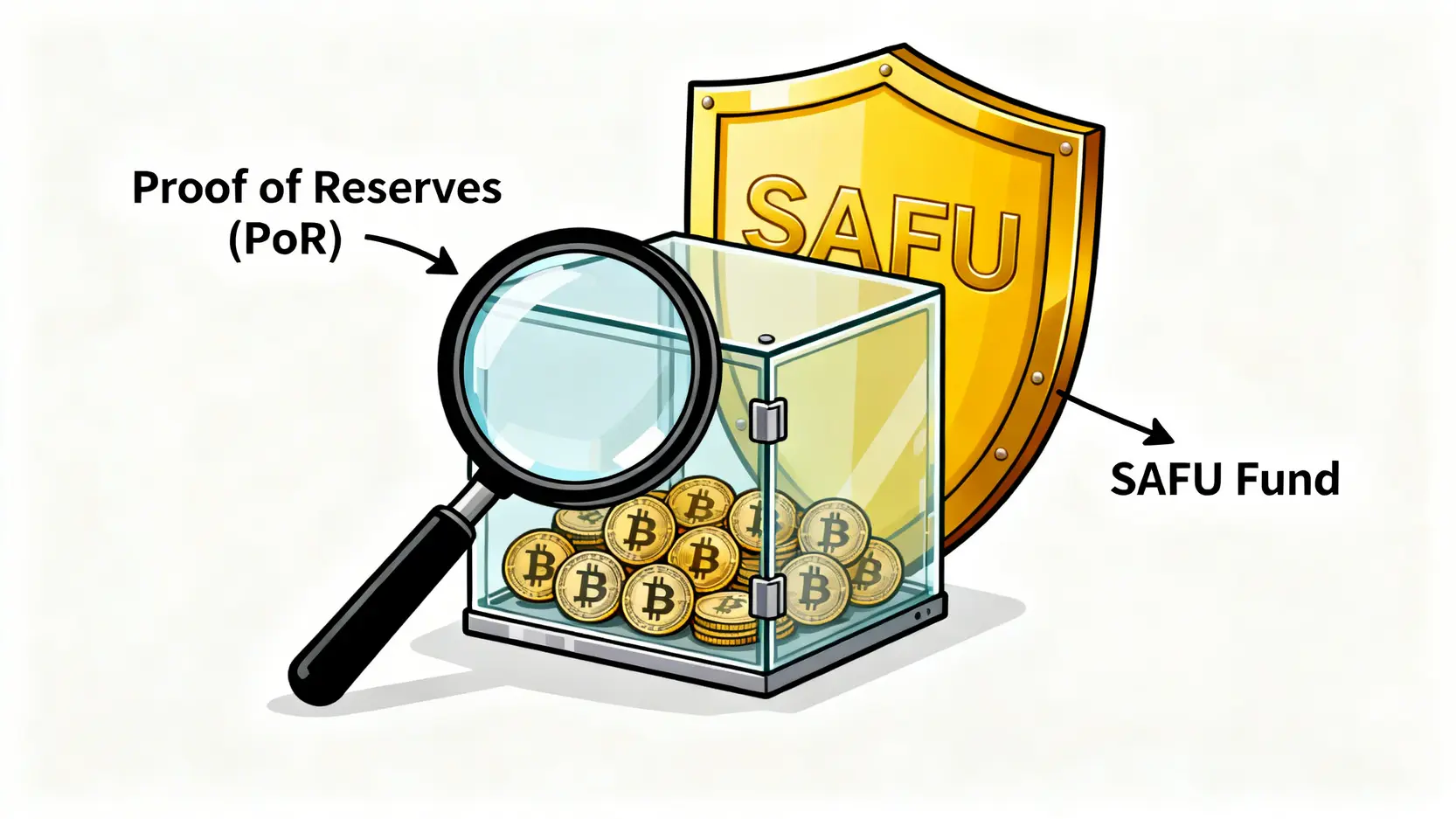
Secure Asset Fund for Users (SAFU): Binance allocates 10 percent of trading fee revenue to this fund to compensate users in extreme situations (such as hacking incidents). The wallet address is publicly disclosed, and as of early 2026, its value exceeds 1 billion US dollars.
Proof of Reserves (PoR): Following the FTX incident, exchanges introduced PoR to demonstrate sufficient asset reserves. Binance utilizes Merkle Tree technology, allowing users to verify that their assets are accurately recorded in the reserve system. In simple terms, the PoR mechanism ensures that Binance maintains at least a 1:1 reserve of user assets and does not misappropriate client funds. Users may review the latest reserve data on Binance’s official website at any time.
Through Proof of Reserves and the SAFU fund as insurance in extreme circumstances, Binance establishes dual layers of security protection.
Account Security Protection: Five Essential Security Settings You Must Enable (2FA, anti-phishing code)
While platform security measures are important, personal account security settings are equally critical. The following five security features are strongly recommended:
Two-Factor Authentication (2FA): Enable Google Authenticator or YubiKey as a fundamental and highly effective layer of protection.
Anti-Phishing Code: Set a unique code that appears in all official Binance emails to help identify fraudulent messages.
Withdrawal Whitelist: Restricts withdrawals to approved addresses, preventing unauthorized transfers even if an account is compromised.
Passkeys: Utilize biometric authentication (such as fingerprint or facial recognition) for enhanced security and convenience.
Device Management: Regularly review authorized devices and remove any unfamiliar or unused devices.
Review of Historical Security Incidents and Official Response Strategy
No exchange can guarantee absolute security. Binance experienced a significant hacking incident in 2019, during which approximately 7,000 Bitcoin were stolen. However, this incident demonstrated Binance’s response capability and accountability. Binance immediately activated the SAFU fund and fully compensated affected users, ensuring no user incurred losses. The manner in which the incident was handled ultimately strengthened community trust in Binance.
Frequently Asked Questions About Binance Background and Security (FAQ)
Q: Which country is Binance based in?
A: This is a complex question. Binance was initially founded in China but quickly moved its operations overseas. It adopts a globalized and decentralized operating model and does not maintain a single global headquarters. However, for compliant operations, Binance has registered and obtained licenses from local regulators in multiple countries and regions, including France, Dubai, Italy, and Spain.
Q: Is it safe to keep funds on the Binance platform? Could it collapse like FTX?
A: No investment is completely risk free, but Binance has implemented stricter asset protection measures compared with FTX. Binance operates a 1:1 Proof of Reserves (PoR) system and has established a SAFU fund exceeding 1 billion US dollars to address extreme risks. The primary cause of FTX’s collapse was the misuse of user funds, and Binance’s PoR mechanism is designed to prevent such situations. Nevertheless, diversifying risk and considering the use of a cryptocurrency cold wallet for long term holdings remains a prudent approach.
Q: Is Changpeng Zhao still the CEO of Binance?
A: No. After reaching a settlement agreement with the US Department of Justice in November 2023, Changpeng Zhao (CZ) stepped down as Chief Executive Officer (CEO) of Binance, and Richard Teng assumed the position. Under the agreement, CZ is prohibited from participating in Binance’s operational management for the next three years, although he remains a major shareholder of the company.
Q: What is Binance’s SAFU fund?
A: SAFU stands for “Secure Asset Fund for Users”. It is an emergency insurance fund established by Binance in 2018, funded by 10 percent of Binance’s trading fee revenue. Its primary purpose is to compensate users for asset losses in the event of extreme security incidents such as hacking attacks, providing an additional layer of protection.
Q: What is the difference between Binance and Binance.US?
A: Binance.com serves global users and offers a wide range of tokens and financial derivatives. Binance.US is an independently operated entity established to comply with US regulations and serves only US residents. The two platforms differ in product offerings, listed tokens, fee structures, and maintain completely separate account systems.
Conclusion
In summary, as the world’s largest platform by trading volume, Binance’s company background and the story of its founder Changpeng Zhao are remarkable, yet accompanied by ongoing regulatory challenges and controversies. Regarding security, which is the primary concern for investors, Binance provides multi-layered fund protection through mechanisms such as the SAFU fund and Proof of Reserves (PoR). However, platform security measures must be combined with users’ own security practices to be fully effective. With a comprehensive understanding of its background, operating model, and potential risks, you can objectively assess Binance’s overall security and make more informed decisions for your cryptocurrency investments.
How to Get Started with Bitcoin? The Complete 2026 Bitcoin Buying Guide for Beginners After watching Bitcoin repeatedly reach new highs in recent years and successfully pass spot ETF reviews in the US and Hong Kong in 2024, officially entering mainstream financial markets, many investors have turned their attention to...
Is Gold’s V-Shaped Rebound a Bottom-Fishing Signal? A Complete Guide to Trading Strategies Amid “$100 Price Swings” What Is a Gold V-Shaped Rebound? More Than Just a Technical Pattern The gold market has recently experienced sharp rises and falls, with prices frequently displaying dramatic “gold V-shaped rebounds”. Single-day “$100 price...
What Is PPI Data? 2026 Latest Analysis: Understand the Differences from CPI and How It Affects Stock Market Trends With market information constantly changing, do you always hold your breath while waiting for CPI data to be released? But did you know that a more forward-looking inflation indicator, PPI data...