Allianz ZAR High Yield Bond Fund: Risks & Returns

Updated: 2026/03/06  |  CashbackIsland

安聯全球高收益債券基金南非幣值得買嗎?風險、配息與Allianz基金比較

Attracted by the eye-catching distribution rate of “Allianz Global High Yield Bond Fund South African Rand” while seeking high income, yet concerned about the underlying “high yield bond fund risks”? With abundant information on “Allianz fund comparison” in the market, unsure how to choose? This article provides an in-depth analysis of this fund, which is highly popular in Taiwan, Malaysia, and other regions, offering a comprehensive “bond fund investment” review. From the nature of the fund and its core risks to horizontal comparisons with other funds, it helps you clarify all concerns and make informed investment decisions. 


What Is Allianz Global High Yield Bond Fund South African Rand?

Although the name of this fund is lengthy, it can be understood by breaking it down into several key components:

  • Global High Yield Bonds: This is the core asset of the fund. “High yield bonds” typically refer to bonds issued by companies with credit ratings below investment grade. Due to higher default risk, they must offer higher interest rates to attract investors, which is the source of their “high yield”. They are also commonly referred to as “junk bonds”.
  • Allianz: This refers to the fund company brand. Allianz Global Investors is one of the world’s leading active asset management firms, with considerable market recognition and research resources.
  • South African Rand Denominated: This means that investor subscriptions, redemptions, and distribution calculations are all conducted in South African rand (ZAR). This is the most distinctive feature of the fund and also the most complex source of both risk and potential return.

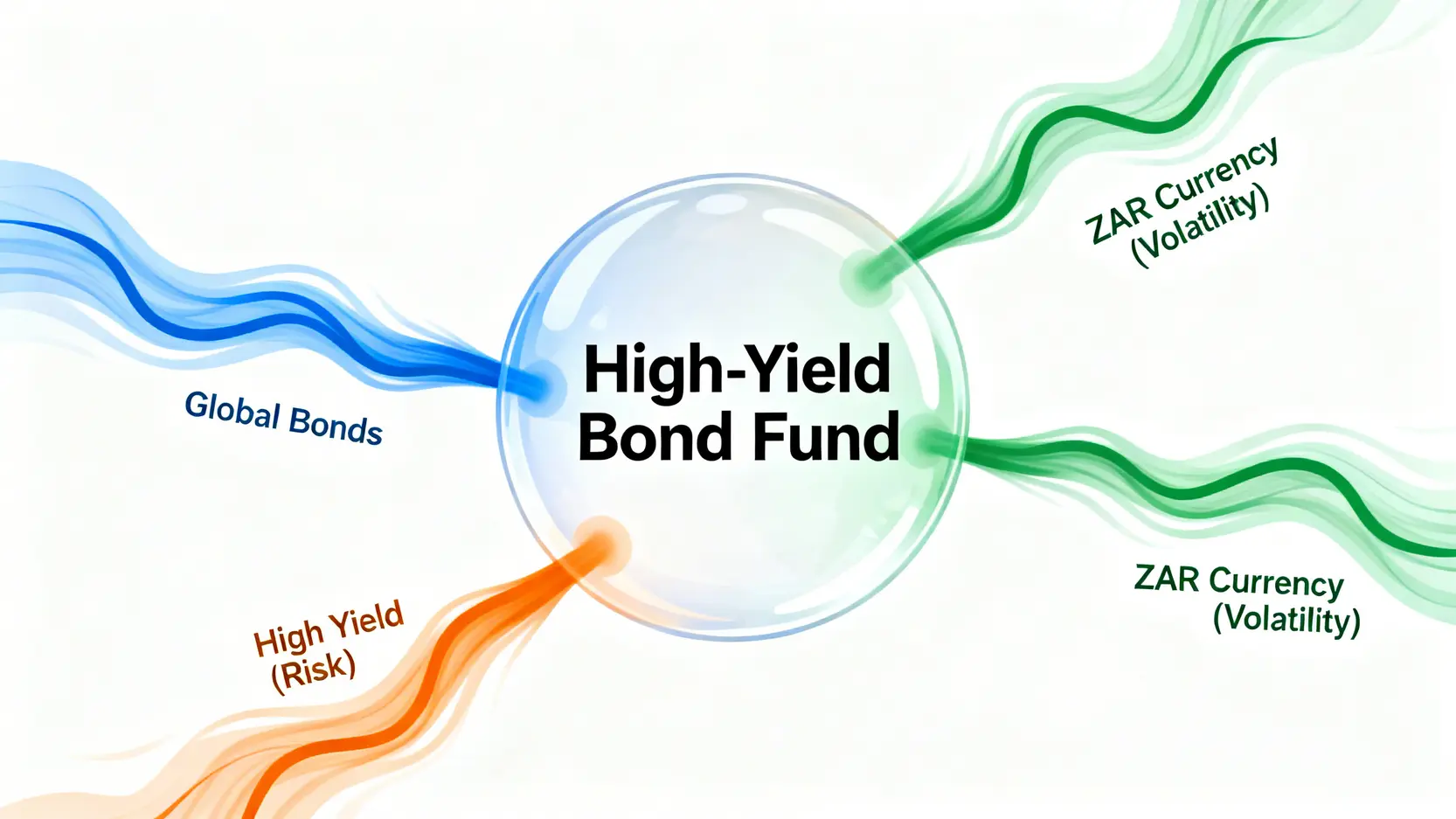
安聯全球高收益債券基金南非幣的三大組成元素示意圖:全球債券、高風險收益、與南非幣的波動性。

Illustration: The Fund Consists of Three Key Elements, Bond Nature, High-Risk High-Return Characteristics, and South African Rand Exchange Rate Volatility.


Fund Investment Objective and Strategy Analysis

The primary objective of Allianz Global High Yield Bond Fund is to generate high recurring income for investors by investing at least two-thirds of its assets in the global high yield bond market. The fund management team actively analyzes corporate bonds across different regions and industries worldwide, seeking the optimal balance between risk and return.

Its investment strategy typically includes:

  • Diversified Allocation: Investment targets are spread globally to diversify economic risk from any single country or region.
  • Credit Research Driven: Relies on in-depth credit analysis to assess the repayment ability of bond issuers and avoid default risks.
  • Active Management: Fund managers dynamically adjust portfolio duration and sector allocation based on market interest rate expectations and economic outlook.


Why Choose South African Rand Denomination? Exchange Rate Risk and Potential Return

Many investors may feel puzzled when seeing “South African rand”. Why not choose mainstream currencies such as the US dollar or euro? The key lies in the “carry trade”. As an emerging market, South Africa typically maintains benchmark interest rates significantly higher than those in developed countries such as the US and Europe. Therefore, issuing a South African rand denominated share class can attract investors willing to bear higher exchange rate risk in exchange for potentially higher returns.

However, this is a double-edged sword. The South African rand (ZAR) is a highly volatile currency, easily influenced by global economic sentiment, commodity prices (especially gold and platinum) as well as South Africa’s domestic political and economic conditions. If the rand depreciates significantly against your local currency (such as the New Taiwan dollar or Malaysian ringgit), the depreciation may completely offset the high interest income generated by the bonds and even result in capital losses. Conversely, if the rand appreciates, you may achieve dual gains from both interest income and exchange rate differences. This is why investing in this fund requires not only an understanding of bonds but also a basic knowledge of the foreign exchange market.


Further Reading (Highly Recommended)

What Are Bond Risks? In-Depth Analysis of Fund Investment Risks: Hedging Strategies for Steady Wealth Management

2025 US Treasury Investment Guide: Understand What US Government Bonds Are and How to Buy Them in One Article


Revealing the 5 Core Risks of High Yield Bond Funds

Before being attracted by the tempting distribution rate, you must clearly understand all potential high yield bond fund risks. Behind any high return, there is inevitably high risk. For this type of fund, the risks mainly come from the following five aspects: 

Credit Risk: The Default Possibility of Junk Bonds

This is the primary risk of high yield bonds. The fund invests in companies with lower credit ratings, which may have weaker operating conditions or higher financial leverage. When an economic downturn occurs or a company encounters operational difficulties, the risk of “default”, meaning failure to pay interest or repay principal, is significantly higher than that of investment grade issuers. Once a bond held by the fund defaults, the fund’s net asset value will be directly impacted.


Interest Rate Risk: Net Asset Value Pressure During Rate Hike Cycles

This is a common risk for all bonds. When market interest rates rise (for example during Federal Reserve rate hikes), newly issued bonds offer higher coupon rates. This reduces the attractiveness of existing bonds with lower yields, causing their prices to decline. Although high yield bonds generally have lower interest rate sensitivity (or duration), compared with long-term government bonds, their net asset value will still face pressure in a rapid rate hike environment.


Exchange Rate Risk: The Double-Edged Sword of South African Rand Volatility

For a fund denominated in South African rand, this is a major risk that cannot be ignored. Even if the underlying bonds perform well, if the rand depreciates by 10 percent against your domestic currency, your total return will immediately decline by 10 percent. Emerging market currencies are highly volatile and unpredictable. You may earn high interest income yet lose money due to exchange rate differences.


Liquidity Risk: Difficulty in Liquidation During Market Panic

The high yield bond market is less liquid than mainstream assets such as US Treasuries. During periods of financial market panic (such as the 2008 global financial crisis or the early stage of the COVID-19 pandemic in 2020), buyers may temporarily disappear from the market. In such cases, fund managers may be forced to sell holdings at extremely low prices to meet investor redemption demands, leading to a sharp decline in the fund’s net asset value.


Distribution Source Risk: The Truth That Distributions May Come From Principal

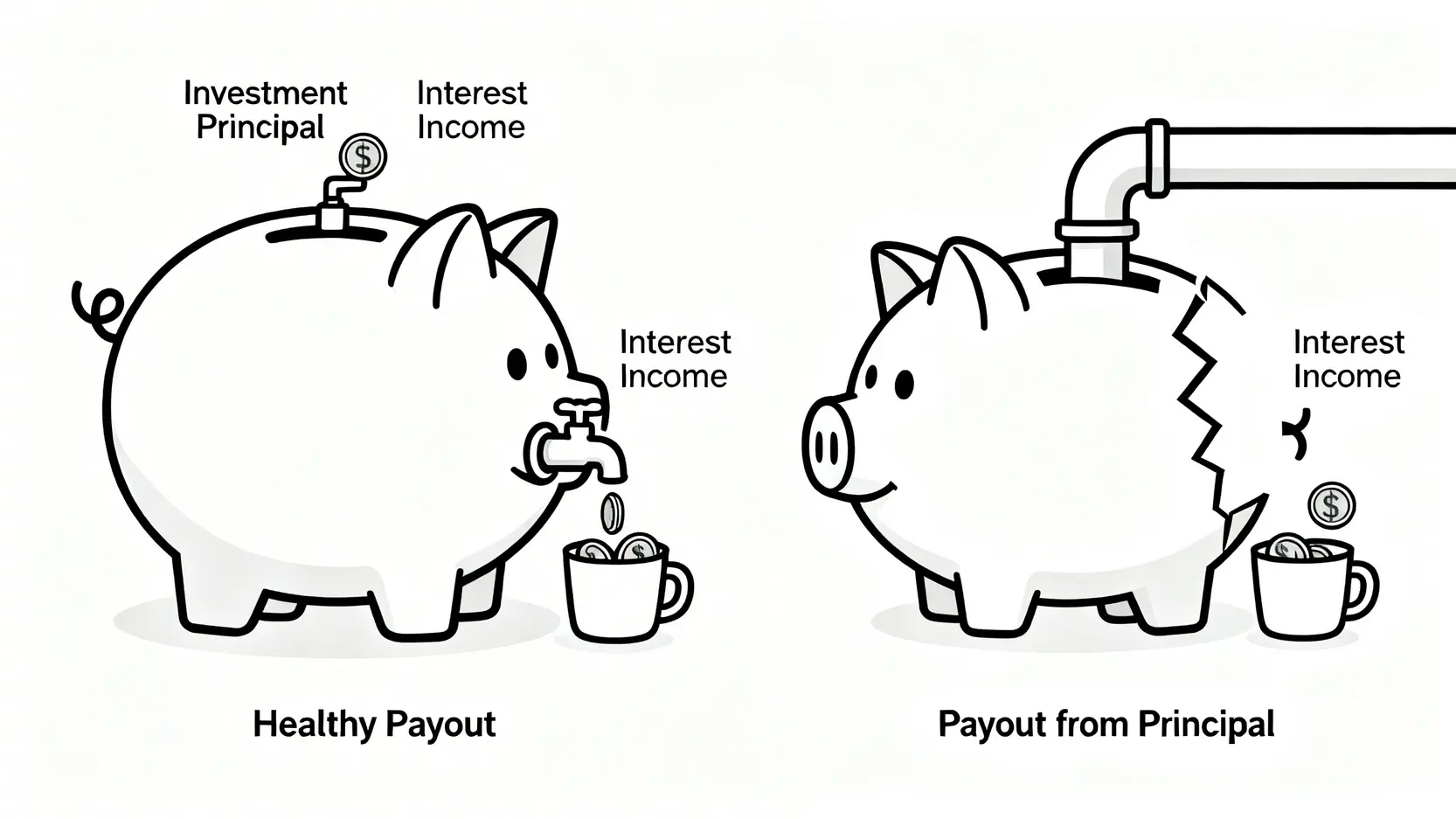
Many investors mistakenly believe that monthly distributions come entirely from the interest income generated by the fund. However, the fund prospectus often states that “distributions may be paid from principal”. This means that when interest income or capital gains are insufficient to meet the projected distribution rate, the fund company may use part of your invested principal to pay distributions. In such cases, you are effectively receiving your own money, and your total assets will shrink accordingly. It is essentially a concept of “shifting money from one pocket to another”.

配息來源可能為本金的示意圖,比較健康的利息配息與動用本金配息的差異。

Warning: Distributions may be paid from principal. The image on the left shows healthy interest-based distributions, while the image on the right illustrates distributions paid from principal, resulting in a reduction of total assets.


Allianz Fund Comparison: Global High Yield vs. Income and Growth

Under Allianz, in addition to the Global High Yield Bond Fund, the “Allianz Income and Growth Fund” is also a well-known product. Many investors hesitate between the two. Below, we clarify their differences through a comparison table to help you conduct a more accurate Allianz fund comparison.


Portfolio and Holdings Differences Comparison Table

Comparison Item Allianz Global High Yield Bond Fund Allianz Income and Growth Fund
Core Assets Global High Yield Corporate Bonds (Non-Investment Grade Bonds) US Convertible Corporate Bonds, Equities
Investment Objective Primarily Seeks High Recurring Income Seeks a Balance Between Income and Capital Appreciation
Sources of Risk Credit Risk, Interest Rate Risk, Exchange Rate Risk (Depending on the Denomination Currency) Equity Market Risk, Credit Risk, Interest Rate Risk
Volatility Medium-High to High High
Correlation With the Stock Market Moderate to High Correlation Highly Correlated


Comparison of Short- and Long-Term Performance and Volatility

Generally, the “Income and Growth Fund”, due to holding a substantial portion of equity assets, tends to have higher long-term capital appreciation potential than the “Global High Yield Bond Fund”. During bull markets, the Income and Growth Fund can deliver outstanding performance. However, its net asset value volatility is also significantly higher than that of pure bond funds, and during stock market corrections, declines can be considerable.

In comparison, while the “Global High Yield Bond Fund” also experiences notable volatility, it is theoretically more stable than equity assets. Its primary source of return comes from steady bond interest rather than stock price appreciation. When evaluating such funds, investors should not focus solely on short-term distribution rates, but instead examine long-term total return including income and performance across different market cycles.


Which Fund Is More Suitable for Conservative or Aggressive Investors?

  • Aggressive Investors: If you can tolerate greater net asset value fluctuations and are optimistic about the long-term potential of growth assets such as US technology stocks, then the “Allianz Income and Growth Fund” may better meet your needs. It offers opportunities to participate in stock market gains while generating partial income through convertible bonds.
  • Aggressive Investors Seeking High Cash Flow: If your primary investment objective is to obtain relatively high monthly cash flow, and you understand and are willing to bear the credit risk of junk bonds as well as exchange rate risk associated with South African rand denomination, then the “Allianz Global High Yield Bond Fund” is an option worth considering.
  • Conservative Investors: Strictly speaking, both funds carry relatively high risk characteristics and may not be entirely suitable for very conservative investors. Conservative investors may consider investment grade bond funds or global government bond funds instead.


2026 Bond Fund Investment Strategy: How to Allocate This Type of Fund?

After understanding the characteristics and risks of the fund, the next question is how to proceed if you decide to invest. An appropriate bond fund investment strategy is far more important than timing the market correctly.


Analysis of the Advantages and Disadvantages of Dollar-Cost Averaging vs. Lump Sum Investment

  • Dollar-Cost Averaging: For a highly volatile asset such as Allianz Global High Yield Bond Fund South African Rand, dollar-cost averaging is a highly effective strategy. By investing in installments, you purchase fewer units when net asset value is high and more units when net asset value is low, which helps average out costs over time and reduce the risk of “buying at market peaks”.
  • Lump Sum Investment: Lump sum investment carries higher risk and requires better judgment of market timing. If invested during periods of market panic, when both the fund’s net asset value and the South African rand exchange rate are at historical lows, potential returns can be substantial. However, if timing is misjudged and investment occurs at relatively high levels, investors may face extended periods of being locked in at a loss.


How to Incorporate High Yield Bond Funds Into Your Asset Allocation

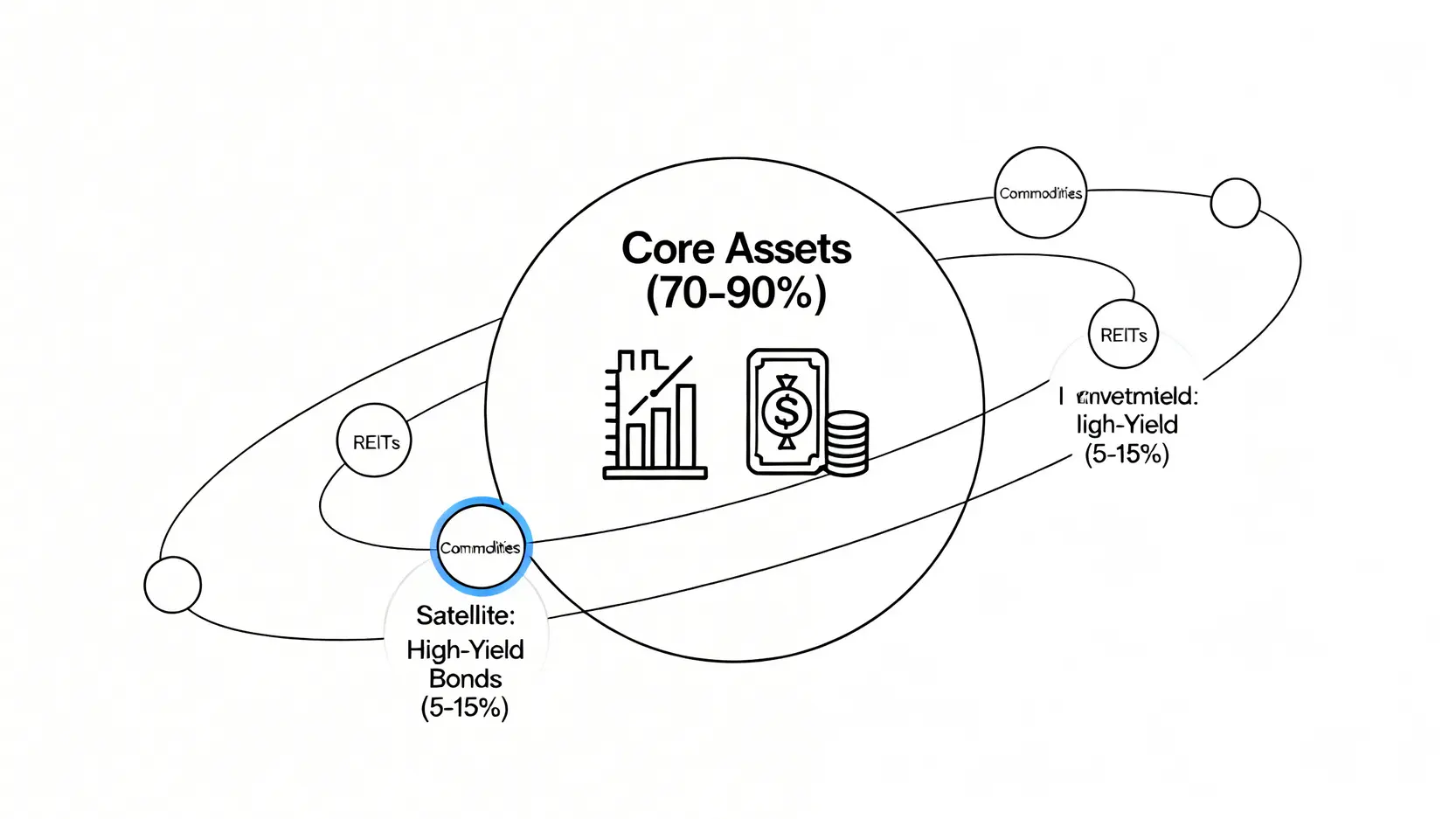
⚠️ Important Concept: High yield bond funds should not serve as the core asset of an investment portfolio, but rather as a “satellite allocation”.

核心-衛星資產配置策略示意圖,顯示高收益債券基金應作為衛星配置。

Asset Allocation Strategy: Use high yield bond funds as satellite allocations around stable core assets to pursue higher returns while controlling overall risk.

A healthy investment portfolio should have relatively stable assets at its core, such as global equity ETFs and investment grade bonds. On this basis, a portion of capital (for example 5 percent to 15 percent depending on individual risk tolerance), may be allocated to higher risk, higher return assets such as high yield bond funds to enhance overall portfolio yield.

Treating such funds as satellite allocations means that even if this portion experiences significant losses due to market volatility, it will not undermine the foundation of your overall financial position. Avoid “all in” all funds in a single high-risk product of this type.


FAQ Frequently Asked Questions

Q: Are the distributions of Allianz Global High Yield Bond Fund South African Rand stable?

A: Not necessarily. The fund’s distribution rate is not guaranteed. It may be adjusted based on the fund’s actual income performance, market interest rate environment, and the management company’s policy. During unfavorable market conditions, the fund company may reduce the distribution rate to maintain net asset value stability. In addition, as mentioned earlier, part of the distribution may come from principal. Investors should regularly review the fund’s monthly reports to understand the composition of distributions.

Q: What should I pay attention to when investing in a South African rand denominated fund?

A: The primary and most important factor is exchange rate risk. You must be prepared for significant volatility in the South African rand, where fluctuations exceeding 10 percent in a short period are not uncommon. Before investing, you should assess your ability to tolerate such exchange rate movements. It is advisable to evaluate the trend of the South African rand as an independent investment decision, rather than focusing solely on the fund’s performance.

Q: Are high yield bond fund risks equivalent to equities?

A: Not exactly, but their risk characteristics share similarities. The price performance of high yield bonds has a moderate to high positive correlation with the equity market, as both are influenced by corporate operating conditions and overall economic cycles. During economic downturns, both tend to decline together. However, bonds have priority claims. In the worst-case scenario (corporate bankruptcy and liquidation), bondholders rank ahead of shareholders, so their downside risk is theoretically slightly lower than that of equities.

Q: How can I check the net asset value and distribution information of this fund?

A: The most accurate source of information is the official website of the fund company. You may visit the Allianz site and locate the dedicated page for this fund, where net asset value is updated daily and distribution information and monthly reports are published regularly. In addition, major financial information platforms (such as Morningstar and Anue) also provide detailed fund data for reference.


Conclusion

In summary, “Allianz Global High Yield Bond Fund South African Rand” with its high yield characteristics, does provide an option for investors seeking cash flow. However, behind its attractive distribution rate lie the credit risk of “junk bonds”, interest rate volatility risk, and most notably the exchange rate risk of the South African rand. The combination of these three risks makes it a highly volatile investment instrument.

Before making any bond fund investment, you must thoroughly clarify your own risk tolerance and investment objectives. If you are unable to withstand substantial fluctuations in net asset value and exchange rates, this fund may not be suitable for you. Conducting a comprehensive Allianz fund comparison and treating this type of fund as a small portion of your overall asset allocation is a more prudent strategy. Before making a final decision, consulting a professional financial advisor to obtain personalized investment advice can help you avoid unnecessary risks.

If you liked this article, please share it!

Related Articles

  • Volatility Surface Guide: Skew Trading Strategies
    Practical Applications of Volatility Surfaces: From Options Modeling to Advanced Skew Trading Strategies In options markets, implied volatility is never a flat line. Instead, it forms complex "smile" or "skew" surfaces. For advanced traders, mastering the practical applications of volatility surfaces is equivalent to possessing a lens that reveals market...
    2026 年 6 月 3 日
  • Foreign Capital Flow Model: Track Institutional Money
    Building a Foreign Capital Flow Copy Trading Model: A Stock Market Indicator for Accurately Tracking Institutional Positioning In Asia-Pacific stock markets, foreign capital inflows and outflows often determine the direction of the index. However, simply looking at daily net buy and sell data is no longer enough. Only by building...
    2026 年 6 月 3 日
  • Options Buying Strategies for Extreme Market Risks
    Options Buyer Strategies During Extreme Market Conditions: Black Swan Hedging and Cross-Market Arbitrage During Volatility Surges The most terrifying aspect of financial markets is not a gradual decline, but overnight flash crashes and cross-market capital withdrawals accompanied by volatility surges. In the highly unpredictable global macroeconomic environment of 2026, geopolitical...
    2026 年 6 月 3 日
返回顶部