NFP & Iran Crisis: Fed, Oil & Market Impact

Updated: 2026/06/22  |  CashbackIsland

fed-rate-hike-iran-crisis-guide

Non-Farm Payrolls and the Iran Crisis: A Complete Guide to Understanding Federal Reserve Rate Hikes and Shifting Oil Prices

Global financial markets are holding their breath as investors face two major sources of uncertainty. Strong US Non-Farm Payrolls (NFP) data could accelerate expectations of Federal Reserve rate hikes, while tensions between the US and Iran centered around the Strait of Hormuz, coupled with the Trump administration’s hardline stance, have intensified geopolitical risks and directly affected global energy supplies and OPEC+ policy decisions. This article provides an in-depth analysis of these two major developments, helping you understand today’s changing market landscape and navigate the dual forces of interest rates and oil prices. 


Strong NFP Data: Why Have Market Expectations for Federal Reserve Rate Hikes Reversed?

Economic data acts as the market’s thermometer, and the latest “Non-Farm Payrolls report” has provided a powerful boost to confidence while completely reshaping expectations for the future path of interest rates. Overnight, the market shifted from dovish expectations of rate cuts to hawkish expectations of rate hikes.


What Is Non-Farm Payrolls (NFP) Data, and Why Is It Such an Important Economic Indicator?

Non-Farm Payrolls (NFP), published monthly by the US Bureau of Labor Statistics (BLS), is a key economic indicator that measures changes in employment across all sectors of the US economy except agriculture. It covers approximately 80% of the workforce, including manufacturing, services, and construction.

NFP is considered highly important for several reasons:

  • A snapshot of economic health: Changes in employment directly reflect whether businesses are expanding or contracting, making NFP one of the clearest indicators of economic conditions.
  • An early warning indicator of inflation: When the labor market becomes tight, businesses often need to raise wages to attract workers. Rising wages boost consumer spending and can fuel inflation, making wage growth one of the Federal Reserve’s primary concerns.
  • A key input for Federal Reserve decisions: The Federal Reserve’s dual mandate is to “promote maximum employment” and “maintain price stability”. Strong NFP data suggests the employment objective has largely been achieved, shifting the central bank’s focus toward controlling inflation, with interest rate hikes serving as its primary policy tool.


A Closer Look at the Latest Data: What Signals Did This NFP Report Send?

According to the latest figures released for May 2026, US Non-Farm Payrolls increased by 172,000, significantly exceeding market expectations. In addition, the previous two months’ figures were revised upward, pushing the three-month average job growth to its highest level in more than two years. The report sent several important signals.

  1. The labor market remains highly resilient: Despite earlier signs of slowing economic momentum, businesses continue to hire aggressively, indicating that the underlying fundamentals of the US economy remain solid.
  2. Wage growth is accelerating: The year-over-year increase in average hourly earnings accelerated, raising concerns among Federal Reserve officials about the growing risk of a “wage-price inflation spiral”.
  3. The unemployment rate remains low: Unemployment continues to hover near historic lows, further confirming the tightness of the labor market.


From Dovish to Hawkish: How Strong Employment Data Reshapes the Federal Reserve’s Interest Rate Path?

Before the release of this strong NFP report, markets generally expected the Federal Reserve to leave interest rates unchanged due to global economic uncertainty and possibly begin considering rate cuts next year. However, the stronger-than-expected employment growth completely changed that outlook. Traders are now almost fully pricing in a 25-basis-point Federal Reserve rate hike before December this year.

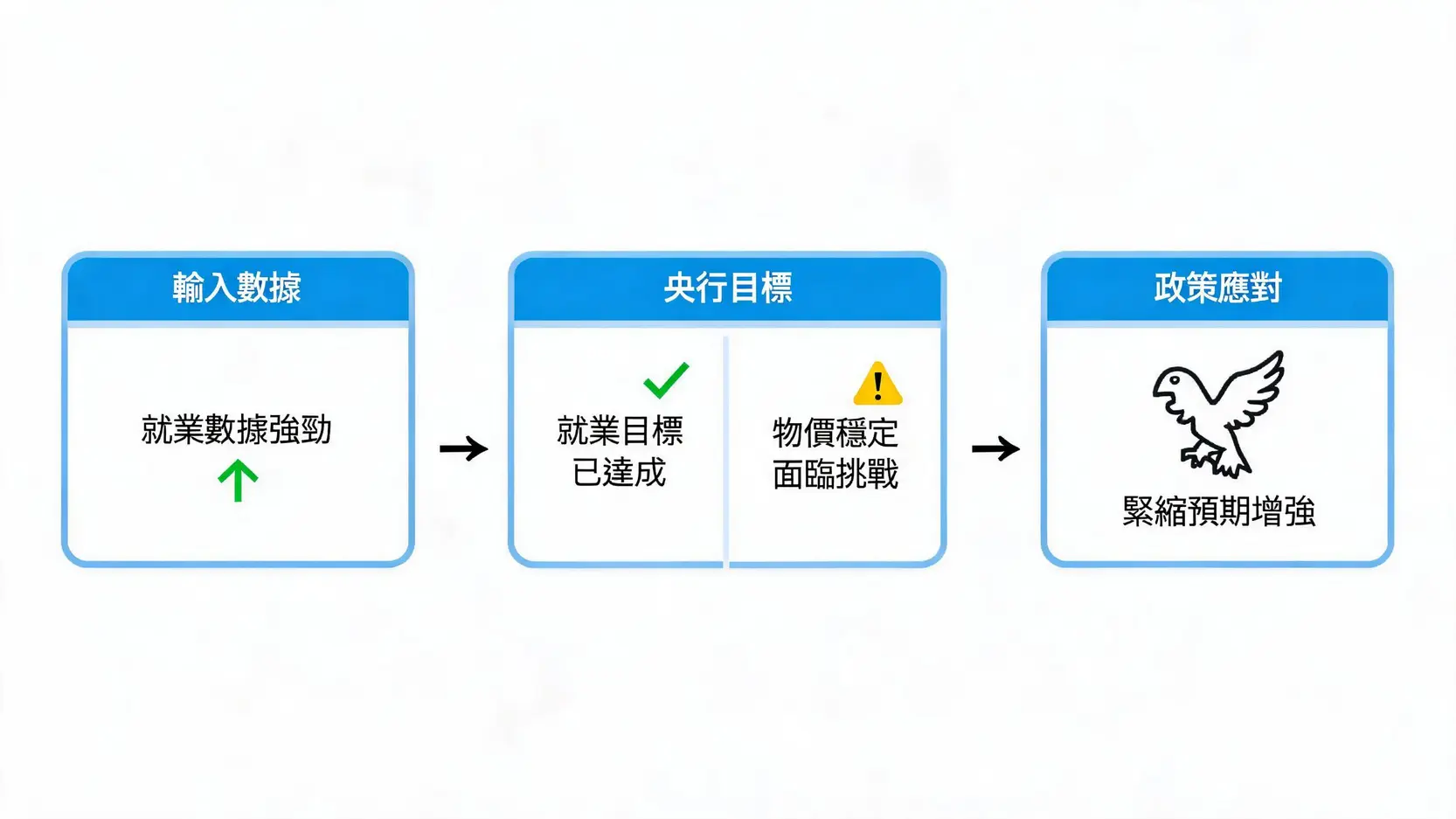
流程圖解釋強勁的非農就業數據如何導致美聯儲加息預期升溫。

Strong NFP Data Is the Key Catalyst Behind the Federal Reserve’s Shift From a Dovish to a Hawkish Stance.

The reasoning is straightforward. Strong employment figures provide additional support for “hawkish” Federal Reserve officials (who favor tighter monetary policy to combat inflation). They believe the labor market has reached equilibrium or may even be overheating, and that failing to raise interest rates preemptively could significantly increase the risk of inflation becoming entrenched. As a result, what was previously a “wait-and-see” approach has quickly evolved into an actively hawkish stance.


Further Reading (Highly Recommended)

How to Trade Crude Oil Futures? A Beginner’s Guide to Investing in Oil in 2026 and Understanding Oil Price Trends…

How to Buy Oil Futures? The 2025 Beginner’s Investment Guide: From Opening an Account to Placing Your First Trade…


Clouds Over the Strait of Hormuz: How US-Iran Tensions Affect Global Energy Markets

If NFP data represents an “economic storm”, then rising tensions between the US and Iran in the Middle East represent a “geopolitical time bomb” that could explode at any moment. The fuse for that bomb lies in the Strait of Hormuz.


The Strategic Importance of the Strait of Hormuz: Why Is It Called the World’s Oil Chokepoint?

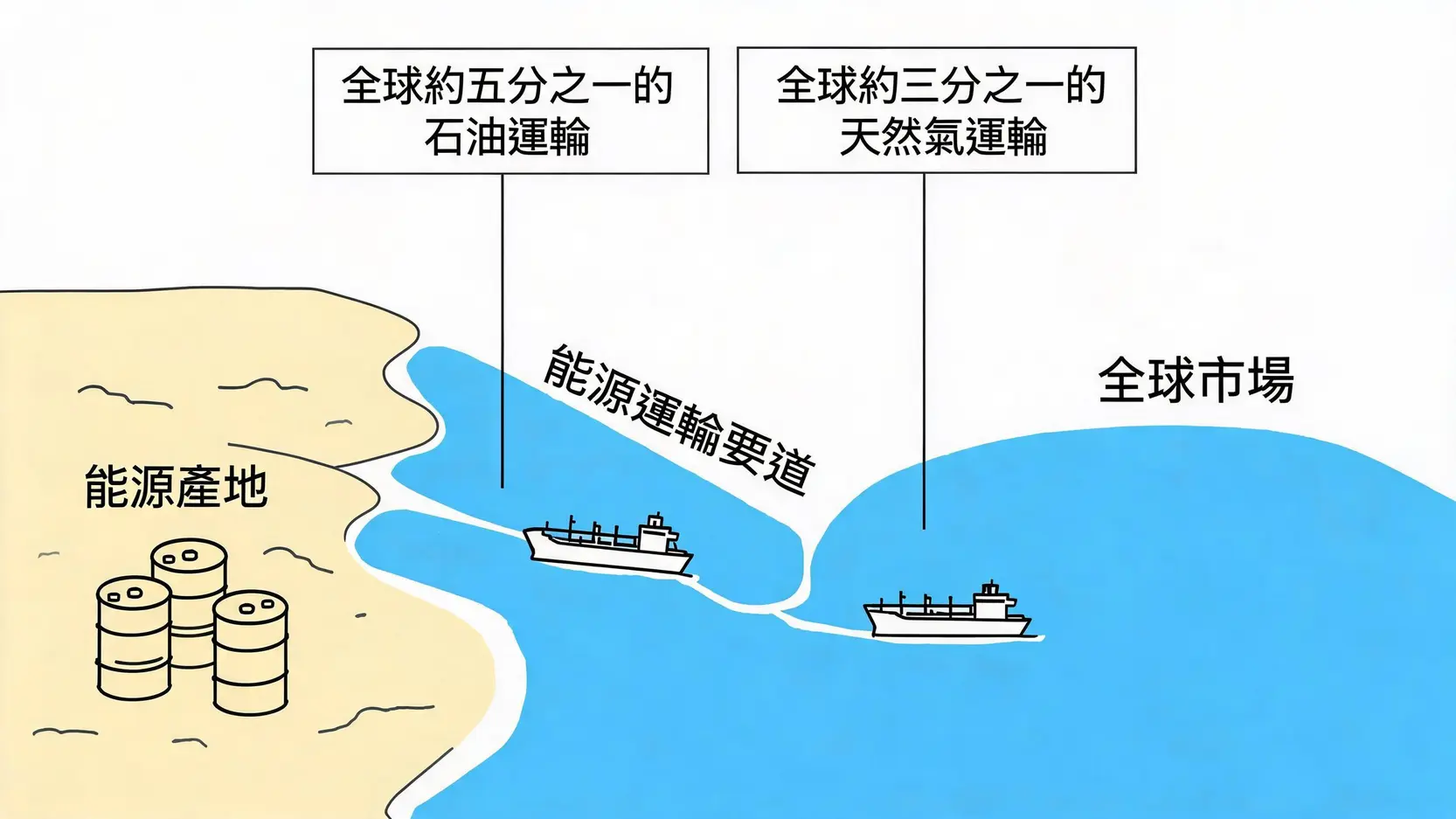
The Strait of Hormuz is a narrow waterway connecting the Persian Gulf with the Gulf of Oman, measuring only about 33 kilometers across at its narrowest point. Although geographically small, its strategic importance is unparalleled. According to authoritative data, roughly one-fifth of global oil consumption and approximately one-third of global liquefied natural gas (LNG) trade pass through this route. Major oil-producing countries, including Saudi Arabia, Iran, the United Arab Emirates, and Kuwait, rely heavily on this shipping lane for crude oil exports. As a result, the Strait of Hormuz is widely regarded as the “world’s oil chokepoint” or the “lifeline of global energy” where even minor disruptions can trigger significant swings in global oil prices.

概念示意圖顯示霍爾木茲海峽作為全球能源運輸咽喉的戰略重要性,以及通過該海峽的石油和天然氣比例。

The Strait of Hormuz: More Than One-Fifth of the World’s Oil Supply Passes Through This Narrow Waterway.


The Trump Administration’s Iran Strategy and the Risk of Potential Military Action

Under the influence of former President Trump, the US adopted a “maximum pressure” strategy toward Iran. Although the current administration has adjusted certain policies, the overall hardline approach has not completely disappeared. Recently, Trump publicly stated that if negotiations with Iran collapse, military options, including commando-style raids, could not be ruled out. These remarks further intensified an already tense situation. Iran responded forcefully, accusing the US of violating its rights and announcing preparations for the proposed “Strait of Hormuz Environmental Service Charges Regulations”, a move widely interpreted as an attempt to strengthen its control over the strait through non-military means. The escalating confrontation has heightened market concerns over the possibility of military conflict.


OPEC+ Response: The Complex Considerations Behind Higher Production Targets

Against the backdrop of US-Iran tensions, the position of OPEC+ (the alliance of OPEC members and allied oil-producing countries) remains critical to global oil supply stability. Despite heightened tensions in the Middle East that could disrupt Iranian oil exports, sources within OPEC+ have indicated that the group still plans to increase production targets for a fourth consecutive month. While this decision may appear contradictory, it reflects several complex considerations.

  • Balancing market demand: The global economy continues to recover, and oil demand remains robust. Without increasing production, persistently high oil prices could ultimately weaken economic growth and hurt oil-producing countries themselves.
  • Addressing pressure from major consumers: Major Western economies, led by the US, continue to pressure OPEC+ to raise production in an effort to moderate oil prices and inflation.
  • Internal competing interests: The interests of OPEC+ members are not fully aligned. Some countries (including Saudi Arabia and the United Arab Emirates) possess substantial spare production capacity and seek to increase output to capture greater market share, while other members with limited production capacity prefer to maintain higher oil prices.

OPEC+’s production increase has eased some concerns about supply shortages, but whether the additional output will be sufficient to offset potential supply disruptions remains uncertain.


Market Impact and Asset Performance Under Dual Pressures

As expectations for “Federal Reserve rate hikes” converge with “growing concerns over conflict in the Strait of Hormuz”, global financial markets are undergoing a dual stress test driven by monetary policy and geopolitical risk. Different asset classes have responded in markedly different ways. Investors seeking a deeper understanding may also refer to this comprehensive guide on the relationship between the Canadian dollar and oil prices: Understand Crude Oil Prices and Master Three Key Strategies for Investing in the Canadian Dollar

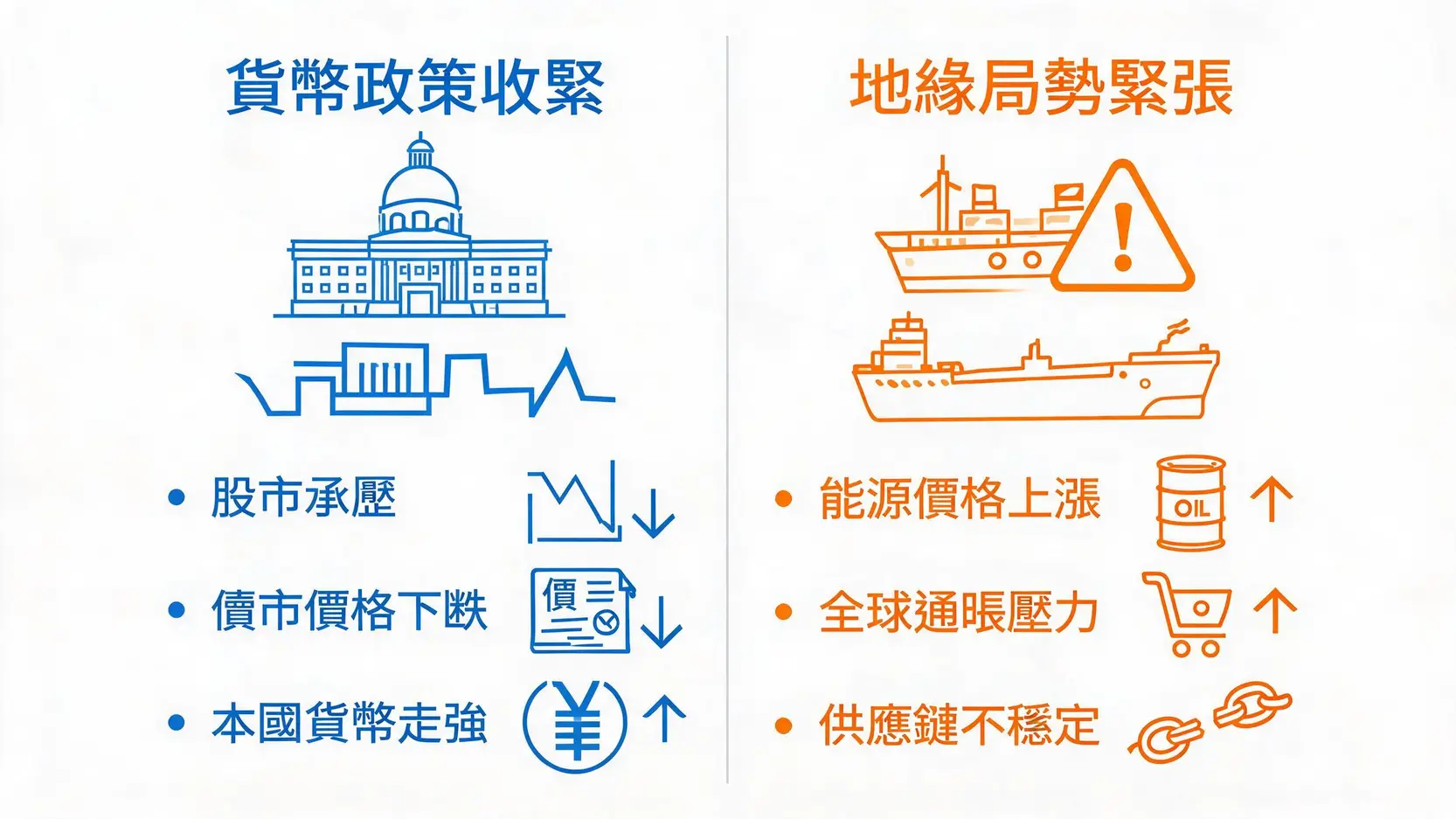
對比圖展示了利率預期升溫和地緣政治風險對股市、債市、美元、原油和通脹等市場的不同衝擊。

The Market’s Dual Pressures: How Monetary Policy and Geopolitical Risks Affect Different Asset Classes.


Rising Interest Rate Expectations: The Potential Impact on Stocks, Bonds, and the US Dollar

Rising expectations of Federal Reserve rate hikes imply higher borrowing costs throughout the financial system. The effects on various asset classes are as follows:

Asset Class Potential Impact Underlying Logic
Stock Market Comes Under Pressure in the Short Term, Especially Growth Stocks Higher interest rates reduce the present value of companies’ future earnings (by increasing the discount rate). As a result, richly valued technology and growth stocks are particularly vulnerable. Capital may instead rotate into value stocks with more reasonable valuations and stable cash flows.
Bond Market Bond Prices Decline, Yields Rise Interest rates and bond prices have an inverse relationship. When the market expects higher interest rates in the future, existing bonds become less attractive, causing bond prices to fall and yields to rise.
US Dollar Exchange Rate Tends to Strengthen Higher interest rates attract international capital into the US in search of higher interest income, increasing demand for the US dollar and supporting its value.


Escalating Geopolitical Risks: The Impact on Oil Prices, Inflation, and Global Supply Chains

Tensions in the Strait of Hormuz primarily affect markets through the real economy:

  • Oil Prices: Any news suggesting the strait could be blocked immediately fuels fears of supply disruptions, driving international oil prices sharply higher. This is a classic example of a geopolitical “risk premium”.
  • Global Inflation: Crude oil is the lifeblood of industry. Higher oil prices increase costs across transportation, manufacturing, and logistics, which are ultimately passed on to consumers, adding to global inflationary pressures.
  • Supply Chain Stability: Beyond crude oil, a substantial volume of global trade also passes through the strait. Any conflict could disrupt shipping, drive insurance costs sharply higher, and deal another blow to an already fragile global supply chain.


Investor Checklist: Key Indicators to Watch in the Current Macroeconomic Environment

In such a complex environment, staying informed is essential. Below is a checklist of key indicators investors should monitor closely:

  1. US Core PCE Price Index: The Federal Reserve’s preferred inflation gauge, providing a more comprehensive measure of underlying inflation than the CPI.
  2. Federal Reserve Officials’ Speeches: Watch for changes in the tone of hawkish and dovish policymakers to identify potential shifts in monetary policy.
  3. US 10-Year Treasury Yield: Widely regarded as the “anchor of global asset pricing”, its movements reflect market expectations for future economic growth and inflation.
  4. WTI and Brent Crude Oil Futures Prices: Oil price movements directly reflect changes in geopolitical risk.
  5. OPEC+ Monthly Meeting Decisions: The group’s production decisions play a decisive role in balancing global oil supply and demand.


Frequently Asked Questions (FAQ)

Q: If the Federal Reserve Really Raises Interest Rates, How Will It Affect My Finances?

A: Federal Reserve rate hikes affect personal finances through multiple channels. First, if you have floating-rate debt, such as a mortgage, auto loan, or credit card balance, your interest payments may increase. Second, bank deposit rates generally rise as well, benefiting savers. For investors, the stock market may experience increased short-term volatility, while bond prices typically decline.

Q: How Likely Is Iran to Block the Strait of Hormuz, and What Would Happen If It Did?

A: Military analysts generally believe Iran has limited capacity to completely and permanently block the Strait of Hormuz. Doing so would effectively amount to declaring war on the international community and would likely trigger a strong military response from the US and its allies, with devastating consequences for Iran itself. Therefore, a full blockade is considered relatively unlikely. Instead, Iran is more likely to employ “gray-zone” tactics, such as harassing vessels, seizing oil tankers, or deploying naval mines to create uncertainty and drive up oil prices and geopolitical risk. If such events occur, global oil prices could surge sharply within a short period, potentially pushing the global economy into recession.

Q: Besides NFP, What Other Economic Indicators Influence Federal Reserve Decisions?

A: In addition to Non-Farm Payrolls (NFP), the Federal Reserve closely monitors a range of economic indicators when assessing economic conditions. The most important include the Consumer Price Index (CPI) and the Personal Consumption Expenditures (PCE) Price Index, both of which are key measures of inflation. Gross Domestic Product (GDP) reflects economic growth, retail sales measure consumer spending, and the Purchasing Managers’ Index (PMI) provides insight into business conditions in the manufacturing and services sectors. Together, these indicators form the complete picture that guides Federal Reserve policymaking.

Q: Are Safe-Haven Assets Such as Gold Worth Considering in the Current Market Environment?

A: Traditionally, gold attracts investors during periods of heightened geopolitical risk because of its safe-haven characteristics. However, the current environment is more complex. On one hand, tensions in the Strait of Hormuz provide support for gold prices. On the other hand, strong expectations of Federal Reserve rate hikes boost both the US dollar and real interest rates, which are typically negative for non-yielding assets such as gold. As a result, gold is caught between the opposing forces of “geopolitical support” and “monetary policy headwinds”, requiring investors to carefully weigh the balance between the two.


Further Reading (Highly Recommended)

A Beginner’s Guide to Commodity Investing: Master Futures Trading, Volatility, and Inflation Hedging in One Article

Oil ETF Investment Guide: Everything You Need to Know About Oil Funds, Fees, and Popular Oil ETFs


Conclusion

In summary, today’s markets are being shaped by the combined forces of US monetary policy and geopolitical tensions in the Middle East. Strong Non-Farm Payrolls (NFP) data has strengthened the case for Federal Reserve rate hikes, potentially reshaping global capital flows, while US-Iran tensions centered on the Strait of Hormuz have increased the risks of rising inflation and supply chain disruptions for the global economy. Investors should closely monitor developments on both fronts while maintaining a flexible and diversified portfolio, enabling them to make informed decisions and navigate potential market turbulence with confidence. 

编者
Evan Lin

Evan Lin

我是Evan Lin,从大学时期开始接触外汇交易,至今已有多年实战经验,熟悉技术分析与EA策略,热衷于研究市场脉动与风险管控,喜欢分享实战经验和交易技巧,和大家一起学习、一起进步!

If you liked this article, please share it!

Related Articles

  • Why Japan Property Is Attracting Global Investors
    Global Asset Repricing: Why Has Japan’s Property Market Become a Safe Haven for Smart Money Amid Yen Depreciation? What Is “Global Asset Repricing”? Why Has Japan Become the Main Focus? While investment forums around the world are heatedly discussing yen depreciation pressure, the real smart money has already begun positioning...
    2026 年 6 月 23 日
  • Japan Ends Negative Rates: Why Is the Yen Still Weak?
    Farewell to Negative Interest Rates! The Truth Behind Japan Meeting Its Inflation Target: Why Has Yen Depreciation Pressure Increased Instead of Easing? The Japanese economy is staging an extremely contradictory drama: after waiting for thirty years, it has finally welcomed the long-awaited Japan inflation, yet the market’s response has been...
    2026 年 6 月 23 日
  • YCC to QT: BOJ & Fed Policy Shift Analysis
    A Complete Analysis of Central Bank Policy Shifts: From YCC to QT, Decoding the BOJ and the Fed’s Next Move The Bank of Japan (BOJ) and the US Federal Reserve (Fed), two giants of the global financial markets, are seeing their diverging monetary policy directions become the core force driving...
    2026 年 6 月 23 日
返回顶部