BOJ Rate Hike Forecast 2026: Outlook & Strategies

When Will the Bank of Japan’s Next Rate Hike Arrive? 2026 Expert Forecasts and Investor Response Strategies
Decision-Making Basis for the Bank of Japan’s Future Interest Rate Policy
The Bank of Japan ended its eight-year negative interest rate policy in early 2026, sending a shockwave through global financial markets. The market’s attention is now fully focused on the timing and magnitude of the “next rate hike”. This not only has a profound impact on the direction of the Bank of Japan’s future interest rates, but also affects the flow and allocation of global capital. For investors, accurately forecasting the rate hike path will be key to capturing future investment opportunities. This article will provide an in-depth analysis of the BOJ’s future interest rate decision-making basis and offer practical investor response strategies.
Stability of Wage Growth and Core Inflation
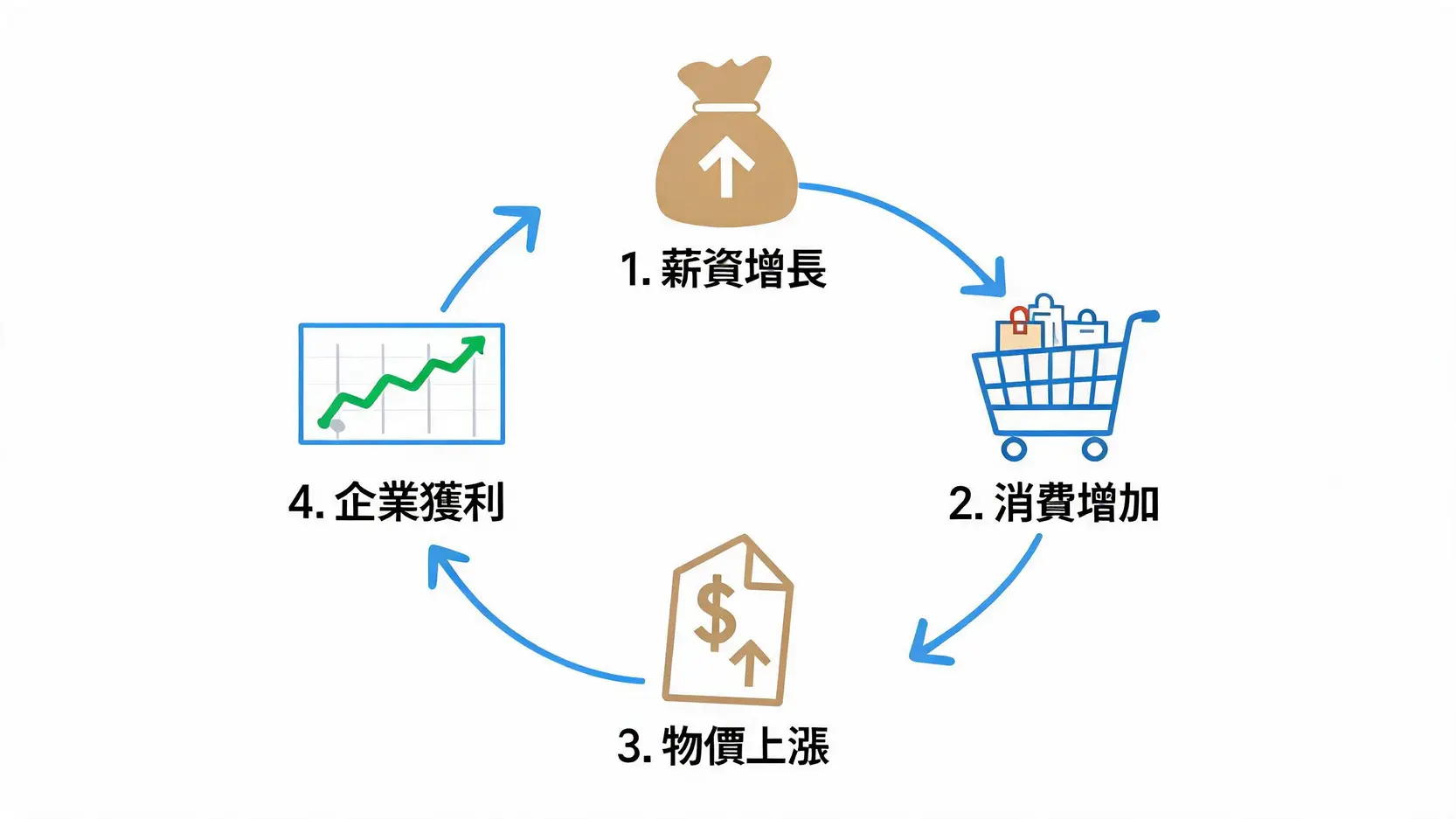
Bank of Japan Governor Kazuo Ueda has repeatedly emphasized that achieving a “virtuous cycle between wages and prices” is a prerequisite for monetary policy normalization. In other words, only when wage growth can continuously catch up with (or even surpass), inflation and form solid domestic demand momentum will the central bank have the confidence to further raise interest rates. According to the Bank of Japan’s “Outlook for Economic Activity and Prices” released in April 2026, it has raised its forecast for core CPI (excluding fresh food) for fiscal 2026 to 2.8%, showing that the central bank remains optimistic about the persistence of inflation. The results of the “Shunto” (spring wage negotiations) and core inflation data over the next few quarters will be the most important indicators for the market to judge the timing of rate hikes.

Figure One: A Virtuous Cycle Between Wages and Prices Is the Foundation for Bank of Japan Rate Hikes
Global Economic Conditions and Geopolitical Risks
As an open economy, Japan’s monetary policy cannot be completely independent of the rest of the world. The interest rate decisions of the US Federal Reserve (Fed), the economic performance of the eurozone, and any developments in global geopolitics will all affect the yen exchange rate and Japan’s economy. For example, if major overseas economies turn toward rate cuts, the interest rate gap with Japan will narrow, which may ease depreciation pressure on the yen and give the BOJ more policy room. Conversely, if global risk aversion rises, the yen may passively appreciate as a traditional safe-haven currency, which would then affect Japan’s exports and disrupt the central bank’s rate hike pace.
Potential Adjustments to Yield Curve Control (YCC) Policy
Although the Bank of Japan has officially abandoned the YCC policy, it has not completely stopped purchasing Japanese government bonds (JGBs). The central bank is currently still carrying out a bond purchase plan of about 6 trillion yen per month to maintain market stability. The market generally believes that before or alongside the next rate hike, the BOJ may gradually reduce the scale of bond purchases, that is, so-called “bond purchase tapering” (Tapering). Bond purchase tapering itself is a signal of monetary tightening, and its scale and pace will directly affect the direction of long-term interest rates. It is another important window for observing the central bank’s policy stance.
Market Expectations for the Bank of Japan’s Rate Hike Path
Based on the current views of major investment banks and economists, the market has formed an initial consensus on the BOJ’s rate hike path, but there are still differences over the specific timing.
Forecast for the Timing and Magnitude of Rate Hikes in 2026
The current mainstream market view is that the next rate hike is most likely to occur in Q3 or Q4 2026. The main reason is that the central bank needs more time to confirm the sustainability of wage growth and whether inflation can remain stable above the 2% target. As for the rate hike magnitude, it is expected to maintain a “gradual” pace, with a single rate hike potentially at 0.25 percentage points, raising the policy rate from the current 0%-0.1% range to around 0.25%.
Possible Range of the Terminal Rate
The “terminal rate” refers to the peak interest rate in the current rate hike cycle. Considering Japan’s structural economic issues (such as an aging population and high government debt), the market generally does not believe that the Bank of Japan will raise rates aggressively like the US Federal Reserve. Most forecasts suggest that the terminal rate in this rate hike cycle may fall within the range of 1.0% to 1.25%. This is a relatively neutral level that can curb overheated inflation without stifling economic growth.
The “Gradual” Nature of Monetary Policy Normalization
Kazuo Ueda is known for his cautious approach and emphasis on communication. He is well aware that after ending decades of ultra-loose policy, any overly aggressive move could cause a major shock to the economy and financial markets. Therefore, a “gradual” normalization path is an inevitable choice. Before each decision, the central bank will release signals to the market through official remarks, meeting minutes, and other channels to guide expectations and avoid “policy surprises”. To understand the meaning of policy normalization in greater depth, please refer to the Complete Analysis of the Bank of Japan’s Rate Hike: Bidding Farewell to the Negative Interest Rate Era, Full Forecast for the Yen and Japanese Stocks
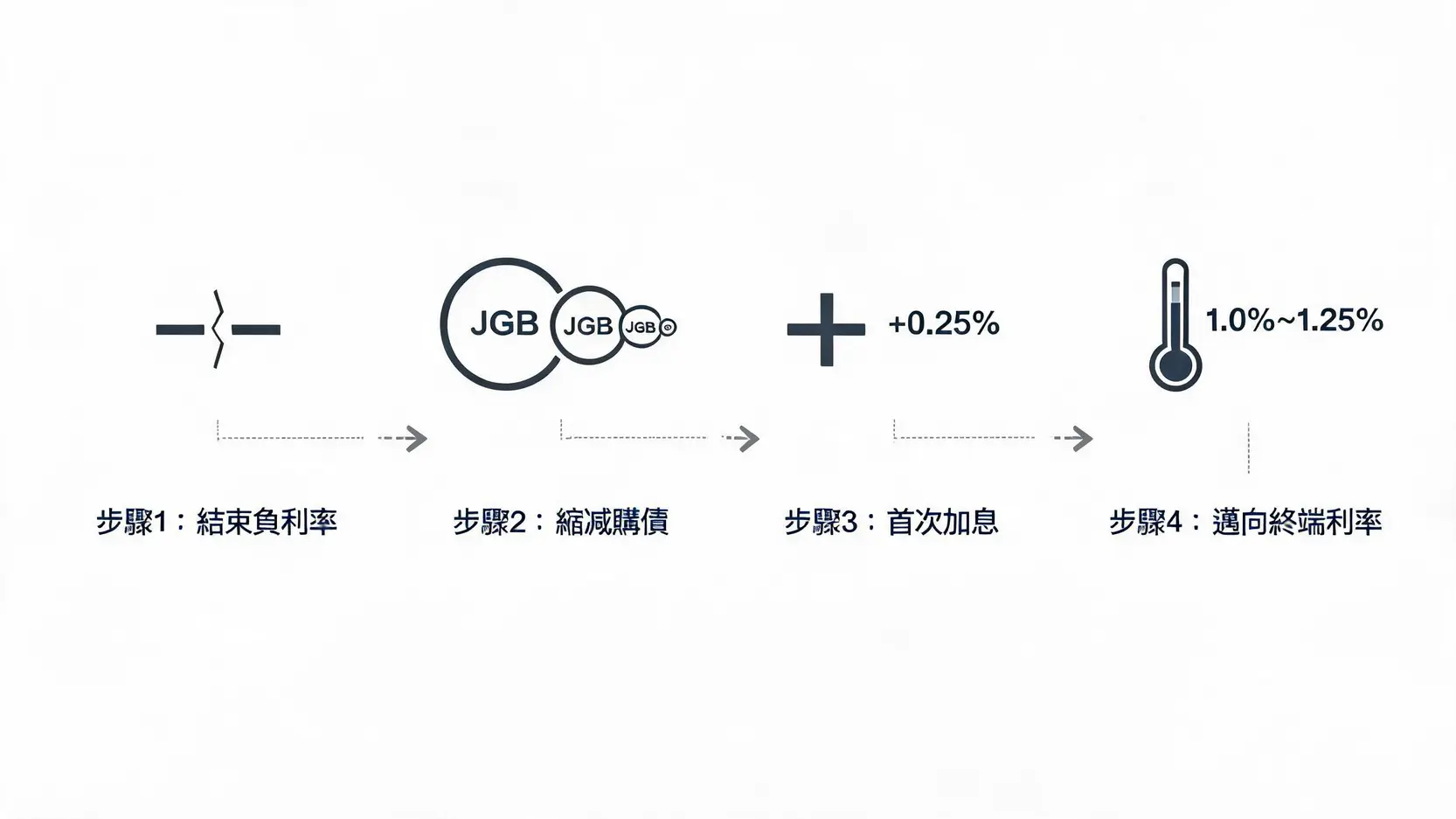
Figure Two: Possible Path of Bank of Japan Monetary Policy Normalization
Strategies for Investors Responding to the Bank of Japan’s Future Interest Rate Direction
Facing this once-in-decades shift in monetary policy, how should investors adjust their asset allocation and capture potential yen investment opportunities?
Suggestions for Adjusting Yen Asset Allocation
- Increase yen positions: As the US-Japan interest rate gap is expected to gradually narrow, the medium- to long-term bullish trend for the yen is relatively clear. Investors may consider moderately increasing their allocation to yen cash or yen-denominated assets.
- Pay attention to Japanese financial stocks: Rising interest rates usually help banks widen their loan-deposit spreads and improve profitability. Large Japanese bank stocks and regional bank stocks are worth watching.
- Position in Japanese domestic demand stocks: If wage growth successfully drives domestic consumption, sectors related to domestic demand, such as retail, food and beverage, and tourism, are expected to benefit.
Focus on Capital Flows in Global Stock and Bond Markets
Over the past decade or more, cheap yen has become the main source of funding for global yen carry trades. As Japanese interest rates normalize, this large pool of capital may begin to flow back to Japan from global stock and bond markets. This could create potential selling pressure on markets that previously benefited from such capital inflows (such as US technology stocks and emerging market assets). Investors need to closely monitor changes in global capital flows and adjust the risk exposure of their portfolios in a timely manner.
Extended Reading (Strongly Recommended)
What Is the Australian Cash Rate? Understand How the RBA Affects Your Mortgage in One Article
Opportunity and Risk Assessment by Industry Sector
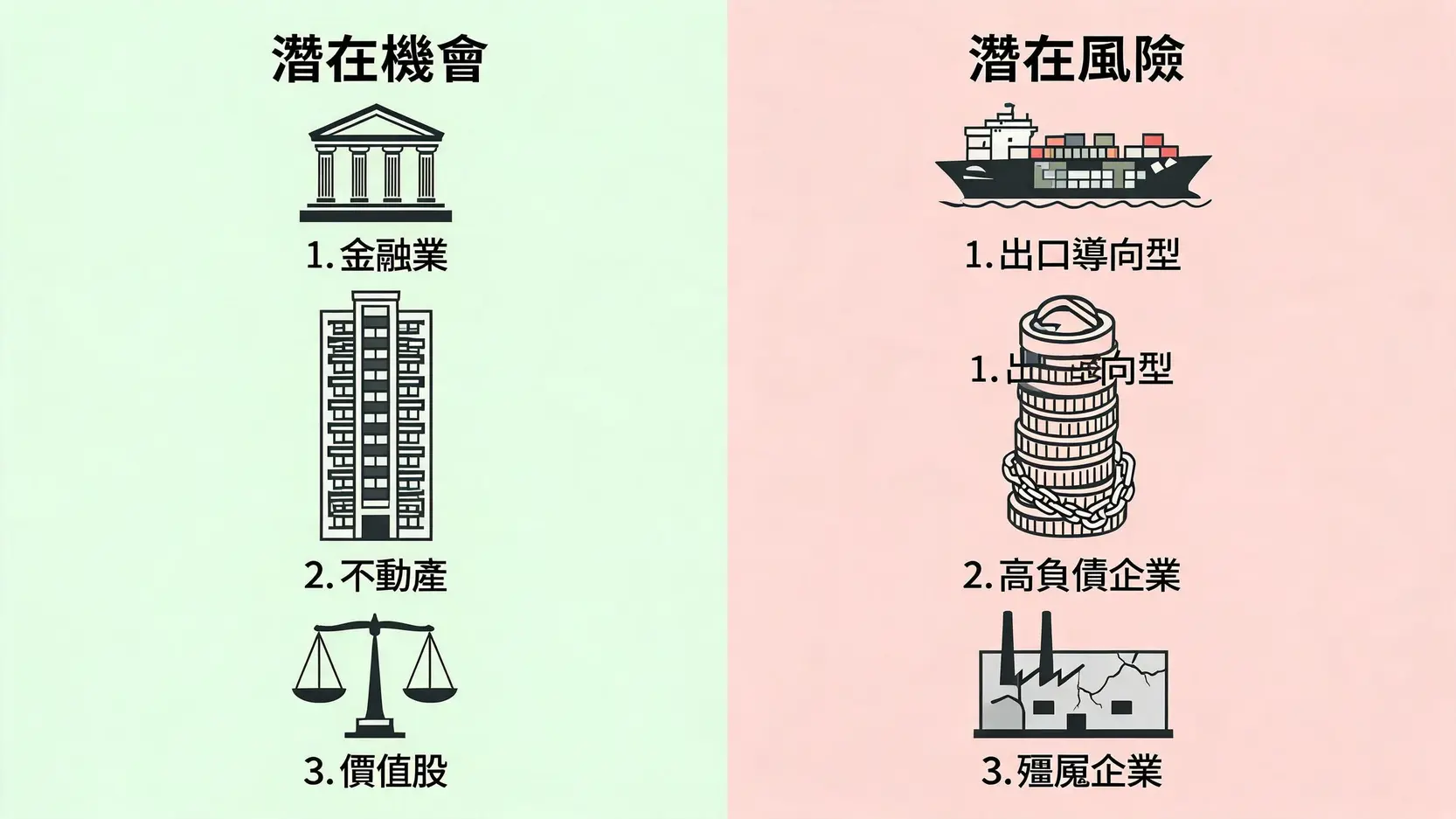
The shift in interest rates will bring structural impacts to different industries:

Figure Three: Assessment of the Impact of the Interest Rate Shift on Different Industries
- Potential Opportunities:
– Financial sector: As mentioned above, financial institutions such as banks and insurance companies will directly benefit from rising interest rates.
– Real estate: Although rising interest rates are unfavorable for mortgages, if the economic recovery is strong, demand for commercial real estate and high-quality residential properties may still continue to grow.
– Value stocks: In a tightening environment, market style may shift from high-growth technology stocks to value stocks with solid fundamentals and abundant cash flow. - Potential Risks:
– Export-oriented companies: Yen appreciation will weaken the overseas competitiveness and foreign exchange gains of export giants such as Toyota and Sony.
– Highly indebted companies: For companies that previously relied on low-cost borrowing to expand, rising interest rates will increase their financial burden.
– Zombie companies: The long-term zero-interest-rate environment has nurtured a group of “zombie companies” that can only barely survive through borrowing. Interest rate normalization may trigger a wave of bankruptcies, but this may actually be good for the long-term health of the economy.
Conclusion
In summary, the Bank of Japan’s future interest rate direction will follow a cautious and data-dependent “gradual” path. Whether the virtuous cycle between wages and inflation is firmly established will be the key factor determining the next move. For global investors, this monetary policy normalization led by Japan is not only a structural shift in the yen market, but may also trigger a reallocation of global capital. Understanding and anticipating these policy dynamics, flexibly adjusting asset allocation, and closely monitoring the interaction between the global economy and policy will be the surest way to move steadily forward and capture investment opportunities in this historic transformation.
FAQ: Frequently Asked Questions About the Bank of Japan’s Future Interest Rates
Q: Is it possible for the Bank of Japan to restart its negative interest rate policy in the future?
A: The possibility is extremely low. Unless Japan’s economy falls into severe deflation again and major global economies also adopt extremely loose policies at the same time, the chances of the Bank of Japan returning to negative interest rates are very slim. The current policy focus is “normalization”, with the goal of moving away from decades of unconventional monetary policy.
Q: Is yen appreciation good or bad for Japan’s export industries?
A: It is a double-edged sword. In the short term, yen appreciation will reduce the price competitiveness of Japanese products overseas and lower companies’ foreign exchange gains, which is unfavorable for export industries. In the long term, however, a stronger yen can reduce the cost of imported raw materials and energy, and may also force companies to transform and upgrade, enhance product added value, and strengthen long-term competitiveness.
Q: How can ordinary investors participate in Japanese market investment opportunities through ETFs or funds?
A: For investors who are not familiar with individual Japanese stocks, ETFs (exchange-traded funds) are the most convenient way to participate in the Japanese market. For example, investors can invest in ETFs that track the Nikkei 225 Index or the Tokyo Stock Price Index (TOPIX). In addition, there are also many actively managed funds focused on investing in the Japanese stock market, and investors can choose according to their own risk preferences.
Q: What is the biggest risk affecting the Bank of Japan’s rate hike path?
A: The biggest risk comes from domestic and external economic uncertainty. Internal risks mainly include wage growth falling short of expectations, leading to weak consumption and inflation failing to sustain. External risks include a sudden global economic recession, declining demand from major trading partners, or intensified international geopolitical conflicts. All of these may force the Bank of Japan to slow or stop its rate hike pace.
Related Articles
-
Global Asset Repricing: Why Has Japan’s Property Market Become a Safe Haven for Smart Money Amid Yen Depreciation? What Is “Global Asset Repricing”? Why Has Japan Become the Main Focus? While investment forums around the world are heatedly discussing yen depreciation pressure, the real smart money has already begun positioning...2026 年 6 月 23 日
-
Farewell to Negative Interest Rates! The Truth Behind Japan Meeting Its Inflation Target: Why Has Yen Depreciation Pressure Increased Instead of Easing? The Japanese economy is staging an extremely contradictory drama: after waiting for thirty years, it has finally welcomed the long-awaited Japan inflation, yet the market’s response has been...2026 年 6 月 23 日
-
A Complete Analysis of Central Bank Policy Shifts: From YCC to QT, Decoding the BOJ and the Fed’s Next Move The Bank of Japan (BOJ) and the US Federal Reserve (Fed), two giants of the global financial markets, are seeing their diverging monetary policy directions become the core force driving...2026 年 6 月 23 日