BOJ Rate Hike Guide: Yen & Japan Stock Outlook

Updated: 2026/05/14  |  CashbackIsland

japan-boj-rate-hike-analysis

Complete Analysis of Bank of Japan Rate Hikes: Farewell to the Negative Interest Rate Era, Full Forecast for Japanese Yen and Japanese Stock Market Trends

The Bank of Japan (BOJ) has historically ended its long-standing negative interest rate policy and officially launched its first rate hike in seventeen years. This not only symbolizes a key step toward the normalization of Japan’s monetary policy, but also carries far-reaching implications for global financial markets. This major shift is based on confidence that Japan’s economy can sustainably achieve its 2% inflation target. Are you confused about why the Japanese yen weakened instead of strengthening after the Bank of Japan raised rates? Or are you trying to understand the future direction of Japanese stocks following the BOJ policy meeting? This article will comprehensively analyze the reasons behind Japan ending negative interest rates, the immediate market impact, and provide professional insights into future investment strategies. 


Farewell to the Old Era: What Was Japan’s Negative Interest Rate Policy, and Why Is It Ending Now?

To understand the historical significance of this policy shift, we must first look back at why the Bank of Japan implemented such an extreme monetary policy in the first place, and what factors have now prompted policymakers to change direction.


Review of the Negative Interest Rate Policy: Why Did the BOJ Implement Negative Rates?

After the collapse of Japan’s asset bubble in the early 1990s, the country entered decades of economic stagnation and deflation, a period commonly referred to as the “Lost Thirty Years”. Deflation refers to a prolonged decline in prices, causing consumers to delay purchases in anticipation of lower future prices, while businesses reduce investment due to shrinking profits, creating a vicious cycle. To combat this persistent economic challenge, the Bank of Japan introduced its “Negative Interest Rate Policy (NIRP)” in 2016.

Simply put, under negative interest rates, commercial banks placing excess funds at the central bank would not receive interest income, but instead have to pay a “storage fee” to the BOJ. The objectives of this policy were very clear:

  • Stimulate Bank Lending: Instead of losing money by parking funds at the central bank, banks would be encouraged to lend money to businesses and consumers, stimulating investment and spending.
  • Suppress the Japanese Yen Exchange Rate: Low or negative interest rates encourage capital outflows in search of higher overseas returns, causing yen depreciation and benefiting Japan’s export industries.
  • Boost Asset Prices: Encourage funds to flow out of bank deposits and into risk assets such as stocks and real estate, creating a wealth effect.


Catalysts Behind the Policy Shift: Inflation and Wage Growth Reaching Targets

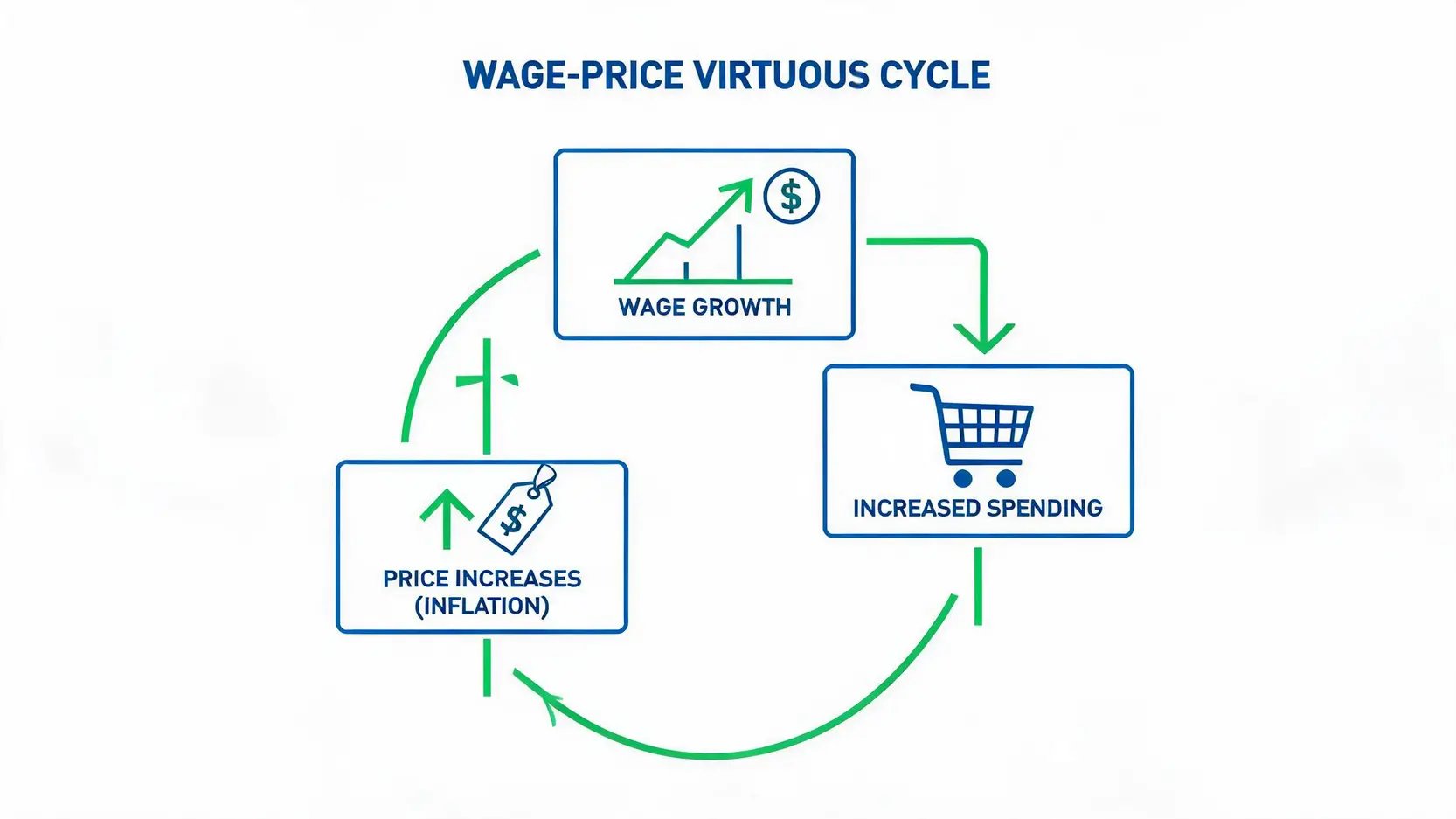
Over time, the global economic environment changed dramatically. In recent years, factors such as supply chain disruptions, the Russia-Ukraine conflict, and rising energy prices created widespread global inflationary pressure, and Japan was no exception. The sustained rise in prices gave the Bank of Japan an opportunity to escape deflation. However, for inflation to remain “sustainably” stable at the 2% target, rising prices alone were insufficient. The key was whether wage growth could keep pace and create a healthy “wage-price” upward spiral.

薪資 - 物價良性循環示意圖,展示薪資增長帶動消費,消費推升通脹,通脹再促進薪資增長的過程。

A Healthy “Wage-Price” Cycle Became the Key Foundation Behind the Bank of Japan’s Decision to Raise Rates.

The final catalyst came from Japan’s annual labor-management wage negotiations, known as “Shunto”. According to preliminary data from Japan’s largest labor union federation, Rengo, average wage growth in 2026 reached 5.28%, marking the highest increase in 33 years. This historic wage growth gave the Bank of Japan sufficient confidence that Japan’s economy had developed endogenous growth momentum capable of supporting moderate inflation, making it the right time to normalize monetary policy.


Key Decisions From the BOJ Policy Meeting: What Else Was Abandoned Besides Rate Hikes?

During this historic BOJ policy meeting, the Bank of Japan not only raised the policy interest rate from -0.1% to a range between 0% and 0.1%, but also announced a series of major policy adjustments, officially dismantling the framework of the ultra-loose monetary policies implemented over the past decade:

  • End of Negative Interest Rates: The uncollateralized overnight call rate target was guided into a range between 0% and 0.1%.
  • Abandonment of the YCC Policy: The Bank of Japan completely scrapped “Yield Curve Control (YCC)”. YCC was a policy under which the BOJ purchased unlimited amounts of Japanese government bonds to keep 10-year government bond yields near 0%. Ending YCC means long-term interest rates will now be more heavily influenced by market forces.
  • End of Risk Asset Purchases: The BOJ will stop additional purchases of exchange-traded funds (ETFs) and Japanese real estate investment trusts (J-REITs).

Together, these measures mark the official end of the Bank of Japan’s long-running large-scale monetary easing experiment and signal the beginning of a completely new phase.


The Chain Reaction of Japan’s Rate Hikes: Four Core Impacts on the Economy and Markets

As the world’s third-largest economy and a major creditor nation, Japan’s shift in monetary policy will undoubtedly trigger a series of chain reactions. From the Japanese yen exchange rate to global capital flows, markets around the world will feel the shockwaves caused by “Japan ending negative interest rates”.


Understanding Japanese Yen Exchange Rate Trends: Why Did the Yen Fall Instead of Rise After Rate Hikes?

Many people intuitively believe that when a country raises interest rates, its currency should strengthen. However, after the Bank of Japan announced rate hikes, the Japanese yen weakened against the US dollar and USD/JPY broke above the 150 level. Why did this happen?

There are three main reasons:

  1. The market had already priced it in: “Buy the rumor, sell the fact” is a common phenomenon in financial markets. Investors had already fully anticipated and priced in the rate hike months before the official announcement. Once the news became reality, profit-taking selling pressure emerged.
  2. Dovish policy guidance: While announcing the rate hike, the Bank of Japan also emphasized that it would “maintain accommodative financial conditions”. Markets interpreted this as a “dovish rate hike”, meaning there would not be rapid or continuous future rate increases.
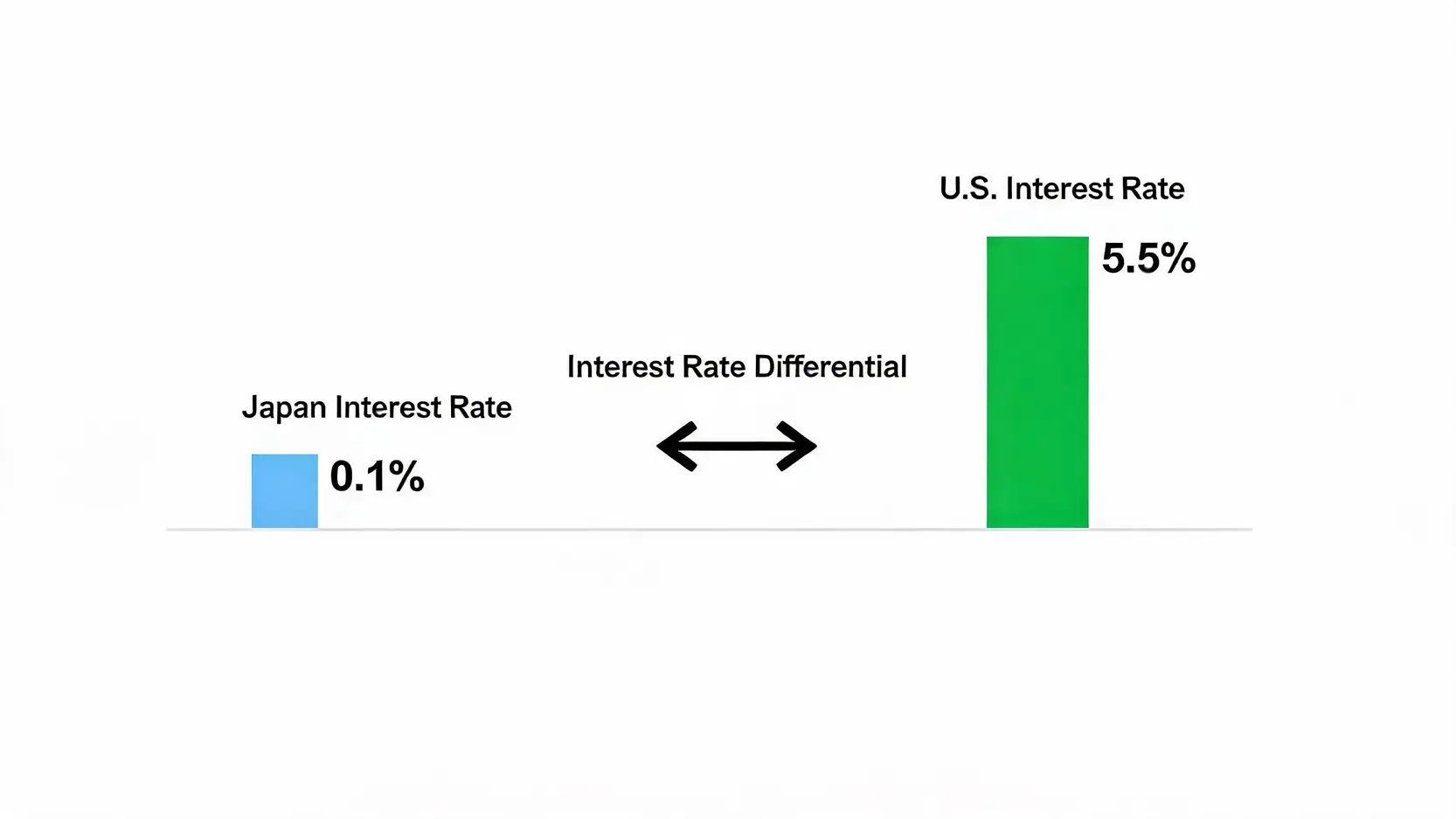
  3. The US-Japan interest rate gap remains huge: Although Japan raised rates, its policy rate (0%-0.1%) still remains far below the US Federal Reserve’s rate (range of 5.25%-5.50%). As long as this significant interest rate differential exists, there is little incentive for capital to return to Japan on a large scale.

圖表比較日本與美國之間的巨大政策利率差距,解釋了為何日本加息後日圓依然疲軟。

Despite Japan Raising Rates, the Massive US-Japan Interest Rate Gap Remains the Primary Driver of the Japanese Yen Exchange Rate.


Analysis of the Impact on Japanese Stocks: Which Sectors Will Benefit and Which Will Face Challenges?

The shift in monetary policy has structural effects on different sectors of the stock market.

  • Benefiting Sectors:
    • Financial Sector (Banks and Insurance Companies): Rising interest rates expand banks’ lending margins, directly improving profitability. Insurance companies also benefit from higher bond yields.
    • Domestic Demand-Related Industries: Wage growth and economic recovery are expected to support domestic consumption, benefiting industries such as retail and dining.
  • Sectors Facing Challenges:
    • Export-Oriented Companies (Automobiles and Electronics): If the Japanese yen shifts toward appreciation in the future, overseas profits for these companies may come under pressure.
    • Highly Leveraged Growth Technology Stocks: Rising interest rates increase borrowing costs, potentially creating pressure for technology companies that rely heavily on financing for expansion.
    • Real Estate Sector: Higher loan rates may cool property demand and create challenges for real estate developers.


Further Reading (Highly Recommended)

Beginner’s Guide to the End of Japan’s YCC Policy: Understand the Exit From Yield Curve Control in One Article

2026 Forex Trading Beginner Guide: Master Risk Management and Broker Selection for Stable Profits!


Changing Global Capital Flows: The Impact of Unwinding Yen Carry Trades

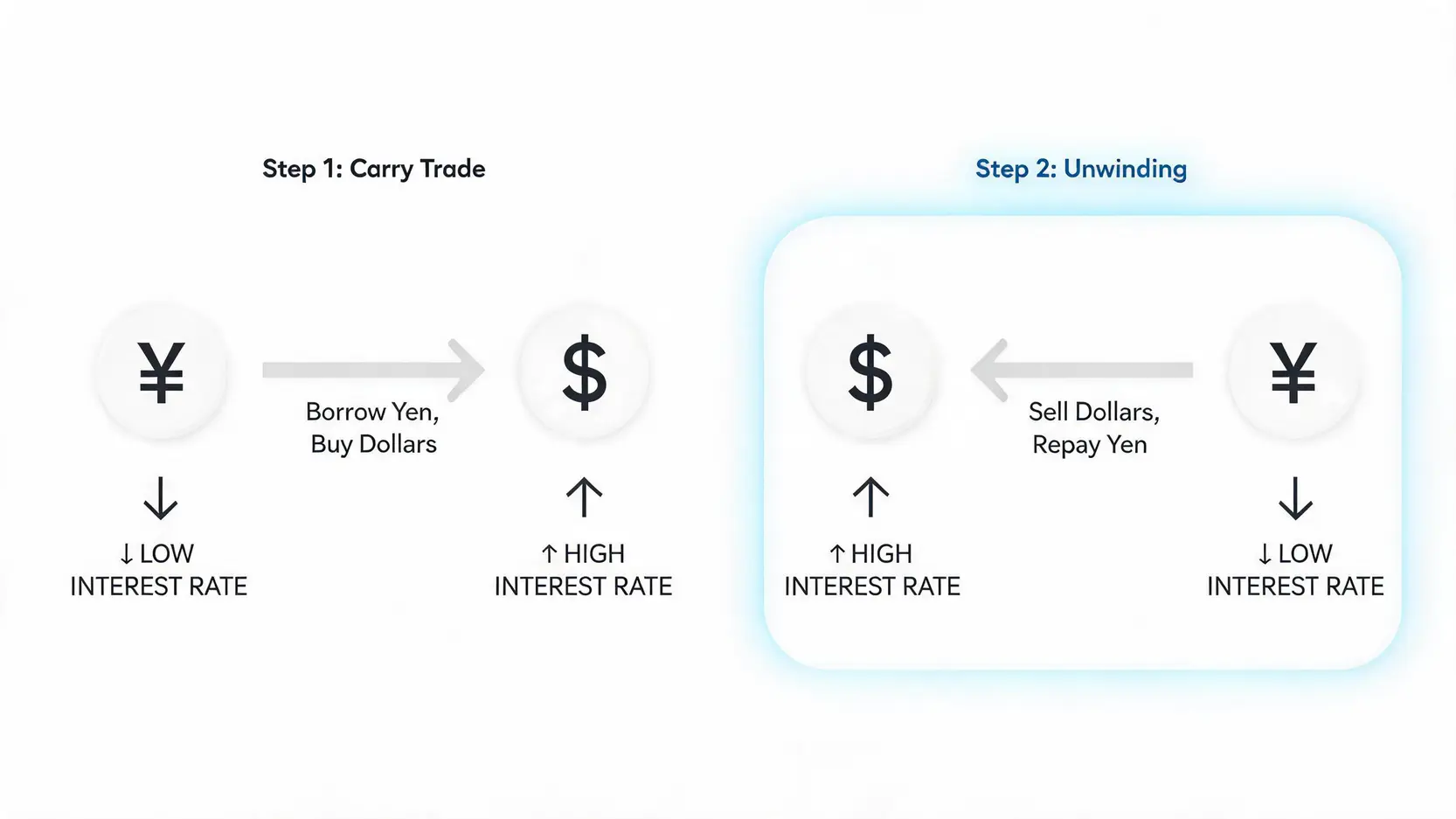
Over the past decade, due to Japan’s ultra-low interest rates, the Japanese yen became the world’s primary “funding currency”. International speculators borrowed Japanese yen at nearly zero cost, then converted it into higher-yield currencies such as the US dollar to invest in overseas high-yield assets. This strategy became known as the “yen carry trade”.

日圓套利交易及其平倉過程的流程圖,顯示資金從借入日圓投資海外到賣出海外資產換回日圓的轉變。

Rising Japanese interest rates may trigger a large-scale unwinding of yen carry trades.

Now that the Bank of Japan has raised interest rates, the cost of borrowing Japanese yen has begun increasing. Although the current pace of rate hikes remains limited, it has already sounded the alarm for this enormous carry trade market. If Japan continues raising rates in the future, it may accelerate the unwinding of carry trades (meaning investors would sell overseas assets and convert funds back into Japanese yen to repay loans). This could lead to:

  • Volatility in Global Asset Prices: Large-scale capital withdrawals from markets such as US stocks and US Treasury bonds could trigger significant market volatility.
  • Increased Demand for Japanese Yen: The unwinding process requires buying back Japanese yen, which may provide medium- to long-term support for the yen exchange rate.


Impact on Hong Kong Investors: Changes in Japanese Equity Funds, Property Investments, and Travel Costs

For Hong Kong and Asian investors focused on Japanese markets, the impact of this policy shift is multifaceted:

  • Japanese Equity Funds and Investments: In the short term, financial stocks leading the rally may continue supporting gains in the Nikkei Index. However, in the medium to long term, investors must pay attention to the potential impact of yen appreciation on export-oriented companies, making stock selection increasingly important.
  • Japanese Property Investments: Rising interest rates may increase acquisition costs and mortgage pressure, although economic recovery could also boost rental yields. Investors must reassess the relationship between rental returns and financing costs.
  • Travel and Consumer Spending: In the short term, the Japanese yen remains relatively weak, meaning it is still a favorable time for travelers to exchange yen. However, if Japan’s monetary policy normalization continues advancing, future appreciation of the yen will increase travel costs to Japan.


Looking Ahead: What Is the Next Step in Japan’s Monetary Policy Normalization?

Ending negative interest rates is only the first step in Japan’s monetary policy normalization. The market is now more focused on what comes next. This will become one of the key variables shaping the global financial landscape over the coming years.


BOJ Future Rate Hike Path: When Does the Market Expect the Next Rate Hike?

The market generally believes the Bank of Japan will remain extremely cautious in its future actions and adopt a “wait-and-see” approach. Governor Kazuo Ueda’s comments have reinforced this view, emphasizing that more time is needed to assess the economic impact of the first rate hike. Most economists predict that the Bank of Japan may not implement a second rate hike until the second half of 2026 or early 2027, and even then, the increase would likely remain moderate (such as raising rates to 0.25%).

Future rate hike decisions will depend heavily on the following key data:

  • Inflation Data: Whether core CPI can remain sustainably above 2%.
  • Wage Growth: Whether next year’s “Shunto” wage negotiations can maintain strong wage growth momentum.
  • Domestic Consumption: Whether wage growth can effectively translate into stronger consumer spending.
  • Global Economic Conditions: Particularly the direction of US monetary policy, which will influence the interest rate differential environment for the Japanese yen.


Investor Strategies: How to Adjust Asset Allocation Under the New Policy Environment?

Facing Japan’s new monetary policy environment, investors should consider reassessing and adjusting their asset allocation strategies:

  1. Diversify Investments and Avoid Excessive Concentration: Certainty in Japanese markets is declining while volatility is increasing. Investors should avoid concentrating all bets on either Japanese stocks or unilateral Japanese yen movements. Globally diversified asset allocation remains the best method for spreading risk.
  2. Focus on Structural Opportunities in Japanese Stocks: The market may shift from a “broad bull market” to a “structural market”. Investors should carefully study and select sectors that can benefit from interest rate normalization and domestic demand recovery, such as high-quality financial stocks and leading consumer companies.
  3. Reassess the Positioning of Japanese Yen Assets: In the past, the Japanese yen was often regarded as a safe-haven currency. However, during a rate hike cycle, its relationship with global markets may change. For forex traders, increasing yen volatility provides more trading opportunities, but also brings higher risks.
  4. Maintain Flexibility and Patience: Japan’s monetary policy normalization will be a long and gradual process. Investors should remain patient, closely monitor every BOJ policy meeting and economic data release, and adjust strategies flexibly in response to market developments.


Further Reading (Highly Recommended)

Beginner’s Guide to the End of Japan’s YCC Policy: Understand the Exit From Yield Curve Control in One Article

2026 Forex Trading Beginner Guide: Master Risk Management and Broker Selection for Stable Profits!


Frequently Asked Questions About Bank of Japan Rate Hikes (FAQ)

Q: After the Bank of Japan Raises Rates, Will the Japanese Yen Immediately Appreciate Sharply?

A: Not in the short term. Since the market had already priced in expectations ahead of time, and the Bank of Japan delivered dovish signals by emphasizing that it would maintain accommodative conditions, combined with the still-massive interest rate gap with the US, the Japanese yen currently lacks strong momentum for sharp appreciation in the short term and may even weaken further due to a “sell the news” effect. From a medium- to long-term perspective, only if Japan continues raising rates while the US begins cutting rates, thereby narrowing the interest rate differential, will the Japanese yen gain a substantial foundation for appreciation.

Q: Is Now a Good Time to Buy Japanese Stocks?

A: That depends on your investment strategy and risk tolerance. Japan’s stock market moving away from deflation and entering an environment of moderate inflation is generally positive for corporate earnings over the long term. Sectors such as financials and domestic consumption may directly benefit. However, investors should also remain cautious about the potential negative impact of future Japanese yen appreciation on export-oriented companies. A stock-picking strategy is recommended rather than blindly buying the entire market.

Q: What Impact Will Rate Hikes Have on Japan’s Real Estate Market?

A: Rate hikes will directly push up mortgage rates and increase borrowing costs for homebuyers, potentially creating a cooling effect on property sales, especially among highly leveraged investors. However, economic recovery and wage growth may also boost rental market demand and rental prices, which could benefit long-term rental property investors. Overall, short-term volatility risks in the real estate market are increasing.

Q: What Is the YCC Policy, and Why Is the BOJ Abandoning It?

A: YCC (Yield Curve Control) is a policy tool introduced by the Bank of Japan in 2016 with the goal of controlling 10-year Japanese government bond yields around 0%. When market interest rates rose, the central bank would purchase unlimited amounts of government bonds to suppress yields. The abandonment of YCC was due to the growing side effects of artificially distorting market prices (interest rates) in an environment where inflation had returned. It not only damaged bond market liquidity, but also caused the central bank’s balance sheet to expand excessively. Ending YCC was a key step toward allowing interest rates to return to market-driven mechanisms.

Q: How Will Japan’s Rate Hikes Affect My Travel Plans to Japan?

A: The short-term impact is limited. Since the Japanese yen weakened instead of strengthening after the rate hike, current exchange rates for traveling and shopping in Japan remain highly favorable. However, in the long run, the broader direction of Japan’s monetary policy normalization is to allow the Japanese yen to return to its fair value, meaning the yen has appreciation potential in the future. Therefore, if you have long-term travel or spending plans related to Japan, you may consider exchanging Japanese yen gradually during periods when the yen remains relatively cheap.


Conclusion

In summary, the Bank of Japan’s rate hikes and the end of negative interest rates represent an important milestone in Japan’s monetary policy normalization journey, symbolizing the country’s effort to emerge from the “Lost Thirty Years”. Although short-term markets remain filled with uncertainty due to dovish guidance and persistent interest rate differentials, causing the Japanese yen to weaken instead of strengthen, the long-term implications suggest that Japan’s economy is gradually escaping deflationary pressures. This will create structural impacts on global capital flows and asset allocation.

编者
Evan Lin

Evan Lin

我是Evan Lin,从大学时期开始接触外汇交易,至今已有多年实战经验,熟悉技术分析与EA策略,热衷于研究市场脉动与风险管控,喜欢分享实战经验和交易技巧,和大家一起学习、一起进步!

If you liked this article, please share it!

Related Articles

  • Trading Drawdown Recovery: Psychological Adjustment Guide
    The Taiwan Dollar Surges Past 31.5! With Hot Money and Foreign Capital Inflows, Is This an Opportunity or a Risk? An In-Depth Analysis The Capital Frenzy: The Three Major Drivers Behind the Taiwan Dollar Breaking Above 31.5 The New Taiwan dollar has recently become the absolute focal point of the...
    2026 年 6 月 10 日
  • Taiwan Dollar Surge: Stocks, Bonds, or USD?
    Taiwan Dollar Appreciation and Hot Money Inflows! An Investor's Action Guide: Should You Buy Stocks, Bonds, or Exchange for US Dollars at This Stage? One of the hottest topics in the market recently has been the capital-driven rally fueled by foreign investors' consecutive net buying of Taiwan stocks, pushing the...
    2026 年 6 月 10 日
  • Hot Money Flows Into Taiwan Bonds: What It Means
    Hot Money Flows Into Taiwan's Bond Market: Understanding the Causes, Impact, and Investor Response Strategies in One Article One of the hottest topics in the market recently is "hot money flowing into Taiwan's bond market". Why have these fast-moving international funds, which come and go like the wind, chosen the...
    2026 年 6 月 10 日
返回顶部