[Investment Psychology] Why Do People Refuse to Exit Even While Losing Money? An Analysis of the 2 Major “Psychological Barriers to Stop Losses” (Including Practical Examples of Loss Aversion)
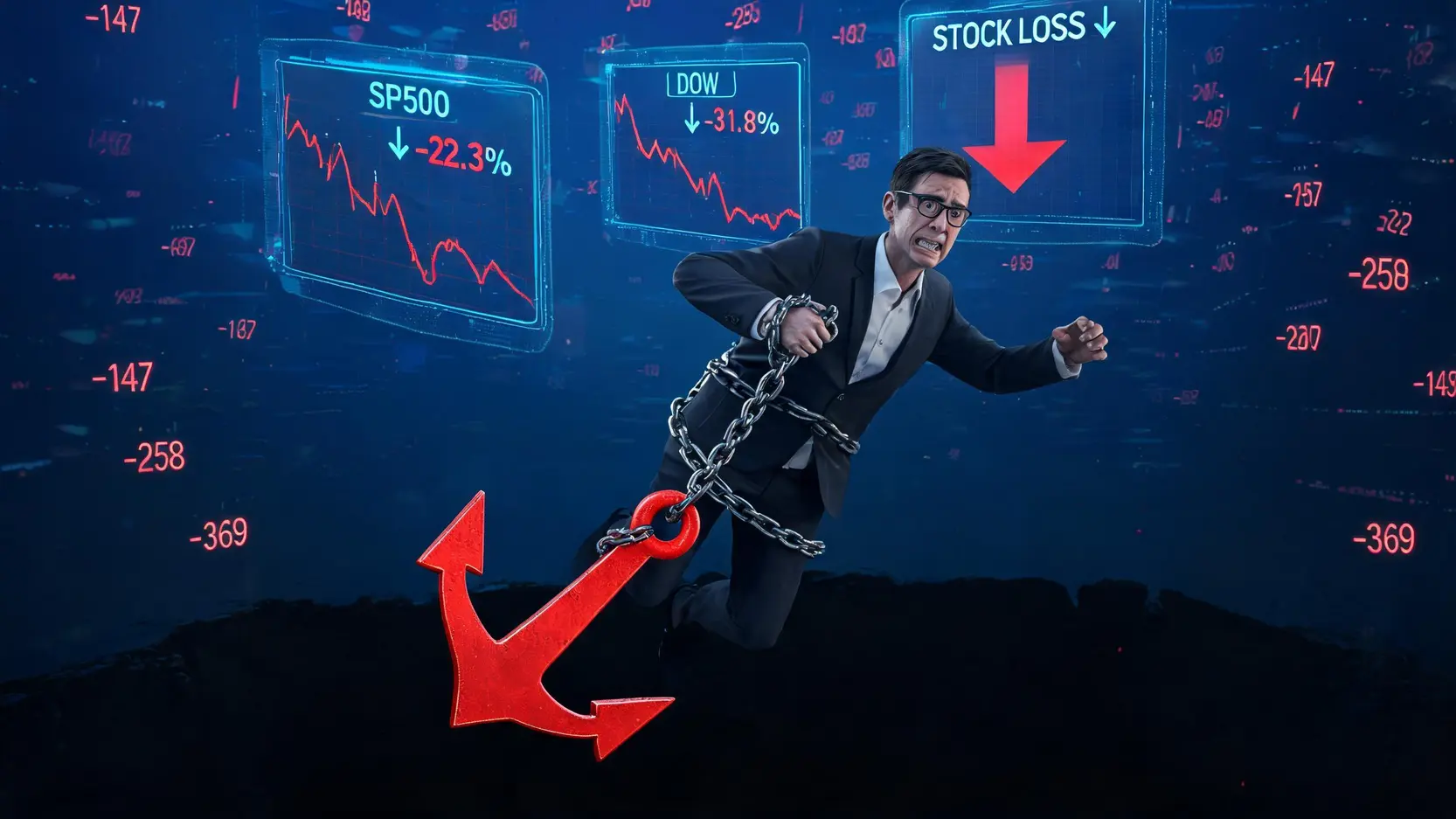
Have you ever experienced this situation: a stock you are holding is clearly starting to lose money, yet you keep hoping that “it will rebound soon”, or even average down your position, only to end up losing even more? This behavior of “refusing to exit while losing money” is not simply bad luck, but stems from powerful psychological barriers to stop losses. Many investors are unable to cut losses decisively, ultimately leading to the painful outcome of “winning a candy but losing a factory” (making small profits while suffering huge losses). Behind this are actually two common psychological biases at work. This article will take an in-depth look at the two major mental demons causing you to keep “holding losing positions”: “loss aversion” and “confirmation bias”. Through practical examples from investment psychology, you will learn how to overcome these mental barriers, establish solid trading discipline, and avoid falling into the trap of holding losing trades endlessly.
Mental Demon No. 1: Loss Aversion – The Psychological Barrier to Stop Losses That Makes People Rather Hold On Than Accept a Loss
“Loss aversion” is the core answer to the question of “why do people refuse to exit while losing money”. It refers to how people feel “losses” far more intensely than they feel “gains” of the same amount. This concept was first introduced by Nobel Prize-winning economists Daniel Kahneman and Amos Tversky in their famous “Prospect Theory”.
What Is Loss Aversion? Why Is “The Pain of Losing Money” Much Greater Than “The Joy of Making Money”?
Simply put, the pain caused by losing US$100 may require the joy of earning US$200 or even US$300 to offset it. This asymmetric psychological reaction causes investors to experience extreme discomfort and avoidance when facing losses. To avoid the direct pain brought by realizing a loss (that is, selling at a loss), they would rather “hold on stubbornly”, fantasizing that one day the stock price will rebound and free them from their unrealized losses. This psychological state is the most typical form of a stop-loss psychological barrier.
- Emotion-Driven Decisions: When an investment starts losing money, fear and anxiety become amplified, while the ability to think rationally declines. Decisions are no longer based on objective market analysis, but are instead dominated by the emotion of “not wanting to lose”.
- Avoiding Reality: As long as the position is not sold, the loss on paper is still just a number, and there still seems to be a chance to recover. Once the position is sold, however, the loss becomes an irreversible “fact”. To avoid facing this harsh reality, investors choose to delay action, commonly known as “holding the losing trade”.
Practical Example: Why Are Retail Investors Willing to Sell Profitable Stocks Too Early, Yet Hold Losing Stocks Stubbornly?
Here is a classic practical example of loss aversion:
Suppose an investor holds two stocks at the same time.
Stock A: Bought at US$10, current price US$12, up 20%.
Stock B: Bought at US$10, current price US$8, down 20%.
When the investor urgently needs cash, which stock will most people choose to sell? The answer is usually Stock A.
Why? Because selling Stock A can “lock in profits”, bringing a certain sense of pleasure. In contrast, selling Stock B means having to “accept the loss”, which triggers the intense pain associated with loss aversion. Even if rational analysis suggests that Stock B’s downtrend is more obvious and future losses could become even greater, investors would still rather sell the more promising Stock A while stubbornly holding onto the losing Stock B, simply to avoid the immediate emotional pain. This perfectly explains why so many retail investors in the market consistently “make small profits but suffer huge losses”.
Mental Demon No. 2: Confirmation Bias – Only Looking at the Information You Want to See, Leading to Continued Holding of Losing Positions
If “loss aversion” makes you unwilling to cut losses, then “confirmation bias” becomes the accomplice that helps justify your decision to “keep holding onto losing positions”. This psychological bias can pull you deeper and deeper into the trap, causing you to miss one exit opportunity after another.
What Is Confirmation Bias? How Does It Cause You to Ignore Warning Signs and Keep Holding Losing Positions?
The mechanism behind confirmation bias leading to stubborn holding behavior is this: when you hold a certain belief (for example, “this stock will definitely rebound”), you will subconsciously seek out, pay attention to, and favor information that supports your belief, while ignoring, downplaying, or even rejecting evidence that contradicts it. When your stock keeps falling, confirmation bias causes you to:
- Magnify Positive News: You pay special attention to any favorable news about the company or optimistic analyst comments, even if they are merely market noise.
- Ignore Negative Warning Signs: You turn a blind eye to weak earnings reports, bearish industry news, or obvious bearish technical patterns, or interpret them as merely “temporary pullbacks” or “market overreactions”.
Practical Example: How Online Forums and News Reinforce Your Bias and Cause You to Miss the Best Stop-Loss Opportunity
Imagine you are heavily invested in a technology stock that has fallen 30% from its peak. Deep down, you feel extremely anxious, but you do not want to admit that you were wrong. As a result, you go online and search through stock forums and social media platforms (such as stock discussion boards and investment groups) for emotional comfort. Naturally, you will click on posts with titles such as “XX Stock Is Severely Undervalued, Target Price Raised to XXX!” or “Insider News: XX Stock Is About to Receive Major Positive Catalysts!” Within these echo chambers, you will find many “fellow believers” who are also stubbornly holding the stock. Everyone comforts one another, shares bullish news, and reinforces each other’s convictions. Meanwhile, warning articles that objectively analyze the deterioration of the company’s fundamentals or point out that the technical structure has already broken down will be automatically filtered out by your mind, or even dismissed as “bearish manipulation”. This behavioral pattern is a classic practical example of confirmation bias. It traps you inside a self-constructed optimistic illusion until the losses eventually spiral out of control.
Further Reading (Highly Recommended)
A Guide to Quantitative Trading Strategies: From Common Indicators to Strategy Backtesting, Understanding the Core of High-Frequency Trading
The Ultimate Guide to Golden Crosses and Death Crosses: A Beginner’s Must-Learn Technical Analysis Guide to Gold Price Candlestick Charts
How to Overcome Psychological Barriers to Stop Losses? 3 Practical Strategies
Now that you understand the two major mental demons, the next step is learning how to defeat them. To overcome psychological barriers to stop losses, the key is to replace human weakness with “discipline” and “systems”.
Strategy 1: Build a Mechanical Trading System and Replace Human Nature With Discipline
The best method is to “dehumanize” the decision-making process. Before entering any trade, you must establish clear and objective exit rules, especially stop-loss conditions. This is what is known as a mechanical trading system or automated trading system.
- Set Clear Stop-Loss Levels: These can be fixed percentages (for example, exiting after an 8% loss), technical indicators (such as breaking below a key support level or important moving average), or volatility-based stop losses (such as the ATR indicator).
- Make Good Use of Your Broker’s Automatic Orders: Set a “Stop-Loss Order”. Once the price reaches your predefined stop-loss level, the system will automatically execute the sell order for you, completely eliminating the emotional struggle in the moment. This minimizes additional losses caused by hesitation and indecision.
Strategy 2: Keep a Trading Journal and Objectively Review Your Decisions
“Observers see more clearly than those involved”. A trading journal allows you to become the “observer” of your own decisions. Record every trade in detail, including:
- Reason for Entry: Why did you buy in the first place? What analysis was it based on?
- Exit Plan: Where were your planned take-profit and stop-loss levels?
- Actual Execution: Where did you actually exit, and why?
- Emotional Record: Changes in your mindset throughout the holding and trading process.
By regularly reviewing your trading journal, you will easily identify your patterns of “refusing to exit while losing money”. Do you often move your stop-loss because of loss aversion? Or miss warning signs because of confirmation bias? Reviewing yourself through objective data and records is far more effective than relying on vague self-reflection. This helps you recognize your psychological weaknesses and consciously avoid them in future trades.
Strategy 3: Change Your Mindset and Treat Stop Losses as “Operating Costs” Rather Than “Failure”
Many people resist stop losses because they associate them with “failure” or “admitting they were wrong”, which damages their self-esteem. To overcome this barrier, you need to completely change your mindset. Successful traders treat stop losses as necessary “operating costs” or “insurance premiums” for running a business.
- Accept Uncertainty: No one in the market can predict with 100% accuracy. Losses are an unavoidable part of trading, just as food wastage is unavoidable when running a restaurant.
- Protect Your Capital: The purpose of a stop loss is not to prove whether your trade was right or wrong, but to protect your trading capital so that you can remain in the market when the next opportunity appears. One fatal large loss is enough to wipe out your entire account.
Once you stop viewing stop losses as an emotional act representing “failure” and instead see them as a “necessary business decision” that protects your long-term interests, the difficulty of executing them will decrease significantly.
Further Reading (Highly Recommended)
Why Do People Always Make Small Profits but Large Losses? An Analysis of the 4 Major Investment Psychology Biases Behind Loss Aversion and Confirmation Bias
[CFD Guide] The Ultimate Beginner’s Guide to Contracts for Difference: From Opening an Account to 5 Practical Investment Strategies
Frequently Asked Questions (FAQ) About Psychological Barriers to Stop Losses
Q: What percentage is considered a reasonable stop-loss level?
A: There is no absolute standard answer. It depends entirely on your trading strategy, risk tolerance, and the volatility of the asset you are investing in. Generally speaking, short-term traders may set tighter stop losses, such as 5-8%, while long-term investors may set wider stop losses, such as 15-20%. A more advanced approach is to refer to technical analysis, such as setting the stop loss below a key support level, or dynamically adjusting the stop-loss distance using the Average True Range (ATR) indicator, which better reflects actual market volatility.
Q: How can I tell whether it is just a temporary pullback or a downtrend that requires a stop loss?
A: This is a headache for many investors. One practical way to distinguish the two is by observing the “trend structure”. In an uptrend, price pullbacks usually do not break below the previous significant low. Once the price breaks below a key uptrend line or a previous major support low, forming a “Lower Low”, it is likely a warning sign of a trend reversal, and the stop loss should be executed strictly. On the other hand, if the price pullback holds above support, it may simply be a healthy temporary correction.
Q: Besides loss aversion and confirmation bias, what other psychological traps should investors be aware of?
A: The investment world is filled with psychological traps. Besides the two discussed in this article, other common ones include:
1. Overconfidence: After several successful trades, investors may overestimate their judgment and take on excessive risk.
2. Herding Effect: Blindly following the crowd’s buying and selling behavior without independent thinking.
3. Disposition Effect: This is a specific manifestation of loss aversion, referring to the behavioral pattern of “selling profitable assets too early while holding losing assets for too long”.
4. Sunk Cost Fallacy: As a large amount of money or time has already been invested, investors refuse to give up even when conditions worsen, choosing instead to continue committing more resources.
Q: What should I do if I set a stop-loss order, but the price gaps down sharply and the execution price ends up far worse than my preset level?
A: This situation is known as “slippage” or “gap risk”, and it can indeed happen during market openings or when major negative news is released. While it cannot be completely avoided, there are several ways to manage the risk. First, avoid holding overly large positions before major earnings reports or economic data releases. Second, diversify your investments rather than concentrating all your capital in a single asset. Finally, accept that this is also part of trading costs. The core principle of strictly executing stop losses is to control losses. Even if slippage occurs, the outcome is usually far better than refusing to stop out entirely and allowing losses to expand uncontrollably.
Conclusion
In summary, the common problem of “why people refuse to exit while losing money” is deeply rooted in the two major human weaknesses of “loss aversion” and “confirmation bias”. To break free from the vicious cycle of continuously holding losing positions and eventually suffering major losses, the key lies in honestly confronting your own psychological barriers to stop losses. By building objective and quantitative trading systems, diligently maintaining and reviewing trading journals, and mentally treating stop losses as a necessary cost of risk control, you can gradually use rational discipline to overcome emotional mental barriers. Start applying the strategies provided in this article today to make your investment decisions more stable and truly move toward the path of consistent profitability.