Fed Rate Hikes & Crypto Liquidations Explained

How Do Federal Reserve Interest Rate Hikes Trigger Waves of Cryptocurrency Liquidations? Understanding the Logic Behind It in One Article
Introduction
Late at night, alarm bells ring across the market. The prices of Bitcoin and other cryptocurrencies suddenly plunge, causing hundreds of thousands of investors to be liquidated within moments. Behind this often stands an invisible force shaping the entire market: the US Federal Reserve (Fed). Many investors who are new to learning How to Trade Bitcoin? The Most Complete 2026 Beginner’s Guide may not understand why an interest rate decision made on the other side of the world can wipe out their trading accounts. This article will explain in a clear and accessible way how the Federal Reserve’s interest rate hikes can trigger a chain reaction throughout the cryptocurrency market, ultimately leading to large-scale liquidations.
Key Terms Explained: What Are the Federal Reserve, Interest Rate Hikes, and Liquidations?
Before examining the chain reaction, we first need to understand several core concepts. Just like learning a new language, mastering the basic vocabulary helps you understand the entire story.
The Federal Reserve (The Fed): The Conductor of the Global Economy
The Federal Reserve System, commonly referred to as the Fed, is the central bank of the United States. Its role extends far beyond printing money. The Fed’s primary responsibilities are maintaining price stability (by controlling inflation) and promoting maximum employment through various monetary policy tools. Since the US dollar is the world’s most important reserve currency, nearly every action taken by the Fed influences financial markets around the globe, including stock markets, bond markets, exchange rates, gold, and, of course, the highly volatile cryptocurrency market. For a more detailed explanation, readers may refer to the relevant Wikipedia entry.
The Butterfly Effect of “Interest Rate Hikes”: Why Do They Impact Financial Markets?
An “interest rate hike” refers to the Fed raising the “federal funds rate”. You can think of this as the cost at which banks lend money to one another. When this base borrowing cost increases, commercial banks also raise the rates they charge businesses and individuals (such as for mortgages, auto loans, and business loans). This creates several direct consequences:
- Higher Borrowing Costs: Businesses become less willing to expand, and consumers become less willing to spend, potentially slowing economic activity.
- Greater Appeal of Savings: Higher interest rates make bank deposits more attractive. As a result, lower-risk assets such as savings accounts and bonds become more appealing than higher-risk investments (like stocks and cryptocurrencies).
- Reduced Market Liquidity: The overall amount of “hot money” in the market will decrease because the cost of obtaining capital has become higher.
Simply put, interest rate hikes act as the financial market’s “brake pedal”. Their purpose is to cool an overheated economy, but they often trigger a reassessment of asset prices as well.
Cryptocurrency Liquidation: The Forced Closure of Leveraged Positions
“Liquidation” is a term used in leveraged contract trading (futures trading). Its formal names are “forced position closure” or “liquidation”. When an investor uses leverage (borrowing funds from the exchange to amplify investment capital), and the market moves against their position, losses may eventually reduce their margin (the collateral backing the trade) to a level that can no longer cover those losses. When this happens, the exchange’s system will automatically close the position to prevent further losses from accumulating. This process is known as liquidation.
For example, suppose you have US$1,000 in capital and open a 20x leveraged long position on Bitcoin. This means you are controlling a US$20,000 position. In this scenario, if Bitcoin falls by just 5% (100% ÷ 20), your entire US$1,000 margin would be wiped out, triggering liquidation. While leverage can magnify profits, it also exposes traders to enormous risk during periods of significant market volatility.
Related Reading (Highly Recommended)
The Complete Chain Reaction: How Do Federal Reserve Rate Hikes Trigger a Cryptocurrency Market Collapse?
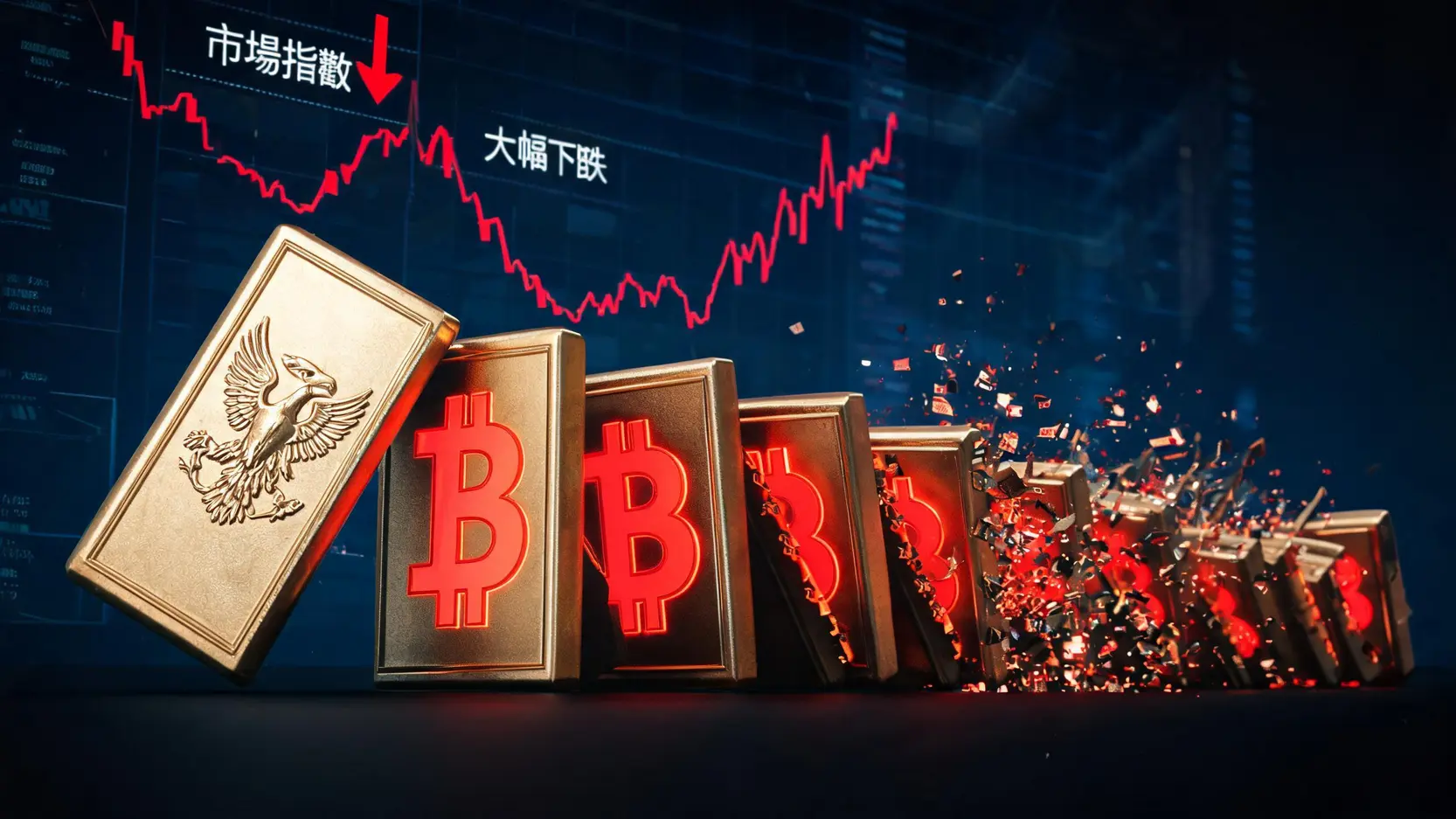
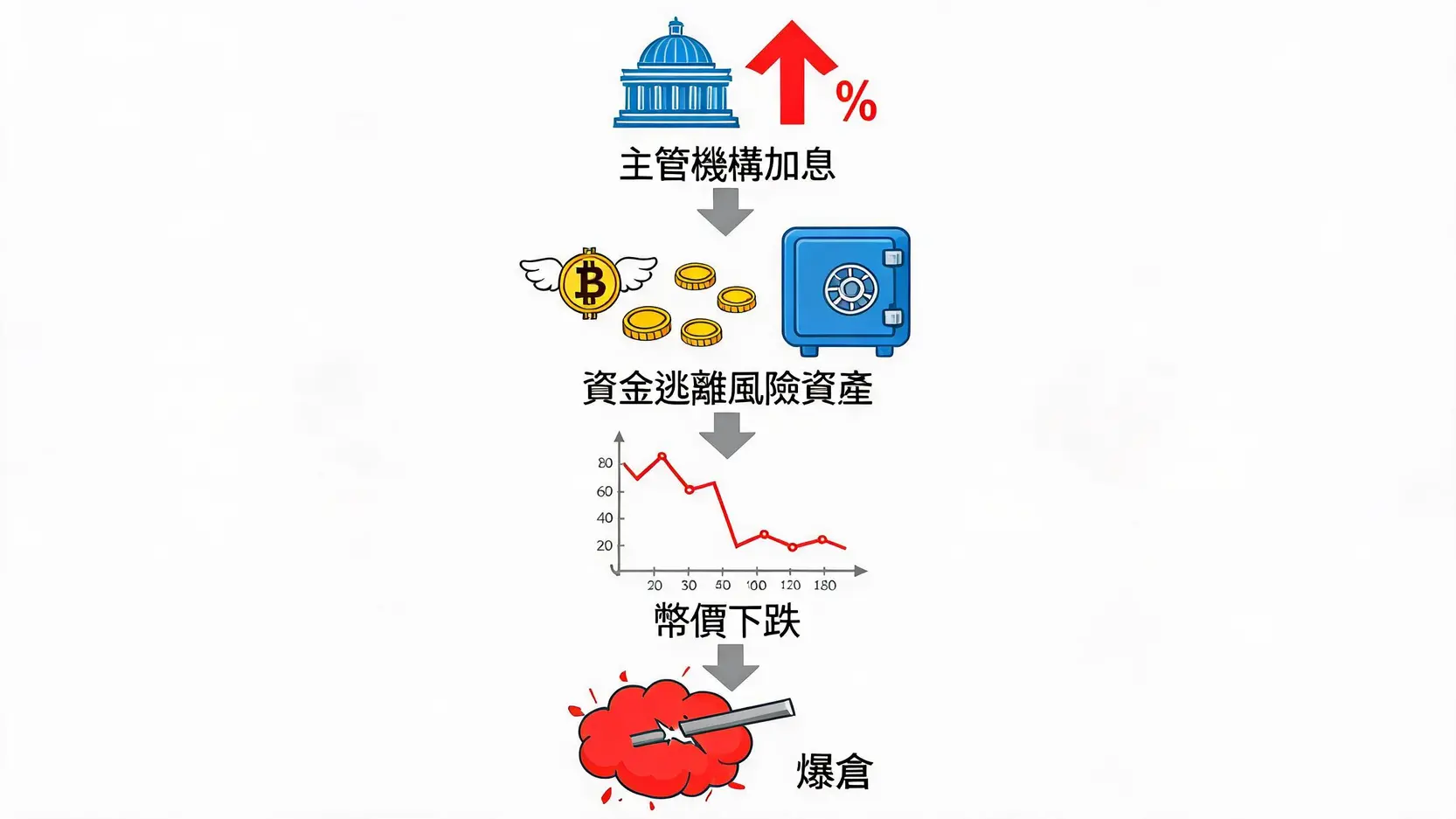
Now that we understand the key concepts, we can connect the dots and examine how a wave of cryptocurrency liquidations develops following a Federal Reserve rate hike. The process resembles a row of dominoes, where knocking over the first piece leads to a series of increasingly destructive consequences
Illustration of the Chain Reaction Triggered by Central Bank Rate Hikes in the Cryptocurrency Market
Step 1: Rising Interest Rates Cause Capital to Exit High-Risk Assets
When the Federal Reserve announces an interest rate hike, or when markets strongly anticipate one, global capital flows begin to shift. Capital behaves like water, always seeking the safest destination with the most attractive returns. Higher interest rates increase the yields available on US dollar deposits and US Treasury bonds, assets generally considered low-risk or virtually risk-free. This makes them highly attractive to institutional and conservative investors.
In contrast, Bitcoin and most cryptocurrencies are classified as “high-risk assets”. They do not generate fixed interest income, their prices are driven entirely by market supply and demand, and they experience substantial volatility. In an environment where the cost of capital is rising, the “opportunity cost” of holding high-risk assets also increases. As a result, rational investors often choose to sell part of their cryptocurrency holdings and move funds into safer alternatives. This creates the initial wave of selling pressure in the market.
Step 2: Bitcoin Prices Fall and Trigger a Chain Reaction of Liquidation Levels
As capital continues to flow out of the market, the price of Bitcoin begins to decline. Initially, the drop may be gradual, but once the price breaks below key technical support levels or important psychological thresholds, the situation can deteriorate rapidly. More importantly, this can trigger a large number of stop-loss orders and liquidation levels for leveraged long (bullish) positions.
Each liquidated long position effectively becomes a market sell order. To recover losses, exchanges will close these positions regardless of price, dumping them into the market and adding further selling pressure, which in turn drives prices down even faster.
Step 3: Large-Scale Liquidations Intensify Market Panic and Selling Pressure
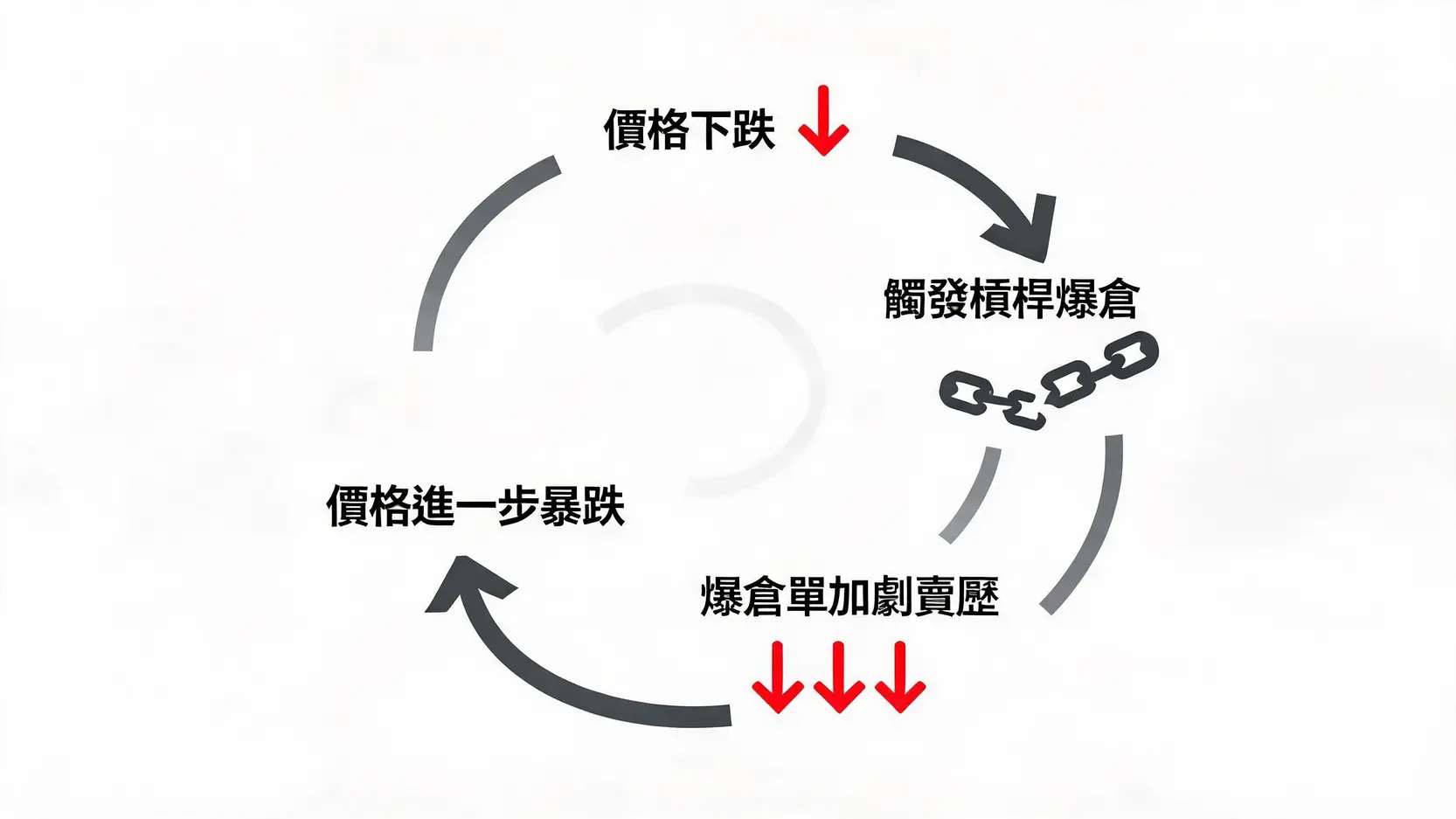
This is where the most dangerous phase begins: the so-called “death spiral”. Price declines → Trigger the first wave of liquidations → Liquidations create additional sell orders → Prices fall further → More and larger liquidations are triggered → The cycle repeats itself.

The “Death Spiral” Created by Falling Prices and Large-Scale Liquidations
Within a very short period, a massive number of forced liquidation orders flood the market, creating what is known as a “liquidation cascade”. The resulting sharp decline in prices generates extreme panic throughout the market. Many spot investors who are not using leverage may also begin selling their holdings out of fear after witnessing such dramatic losses. This panic selling adds further downward pressure, pushing prices even lower. The headlines reporting that hundreds of thousands of investors have been liquidated are often the result of precisely this sequence of events.
An Investor’s Essential Lesson: How to Navigate Market Volatility During a Rate-Hike Cycle
After understanding the logic behind how Federal Reserve rate hikes trigger market turbulence, the more important question is how to respond. As investors navigate the markets, we cannot change the macroeconomic environment, but we can adjust our strategies to reduce risk and improve our chances of success.
Watch the Key Indicators: How to Interpret Federal Reserve Meetings and Statements
Rather than relying on market rumors, learn to understand the Fed’s official communications yourself. Pay particular attention to the following:
- FOMC Meetings: The Federal Open Market Committee (FOMC) holds eight interest rate decision meetings each year. The post-meeting statement, the Dot Plot, and Federal Reserve Chair Jerome Powell’s press conference are the market’s most important sources for interpreting future policy direction.
- Inflation Data (CPI): The Consumer Price Index (CPI) is one of the Fed’s primary measures of inflation. CPI readings that remain persistently above the Fed’s 2% target generally strengthen expectations for further rate hikes.
- Employment Data (Nonfarm Payrolls): Strong employment reports indicate that the economy remains resilient, giving the Fed greater room to raise rates to combat inflation without excessively damaging economic growth.
Learning how to interpret these indicators can help you identify changes in market direction earlier than many other participants.
Risk Management Strategies: Set Stop-Loss Orders and Control Leverage
This may sound repetitive, but it remains the most important survival tool during volatile markets. Effective cryptocurrency risk management is essential.
- Set Strict Stop-Loss Levels: Whether trading spot markets or derivatives, you should determine your stop-loss level before entering a position. This ensures that any single loss remains within a manageable range and helps prevent catastrophic losses.
- Reduce Leverage: During periods of uncertainty, especially in a rate-hike cycle, investors should proactively reduce or avoid high leverage. Lower leverage may generate slower returns, but it significantly improves survival odds. Remember, staying in the game is what creates future opportunities.
For a more detailed discussion of risk management techniques, readers may refer to A Complete Analysis of Cryptocurrency Risks, which provides a deeper examination of these topics.
Asset Allocation Thinking: Finding Defensive Opportunities in Volatile Markets
Smart investors do not put all their eggs in one basket. During periods when the Federal Reserve continues tightening monetary policy, it may be prudent to adjust asset allocation accordingly.
- Increase Cash Exposure: Holding a larger proportion of stablecoins or fiat currency can reduce overall portfolio volatility while providing capital to deploy if the market experiences significant declines.
- Look for Defensive Assets: Although Bitcoin is often referred to as “digital gold”, its safe-haven characteristics frequently weaken when global liquidity tightens. Traditional defensive assets such as the US dollar and gold may perform better during certain periods.
Conclusion
In summary, Federal Reserve interest rate policy is one of the most important macroeconomic factors influencing Bitcoin and the broader cryptocurrency market. By affecting the cost of capital and overall market liquidity, rate hikes directly or indirectly trigger a chain reaction that can lead from price declines to large-scale liquidations. For investors, memorizing chart patterns and technical indicators alone is not enough. It is equally important to understand the broader macroeconomic environment. Developing a deep understanding of these underlying dynamics, learning to interpret market signals, practicing disciplined risk management, and maintaining flexible asset allocation strategies are all essential for long-term survival in a market filled with both opportunities and challenges.
Frequently Asked Questions (FAQ)
Q: Are Federal Reserve rate cuts bullish for Bitcoin?
A: In most cases, yes. Rate cuts reduce the cost of capital and increase market liquidity. As a result, “speculative capital” tends to flow toward higher-risk, higher-return assets, including Bitcoin and other cryptocurrencies. Therefore, rate cuts or expectations of future rate cuts are generally viewed as positive signals for the cryptocurrency market and may support higher prices.
Q: Besides rate hikes, what other macroeconomic factors affect cryptocurrencies?
A: Many macroeconomic factors influence cryptocurrencies, including geopolitical conflicts (such as wars, which can increase risk-averse sentiment), expectations of a global economic slowdown (which can suppress risk investment), regulatory policies in major economies (such as changes in regulations by the US Securities and Exchange Commission), and the strength of the US Dollar Index (a stronger US dollar generally puts pressure on assets denominated in US dollars).
Q: How can I identify upcoming liquidation risk zones?
A: Investors can monitor professional on-chain and derivatives analytics platforms such as CoinGlass, Glassnode, or CryptoQuant. These platforms provide tools such as “Liquidation Maps” and “leverage metrics” that show price zones where large concentrations of long or short liquidation levels are located. These areas represent potential high-risk liquidation zones.
Q: Why do Federal Reserve rate hikes lead to liquidations?
A: Simply put, this is a domino effect. Interest rate hikes → capital flows out of high-risk assets such as cryptocurrencies → the price of Bitcoin falls → the price decline triggers the liquidation levels of highly leveraged traders → a large number of liquidation orders (market sell orders) flood the market, pushing prices even lower and triggering even more liquidations.
Q: Is leveraged trading riskier during a rate-hike cycle?
A: Absolutely. Rate-hike cycles are often accompanied by elevated volatility and downward market pressure. In such uncertain conditions, leverage dramatically amplifies potential losses. Even a relatively small market correction can be enough to force the liquidation of highly leveraged positions. Therefore, controlling or avoiding leverage is one of the most important risk management principles during a rate-hike cycle.
Related Articles
-
The Interest Rate and Exchange Rate Seesaw: How Does the Central Bank Use the "Dual-Rate Policy" to Stabilize Taiwan's Economy? Interest rates and exchange rates are the two lifelines of a country's economy. Any movement in either one directly affects the stock market, property market, corporate profitability, and even the...2026 年 6 月 12 日
-
US-Japan Interest Rate Differential Out of Control? Uncovering the Root Causes of Yen Depreciation and the Bank of Japan's Policy Dilemma Recently, even though Japan's Ministry of Finance has repeatedly deployed large-scale intervention measures, the yen has only enjoyed brief periods of relief before returning to its depreciation trend. This...2026 年 6 月 9 日
-
The Ultimate Guide to Yen Carry Trade Unwinding: The Chain Reaction That Triggers Global Market Turmoil Recent violent fluctuations in the Japanese yen exchange rate, including the frequent intraday "flash crashes" and "surges", all point to one key term: the "carry trade unwinding chain reaction". This seemingly technical concept is...2026 年 6 月 9 日