CFD Tutorial: Beginner Guide & 5 Trading Strategies

Updated: 2026/03/06  |  CashbackIsland

【CFD教學】差價合約新手入門終極指南:從開戶到5種實用投資策略

[CFD Tutorial] The Ultimate Beginner’s Guide to Contracts for Difference: From Account Opening to 5 Practical Investment Strategies

In recent years, more and more investors have turned their attention to CFDs (contracts for difference). However, when faced with complex terminology and high leverage risks, many beginners feel lost when attempting to implement contracts for different investment strategies. Do you also want to know what CFDs are, how to safely begin your first trade, and how to learn effective investment strategies? This comprehensive CFD tutorial is the ultimate guide designed specifically for CFD beginners, taking you from scratch through the core concepts of contracts for difference, the account opening process, and sharing five simple and practical investment strategies to help you take your first investment step steadily. 


What Are CFDs (Contracts for Difference)? Why Are They Attractive to Beginners?

Before diving into complex investment strategies, it is essential to build a solid foundation. CFD stands for Contract for Difference. It is a financial derivative that allows investors to speculate on price movements without actually owning the underlying asset. Simply put, you are trading a “contract”, not the “asset itself”.


Core CFD Concept: Trading Without Holding the Physical Asset

Imagine you believe the price of gold will rise, but you do not want to physically purchase a gold bar from a bank and store it at home. Through a CFD, you can directly open a “buy” contract on gold via a trading platform. If the gold price rises as expected, you can close the position (sell the contract) to earn the price difference. Conversely, if the gold price falls, you will incur a loss. Throughout the entire process, you never come into contact with physical gold. What you are trading is solely the expectation of price movement. This is the core of CFDs.CFD差價合約與傳統股票交易的對比圖,說明CFD不涉及持有實體資產。

Illustration: CFD trading involves price movement “contracts”, not direct ownership of company shares.


The 4 Major Advantages of CFDs: High Leverage, Two-Way Trading, and Market Diversification

The global popularity of CFDs, especially among retail investors, is largely due to their unique advantages:

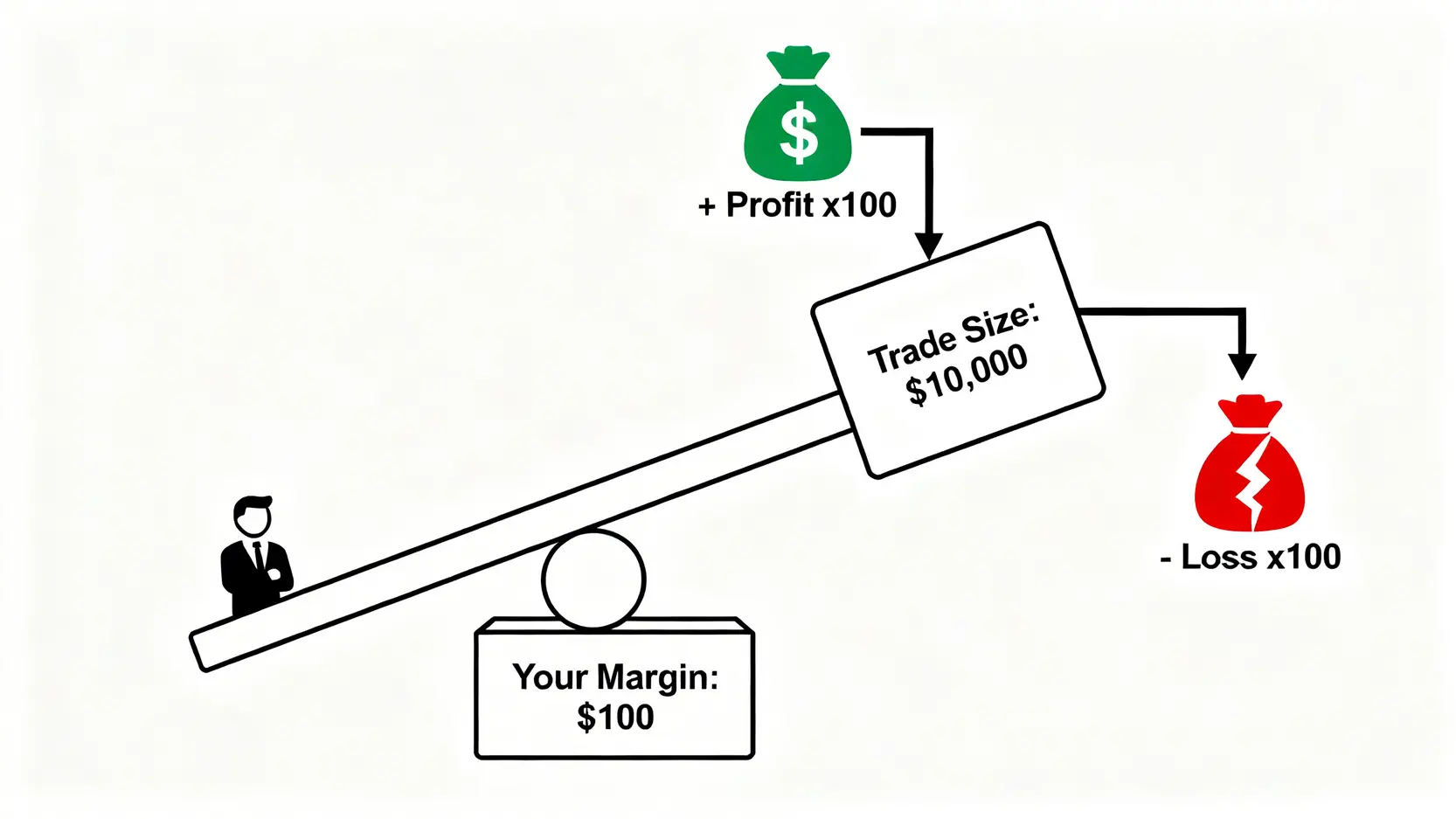
  • High leverage: This is the most attractive and also the most risky feature of CFDs. Leverage allows you to use a smaller margin to control a position with a much higher value. For example, with 100:1 leverage, you only need 100 US dollars to control a trade worth 10,000 US dollars. This means potential profits are amplified, but losses are amplified as well.
  • Two-way trading: Traditional investing typically involves buying and waiting for prices to rise. CFDs allow you to “go long” (buy in anticipation of rising prices) and “go short” (sell in anticipation of falling prices). Even in a bear market, there are opportunities for profit if your judgment is correct.
  • Market diversification: A single CFD account can provide access to major global markets, including forex, stocks, indices (such as the S&P 500), commodities (such as crude oil and gold) and even cryptocurrencies. This offers significant flexibility for portfolio allocation.
  • Flexible trading hours: Since CFDs cover global markets, many products (such as forex) are available for trading nearly 24 hours a day, making them suitable for investors with different schedules.


Risks That Must Be Recognized: Market Volatility, Leverage Risk, and Overnight Financing

There is no such thing as a free lunch. Behind the high return potential of CFDs lies significant risk. The Hong Kong Investor and Financial Education Council (IFEC) has also reminded investors to be aware of the risks associated with contracts for difference. Beginners must clearly understand the following before entering the market:

  • Market volatility risk: All financial markets are subject to price fluctuations. Sudden political or economic events may cause sharp price movements, leading to losses.
  • The double-edged nature of leverage: While high leverage can magnify profits, it can also accelerate losses. If the market moves against your expectations, losses may quickly exceed your initial margin and even trigger forced liquidation (commonly known as a margin call).

說明CFD槓桿效應的示意圖,顯示小額保證金如何同時放大潛在利潤與虧損。

Leverage is a double-edged sword: it can magnify your profits and equally magnify your losses.

  • Overnight financing (Swap Fee): If your position is held beyond the daily settlement time, the broker will charge or pay overnight financing. For long-term positions, this can accumulate into a significant cost.


Four Steps for CFD Beginners: From Choosing a Platform to Completing Your First Trade

After understanding the basic concepts and risks, the next step is practical application. By following these four steps, CFD beginners can begin their trading journey safely.


Step One: How to Choose a Safe and Compliant CFD Broker?

Selecting a reliable broker is the foundation of trading success and is more important than any trading strategy. A good platform safeguards your funds and provides a stable trading environment. When evaluating, focus on the following:

  • Regulatory license: This is the most important screening criterion. Be sure to choose brokers licensed by top-tier global regulators, such as the Financial Conduct Authority (FCA) in the United Kingdom and the Australian Securities and Investments Commission (ASIC). These authorities impose strict financial and operational requirements on brokers.
  • Trading costs: Compare spreads, commissions, and overnight financing among different brokers. Lower costs mean higher potential profitability.
  • Deposit and withdrawal convenience: Ensure the platform supports your preferred deposit and withdrawal methods, and review processing speed and related fees.
  • Platform stability and customer service: Is the trading platform (such as MT4 or MT5), stable and free from frequent disconnections? Can customer service provide prompt and effective support in Chinese? These factors directly affect your trading experience.

For more detailed evaluation standards, you may refer to this comprehensive guide, How to Choose a Forex Broker? Top 7 Best Forex Platforms Ranking and Complete Guide to Avoiding Pitfalls, as many of the criteria also apply to selecting a CFD broker. 

Step Two: Illustrated Account Opening Process and Identity Verification

After selecting a broker, the account opening process is generally similar and can be completed online:

  1. Complete the online application form: Provide basic personal information such as your name, email, and phone number.
  2. Complete the questionnaire: Regulators require brokers to assess clients’ financial situations and trading experience to ensure they understand the associated risks.
  3. Upload identity verification documents: Usually a clear photo of your identity card or passport is required.
  4. Upload proof of address: Provide a utility bill or bank statement issued within the past three months, clearly showing your name and address.
  5. Await review: The broker will typically complete the review within 1 to 2 business days and notify you by email once the account is activated.


Step Three: Learn to Use the Trading Platform and Make Good Use of the demo account

Before depositing real funds, all beginners are strongly advised to use a demo account first!

A demo account provides virtual funds, allowing you to become familiar with all platform functions in a completely risk-free environment, including how to place orders, set up charts, and use technical indicators. It is the best place to practice what you have learned and test trading strategies. Spend at least one to two weeks practicing on a demo account until you are fully confident in the entire process.


Step Four: Place Orders, Set Stop Loss and Take Profit, and Manage Your First CFD Trade

When you are ready to trade with real funds, risk management is the top priority. Every trade must include a “Stop Loss” and a “Take Profit”.

  • Stop Loss: A predefined price level at which your position will automatically close if reached, preventing further losses. It is the “seat belt” that protects your capital.
  • Take Profit: A predefined price level at which your position will automatically close when the target is reached, locking in profits.

Never trade without setting a stop loss. This is discipline and the key difference between professional traders and amateur speculators.


Further Reading (Highly Recommended)

How to Choose a Forex Broker? Top 7 Best Forex Platforms Ranking and Complete Guide to Avoiding Pitfalls

Futures Technical Analysis Beginner Package: Master Trend Identification and Common Indicators From 0 to 1


5 Essential Contracts for Difference Investment Strategies Every CFD Beginner Must Learn

After mastering the basic operations, the next step is learning how to analyze the market and develop trading strategies. Below are five fundamental investment strategies suitable for CFD beginners to help you build your own trading system.


Strategy 1: Trend Following

“The trend is your friend”. This long-standing Wall Street saying captures the essence of trend following. The core idea is to identify the market’s primary trend (whether upward, downward, or ranging) and trade in the direction of that trend. In an uptrend, look for buying opportunities. In a downtrend, look for selling (shorting) opportunities. The advantage of this strategy is its simplicity, clarity, and relatively higher probability of success.


Strategy 2: Range Trading

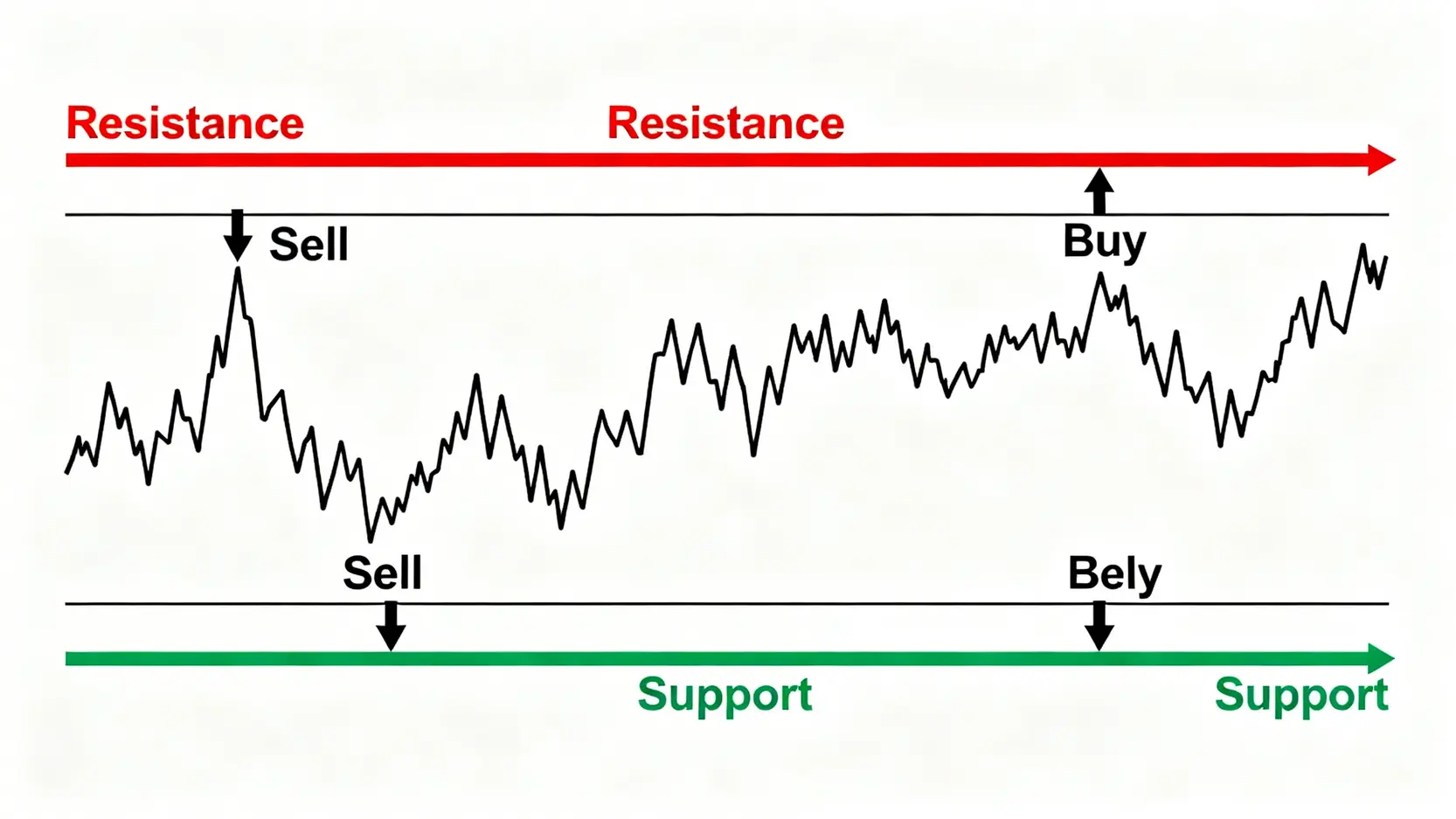
When the market shows no clear upward or downward trend and prices fluctuate within a defined range, range trading becomes suitable. Traders identify price “support” and “resistance” levels. They buy when the price approaches support and sell when it approaches resistance. This strategy is highly effective in sideways markets.

區間交易策略示意圖,顯示價格在支撐位和壓力位之間波動時的買賣時機。

Range trading strategy: Buy near the support level (green line) and sell near the resistance level (red line).


Strategy 3: News Trading

Major economic data releases or unexpected news events (such as central bank interest rate decisions or Non-Farm Payroll data), often trigger significant market volatility, creating opportunities for news traders. They establish and close positions quickly before or after news releases based on anticipated market reactions. However, this strategy carries extremely high risk due to intense volatility and is not suitable for inexperienced beginners.


Strategy 4: Introduction to Technical Indicators (Such as RSI and MACD)

Technical indicators use mathematical formulas to calculate historical price and volume data in order to forecast future price movements. Beginners can start with two of the most basic and practical indicators:

  • Relative Strength Index (RSI): Used to determine whether the market is in an “overbought” or “oversold” condition. Generally, an RSI above 70 is considered overbought, while below 30 is considered oversold.
  • Moving Average Convergence Divergence (MACD): Used to identify market trend direction and momentum. When the fast line (DIF) crosses above the slow line (MACD), it is regarded as a buy signal (known as a golden cross).

Learning how to apply these indicators can provide more objective data support for your contracts for different investment strategies. For a deeper understanding, you may read this introduction to technical analysis tutorial

Strategy 5: Basic Application of Hedging

Hedging is a risk management technique. When you hold a position (for example buying EUR/USD) but are concerned about unfavorable short-term market fluctuations, you may open an opposite position (such as selling EUR/USD) to lock in losses or profits. This temporarily protects your portfolio from short-term volatility. However, hedging operations are relatively complex and may generate additional transaction costs. Beginners should practice thoroughly in a demo account first.


CFD Beginner FAQ

Q: How Much Initial Capital Is Required for CFD Trading?

A: This depends on the broker’s minimum deposit requirement, but many well-known platforms allow investors to start trading with 100 to 200 US dollars. The key is not the amount of initial capital, but the proper use of position sizing and risk management. Beginners are advised to invest only funds they can fully afford to lose at the initial stage.

Q: Are CFDs Suitable for Long-Term Investment?

A: Generally, CFDs are more suitable for short- to medium-term trading rather than long-term investment. The main reason is “overnight financing” costs. If you hold a position long term, the accumulated overnight financing charges may erode profits or even increase losses. If your goal is to invest for several years or decades, directly purchasing physical assets such as stocks or ETFs would be more appropriate.

Q: What Hidden Costs or Fees Are Associated With CFD Trading?

A: The main trading costs of CFDs include: the spread (the difference between the bid and ask prices), commission (charged for certain account types), and overnight financing (the cost of holding a position overnight). In addition, some brokers may charge inactivity fees for accounts that remain inactive for extended periods. Before opening an account, be sure to review the broker’s fee schedule carefully.

Q: Are Profits From CFD Trading Subject to Tax?

A: Tax matters vary according to the regulations of your country or region of residence. In some jurisdictions, profits from CFD trading may be considered capital gains and subject to taxation. It is strongly recommended to consult a local tax professional to ensure compliance with applicable laws.


Conclusion

In summary, CFDs provide beginner investors with a highly flexible and low-threshold channel to access global financial markets. However, success depends on whether you fully understand how they operate and strictly adhere to risk management principles. This CFD tutorial, covering fundamental concepts, account opening steps, and introductory contracts for different investment strategies, aims to lay a solid foundation for your trading journey. Open a demo account now, put the strategies you have learned into practice, transform theory into experience, and create more possibilities for your investment journey.

If you liked this article, please share it!

Related Articles

  • Gold Plunge Guide: 5 Investment Strategies
    Practical Guide After a Gold Plunge: 5 Gold Investment Strategies and Safe-Haven Asset Allocation Fully Revealed Facing the uncertainty of the global economy in 2026, as well as a market environment where gold prices frequently plunge and remain under pressure, blindly following the crowd often only leads to unnecessary losses....
    2026 年 7 月 3 日
  • Gold Under Pressure: Oil Prices & Strong US Dollar
    Analysis of Gold Under Pressure: How Do Rising Oil Prices and a Stronger US Dollar Put Gold Prices Under Dual Pressure? Recently, “gold under pressure” has become a high-frequency term in financial news. Under the influence of multiple factors such as a stronger US dollar and oil price volatility, gold...
    2026 年 7 月 3 日
  • Gold V-Shaped Reversal: Signals & Trading Guide
    Gold V-Shaped Reversal: Master Bottom Reversal Signals From Identification to Trading Strategies in One Article In the gold market, price movements are often unexpected. One of the sharpest and most explosive patterns is the gold V-shaped reversal. After the market experiences a rapid decline, panic spreads, but the price then...
    2026 年 7 月 2 日
返回顶部