Stop Overtrading: 5 Ways to Reduce Trading Losses

Updated: 2026/05/18  |  CashbackIsland

overtrading-solutions-guide

Overtrading OUT! 5 Practical Ways to Reduce Trading Frequency and Eliminate Meaningless Losses

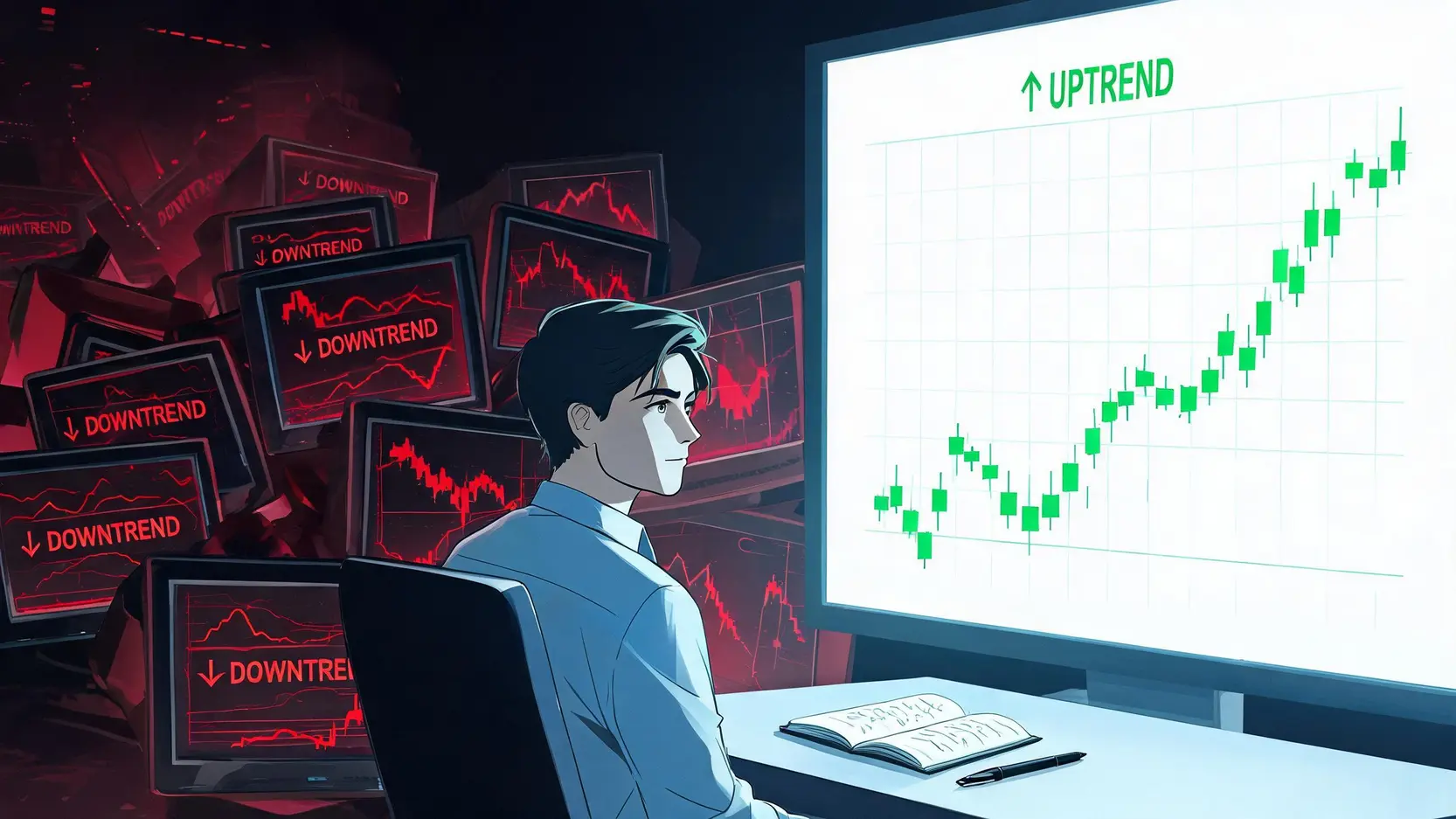
Have you ever experienced constantly buying and selling within a single day, believing you were capturing every market fluctuation, only to realize at the end of the month that losses kept piling up? This “the more you trade, the more mistakes you make” dilemma could very likely be a warning sign of “overtrading”. Many investors mistake frequent trading for diligence, but in reality, understanding the definition of overtrading and finding ways to reduce trading frequency are the real keys to preventing profits from being eaten away and avoiding growing psychological pressure. This article will take an in-depth look at the drawbacks of frequent trading and provide five concrete and practical methods to help you break free from the curse of overtrading and build a more stable and efficient investment strategy. 


What Exactly Is Overtrading?

Overtrading is a common stumbling block on the investment journey, and many people do not even realize they are deeply trapped in it. It does not refer to the absolute number of trades, but rather trading behavior that exceeds one’s personal ability, strategy, and risk tolerance.


The Definition of Overtrading: When Your Trading Frequency Exceeds the Scope of Your Strategy

Simply put, the definition of overtrading refers to trading too frequently or committing too much capital to the point that your actions no longer align with your predefined trading strategy and risk management rules. This is usually driven by emotions rather than rational market analysis. When you realize that each order you place is no longer based on sufficient reasoning, but instead comes from feelings such as “itchy fingers”, “wanting to recover losses”, or “fear of missing out”, the warning light is already flashing. 


Three Major Warning Signs: How to Tell If You Have Fallen Into Overtrading?

To determine whether you have fallen into overtrading, you can start by identifying the following three obvious warning signs:

  • Impulsive Trades Without a Plan: You cannot resist placing trades whenever the market moves slightly, without clear entry points, exit points, or stop-loss levels. These trades often involve chasing rallies and panic selling, lacking thoughtful analysis and resembling gambling more than investing.
  • Revenge Trading: After a losing trade, you immediately enter another trade in an attempt to “win it back”, sometimes even increasing your position size. This behavior is completely emotion-driven and can easily lead to even larger losses, creating a vicious cycle.
  • Loss of Control Over Position Size While Ignoring Risk: In pursuit of quick profits, you allocate an excessively high percentage of capital into a single trade, far exceeding your own risk management limits. Once the market moves against you, the damage can become devastating.

过度交易的三个警号:代表冲动交易的闪电图标、代表报复性交易的愤怒表情、以及代表注码失控的超载天秤。

The Three Major Warning Signs of Overtrading: Impulsiveness, Revenge, and Loss of Control


The 3 Major Fatal Drawbacks of Frequent Trading

Understanding the drawbacks of frequent trading is the first step toward making a real change. These drawbacks affect not only your finances, but also your psychology and decision-making ability in the long run.

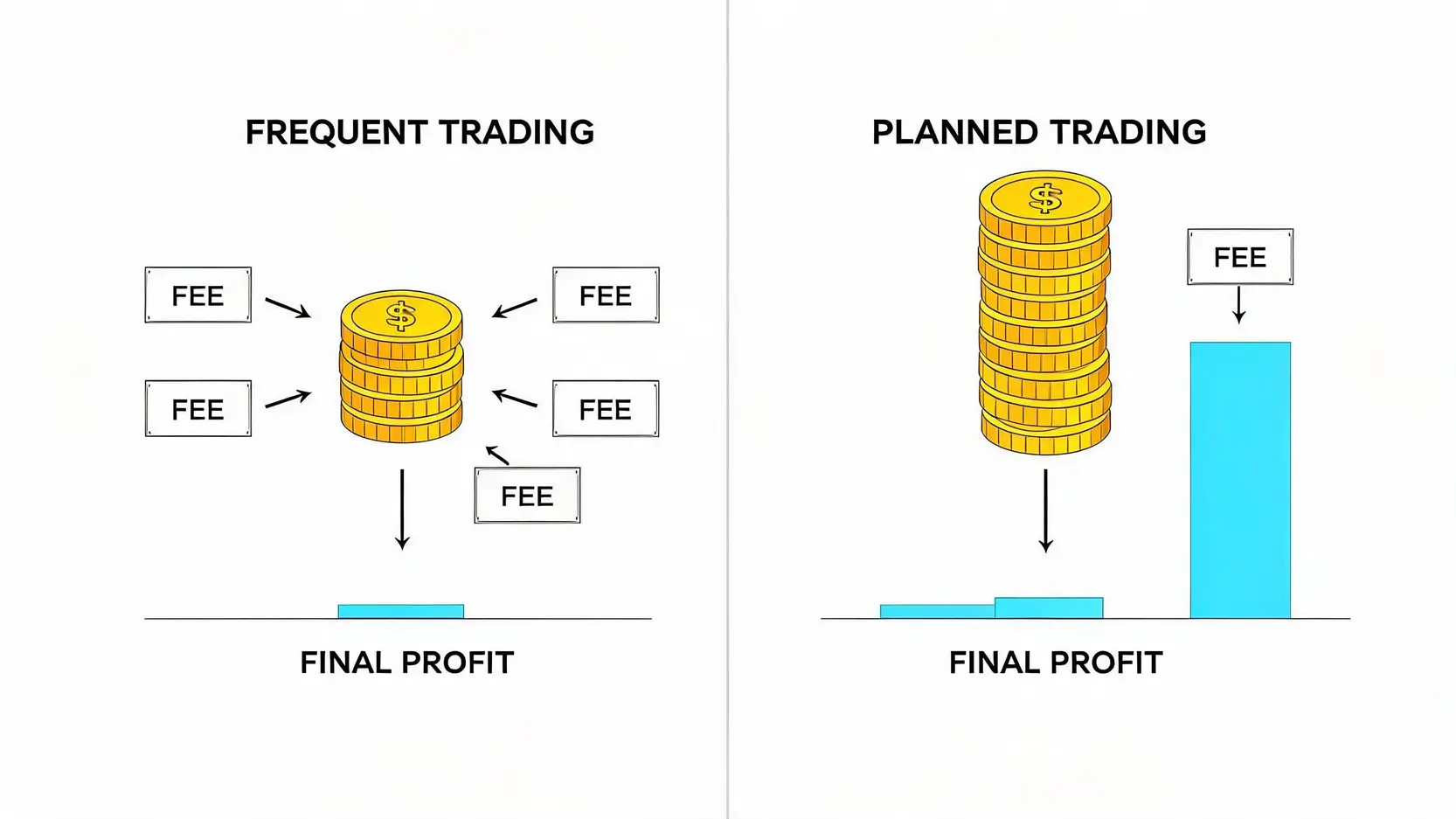
一张对比图显示频繁交易与耐心交易的利润差异。左边多个小交易的利润被大量手续费图标蚕食,右边单个大交易的利润则保持完整。

Like termites, trading costs slowly eat away at your final profits through constant trading activity.


Drawback 1: Trading Costs Increase Significantly and Erode Profits

This is the most direct impact. Every trade, regardless of profit or loss, requires paying commissions, spreads, and potentially taxes. When you frequently enter and exit the market, these seemingly insignificant costs accumulate rapidly, constantly eating away at your capital and profits like termites. In many cases, even if your market direction is correct, high trading costs can still leave you ending in a net loss.


Drawback 2: Increased Psychological Pressure Damages Decision Quality

Constantly watching the market and trading frequently keeps your mind in a prolonged state of high tension. This pressure leads to decision fatigue, making irrational decisions more likely. Emotions such as anxiety, frustration, and fear become amplified, causing you to deviate from your original trading plan and fall into the trap of “holding onto losses too long while taking profits too quickly”. A tired and highly stressed brain cannot make high-quality investment decisions.


Drawback 3: Ignoring Macro Trends and Falling Into the Trap of Market Noise

When you focus excessively on minute-by-minute or even second-by-second price fluctuations, it becomes easy to get lost in short-term market noise while ignoring the macroeconomic trends and fundamental factors that truly drive the market. These short-term random fluctuations often carry little predictive value. Trying to capture every tiny movement will only result in the market repeatedly punishing you. Truly stable profits often come from understanding major trends, not from overreacting to market noise.


Further Reading (Highly Recommended)

The Ultimate 2026 Hong Kong Forex Investment Guide: Promotions, Rebates, Strategies, and Complete Bank Account Solutions

How to Reduce Investment Risk? 5 Major Risk Management Strategies and Practical Diversification Techniques


How to Solve the Problem of Overtrading? 5 Practical Ways to Reduce Trading Frequency

After recognizing the problem, the next step is taking action. Below are five concrete and actionable methods to help you effectively reduce trading frequency and solve the problem of overtrading at its root

Method 1: Create and Strictly Follow a Trading Plan

Trading without a plan is gambling. Trading with a plan is investing. A complete trading plan should include at least the following elements:

  • Entry Conditions: What signals must appear before you consider entering a trade? (For example: technical indicator breakouts or specific candlestick patterns)
  • Exit Conditions: At what target level will you take profit and exit?
  • Stop-Loss Level: At what level of loss must you exit unconditionally?
  • Position Size: Based on your total capital and risk tolerance, how much capital will you allocate to each trade?

Most importantly, once the plan is established, execute it with the discipline of a robot. This minimizes emotional interference in your trading decisions.


Method 2: Set Daily or Weekly Trade Limits

This is a simple but highly effective method. Set a clear trading limit for yourself, such as “a maximum of 3 trades per day” or “a maximum of 10 trades per week”. Once you hit the limit, no matter how tempting the market opportunity appears, you must close your trading platform and step away from the computer. This method forces you to value each trading opportunity more carefully and only act when the odds are truly in your favor.


Method 3: Focus on Higher Time Frame Chart Analysis

If you are used to looking at 1-minute or 5-minute charts, try switching to 1-hour, 4-hour, or even daily charts. Higher time frame charts filter out large amounts of market noise, allowing you to see the market’s main trends and key support and resistance levels more clearly. By focusing on the bigger trend, your trading frequency will naturally decrease, while your win rate and risk-reward ratio may improve significantly.
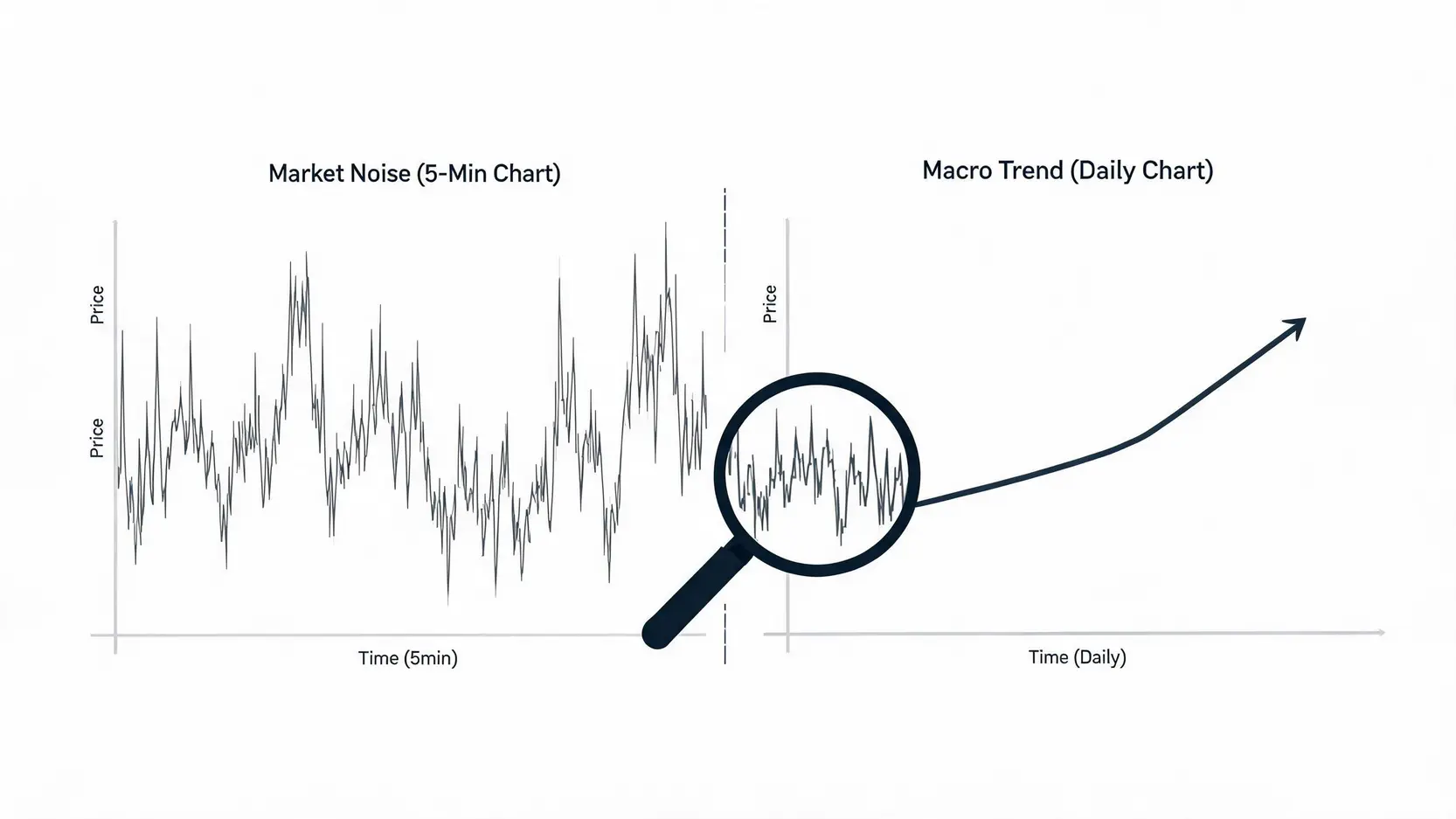
一张对比图显示短期市场噪音和长期宏观趋势的区别。左边是混乱无序的短期价格波动图,右边是平滑清晰的长期趋势向上图。

Step away from market noise and focus on clearer macro trends.


Method 4: Review Your Trades and Analyze Whether Each Trade Was Necessary

Maintain a detailed trading journal and conduct reviews at the end of each day or week. Honestly ask yourself several questions:

  • Did this trade follow my trading plan?
  • Was this order placed impulsively or based on rational analysis?
  • If I could go back in time, would I still make this trade?

Through continuous review and reflection, you will gradually recognize which trades were meaningless and driven by emotions. By consistently doing this, you can slowly eliminate bad habits and optimize your trading behavior patterns.


Method 5: Learn to Wait Patiently and Strike Only at the Best Opportunities

Top traders are like hunters. Most of their time is spent patiently waiting for the highest-probability opportunity to appear. The market will always exist, and opportunities will never disappear. Learning to accept “missing” certain market moves is a sign of a mature trader. You are not looking for “every” opportunity, but rather “the best” opportunities. Once you stop fearing missed opportunities, you can truly escape the anxiety of frequent trading and execute trades with precision.


Frequently Asked Questions About Solving the Problem of Overtrading

Q: How many trades per day count as overtrading?

A: There is no standard answer to this question. The key to overtrading is not the “number of trades”, but whether the trading activity “exceeds the scope of your strategy and risk control”. For a mature intraday trader (Day Trader), making more than ten trades a day may be completely normal. However, for a trend trader, trading only a few times per month may already be sufficient. The real standard is whether your trades are rational, planned, and within your risk tolerance.

Q: Does day trading equal overtrading?

A: Not necessarily. Day trading is a specific trading style that requires all positions to be closed before the market closes on the same day. Professional day traders operate with extremely strict trading systems and discipline. However, many beginners engage in day trading without any strategy, which can easily turn into gambling-style overtrading. Therefore, day trading itself is not the problem. The real issue is whether the person executing the trades possesses the necessary knowledge, strategy, and discipline.

Q: If overtrading has caused losses, how should I adjust my mindset?

A: First, stop trading immediately and step away from the market for a few days to calm yourself down. Second, calmly accept the losses and treat them as the cost of learning, rather than rushing to recover them. Then, carefully review the losing trades and identify the root cause of the problem. Finally, re-evaluate and improve your trading plan and risk management rules, starting again with smaller position sizes to gradually rebuild confidence.


Conclusion

In summary, the key to solving the problem of overtrading is shifting from “pursuing quantity” to “pursuing quality”. Deeply understanding the drawbacks of frequent trading is the first step toward awareness, but more importantly, you must implement practical methods to reduce trading frequency through clear trading plans and iron discipline. Remember, successful investing does not come from participating in the market at every moment, but from executing precisely at the right opportunities. Starting today, review your trading habits, break free from overtrading, and move toward a more rational and stable investment journey. 

If you liked this article, please share it!

Related Articles

  • Fed Rate Hikes & Crypto Liquidations Explained
    How Do Federal Reserve Interest Rate Hikes Trigger Waves of Cryptocurrency Liquidations? Understanding the Logic Behind It in One Article Introduction Late at night, alarm bells ring across the market. The prices of Bitcoin and other cryptocurrencies suddenly plunge, causing hundreds of thousands of investors to be liquidated within moments....
    2026 年 6 月 12 日
  • Interest Rates vs Exchange Rates: Taiwan’s Policy Guide
    The Interest Rate and Exchange Rate Seesaw: How Does the Central Bank Use the "Dual-Rate Policy" to Stabilize Taiwan's Economy? Interest rates and exchange rates are the two lifelines of a country's economy. Any movement in either one directly affects the stock market, property market, corporate profitability, and even the...
    2026 年 6 月 12 日
  • US-Japan Rate Gap: The Real Cause of Yen Weakness
    US-Japan Interest Rate Differential Out of Control? Uncovering the Root Causes of Yen Depreciation and the Bank of Japan's Policy Dilemma Recently, even though Japan's Ministry of Finance has repeatedly deployed large-scale intervention measures, the yen has only enjoyed brief periods of relief before returning to its depreciation trend. This...
    2026 年 6 月 9 日
返回顶部