Improve Investment Returns: 5 Expert Strategies

Updated: 2026/03/26  |  CashbackIsland

how-to-increase-investment-return

How to Improve Investment Returns? 5 Expert-Level Strategies to Enhance Returns and Easily Balance Risk!

Do you often feel dissatisfied with your investment returns, yet worry that pursuing higher returns may bring unbearable risks? Many investors struggle between “how to improve investment returns” and “controlling risk”. This is in fact a necessary journey for every investor. To achieve steady profits in the vast stock market, the key is not to find that one “miracle stock” that skyrockets, but to establish a clear action guide that suits you. This article provides various practical strategies to enhance returns and explores in depth the art of balancing risk and return, helping you learn how to find the optimal balance between the two and steadily grow your wealth. 


Re-Understanding Investment Return (ROI): Why Is Your Investment Dashboard?

Before diving into any strategies to enhance returns, it is essential to build a solid foundation. Investment return (Return on Investment, ROI) is the “dashboard” of your investment portfolio, directly telling you how your investments are performing. If you do not know how to read this dashboard, it is like driving blindfolded, which is extremely dangerous.


More Than Just Numbers: Basic Calculation and Interpretation of Investment Return

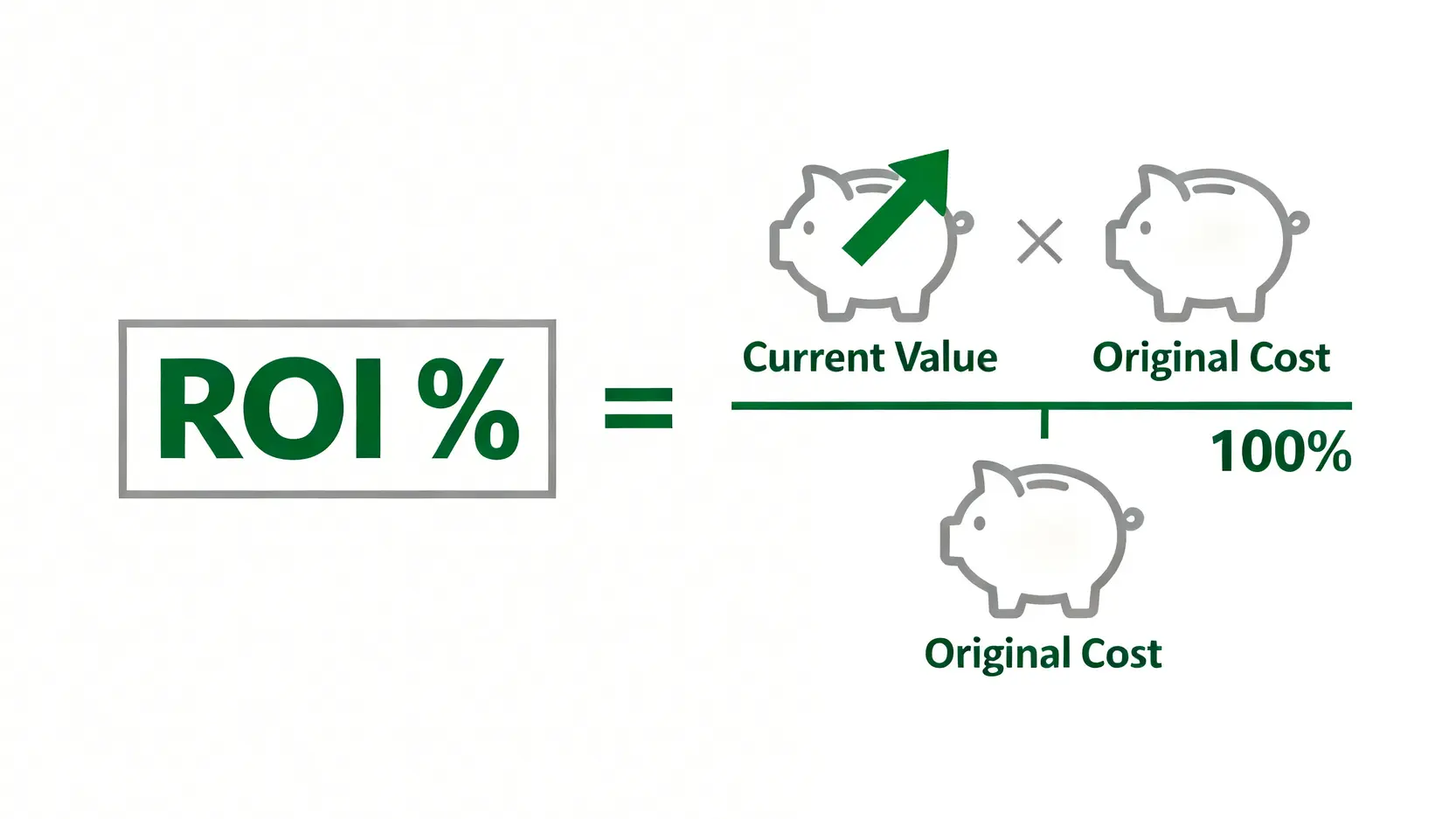
Fundamentally, the calculation of ROI is very straightforward. The basic formula is as follows:

ROI (%) = (Current Value – Original Cost) / Original Cost × 100%

投資回報率 ROI 的計算公式圖解,顯示當前價值減去原始成本,再除以原始成本,最後乘以 100%。

Investment Return (ROI) is the core metric for measuring your investment performance.

For example, suppose you bought a stock for $10,000 a year ago, and its value has now increased to $12,000. Then your investment return is:

($12,000 – $10,000) / $10,000 × 100% = 20%

If you also received $500 in dividends during this period, then the total return should include this income:

Total Return (%) = (Current Value – Original Cost + Income) / Original Cost × 100%

($12,000 – $10,000 + $500) / $10,000 × 100% = 25%

This figure is not just a report card, it also reflects whether your investment decisions are sound and whether your assets are growing healthily. Regularly calculating and tracking your ROI is the first step in optimizing your investment portfolio.


How to Set a Reasonable Expected Rate of Return?

A common mistake among beginner investors is holding unrealistic expectations, such as imagining achieving returns of over 50% every year. A “reasonable” expected rate of return should be based on the following factors:

  • Market average return: Understand the long-term average return of the market you are investing in. For example, the historical average annual return of the US S&P 500 Index is about 8-10%. This serves as a good benchmark.
  • Asset class: Different asset classes have vastly different return and risk characteristics.
  • Personal risk tolerance: How much risk are you willing to take for potential higher returns? This is the core question when setting expected returns.

The table below is a simplified reference of asset classes and expected returns (long-term average):

Asset Class

Risk Level Expected Long-Term Average Annual Return
Cash / Money Market Funds Very Low 1% – 2%
Government Bonds Low 2% – 4%
Investment-Grade Corporate Bonds Medium-Low 4% – 6%
Large Blue-Chip Stocks / Index Funds Medium-High 7% – 10%
Growth Stocks / Emerging Markets High Above 12%


Core Key: Mastering the Art of Balancing Risk and Return in Investing

There is an enduring saying in the investment world: “There is no free lunch”. Pursuing higher returns almost always means accepting higher risk. Understanding and mastering the art of balancing risk and return is a key step from being an amateur investor to becoming an experienced player.

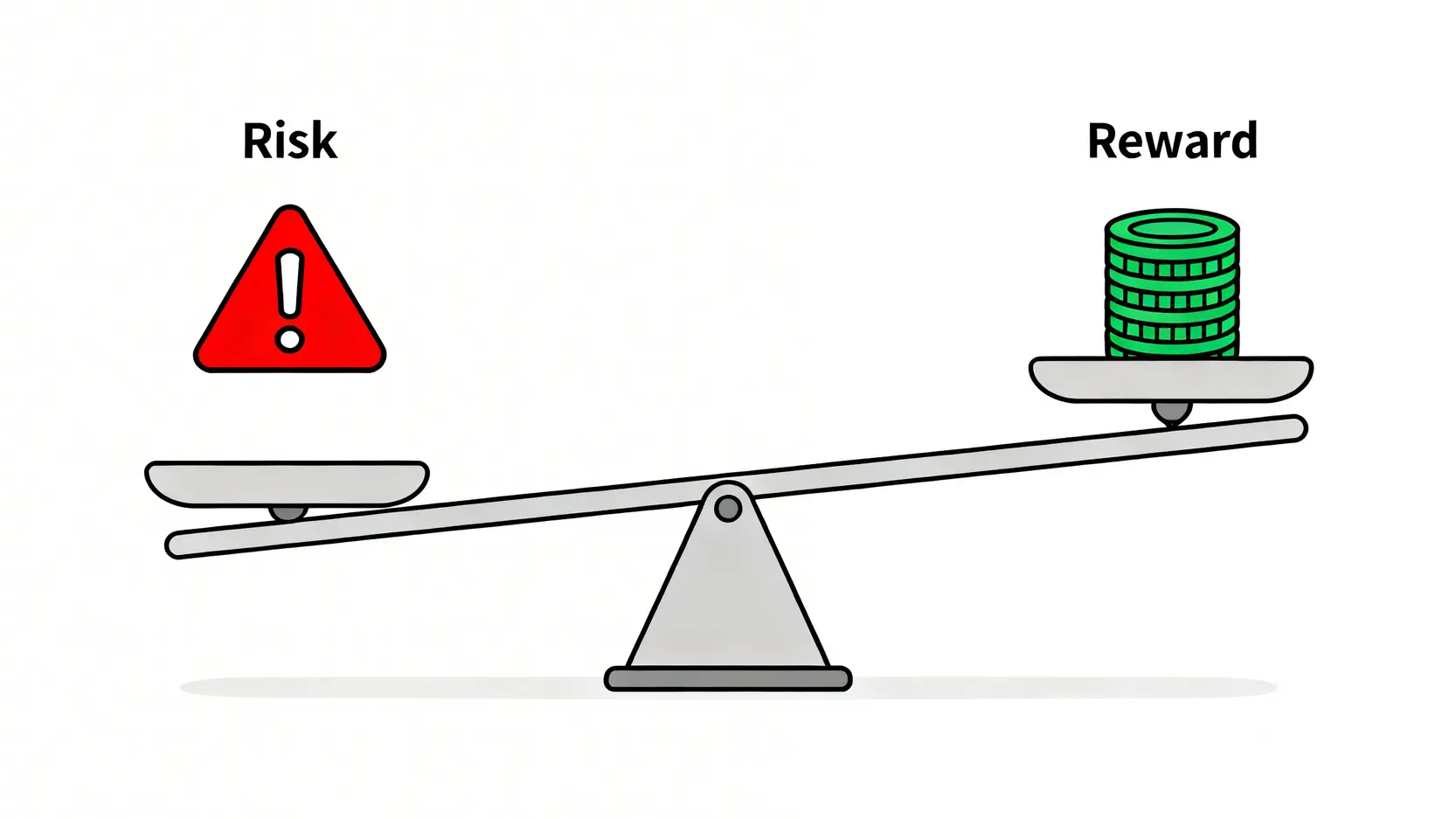
一個蹺蹺板,左邊是代表風險的紅色警示符號,右邊是代表回報的綠色金幣,象徵風險與回報的平衡關係。

The Art of Balancing Risk and Return: Higher potential returns are usually accompanied by higher potential risks.


What Is the Risk-Reward Ratio? Why Do High Returns Often Come with High Risk?

The risk-reward ratio is a metric used to measure potential returns against potential losses. Simply put, it tells you how much risk you are willing to take to earn 1 unit of profit. For example, if an investment has an expected return of 30% and a maximum potential loss of 10%, then the risk-reward ratio is 1:3.

The reason high returns often come with high risk is that the market reflects uncertainty through pricing. A startup company with strong prospects but not yet profitable may see its stock price double within a year, or drop to zero; whereas a mature utility company, with low price volatility and stable annual dividends, naturally has lower return potential. Smart investors do not completely avoid risk, but learn to manage it, ensuring that the potential return justifies the risk taken.


Assess Your Personal Risk Tolerance: Are You Aggressive, Balanced, or Conservative?

Before deciding on any return-enhancing strategy, evaluate yourself honestly. Your risk tolerance depends on multiple factors, including age, income stability, investment goals, and psychological resilience. Try answering the following questions:

  • Investment horizon: How long do you plan to use this money? (A. 1-3 years / B. 5-10 years / C. More than 10 years)
  • Reaction to losses: If your portfolio drops by 20% within a month, what would you do? (A. Panic and sell everything / B. Feel worried but continue holding / C. Treat it as a buying opportunity and increase investment)
  • Financial situation: Is your income stable? Do you have sufficient emergency savings? (A. Not very stable / B. Stable / C. Very stable with substantial savings)

If most of your answers are A, you may be conservative; mostly B, you may be balanced; mostly C, you may be aggressive. Understanding your type allows you to choose the most suitable investment tools and strategies. 

5 Practical Strategies to Enhance Returns (2026 Edition)

With the theory covered, it is time to move into practice. The following five strategies have been validated over time and can effectively help you gradually improve investment returns under controllable risk.


Strategy 1: Smart Asset Allocation and Diversification

“Do not put all your eggs in one basket”. This old saying is the core of global asset allocation. Smart asset allocation refers to distributing funds across different types, regions, and industries of assets, such as stocks, bonds, real estate, and cash. The advantage is that when one type of asset performs poorly, the strong performance of others can offset part of the loss, reducing overall portfolio volatility and achieving smoother growth.

A typical balanced investor’s asset allocation may be as follows:

  • 50% global equities (covering different markets such as the US, Europe, and Asia)
  • 30% various bonds (government bonds, investment-grade corporate bonds)
  • 10% real estate investment trusts (REITs)
  • 10% cash or money market funds


Strategy 2: Use Dollar-Cost Averaging to Reduce Volatility

Trying to “buy low and sell high” by timing the market is nearly impossible for most people. Dollar-cost averaging (DCA) is a smarter and more effortless approach. It means consistently investing a fixed amount at regular intervals regardless of market movements. The core advantages of this strategy are:

  • Cost averaging: When prices are high, you buy fewer units; when prices are low, you buy more units. Over time, your average purchase cost is effectively reduced.
  • Emotional control: DCA is a disciplined investment approach that helps you avoid impulsive decisions driven by market fear or greed.

For investors aiming for long-term investment in index funds or large blue-chip stocks, dollar-cost averaging is an excellent tool for wealth accumulation.


Further Reading (Highly Recommended)

[2026 US High-Dividend Stock Recommendations] Top 10 High-Dividend Stock Portfolio


Strategy 3: Build Stable Cash Flow Through High-Dividend Stocks and Bonds

Do you want your portfolio not only to achieve capital appreciation but also to generate regular cash flow like rental income? Then you should focus on high-dividend stocks and bonds. These assets provide stable dividend or interest income, adding a layer of defense to your portfolio. During market volatility, this cash flow offers psychological comfort and can be reinvested to further benefit from the compounding effect. This is also an effective strategy to enhance returns, especially for investors seeking stable income. For more details, refer to the complete guide on US high-dividend stock portfolios

Strategy 4: Regularly Review and Rebalance Your Portfolio

Investing is not a one-time effort. As markets change, your carefully designed asset allocation will gradually drift. For example, if the stock market rises significantly, the proportion of stocks in your portfolio may increase from 50% to 60%. This means your portfolio’s risk exposure is increasing.

“Rebalancing” means selling part of the assets that have performed well and reallocating the funds into underperforming assets, restoring the portfolio to its original target allocation. This process may seem counterintuitive (selling what has risen more and buying what has risen less), but it effectively locks in profits and forces you to buy assets when they are relatively cheaper, forming the core of disciplined risk management.

It is recommended to review and rebalance your portfolio at least once a year.


Strategy 5: Invest for the Long Term and Embrace the Power of Compounding

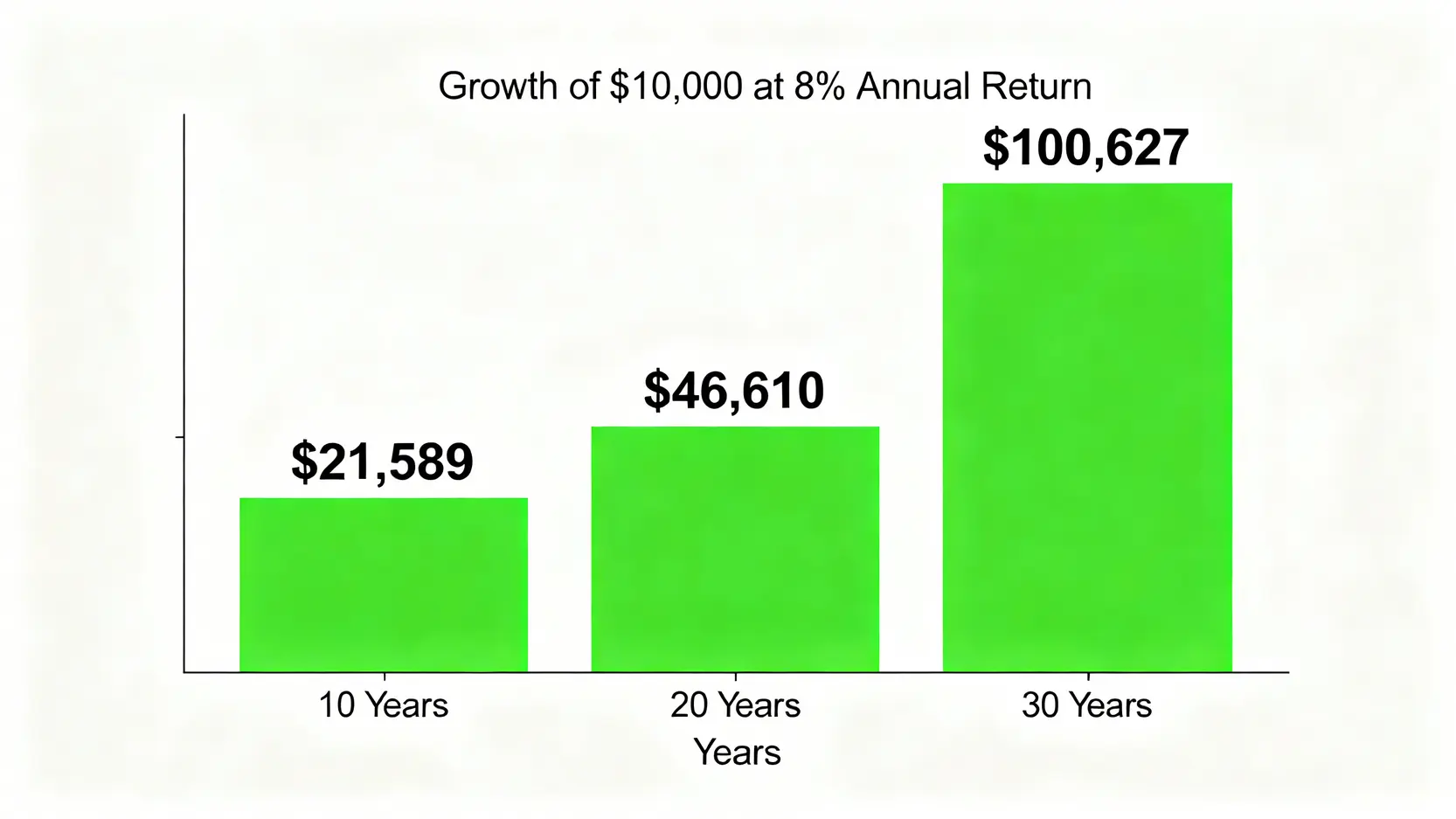
Einstein once referred to compounding as the “eighth wonder of the world”. It means that your investment returns themselves generate returns, commonly known as “earning interest on interest”. Time is the best ally of compounding. In the short term, its effect may not be obvious, but over time, its power grows exponentially.

一張條形圖展示複利效應,顯示一萬元的初始投資在年回報率 8% 的情況下,經過 10 年、20 年和 30 年後的資產增長情況。

The Miracle of Compounding: Time Is Your Best Friend, Allowing Your Wealth to Grow Exponentially.

Suppose you invest $10,000 with an annual return rate of 8%:

  • After 10 years, your assets will grow to approximately $21,589.
  • After 20 years, they will grow to approximately $46,610.
  • After 30 years, they will grow to an astonishing $100,627.

This is the appeal of long-term investing. Do not trade frequently due to short-term market fluctuations. Give your assets sufficient time to grow and let compounding work for you.


FAQ: Common Questions About Improving Investment Returns

Q: What level of investment return is considered ideal?

A: There is no standard answer. It entirely depends on individual investment goals, risk tolerance, and the overall market environment. Generally, for a diversified portfolio, achieving an annual return of 8% to 12% over the long term is already considered very good performance. Conservative investors may target 5-7%, while more aggressive investors who are willing to take higher risks may aim for returns above 15%.

Q: Does high risk always equal high return?

A: This is a common misconception. The correct understanding is that high risk provides the possibility of “high potential returns”, but it also comes with the risk of “high potential losses”. The two are not equivalent. Many high-risk speculative activities often end in losses. Successful investing involves capturing reasonable returns within calculable and acceptable risk levels, rather than blindly pursuing high risk.

Q: How should beginners start building a portfolio that balances risk?

A: For beginners, the simplest and most effective approach is to start with low-cost global index funds (ETFs). For example, one may consider allocating 70% of funds to ETFs tracking the global stock market (such as the MSCI World Index), and 30% to ETFs tracking the global aggregate bond index. This simple stock-bond portfolio already provides good diversification, relatively controllable risk, and the ability to capture long-term market growth. As experience increases, additional asset classes can be gradually incorporated.

Q: How often should I review my investment portfolio?

A: It is recommended to conduct a comprehensive portfolio review at least once a year. In addition, when there are major changes in your personal financial situation or life (such as marriage, having children, changing jobs, or receiving an inheritance), you should also reassess whether your investment strategy still aligns with your current needs and goals. Reviewing too frequently (such as daily or weekly) may lead to overreacting to short-term market fluctuations and making irrational decisions.


Conclusion

To successfully improve investment returns, the key is not blindly chasing market trends or seeking quick riches, but building a disciplined investment system that suits you. The five return-enhancing strategies introduced in this article, from smart asset allocation and the use of dollar-cost averaging to embracing the power of compounding through long-term investing, are all designed to help you establish a solid foundation and truly achieve a balance between risk and return. Investing is a long journey, not a sprint. Start reviewing your portfolio now, apply these strategies, and take the first step toward optimizing returns and achieving steady wealth growth.

If you liked this article, please share it!

Related Articles

  • How Hedging Works: Hedge Fund Strategies & Trading Guide
    How Does Hedging Work? Advanced Hedge Fund Strategies and Practical Trading Guide In the rapidly changing financial markets, relying solely on a “buy-and-hold” strategy often makes it difficult to withstand severe market volatility and achieve stable long-term profits. If you have heard Wall Street leaders discuss risk hedging, you are...
    2026 年 7 月 14 日
  • What Is Hedging? A Beginner’s Risk Management Guide
    What Is Hedging? A Risk Management Guide Every Financial Beginner Should Read In the investment market, we often hear the term “hedging”, but what exactly does it mean? Why do professional investors use it? Hedging means adopting strategies to protect assets from adverse price movements. Whether in the stock, foreign...
    2026 年 7 月 14 日
  • 2026 US Treasury Yield Guide: Trends & Strategies
    2026 Complete Guide to US Treasury Yields: Trend Analysis, Impact of Surging Yields, and Asset Allocation Strategies In the rapidly changing global financial market, US Treasury yields have long been regarded as the most important benchmark for the risk-free rate. Entering 2026, amid recurring shifts in inflation expectations and dynamic...
    2026 年 7 月 13 日
返回顶部