HK Dividend Stocks 2026: Top 10 Blue Chips Ranked

[2026 Hong Kong Stocks Dividend Income Strategy] Top 10 High-Return Blue-Chip Stocks Ranked, with a Tutorial on How to Check High-Dividend Stock Returns!
In an era of low interest rates, growing wealth through savings has become increasingly difficult, leading more investors to turn their attention to the Hong Kong stock market in search of stable passive income. However, with so many choices available, are you also confused about where to find a “ranking of returns of individual Hong Kong stocks”? What is the actual “average return of blue-chip stocks”? And how can you conduct a “high-dividend stock return rate query” most accurately? This article provides you with a comprehensive guide, from market trend analysis to practical tutorials, helping you identify the most promising stable high-dividend blue-chip stocks and avoid investment pitfalls to achieve steady wealth growth.
Why Invest in High-Dividend Hong Kong Stocks? An Analysis of the Average Return and Potential of Blue-Chip Stocks
Investing in high-dividend stocks, especially blue-chip stocks, means choosing companies with strong financial conditions, long operating histories, and the ability to distribute dividends consistently. This is not only about earning dividends, but also about sharing in the growth of the company, forming the foundation for building long-term passive income.
2026 Market Trends: Why High-Dividend Stocks and Blue-Chip Stocks Have Become the Top Safe-Haven Choice?
Amid uncertain global economic prospects and increased market volatility in 2026, risk-averse sentiment among capital is rising. High-dividend blue-chip stocks, with their mature businesses, stable cash flows, and transparent dividend policies, have become a “safe haven” for funds. They typically have the following characteristics:
- Strong defensiveness: Their businesses are mostly in essential sectors such as utilities, telecommunications, and finance, making them less affected by economic cycles.
- Stable cash flow: They can consistently generate healthy cash flow, providing support for stable dividend payouts.
- Lower volatility: Compared to technology or growth stocks, blue-chip stocks generally experience smaller price fluctuations, making them suitable for conservative investors.
Against the backdrop of potential shifts in monetary policy, locking in current high dividend yields is equivalent to building a protective buffer for future investment portfolios.
Revealing the Average Return of Blue-Chip Stocks: Long-Term Investment Value and Historical Data Analysis
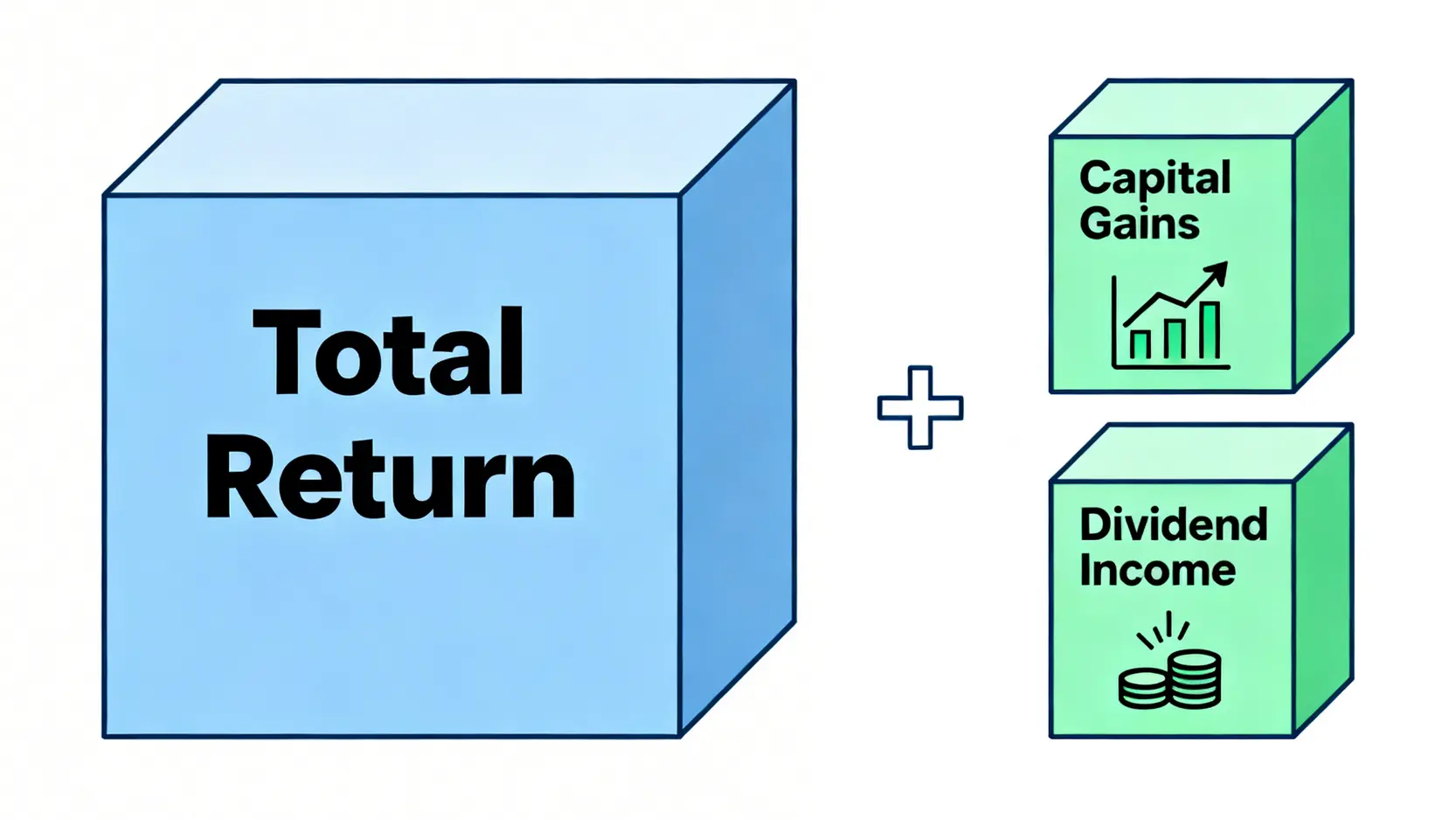
The so-called “blue-chip stocks” generally refer to leading companies in the Hong Kong stock market with large market capitalization, strong credibility, and broad market recognition, most of which are constituents of the Hang Seng Index. To evaluate the average return of blue-chip stocks, one should not focus solely on one or two years of data, but rather on long-term “Total Return”, which includes both capital appreciation and dividend income.

Historical data shows that long-term holding and reinvesting dividends into a blue-chip stock portfolio can generate considerable returns. According to historical data of the Hang Seng Index total return, despite multiple bull and bear market cycles, the long-term trend of total return remains upward. This demonstrates the ability of quality blue-chip stocks to withstand economic cycles, offering investors not only stable cash flow but also the potential for capital appreciation.
Further Reading (Highly Recommended)
How to Reduce Investment Risk? 5 Major Risk Management Strategies and Diversification Techniques
2026 Ranking of Returns of Individual Hong Kong Stocks: Top 10 Selected High-Dividend Blue-Chip Stocks
For investors’ reference, we have selected 10 high-dividend blue-chip stocks worth attention in 2026 based on strict criteria. This ranking of returns of individual Hong Kong stocks is not investment advice, but a compilation and analysis based on publicly available data, intended to serve as a starting point for your research.
Selection Criteria: How We Identify High-Return and Stable Stocks?
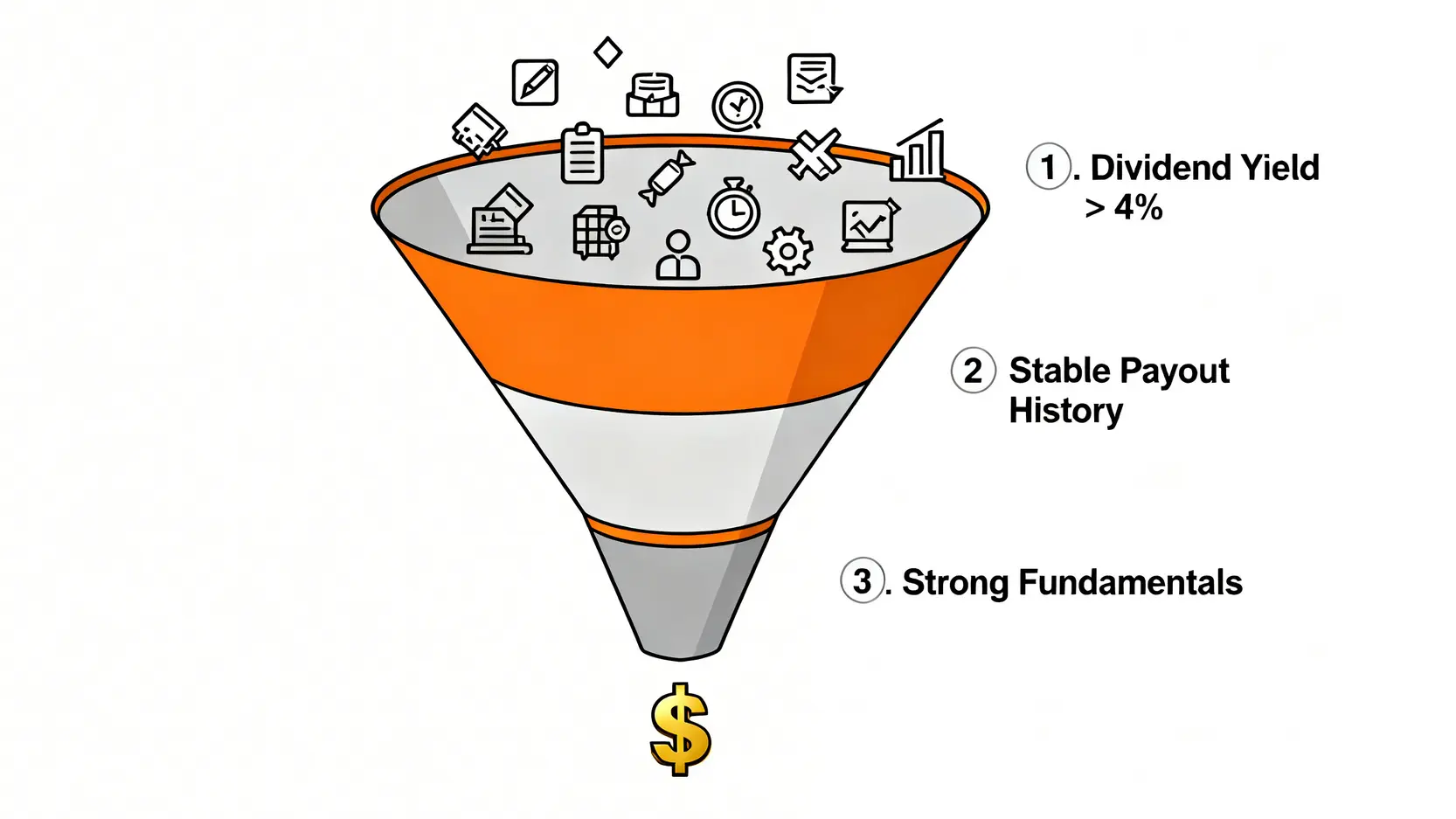
To form a reliable list of high-dividend stocks, looking at dividend yield alone is far from sufficient. Our selection criteria integrate the following three core elements:
- Dividend Yield: At least above 4%, providing attractive cash returns.
- Payout History & Policy: Priority is given to companies with a consistent dividend payment record over many years, or even a track record of continuous growth. This reflects management’s willingness to reward shareholders and the company’s solid financial condition.
- Company Prospect & Fundamentals: Evaluation of the company’s industry position, profitability, debt level, and future growth potential. Avoid potential traps where dividend yields appear “artificially high” due to a sharp decline in stock price.

[Comparison Table] Overview of Top 10 High-Dividend Blue-Chip Stocks Returns, Prices, and Analysis
The following list is compiled based on the above criteria. All data is as of the time of writing and is for reference only. Actual stock prices and dividend yields may fluctuate with market conditions, so please refer to the latest information before investing.
| Stock Name (Ticker) | Industry | Estimated Dividend Yield |
Brief Analysis |
| China Mobile (0941.HK) | Telecommunications | ~7.2% | Stable business, strong cash flow, continuously increasing payout ratio, less affected by economic cycles. |
| HSBC Holdings (0005.HK) | Financials | ~6.8% | Global banking giant, benefiting from a rising interest rate environment, improving profitability, and resuming stable dividend payments. |
| CNOOC (0883.HK) | Energy | ~8.5% |
Benefiting from high oil prices, with significantly increased profits and generous dividends, but oil price volatility risk should be noted. |
| The Hong Kong and China Gas Company (0003.HK) | Utilities | ~5.5% | Local Hong Kong utility stock with highly stable operations, although growth has slowed in recent years, with a long dividend payment history. |
| Power Assets Holdings (0006.HK) | Utilities | ~6.0% | Operations span globally, with diversified income sources, a very stable dividend record, and excellent defensiveness. |
| China Construction Bank (0939.HK) | Financials | ~9.0% | One of the four major state-owned banks, with a very high dividend yield, but attention should be paid to mainland economic and real estate risks. |
| China Telecom (0728.HK) | Telecommunications | ~7.0% | Similar to China Mobile, with strong defensiveness in its business, continuously investing in new businesses such as cloud computing to seek growth. |
| Hong Kong Exchanges and Clearing (0388.HK) | Financial Services | ~3.5% | Relatively lower dividend yield, but as a market monopoly business, it is linked to overall market trading volume and has growth potential. |
| Sun Hung Kai Properties (0016.HK) | Real Estate | ~6.5% | A leading Hong Kong property developer with a large portfolio of high-quality rental properties, strong financial position, and stable dividend payments. |
| CITIC Limited (0267.HK) | Conglomerate | ~7.8% | Diversified business covering finance, resources, manufacturing, etc., helping to diversify risk, with attractive valuation. |
High-Dividend Stock Return Rate Query Practical Tutorial: 3 Steps to Find Your Ideal Stocks
Mastering how to conduct your own high-dividend stock return rate query is key to building a personalized investment portfolio. Follow the three simple steps below, and you can also become skilled at stock selection.
Step 1: Use Reliable Financial Websites and Apps
To obtain accurate stock data, you must use reliable information sources. There are many free and powerful tools available on the market, such as:
- AAStocks: A long-established Hong Kong financial website providing detailed individual stock quotes, financial data, and news information.
- Yahoo Finance: An internationally renowned financial platform with comprehensive data and powerful charting functions.
- Major Brokerage Apps: The app of the brokerage where you open your trading account usually includes detailed individual stock information query functions.
On these platforms, you only need to enter the stock ticker to easily find key data such as dividend yield and price-to-earnings ratio.
Step 2: Interpret Key Indicators (Dividend Yield, P/E Ratio, Payout Ratio)
After finding the data, understanding its underlying meaning is even more important. For dividend stocks, the following three indicators are essential:
- Dividend Yield: (Dividend per Share / Stock Price) x 100%. This is the most intuitive return indicator, but it should not be used alone.
- P/E Ratio: Stock Price / Earnings per Share. It reflects the market’s expectations of a company’s earnings. A very low P/E ratio may indicate that the market is not optimistic about its prospects, or that it is undervalued.
- Payout Ratio: (Dividend per Share / Earnings per Share) x 100%. It shows how much of the company’s earnings is distributed as dividends. A ratio that is too high (such as above 80-90%) may indicate that the dividend policy is unsustainable and there is a risk of future dividend cuts.
For beginners, starting with understanding these basic indicators is an important first step in learning about stocks.
Step 3: How to Avoid the High-Dividend Trap of “Earning Dividends but Losing Money”?
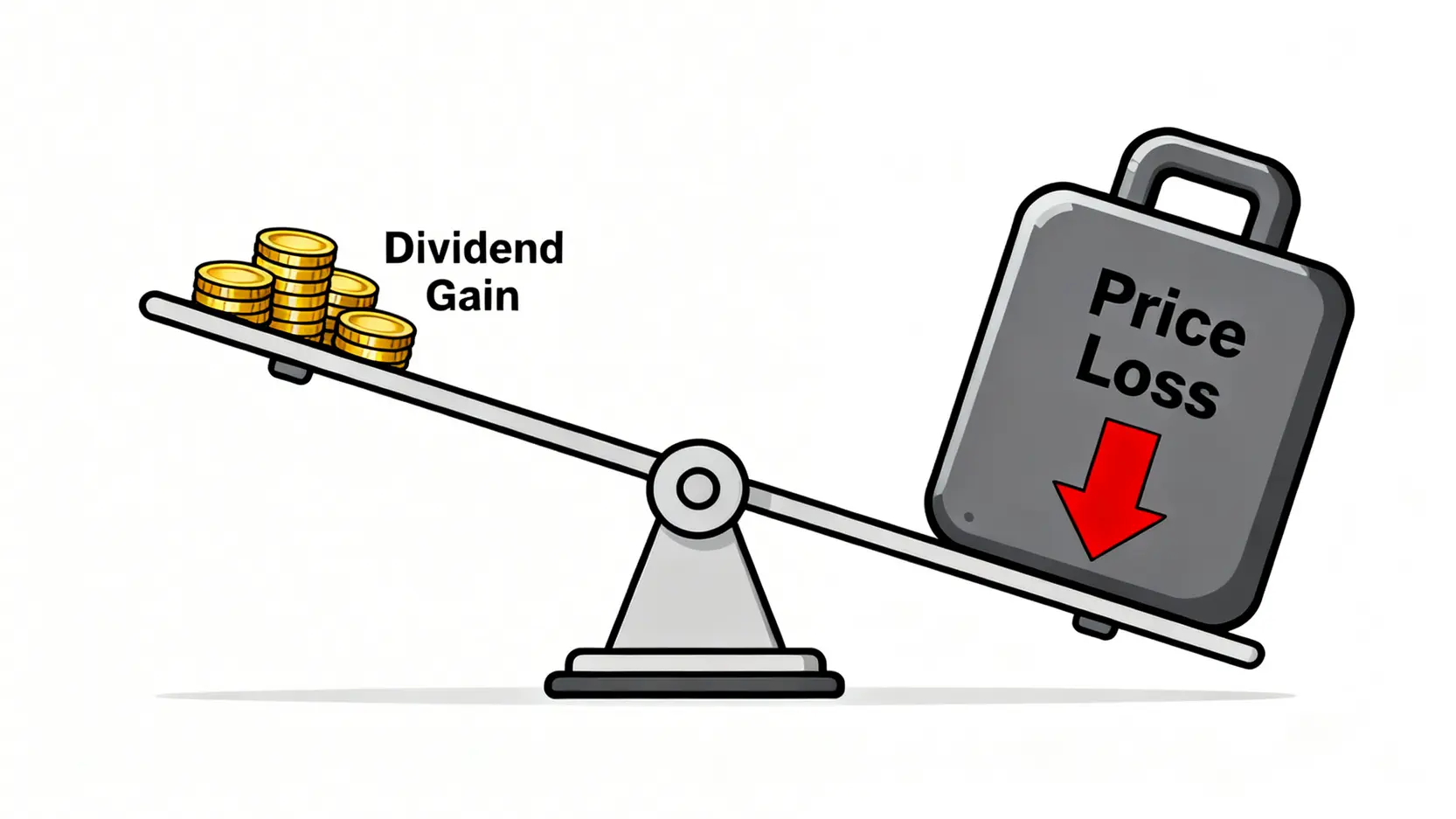
“Earning dividends but losing money” is the biggest nightmare for dividend stock investors, where the dividends received are insufficient to offset losses from falling stock prices. To avoid this trap, you must be alert to the following situations:

- Abnormally high dividend yield: If a blue-chip stock’s dividend yield is far higher than the industry average (for example above 10%), it is usually due to a sharp drop in stock price within a short period. This may indicate serious fundamental problems in the company.
- Declining earnings but maintaining high dividends: If a company’s profitability declines while it continues to maintain a high payout ratio, this is unsustainable. Reviewing its earnings trend over the past few years is crucial.
- Deteriorating industry outlook: Even if a company has a long history, if its industry is being phased out (such as traditional media), its long-term dividend-paying ability will be questioned.
Successful dividend investing lies in selecting companies that can “consistently generate profits”, rather than those that are “currently paying high dividends”. This requires a comprehensive assessment of macroeconomic conditions, industry trends, and the company itself, along with proper investment risk management.
Further Reading (Highly Recommended)
Frequently Asked Questions (FAQ)
Q: Is a higher dividend yield always better?
A: Absolutely not. An excessively high dividend yield is often the result of a sharp decline in stock price and may indicate potential financial or operational risks within the company. A sound investment approach is to choose companies with a reasonable dividend yield (for example 4%-8%) supported by stable earnings. Sustainability is more important than simply a high dividend yield.
Q: Do dividends from investing in Hong Kong stocks need to be taxed?
A: No. According to Hong Kong tax regulations, whether for local residents or overseas investors, dividend income and capital gains (i.e. gains from stock price appreciation) from buying and selling stocks in Hong Kong are not subject to any tax. This is one of the major advantages of Hong Kong as an international financial center.
Q: Besides individual stocks, are there other ways to invest in high-dividend stocks (for example ETFs)?
A: Yes. For investors who do not want to spend time researching individual stocks or who wish to further diversify risk, investing in high-dividend stock ETFs (exchange-traded funds) can be considered. These ETFs track the performance of a basket of high-dividend stocks, such as the well-known Tracker Fund of Hong Kong (2800.HK) or the Hang Seng High Dividend Yield Index ETF (3110.HK) in the Hong Kong market. The advantage is that a single purchase allows diversification across dozens of stocks, effectively reducing individual stock risk. For more details, refer to high-dividend stock ETF recommendation articles.
Q: What are the “ex-dividend date” and the “dividend payment date”?
A: The “ex-dividend date” refers to the date on or after which investors who buy the stock will not be entitled to receive the declared dividend. You must buy and hold the stock before the ex-dividend date. The “dividend payment date” is the date when the company actually distributes the dividend to shareholders’ accounts. Understanding these two dates is very important for cash flow planning.
Conclusion
In summary, making good use of the ranking of returns of individual Hong Kong stocks as a starting point for research, gaining a deep understanding of the long-term value of the average return of blue-chip stocks, and mastering the practical skills of high-dividend stock return rate queries are key to formulating a successful Hong Kong stock dividend income strategy in 2026. Remember, sound investing begins with thorough research and risk management, and no list can replace independent thinking. Start your research now, build your own high-dividend stock investment portfolio, and move steadily toward your financial goals.
Related Articles
-
Binance Margin Trading Guide: Differences Between Cross and Isolated Margin Modes and Illustrated Borrowing Instructions Short on funds but expect a particular cryptocurrency to surge? Besides the commonly used futures trading, you can also use “Binance Margin” to borrow funds and purchase spot assets, amplifying your investment returns. This Binance...2026 年 7 月 14 日
-
2026 Euro Exchange Rate Forecast: Is Now the Best Time to Buy Euros? Planning a trip to Europe or considering foreign currency investments? As the world’s second-largest reserve currency, fluctuations in the euro directly affect your currency exchange costs and investment returns. As we enter 2026 and face changes in...2026 年 7 月 14 日
-
【2026 In-Depth Analysis】Trump’s Major Shift in Middle East Policy: How Will It Trigger a New Round of Correlated Oil and Gold Price Movements? In 2026, global markets are once again focusing on the Middle East. As the Trump administration makes a significant shift in foreign policy, from maximum pressure on...2026 年 7 月 14 日