Gold Leverage Trading: Liquidation Risks Explained

Updated: 2026/06/22  |  CashbackIsland

gold-leverage-trading-risks

Gold Leverage Trading Risks Explained: Uncovering the 5 Major Causes of Liquidation and Essential Risk Management Techniques

Gold leverage trading attracts countless investors seeking rapid profits because of its appealing ability to “use a small amount of capital to control a much larger position”. However, this shortcut to wealth is filled with traps and dangers. Many investors focus solely on the profit amplification provided by leverage while overlooking the fact that gold leverage trading risks are magnified exponentially as well. A single mistake can result in forced liquidation and the loss of your entire investment. This article examines the true nature of leverage as a “double-edged” sword from the perspective of an experienced trader, reveals five of the most dangerous risks, and provides a practical risk management framework to help you protect yourself before entering this high-risk market. After all, in the gold market, survival is far more important than making a fortune. 


Risk 1: The Double-Edged Sword of Leverage – Profits and Losses Are Magnified Equally

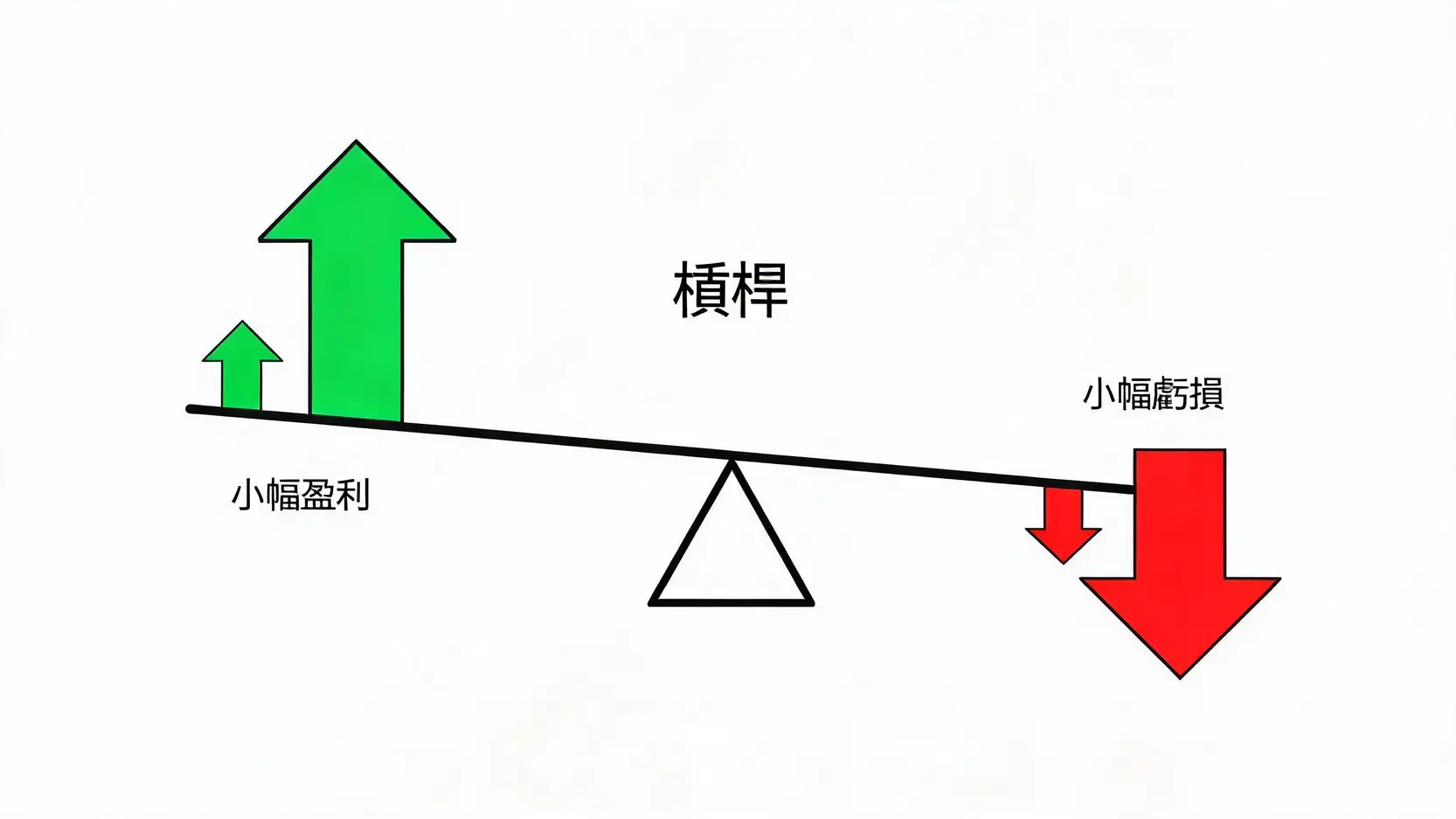
The greatest appeal of leverage trading lies in its ability to amplify capital. However, this is also its greatest danger. Leverage does not increase your probability of success. It simply magnifies your profits when you are right and magnifies your losses by the same multiple when you are wrong.

一張蹺蹺板圖解,說明黃金槓桿交易如何將小幅的盈利和虧損同等倍數地放大,形象地展示了其雙面刃特性。

Leverage Is a Double-Edged Sword That Amplifies Both Profits and Losses by the Same Multiple.


What Does 100x Leverage Mean?

A leverage ratio of 100:1 means you only need to provide 1% of the total contract value as “margin” in order to control the entire position. For example:

  • A standard gold contract (assuming 100 ounces), with gold priced at US$2,300 per ounce, has a total value of 2,300 × 100 = US$230,000.
  • Without leverage, you would need US$230,000 to trade this contract.
  • With 100x leverage, you only need 230,000 ÷ 100 = US$2,300 in margin to enter the trade.

This mechanism dramatically lowers the capital required to participate, but it also introduces significant risk. Many international regulators, such as the US Securities and Exchange Commission (SEC), continue to warn investors about the risks associated with highly leveraged financial products.


Case Study: How Leverage Magnifies Losses During the Same Market Move

Let’s use a simple example to illustrate how leverage affects trading outcomes. Assume you have US$10,000 in capital, purchase gold, and the gold price subsequently declines by 1%.

Item Non-Leveraged Trading 100x Leverage Trading
Capital Invested $10,000 $10,000
Controllable Contract Value $10,000 $1,000,000 (10,000 * 100)
Gold Price Declines by 1% US$100 Loss on US$10,000 Worth of Gold US$10,000 Loss on US$1,000,000 Worth of Gold
Account Balance $9,900 $0
Loss as a Percentage of Initial Capital 1% 100% (Complete Loss of Capital)

From the table above, it is clear that the same 1% market movement is merely a minor loss for an investor trading without leverage. However, for a trader using 100x leverage, it is enough to wipe out the entire account instantly. This is the most realistic and brutal aspect of leverage trading.


Further Reading (Highly Recommended)

The Ultimate Guide to Futures Money Management: 5 Position Sizing Techniques Used by Professional Traders

Futures Stop-Loss Techniques: 5 Trading Risk Management and Capital Protection Strategies That Let You Sleep at Night


Risk 2: Forced Liquidation (Margin Call) – The Ultimate Nightmare of Losing Everything

If leverage is the accelerator, then forced liquidation (commonly known as a “margin call”), is the catastrophic end result. It is the greatest nightmare for all leveraged traders and the most direct manifestation of gold leverage trading risks.

一張流程圖,展示了交易帳戶從安全狀態到收到追加保證金警告,最終因保證金維持率過低而被強制平倉的過程。

Your Margin Maintenance Ratio Is Your Account’s Lifeline. Falling Below the Threshold Triggers Forced Liquidation.


What Is the Margin Maintenance Ratio?

The margin maintenance ratio is a critical indicator used to monitor account risk. It is calculated as follows:

Margin Maintenance Ratio = (Account Equity / Used Margin) × 100%

  • Account Equity: The total value of your account, including unrealized profits and losses.
  • Used Margin: The amount of capital set aside to maintain your current positions.

Every broker sets a “forced liquidation level”, typically 50% or lower. When losses cause your margin maintenance ratio to fall to that level, the trading system automatically and mercilessly begins closing your largest losing positions until the ratio returns to a safe level. This process does not require your approval and gives you no time to react.


Case Study: How Much Market Movement Can Trigger a Margin Call on a US$1,000 Account?

Scenario: Your account balance is US$1,000. With gold trading at US$2,300 per ounce, you use 100x leverage to buy 0.1 lots of gold (10 ounces).

  • Contract Value: US$2,300 × 10 = US$23,000
  • Used Margin: US$23,000 ÷ 100 = US$230
  • Account Equity: US$1,000
  • Initial Maintenance Ratio: (US$1,000 ÷ US$230) × 100% ≈ 434%

Assume your broker’s forced liquidation level is 50%. This means the system will begin liquidating positions once your maintenance ratio reaches 50%.

Maintenance Ratio of 50% = (Account Equity ÷ US$230) × 100%

From this calculation, forced liquidation will occur when account equity falls to just US$115 (US$230 × 50%).

This means your account would decline from US$1,000 to US$115, resulting in a total loss of: US$1,000 – US$115 = US$885.

You are trading 0.1 lots (10 ounces), meaning every US$1 movement in gold generates a profit or loss of US$10. Therefore, when gold falls by US$88.5 (US$885 ÷ 10), from US$2,300 to US$2,211.5, your account will be forcibly liquidated. While an US$88.5 decline may appear significant, such a move is not uncommon in the gold market within a single trading day. This highlights the true danger of forced liquidation risk.

Risk 3: Market Gaps and Slippage Risk – Orders Filled at Unexpected Prices

In addition to leverage and margin requirements, the unpredictable nature of financial markets creates additional risks. Among them, gaps and slippage are issues that every trader, especially those relying on stop-loss orders, must confront.


Why Do Market Orders Get Filled at Different Prices During Major Data Releases?

This is known as “slippage”. When markets become highly volatile, such as immediately after the release of US Non-Farm Payrolls (NFP) data, the bid-ask spread can widen dramatically and market liquidity can deteriorate. If you place a market order during such conditions, the system will execute your trade at the best available price at that moment, which may be significantly different from the quoted price you saw. Similarly, your stop-loss order may be triggered at a much worse price than intended, resulting in losses greater than expected.


The Threat of Weekend Price Gaps to Open Positions

The gold market is closed over the weekend. However, major geopolitical events or economic developments can occur while markets are shut. When trading resumes on Monday, the price may “gap” directly to an entirely new level, creating a significant gap relative to Friday’s closing price.

一張圖表演示黃金交易中的週末跳空風險,顯示週一開盤價遠低於週五設定的停損價,導致實際虧損遠大於預期。

Weekend Gaps Can Cause Your Stop-Loss Order to Be Executed at a Much Worse Price Than Expected.

This can be devastating for traders holding overnight positions (particularly those holding positions through the weekend). Suppose you went long gold at US$2,300 before Friday’s close and placed a stop-loss at US$2,290. If major negative news emerges over the weekend and gold opens at US$2,250 on Monday, your stop-loss order will not be executed at US$2,290. Instead, it will be filled near the first available market price, around US$2,250. As a result, you would incur a US$50 loss rather than the planned US$10 loss. This is a crucial aspect of gold trading risk management that must not be overlooked. 

How Can Beginners Manage Gold Leverage Trading Risks?

Understanding risk is only the first step. The next step is learning how to control it. Trading success is determined 90% by risk management. Below are three core recommendations for beginners, and they will largely determine how long you survive in the market.


Strategy 1: Use Lower Leverage and Never Trade With Your Entire Account

Just because a broker offers 500x or even 1,000x leverage does not mean you should use it. High leverage is designed for professional short-term traders and institutions engaged in precise hedging. For beginners, it is often a recipe for disaster.

  • Recommended Leverage: Beginners should keep effective leverage below 20x. In other words, if you have US$1,000, the total value of your positions should not exceed US$20,000.
  • Avoid Going All-In: “All in” is gambling, not investing. Always maintain sufficient excess margin to absorb normal market fluctuations. Ideally, margin utilization should remain below 30%.


Strategy 2: Set Clear Stop-Loss Orders

“The market determines how much you make, but you determine how much you lose.” This phrase perfectly captures the essence of risk management. A stop-loss order is the only form of insurance available to traders. Before entering any trade, you must know exactly “where you are willing to admit you are wrong and exit the position”.

  • Discipline Matters: Once a stop-loss is set, do not move it arbitrarily (unless you are moving it in a direction that protects profits). Losses are part of trading. Accept them and move on to the next opportunity.
  • Risk-Reward Ratio: Professional traders only consider opportunities where the potential reward is at least two to three times the potential risk. If your stop-loss is US$10, your target profit should be at least US$20 to US$30.


Strategy 3: Proper Position Sizing and Capital Management

This is the highest level of risk management and the true dividing line between professionals and amateurs. The core principle is simple: no single loss should ever be large enough to seriously damage your overall capital. You may refer to this in-depth guide on money management and position sizing strategies.

  • The 2% Rule: This is one of the most widely accepted principles in the trading industry. The risk on any single trade (measured as the potential loss between your entry price and stop-loss level) should not exceed 2% of your total trading capital.
  • Example: If your account balance is US$5,000, the maximum loss on any single trade should be limited to: US$5,000 × 2% = US$100 Based on this risk amount and your stop-loss distance, you can calculate the appropriate position size for the trade. Following this principle significantly reduces the likelihood of facing forced liquidation.


FAQ

Q: Is higher leverage always better?

A: Absolutely not. For beginners, high leverage is a tool that amplifies risk, not a magic formula for increasing profits. Leverage should be viewed as a tool for improving “capital efficiency”, not as gambling chips. Before building a mature trading system and risk control discipline, using low leverage (such as 10x to 20x) is far safer and wiser than chasing high leverage.

Q: What is a Margin Call?

A: A “Margin Call” can be seen as the “final warning” before forced liquidation. When your margin maintenance ratio falls to a preset warning level (such as 100%), the broker will issue a notification requiring you to deposit more funds to increase your margin level or close part of your position yourself. If you do not respond in time, the next step occurs when the maintenance ratio reaches the forced liquidation threshold, at which point the system automatically intervenes.

Q: Can a demo account help me understand risk?

A: Yes, it is extremely helpful. A demo account is the best zero-risk tool for learning how leverage trading works. In a demo account, you can personally experience how small market movements under high leverage can have a major impact on account equity. You can also practice calculating position size, setting stop-loss orders, and even understanding losses caused by price gaps. However, remember that demo trading cannot replicate the fear and greed involved in real trading. This is also a psychological hurdle that beginners must overcome.

Q: What is the biggest mistake beginners make in gold leverage trading?

A: The biggest mistake is usually a combination of “losing control over risk management”: oversized positions, no stop-loss, and holding losing trades. Many beginners tend to believe that the market will reverse when they are losing. Not only do they refuse to stop-loss, but they may even add to losing positions to average down. In the end, a sharp one-way market move can trigger forced liquidation, wiping out the capital they worked hard to build. 

Conclusion

Gold leverage trading itself is a neutral financial tool. It provides an efficient way to use capital, but it also comes with extremely high risk. It is not a scam or a trap. The real trap comes from traders’ ignorance of risk and uncontrolled greed. Before committing real money, make sure you thoroughly understand the double-edged nature of leverage, margin requirements, and how forced liquidation works. Always place risk management before profits, learn how to use small positions, set strict stop-loss orders, and follow capital management discipline. Only then can you survive in this high-risk game over the long term and eventually find a path toward stable profitability.

If you liked this article, please share it!

Related Articles

  • Japan Investment Risks: 5 Hidden Risks Beyond the Yen
    Essential Reading on Japan Investment Risks: Five Potential Risks You May Not Know Besides Yen Depreciation Driven by the historic depreciation of the yen, global capital is flowing into Japan with unprecedented enthusiasm. Both the stock market and the real estate market are showing a thriving picture. The market is...
    2026 年 6 月 23 日
  • Gold Price Outlook 2026: Will the Bull Market Continue?
    Will the Gold Price Bull Market Continue? 2026 XAUUSD Trend Analysis, Experts Reveal Three Key Drivers Recently, gold prices have repeatedly hit new highs, and the market is actively debating whether gold has entered a new historic gold price bull market. Many investors are both excited and concerned, wondering how...
    2026 年 6 月 23 日
  • XAUUSD Trading Guide: Trends & Beginner Strategies
    Ultimate Guide to Trading XAUUSD Trends: From Candlestick Teaching to Practical Strategies for Stable Profits for Beginners XAUUSD (spot gold against the US dollar), as one of the world’s most popular trading instruments, offers abundant profit opportunities through its sharp price fluctuations, but also comes with considerable risk. Many beginners...
    2026 年 6 月 23 日
返回顶部