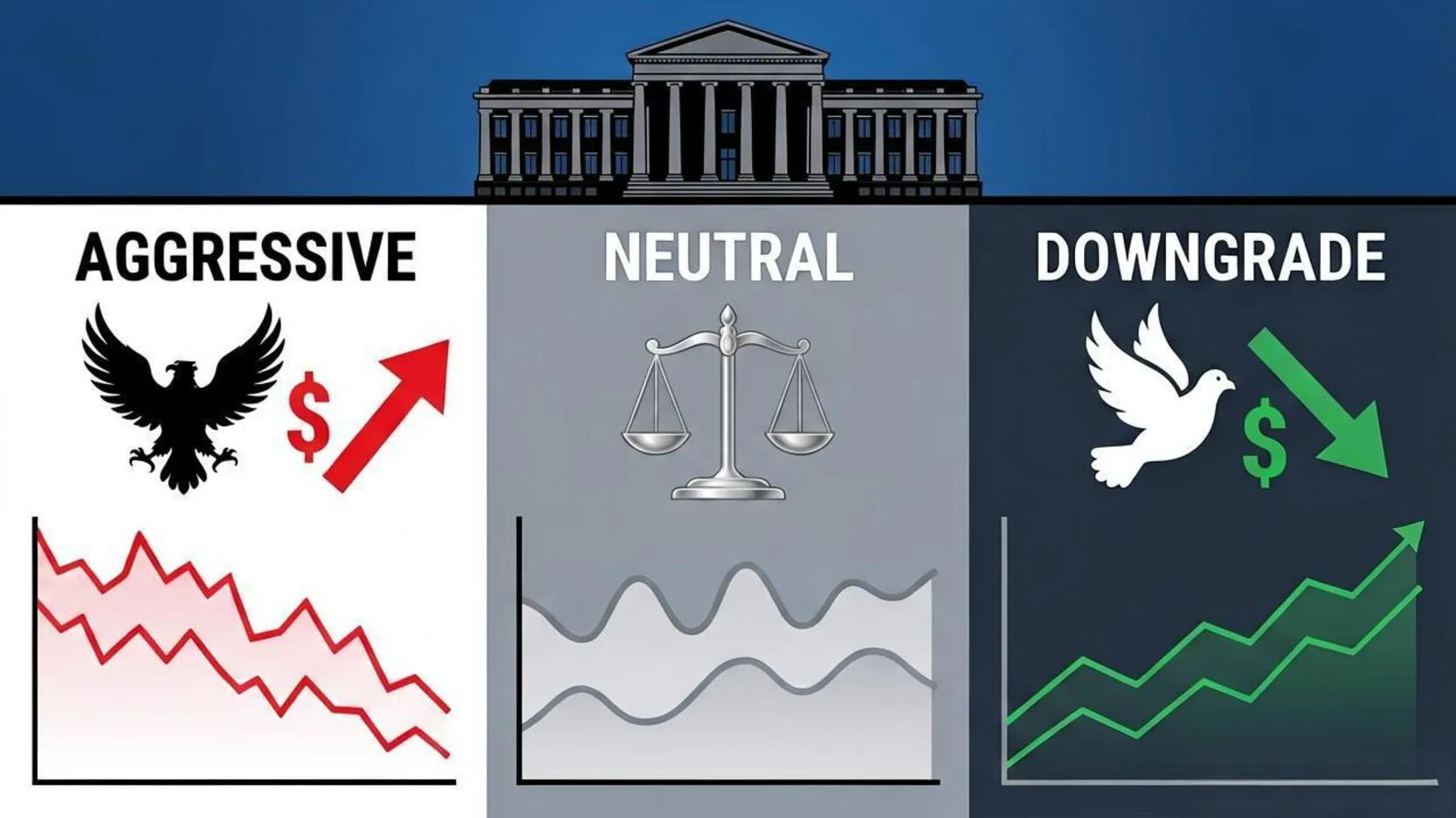
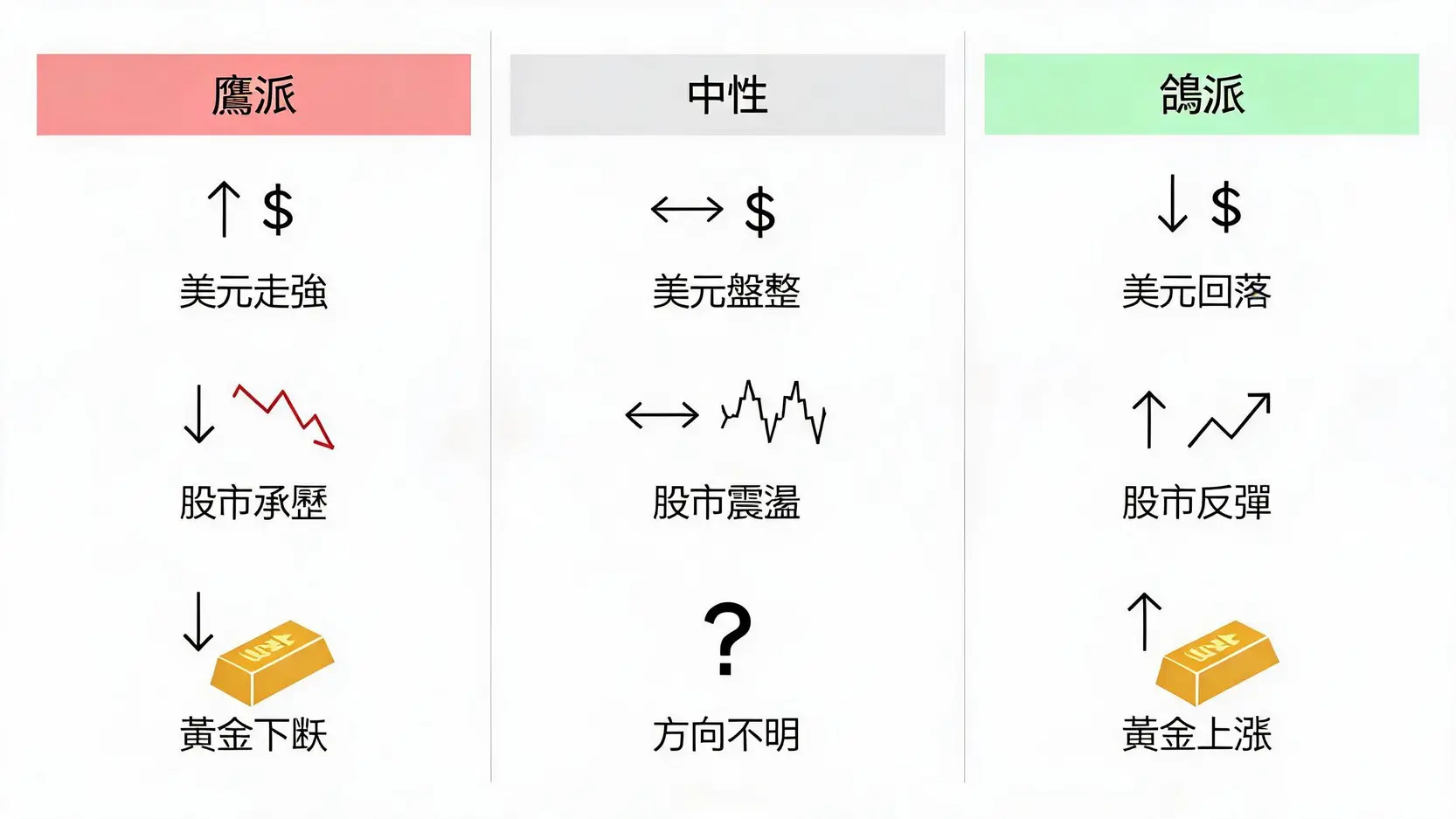
Illustration: Three FOMC Decision Scenarios and Potential Market Reactions
Scenario 1: A More Hawkish Fed (Keeping Interest Rates Higher and Signaling Delayed Rate Cuts)
When the Federal Reserve places greater emphasis on combating persistent inflation, it may adopt a more hawkish stance. This typically occurs when economic data (particularly inflation and employment figures) continue to exceed expectations.
Potential Market Reaction: Stronger US Dollar, Pressure on Equities and Technology Stocks, Lower Gold Prices
How might the market respond if the meeting delivers a hawkish outcome?
- US Dollar Index: A higher interest rate environment makes US dollar-denominated assets more attractive, potentially driving the US Dollar Index even higher and putting pressure on non-US currencies.
- Equity Market: Higher interest rates mean higher borrowing costs for businesses, creating headwinds for corporate earnings, especially for technology and growth companies that depend heavily on financing. US equities may therefore face correction pressure.
- Gold: As a non-yielding asset, gold becomes less attractive when both the US dollar and US Treasury yields strengthen, potentially putting downward pressure on gold prices.
Investment Strategy: Increase Cash and Short-Term Bonds, Consider US Dollar Assets, Avoid Highly Leveraged Growth Stocks
Under a hawkish scenario, defense becomes the best offense. Investors should consider making their portfolios more defensive:
- Increase Cash Holdings: Maintaining adequate cash (or investing in money market funds), not only reduces portfolio volatility but also provides flexibility to take advantage of buying opportunities if the market experiences an excessive correction.
- Allocate to Short-Term Bonds: Short-term US Treasury securities (such as two-year Treasuries) are generally less sensitive to interest rate changes while providing relatively stable income.
- Focus on Value Stocks and Defensive Sectors: Compared with highly valued growth stocks, value stocks with stable earnings (such as consumer staples and utilities) generally demonstrate greater resilience during market pullbacks.
Scenario 2: A Dovish Surprise (Signaling the Timing of Rate Cuts and Concerns About Slowing Growth)
If the Federal Reserve’s statement or Powell’s remarks reveal greater concern about the economic outlook or clearly suggest that rate cuts may arrive sooner than the market expects, investors would interpret this as a dovish signal.
Potential Market Reaction: Weaker US Dollar, Rebound in Equities and Gold
An unexpected dovish shift would likely fuel market optimism:
- US Dollar Index: Rising expectations for rate cuts would reduce the attractiveness of the US dollar, potentially pushing the US Dollar Index lower.
- Equity Market: Expectations of a more accommodative monetary policy would be highly supportive for equities, particularly interest rate-sensitive sectors such as technology, real estate, and small-cap stocks, which could experience a strong rally.
- Gold: Expectations of a weaker US dollar and lower real interest rates would likely provide strong support for gold prices.
Investment Strategy: Position in Interest Rate-Sensitive Stocks (Such as Utilities), Increase Gold Exposure, Consider Non-US Currencies
If a dovish signal emerges, investment strategies should quickly shift toward a more aggressive allocation:
- Increase Exposure to Growth Stocks: Sectors such as technology and consumer discretionary are likely to benefit directly from a more accommodative financial environment.
- Add Gold and Silver: Precious metals are traditional hedges against US dollar weakness and inflation, making them suitable for a larger allocation within a diversified portfolio.
- Explore Opportunities Outside the US: A weaker US dollar generally supports capital inflows into emerging markets, making related ETFs and funds worth considering.
Further Reading (Highly Recommended)
What Are Investment Risks? A Complete Guide to the Five Most Common Types of Investment Risk for Beginners…
How to Build a Futures Trading System? The Five Core Steps From Asset Allocation to Portfolio Strategy
Scenario 3: A Neutral Hold (Maintaining the Status Quo and Emphasizing Data Dependence)
This is currently considered the most likely outcome by the market. The Federal Reserve may leave interest rates unchanged while reiterating in its statement that future policy decisions will remain “data dependent”, without providing clear forward guidance.
Potential Market Reaction: Short-Term Consolidation, With Attention Shifting to the Next Economic Data Release
An “ambiguous” outcome may leave the market without a clear direction in the short term:
- US Dollar and Equities: Both may trade within a range while waiting for the next major economic release (such as CPI or the nonfarm payrolls report) to provide a new catalyst.
- Market Volatility: As uncertainty remains unresolved, short-term market volatility could increase.
Investment Strategy: Maintain Diversification, Focus on Company Fundamentals, and Trade Market Swings
Under a neutral scenario, maintaining a balanced and flexible portfolio is essential:
- Maintain a Diversified Portfolio: A portfolio that includes different asset classes, (such as equities, bonds, and commodities) as well as investments across different regions, can effectively reduce the risk associated with any single event.
- Return to Fundamental Stock Selection: When the macroeconomic outlook lacks clarity, a company’s profitability, cash flow, and competitive position within its industry become even more important.
- Adopt Swing Trading Strategies: Experienced investors may take advantage of range-bound market movements through swing trading, buying at lower levels and selling at higher levels, while maintaining strict stop-loss discipline.
Differentiated Insight: How to Identify the “Hidden Messages” in the FOMC Post-Meeting Statement and Press Conference
The best investment opportunities are often hidden in the details. Learning to interpret the Federal Reserve’s official language can help you stay one step ahead of the market. Every scheduled Federal Reserve meeting deserves close attention from investors.
Changes in the Statement’s Wording: A “Few Words” May Signal a Policy Shift
Pay close attention to changes in the wording of the FOMC statement compared with the previous meeting. For example, if the description of economic activity changes from “solid” to “modest”, it may indicate that the Federal Reserve has become more cautious about the economic outlook. Likewise, changes in the description of inflation, such as moving from “remains elevated” to acknowledging that “further progress has been made”, could signal a potential shift in future policy.
During the Press Conference: Focus on the Chair’s Views on Inflation, Employment, and Economic Growth
Chair Powell’s unscripted responses during the press conference often reveal more than the carefully prepared written statement. Pay particular attention to how he answers questions about:
- Tolerance for Inflation: Does he view the current inflation data as temporary volatility or as evidence of a broader trend?
- Assessment of the Labor Market: Does he believe the strength of the labor market could prevent inflation from moving lower?
- The Threshold for Rate Cuts: What combination of economic data would be necessary before the Federal Reserve considers cutting interest rates?
His tone, hesitation, and willingness, or reluctance, to answer certain questions can all provide valuable clues about his true thinking.
Analyst Insights: How to Use the First Reactions From Major Investment Banks?
After the FOMC decision is announced, major financial institutions (such as Goldman Sachs and JPMorgan) along with financial media outlets (such as Bloomberg and Reuters), quickly publish their analysis. These reports reflect the insights of leading analysts and can help you quickly identify the key takeaways while understanding how the broader market’s expectations are evolving.
Frequently Asked Questions (FAQ)
Q: When Is the FOMC Decision Announced?
A: The FOMC interest rate decision is typically announced at 2:00 p.m. US Eastern Time following the conclusion of the two-day meeting, which is 2:00 a.m. the following day (in Taiwan, Hong Kong, and Malaysia). Thirty minutes later, at 2:30 p.m. US Eastern Time, the Federal Reserve Chair holds a press conference to further explain the policy stance.
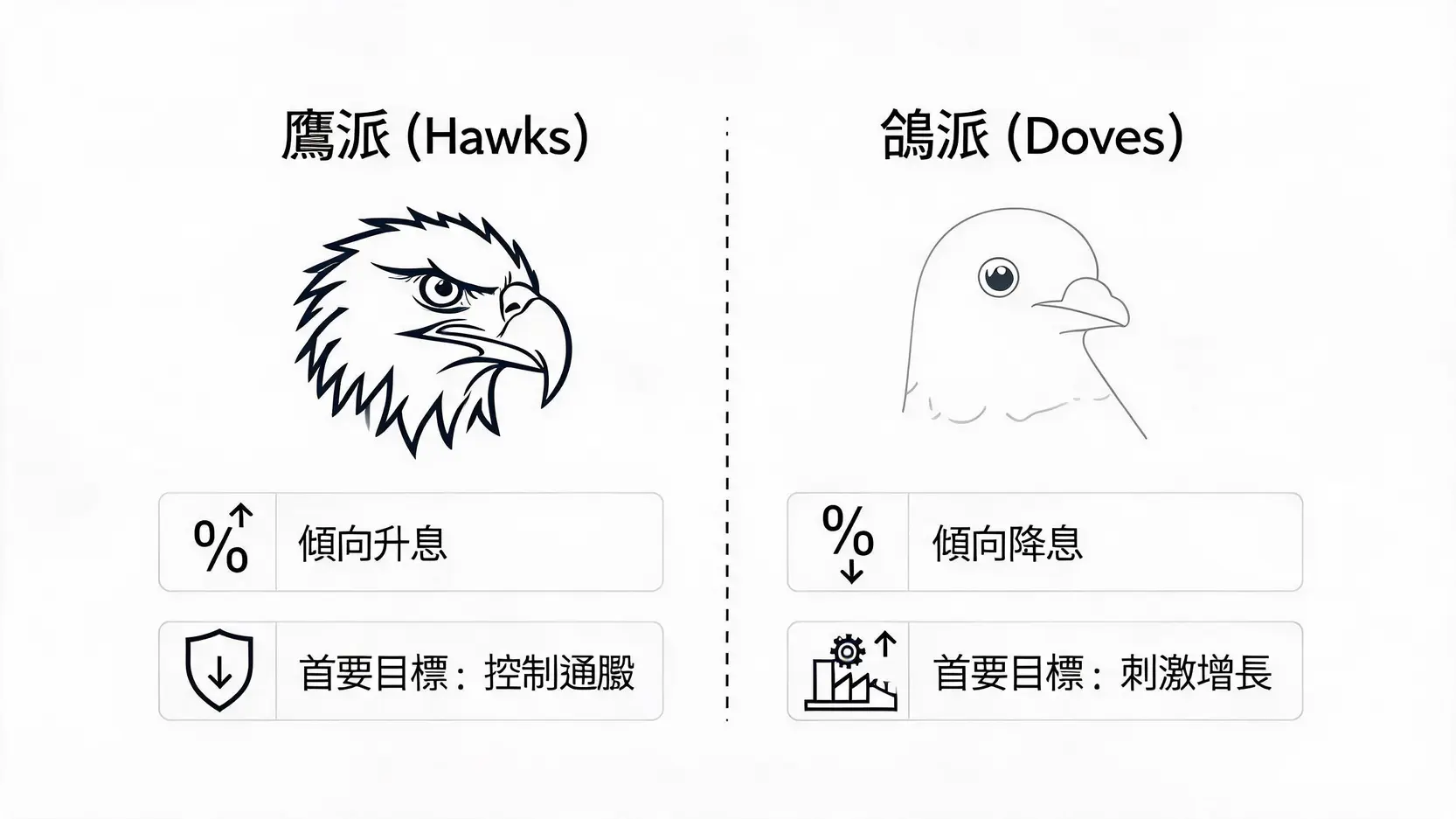
Q: What Do “Hawkish” and “Dovish” Mean?