Fed Rate Cut Hopes Fade: 3 Key Market Concerns

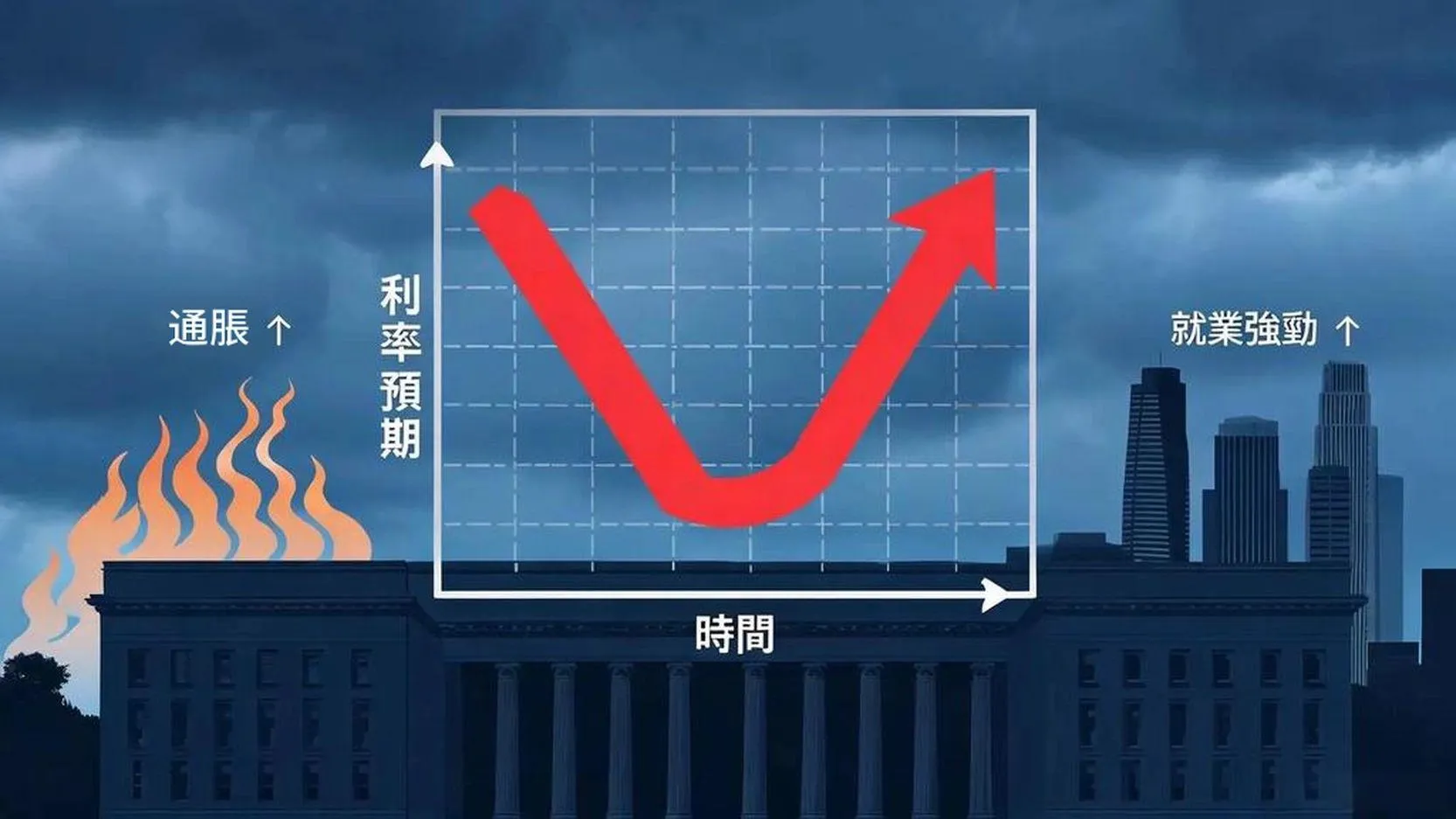
Rate Cut Hopes Dashed! Interest Rate Expectations Take a 180-Degree Turn, Revealing the Federal Reserve’s Three Biggest Unspoken Concerns
Looking Back at the Market’s Optimistic Expectations: How Did the Early-Year Consensus on Rate Cuts Take Shape?
Rewind to the beginning of 2026, when financial markets were filled with optimism. Nearly everyone believed that the Federal Reserve (Fed) would begin a rate-cutting cycle within the year. This widespread consensus did not emerge out of thin air. Instead, it was built on several reasons that appeared highly convincing at the time.
Early Signs of Cooling Inflation
First, the biggest source of confidence came from inflation data. After surging sharply over the previous two years, both the Consumer Price Index (CPI) and the Personal Consumption Expenditures (PCE) Price Index showed clear signs of cooling. As inflation retreated from its peak, markets became convinced that the Federal Reserve’s aggressive rate hikes had worked and that the inflation monster was finally being tamed. The prevailing view was that, with inflationary pressures easing, there was little reason for the Federal Reserve to keep interest rates elevated, making a shift toward rate cuts the logical next step.
Expectations for a Soft Landing
Second, markets widely expected the US economy to achieve a “soft landing”. This meant economic growth would slow enough to curb inflation without tipping the economy into recession. Under this ideal scenario, the Federal Reserve could comfortably begin cutting rates to prevent excessive economic cooling while injecting fresh momentum into the markets. Although employment data remained resilient, the pace of job creation appeared to be slowing, which was interpreted as a sign that the economy was cooling steadily according to the Federal Reserve’s plan.
This golden combination of “cooling inflation” and a “soft landing” formed the foundation of the market’s early-year rate cut expectations. At one point, interest rate futures were even pricing in as many as three to four rate cuts throughout the year, creating an overwhelmingly positive investment environment.

The Foundation of the Market’s Optimistic Rate Cut Expectations at the Beginning of the Year
What Triggered the Reversal in Expectations? Which Data Dashed Rate Cut Hopes?
However, sentiment shifted dramatically in the second quarter. A series of stronger-than-expected economic data poured cold water on the market’s enthusiasm for rate cuts, triggering a sharp reversal in interest rate expectations. The earlier optimism was quickly replaced by caution and uncertainty.
Sticky Core Inflation: Persistent Services Inflation
The biggest warning signal came from the persistence of “core inflation”. Although headline CPI declined, core CPI, which excludes the more volatile food and energy prices, especially services inflation, proved remarkably “sticky”.
- Rental costs remained elevated: Housing rents account for a significant share of core services inflation, and their decline was much slower than expected.
- Wage growth pressures: A strong labor market kept wage growth elevated, forcing businesses to pass higher labor costs on to consumers through increased service prices.
- Transportation and insurance costs: Prices for services such as auto insurance and healthcare continued to rise, becoming persistent drivers of inflation.
This situation made the Federal Reserve realize that the “last mile” in the fight against inflation would be exceptionally difficult. Cutting rates too early could easily reignite underlying inflationary pressures.
A Strong Labor Market: Surprisingly Strong Non-Farm Payroll Data
Another major blow came from the labor market. Non-Farm Payroll (NFP) data, which had been expected to gradually cool, repeatedly exceeded market expectations by a wide margin. Job creation remained robust, while the unemployment rate stayed near historic lows. This indicated that the US economy’s underlying strength was far greater than anticipated, with businesses continuing to hire aggressively. For the Federal Reserve, an “overheated” labor market fuels inflation because it continues to push wages higher, which eventually feeds into consumer prices. Until the labor market shows meaningful signs of cooling, any discussion of rate cuts appears unrealistic.
Resilient Consumer Spending Continues to Support an Overheated Economy
Finally, US consumers proved far more resilient than anyone had expected. Despite elevated interest rates, retail sales and personal consumption expenditures remained strong. Although the savings rate declined, consumers’ willingness to spend showed little sign of weakening, providing substantial support for economic growth. A strong consumer-driven economy naturally makes it more difficult to bring inflation down, giving the Federal Reserve another key reason to maintain higher interest rates to cool economic activity.

The Three Biggest Obstacles That Dashed Rate Cut Hopes
The Federal Reserve’s Policy Pivot: Three Core Reasons Behind Its Hawkish Stance
Faced with the economic reality reflected in the data above, the Federal Reserve’s stance clearly shifted from early-year “dovish expectations” to “hawkish caution”. Behind this shift are three key considerations that explain why rate cuts failed to materialize and why the market even briefly began discussing the possibility of further rate hikes.
Consideration 1: Preventing Inflation From Rebounding Due to Premature Easing
History offers a powerful lesson. Federal Reserve officials, particularly Chair Jerome Powell, have repeatedly referred to the experience of the 1970s. At that time, the Federal Reserve eased monetary policy before inflation had been fully defeated, resulting in a more severe and prolonged second wave of inflation. Ultimately, much more aggressive measures (known as the “Volcker Moment”) were required to bring inflation under control, at the cost of a deep economic recession. Today’s Federal Reserve clearly has no intention of repeating that mistake. Policymakers would rather keep interest rates higher for longer than risk allowing inflation to make a comeback.
Consideration 2: The Need to Keep Policy Rates Elevated
The Federal Reserve believes that maintaining the current restrictive level of interest rates remains necessary. A “restrictive” policy rate refers to a policy rate that sits above the neutral rate and is sufficiently high to cool economic activity. With inflation still above the 2% target and the labor market remaining tight, elevated interest rates directly increase borrowing costs for businesses and households, reducing investment and consumer demand while slowing the economy. Cutting rates too early would weaken the effectiveness of this policy, effectively “ending the campaign” before the job is done, which policymakers view as unacceptable.
Consideration 3: The Potential Impact of Geopolitical Risks on Supply Chains
Global geopolitical uncertainty also remains a major concern for the Federal Reserve. Whether it is the ongoing Russia-Ukraine conflict or tensions in the Middle East, either could disrupt global supply chains at any time. For example, disruptions to major shipping routes could send transportation costs soaring, while conflicts could also push energy prices sharply higher again. These supply-side shocks are difficult for monetary policy to control, yet they directly fuel inflation. As a result, the Federal Reserve needs to preserve policy flexibility by maintaining higher interest rates as a buffer against any future inflationary pressures triggered by geopolitical events.

The Three Core Reasons Behind the Federal Reserve’s Hawkish Stance
Further Reading (Highly Recommended)
How to Understand the Federal Reserve’s Next Move Through the “Dot Plot” and Officials’ Remarks
In such a complex macroeconomic environment, investors are eager to find clues about the Federal Reserve’s next move. Among the most important indicators are the Federal Reserve’s “dot plot” and public remarks made by its officials.
Interpreting the Dot Plot: Understanding Committee Members’ Interest Rate Expectations
The dot plot is a chart released quarterly by the Federal Reserve that anonymously displays each Federal Open Market Committee (FOMC) member’s projections for the policy interest rate over the coming years. Although it is not an official policy commitment, it provides an excellent window into policymakers’ thinking.
- Watch for changes in the median: The median dot (representing the midpoint of all projections) receives the most market attention. If the median shifts higher in the latest dot plot, it suggests the Federal Reserve’s overall interest rate outlook has become more hawkish, signaling fewer rate cuts or later timing.
- Analyze the distribution: Observe whether the dots are tightly clustered or widely dispersed. A wide dispersion indicates significant disagreement within the committee, while a tighter cluster suggests stronger consensus and greater certainty regarding the policy path.
- Pay attention to the long-term rate projection: The long-term rate projection reflects committee members’ views on the “neutral rate”. If this projection moves higher, it may indicate that the Federal Reserve believes the economy can sustain higher interest rates over the long run.
Analyzing Officials’ Remarks: The Tug of War Between Hawks and Doves
Between each FOMC meeting, public remarks from Federal Reserve Bank presidents and Board members become the market’s focal point. Their comments often reveal their views on current economic data and their policy preferences. Investors should learn to distinguish between “hawkish” and “dovish” positions.
- Hawks: More concerned about inflation and generally favor maintaining higher interest rates or raising rates further. When hawkish voices dominate, market expectations for rate cuts typically weaken.
- Doves: More concerned about economic growth and employment and generally favor rate cuts. When dovish voices become more prominent, expectations for rate cuts tend to strengthen.
By following the remarks of these officials (including key figures such as Chair Jerome Powell and New York Fed President John Williams) while also considering the latest economic data, investors can more accurately gauge shifts in the Federal Reserve’s internal thinking and form more reasonable expectations about future policy changes.
Further Reading (Highly Recommended)
Conclusion
In summary, the market’s shift from the early-year “rate cut euphoria” to today’s “reversal in interest rate expectations” does not reflect inconsistency on the part of the Federal Reserve. Rather, it reflects a major Federal Reserve pivot driven by economic realities. Persistent core inflation, an exceptionally strong labor market, and resilient consumer spending have collectively led to the failure of expected rate cuts. Driven by concerns over a resurgence in inflation, the need to maintain restrictive monetary policy, and geopolitical risks, the Federal Reserve has adopted a more cautious and hawkish stance. For investors, understanding the deeper logic behind this shift is essential. It means abandoning expectations of rapid rate cuts in the near term, reassessing asset allocation, and preparing for a new normal in which interest rates may remain higher for longer. Going forward, closely monitoring inflation and employment data while learning to interpret the dot plot and officials’ remarks will be key to navigating an increasingly uncertain market with confidence.
Frequently Asked Questions (FAQ)
Q: Why Is There a Gap Between Market Expectations and the Federal Reserve’s Projections?
A: The gap between market expectations and the Federal Reserve’s projections mainly stems from their different perspectives and approaches. Market pricing, particularly in the interest rate futures market, reflects traders’ collective “bets” on future economic data. It is heavily influenced by sentiment and short-term data, allowing it to react very quickly. In contrast, the Federal Reserve’s projections (such as the dot plot) are based on its internal economic models and the professional judgment of each committee member. They focus more on medium- to long-term trends, with a more cautious decision-making process designed to avoid overreacting to short-term market fluctuations. As a result, the Federal Reserve’s projections often appear more “lagging” or “conservative”.
Q: How Long Will Higher for Longer Last?
A: There is no definitive answer, as it depends entirely on future economic data. Federal Reserve Chair Jerome Powell has repeatedly emphasized the Fed’s “data-dependent” approach to policymaking. Generally, the Federal Reserve is expected to see several consecutive months (such as three to six months) of inflation clearly moving toward its 2% target, along with signs of moderate cooling in the labor market (such as a slight rise in the unemployment rate and slower wage growth) before seriously considering rate cuts. Until then, the high interest rate environment is likely to persist.
Q: How Will the Federal Reserve’s Policy Pivot Affect My Mortgage?
A: The Federal Reserve’s policy pivot has a direct impact on mortgage rates. When markets expect interest rates to remain higher for longer, yields on long-term government bonds typically rise, and mortgage rates are closely linked to long-term government bond yields. This means borrowers applying for fixed-rate mortgages are likely to face higher borrowing costs. For those with adjustable-rate mortgages, monthly payments are likely to remain elevated as long as the Federal Reserve does not cut interest rates.
Q: How Should I Adjust My Stock Portfolio in the Current Environment of Reversed Interest Rate Expectations?
A: A high interest rate environment affects different types of stocks in different ways. Interest rate-sensitive growth stocks, technology stocks (whose valuations rely on discounted future cash flows) and industries that depend heavily on financing (such as real estate and utilities), generally face greater pressure. In contrast, value stocks with strong cash flow and healthy balance sheets, financial stocks, especially banks that benefit from wider interest margins, and inflation-resistant sectors such as energy may perform relatively better. Investors should consider making their portfolios more defensive while placing greater emphasis on corporate fundamentals and profitability rather than growth narratives alone.
Q: Could the Federal Reserve Raise Interest Rates Again in the Future?
A: Although further rate hikes are not the base-case scenario at present, Federal Reserve officials have never completely ruled out the possibility. If inflation unexpectedly rebounds significantly or financial conditions become excessively loose, causing the economy to overheat, the Federal Reserve may be forced to raise interest rates again to preserve its credibility in fighting inflation. Therefore, although the probability remains low, investors should still factor “the risk of further rate hikes” into their considerations.
Related Articles
-
Global Asset Repricing: Why Has Japan’s Property Market Become a Safe Haven for Smart Money Amid Yen Depreciation? What Is “Global Asset Repricing”? Why Has Japan Become the Main Focus? While investment forums around the world are heatedly discussing yen depreciation pressure, the real smart money has already begun positioning...2026 年 6 月 23 日
-
Farewell to Negative Interest Rates! The Truth Behind Japan Meeting Its Inflation Target: Why Has Yen Depreciation Pressure Increased Instead of Easing? The Japanese economy is staging an extremely contradictory drama: after waiting for thirty years, it has finally welcomed the long-awaited Japan inflation, yet the market’s response has been...2026 年 6 月 23 日
-
A Complete Analysis of Central Bank Policy Shifts: From YCC to QT, Decoding the BOJ and the Fed’s Next Move The Bank of Japan (BOJ) and the US Federal Reserve (Fed), two giants of the global financial markets, are seeing their diverging monetary policy directions become the core force driving...2026 年 6 月 23 日