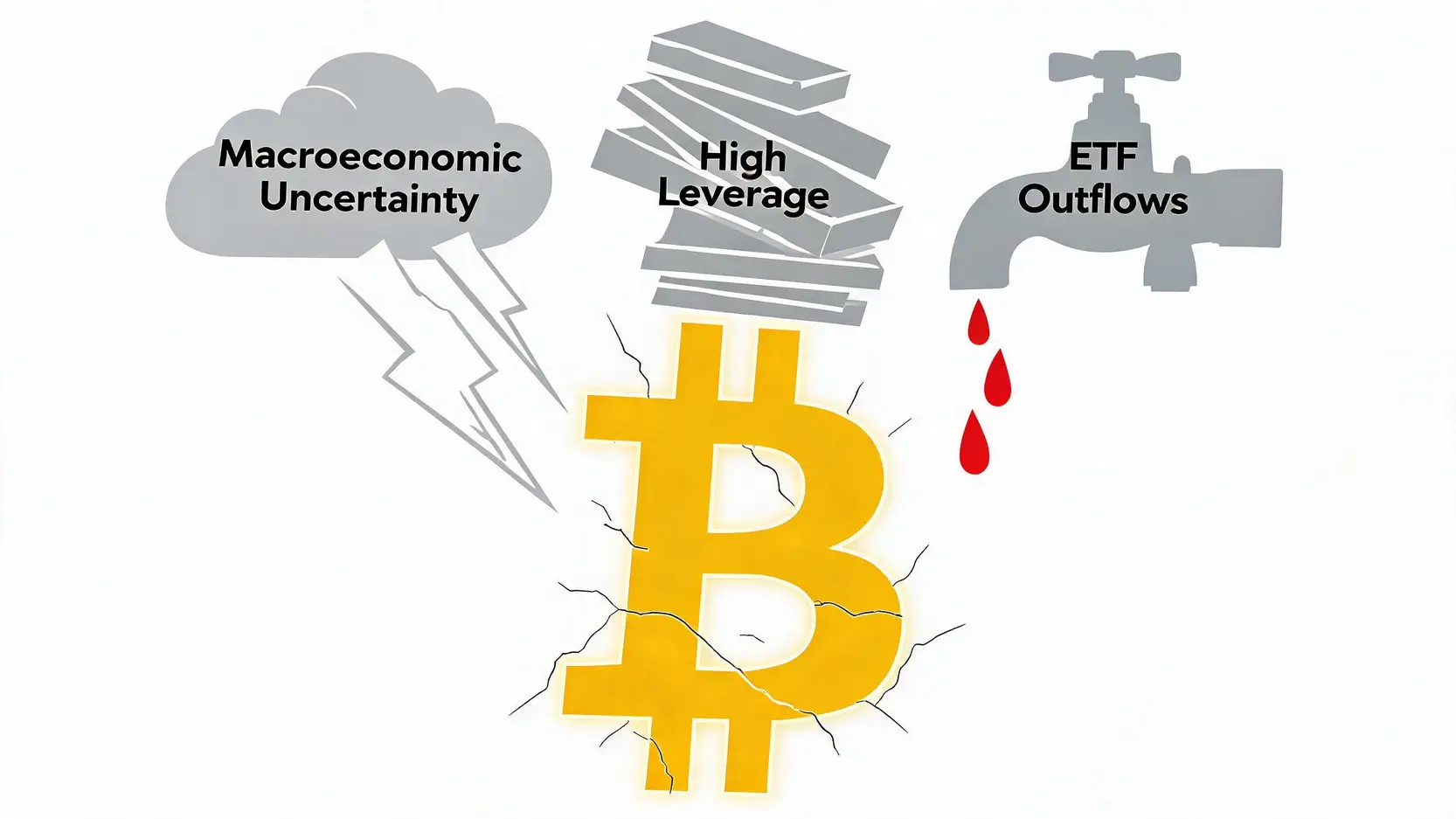
Three Major Sources of Pressure Jointly Drove Bitcoin’s Price Lower
Macroeconomic Gloom: How Geopolitical Tensions and Tariff Policies Hit Market Confidence
Although the cryptocurrency market may appear independent, it can no longer escape the influence of the global macroeconomy. Recently, geopolitical risks have risen again, while new tariff policy discussions among major economies have also cast a shadow of uncertainty over global financial markets. As a risk asset, Bitcoin often faces selling pressure when risk-off sentiment rises. These macro factors shook overall market confidence and became the first straw that broke the camel’s back.
Internal Structural Imbalance: An Overheated Derivatives Market and Selling Pressure From Whales
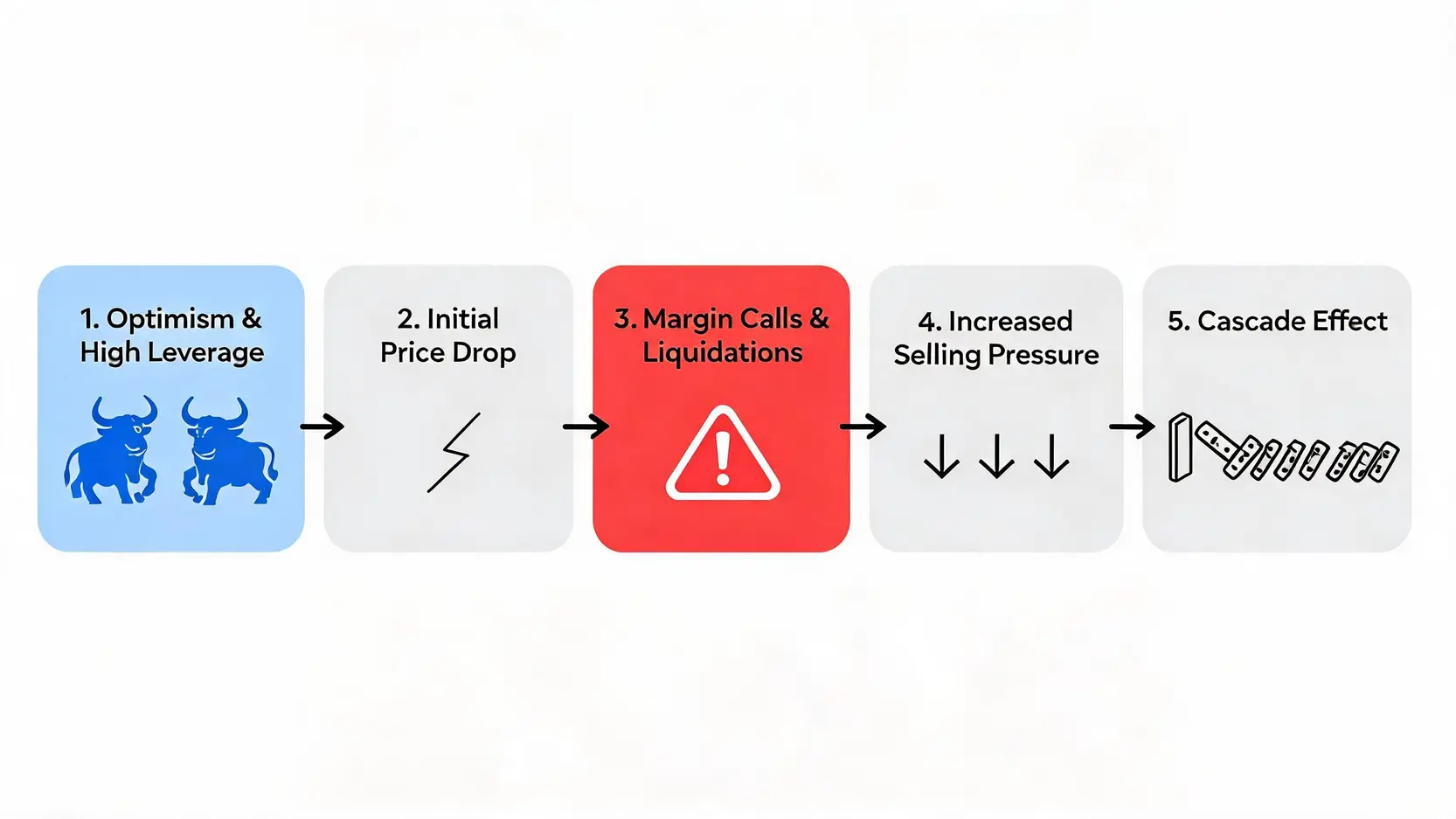
Before this decline, the cryptocurrency derivatives trading market had already accumulated a large number of long positions, and market sentiment was extremely greedy. Excessive leverage was like a powder keg that only needed a small spark to ignite. At the same time, some “whales” holding large amounts of Bitcoin may have chosen to conduct large-scale selling at this point for profit-taking or risk control purposes. This directly provided the “first push” that triggered chain liquidations and became the direct trigger for the long squeeze market.
ETF Fund Flow Reversal: From Net Inflows to Net Outflows, a Barometer of Market Sentiment
Since the approval and listing of spot Bitcoin ETFs, their fund flows have been an important indicator of market sentiment. Over the past few months, continued net fund inflows were an important driver behind Bitcoin’s price rise. However, on the eve of this decline, the market observed that ETFs began to see consecutive net fund outflows. This was a very important warning sign, indicating that institutional investors and some retail investors in traditional financial markets had become more cautious. When smart money began to exit, market buying power weakened, also laying the groundwork for the subsequent rapid decline. If you want to learn more about what a Bitcoin ETF is, you can refer to our in-depth analysis.
Market Outlook Analysis: How Should Investors Respond After Bitcoin’s Sharp Drop?
After experiencing such a severe decline, market sentiment often shifts from extreme greed to extreme fear. Many investors may feel lost and uncertain about what to do next. Below is our response guide from both technical analysis and investment strategy perspectives.
Technical Analysis: Where Are the Key Support and Resistance Levels?
After prices fell below US$80,000, the market structure changed. Investors should closely monitor the following key price levels:
- Major support levels: These are usually the starting points of the previous rally or areas with concentrated trading activity. For example, the US$72,000 to US$75,000 range may become an important short-term psychological and technical support zone. If this area fails to hold, prices may continue to test lower support zones.
- Major resistance levels: The US$80,000 level that was previously broken has now shifted from support into a strong resistance zone. If prices rebound toward this area in the future, they may encounter heavy selling pressure from trapped investors looking to exit positions.
In the coming market phase, prices are likely to fluctuate and consolidate within these two key ranges to absorb the impact caused by this decline.
3 Strategies to Navigate a Volatile Market: Position Adjustments, Risk Management, and Finding New Opportunities
When facing a highly volatile market, maintaining a calm mindset and a clear strategy is crucial. Below are three core response strategies:
- Reassess and adjust positions: Review your current portfolio. If you are fully invested and using leverage, consider moderately reducing leverage and position sizes during rebounds to lower risk exposure. If you are holding cash or maintaining light positions, avoid rushing to “buy the dip”. Instead, consider using a phased entry strategy, such as dollar-cost averaging, to gradually build positions near key support levels.
- Strictly implement risk management: Set clear stop-loss levels. Whether for newly established positions or existing holdings, there should always be a clearly defined exit plan. In such an uncertain market, protecting capital should always remain the top priority. Remember, never allow a small loss to turn into an unbearable major loss.
- Look for new opportunities amid panic: Although a “long squeeze” market is brutal, it also helps the market complete an effective deleveraging process. Once the market regains calmness, some fundamentally strong and unfairly sold-off high-quality crypto assets may present better long-term investment value. Continue learning, monitor changes in market structure, and prepare for the next market cycle.
Frequently Asked Questions About BTC’s Sharp Drop and Long Squeeze Markets
Q: How long will this Bitcoin decline last?
A: No one can accurately predict the market bottom. The duration of the decline depends on multiple factors, including whether the macroeconomic environment improves, whether market leverage has been fully cleared out, and how quickly investor confidence recovers. Generally speaking, after large-scale liquidations, the market requires time to consolidate and form a base, which may last from several weeks to several months. Investors should pay attention to whether key support levels can hold and whether ETF fund flows return to net inflows.
Q: Is this a good time to buy the dip on Bitcoin?
A: Extreme caution is required when “buying the dip”. When market trends remain unclear, left-side trading, or countertrend trading, carries very high risk. For conservative investors, waiting until prices stop falling and clear bottoming signals appear, such as a double bottom or inverse head and shoulders pattern, before entering from the right side is a safer approach. If you still wish to build positions from the left side, be sure to adopt a phased buying strategy and strictly control the proportion of capital invested, avoiding deploying too much capital at once.
Q: What usually happens after a “long squeeze” market ends?
A: Once the market’s highly leveraged long positions are fully flushed out, selling pressure will decrease significantly. The market will usually enter a relatively calm “low-volatility phase” or “sideways consolidation phase”. During this stage, bullish and bearish forces reach a new balance. If positive news or renewed buying interest appears afterward, the market may begin forming a new upward trend. On the other hand, if macroeconomic conditions continue deteriorating, the market may continue searching for lower support levels after consolidation.
Q: What is the relationship between Bitcoin’s sharp drop and other cryptocurrencies, or altcoins?
A: Bitcoin is viewed as the “anchor” of the entire cryptocurrency market. When Bitcoin experiences a sharp decline, the losses are often amplified in other altcoins with lower liquidity and higher risk. Typically, if Bitcoin drops by 10%, many altcoins may fall by 20%-30% or even more. Therefore, when Bitcoin market conditions are unstable, investing in altcoins requires greater caution and stronger risk management preparation.
Conclusion
In summary, the reasons behind this sharp BTC drop were the combined result of macroeconomic uncertainty, excessive leverage within the market, and a reversal in ETF fund flows, ultimately triggering a classic “long squeeze” liquidation cascade that caused Bitcoin to fall below the key psychological level of US$80,000. Although this type of market move arrives aggressively, it also allows the market to undergo a complete risk release process. For investors, this represents both a crisis and an opportunity. In a highly volatile market, the most important thing is not predicting the exact top or bottom, but maintaining calm thinking, deeply understanding the logic behind long squeeze market analysis, and always prioritizing risk management. Only by doing so can investors survive long term and achieve stable profits in the challenging cryptocurrency market.