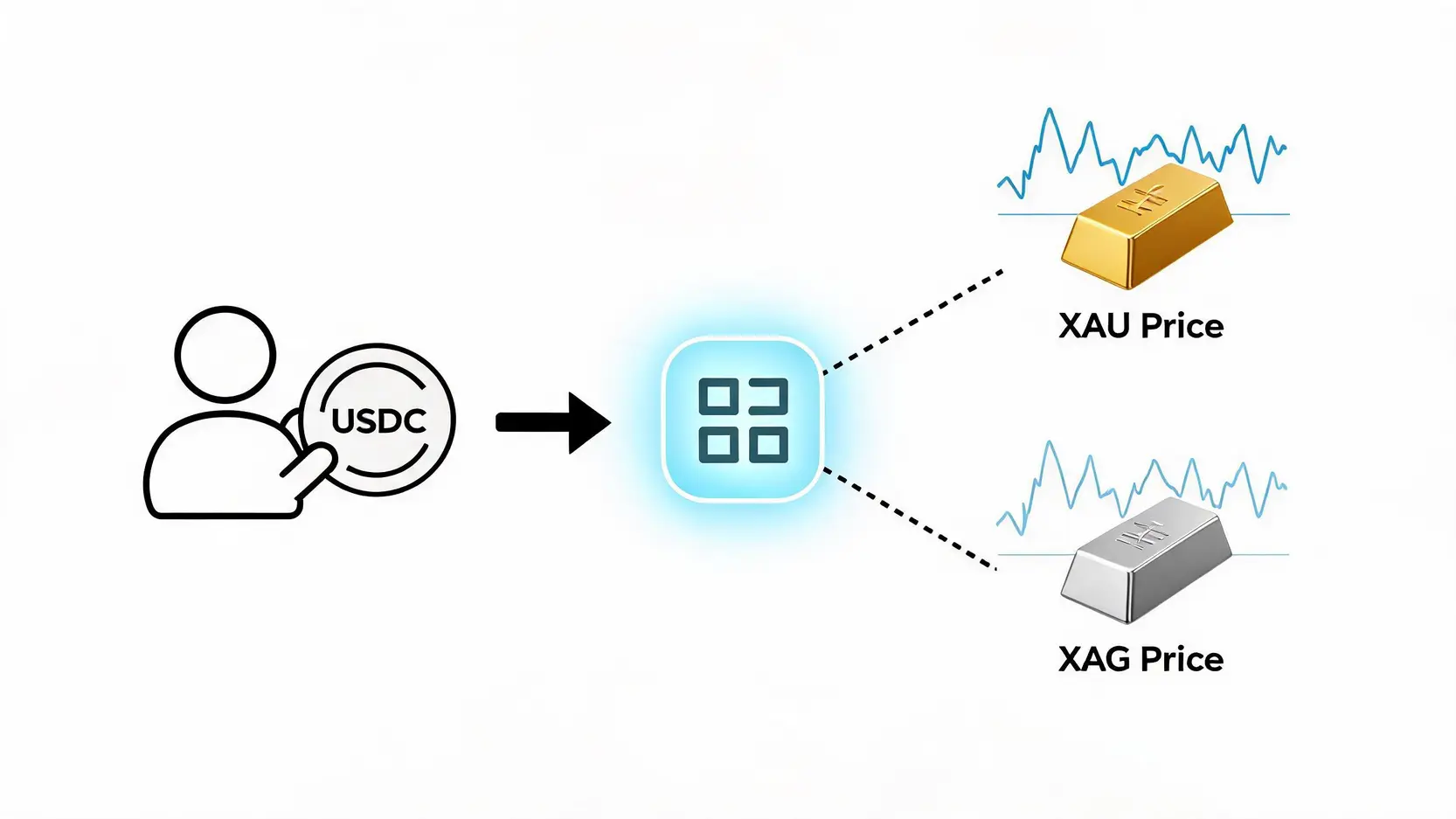
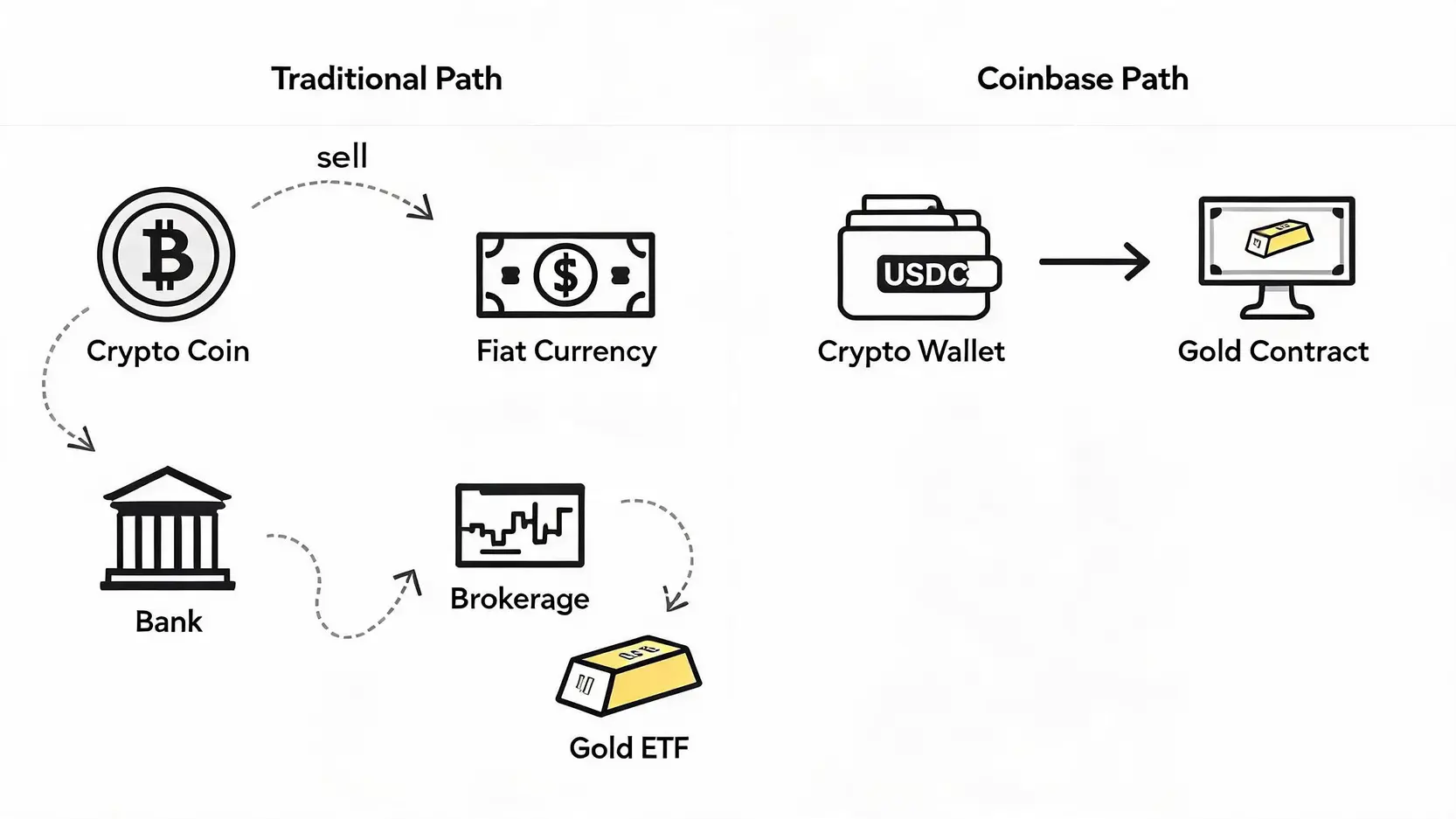
Capital Flow Efficiency Comparison: Traditional Process vs. Coinbase Integrated Platform
Advantage 3: Simplified Processes for Investment Diversification on a Single Platform
Managing investment accounts across multiple platforms can be frustrating. You need to remember different passwords, adapt to different user interfaces, and separately track asset conditions across each account. Coinbase integrates cryptocurrencies and precious metals derivatives on the same platform, allowing investors to manage their portfolios in one place. On a single dashboard, you can simultaneously monitor the performance of your Bitcoin, Ethereum, gold, and silver contracts, making it easier to achieve investment diversification on a cryptocurrency platform while more intuitively evaluating overall portfolio risk and returns.
How to Start Trading Coinbase Gold and Silver Contracts
After understanding the appeal of these products, the actual trading process is relatively straightforward. Below is a quick beginner’s guide to help you safely take your first step.
Account Eligibility and Identity Verification Requirements (Important: Non-US Users)
First, one extremely important point: Coinbase derivatives services (including gold and silver contracts) are currently not available to US users. You must reside in an eligible jurisdiction to participate. The account opening process is similar to a standard Coinbase account and requires completing identity verification (KYC), including submitting identification documents and proof of address to comply with Anti-Money Laundering (AML) regulatory requirements.
Beginner Tutorial: Complete Step-by-Step Guide From Deposits to Order Placement
For eligible users who already have a Coinbase account, starting to trade only requires the following steps:
- Prepare funds: Ensure your account contains sufficient USDC. You can purchase USDC through bank transfers or convert other cryptocurrencies into USDC.
- Access the derivatives platform: After logging in, locate Coinbase International Exchange or the relevant derivatives/futures trading section.
- Select a contract: In the trading pair list, find the gold (XAU-PERP) or silver (XAG-PERP) perpetual contract.
- Analyze the market: Use charting tools provided by the platform (such as TradingView) to analyze price trends and formulate your trading strategy.
- Place an order: In the order section, choose the order type (such as market order or limit order), enter the quantity you wish to trade, and set the leverage ratio.
- Set stop-loss and take-profit levels: Whether during or after placing the order, always set Stop-Loss and Take-Profit prices. This is a critical step in risk management.
- Confirm the order: After verifying all parameters are correct, click the “Buy/Long” or “Sell/Short” button to establish your position.
For investors who are just getting started, it is recommended to first refer to a Beginner Cryptocurrency Guide to familiarize yourself with the platform’s basic operations.
Essential Risk Management Lessons: How to Properly Use Leverage and Set Stop-Loss Orders
The risks of leveraged trading should never be underestimated. High leverage means even small market price fluctuations can result in significant profits or losses. Therefore, mature cryptocurrency trading risk management strategies are extremely important:
- Control leverage ratios: Beginners should start with the lowest leverage ratios (such as 2x or 3x) and avoid pursuing high leverage from the beginning.
- Set reasonable stop-loss levels: A stop-loss order automatically closes a position once the price reaches a predefined loss level. This ensures your losses remain within an acceptable range and helps avoid liquidation during severe market volatility.
- Position size management: Do not allocate all your funds into a single trade. A more reasonable approach is to ensure the risk of each trade does not exceed 1%-2% of your total capital.
- Understand funding rates: Perpetual contracts use a “funding rate” mechanism, where long and short traders periodically pay or receive fees. For long-term positions, this can become a significant cost that should not be ignored.
Coinbase vs. Other Exchanges: A Comprehensive Comparison of Precious Metals Products
Coinbase is not the only cryptocurrency platform offering precious metals derivatives trading. Major exchanges such as Binance and Bybit have already entered this market as well. Understanding the differences between these platforms can help you choose the option that best suits your needs.
Major Market Participants: Analysis of Similar Products on Platforms Such as Binance
The major competitors in the market generally offer precious metals products in two forms:
- Tokenized gold: For example, PAX Gold (PAXG) issued by Paxos, where each token is backed by one ounce of physical gold reserves. Users can trade PAXG just like any other cryptocurrency.
- Perpetual contracts: Similar to Coinbase’s products, Binance offers gold perpetual contracts such as GOLDUSDT, which also use stablecoins as margin and settlement units.
The key difference is that tokenized gold is closer to actual ownership of gold, while perpetual contracts are purely price speculation tools that do not involve physical delivery.
Comparison Table of Fees, Liquidity, and Product Variety
When choosing a platform, trading fees, financial market liquidity, and product diversity are core considerations. As a platform recognized for regulatory compliance, Coinbase’s strengths lie in credibility and security, while other platforms may offer more competitive fees or higher leverage options.
| Features |
Coinbase International Exchange |
Binance Futures |
Bybit Derivatives
|
| Product Type |
Gold/Silver Perpetual Contracts |
Multiple Commodity Perpetual Contracts Including Gold/Silver |
Gold/Silver Perpetual Contracts |
| Settlement Currency |
USDC |
USDT |
USDT |
| Maximum Leverage |
Generally More Conservative |
Up to 50x or Higher |
Up to 50x or Higher |
| Key Features |
Strong Regulatory Compliance, High Platform Credibility, User-Friendly Interface |
Best Market Depth, Strong Liquidity, Wide Product Variety |
Powerful Trading Engine Performance, Fast Order Execution, Competitive Fees |
FAQ
What Are the Tax Implications of Trading Gold and Silver Contracts on Coinbase?
Tax treatment for cryptocurrencies and derivatives varies by country and region and can be highly complex. Profits generated from trading may be classified as capital gains or personal income and must be reported according to local laws. It is strongly recommended that you consult a professional tax advisor in your jurisdiction to ensure compliant reporting and avoid legal risks.
How Are the Trading Fees for These Contract Products Calculated?
Trading fees are generally divided into two parts: Trading Fees and Funding Rates. Trading fees are charged based on the “Maker” and “Taker” model and are usually a very small percentage of the transaction amount. Funding rates are a mechanism designed to anchor perpetual contract prices to spot prices, with long and short traders periodically paying or receiving fees, such as every 8 hours. Funding rates may be either positive or negative.
If There Is an Issue With the Coinbase Platform, Are My Precious Metals Assets Safe?
This is an extremely important question. First, it must be clarified that trading contracts does not mean you own physical gold or silver. Your assets are held in the form of USDC within Coinbase’s margin account system. As a publicly listed company, Coinbase maintains industry-leading standards in asset custody and security, including cold storage and commercial insurance coverage. However, all centralized platforms carry counterparty risk. Therefore, the capital you invest should only be an amount you can afford to lose.
What Is the Difference Between Trading Coinbase Gold Contracts and Buying Gold ETFs?
The main differences lie in the trading mechanism, trading hours, and investment objectives. Coinbase gold contracts are leveraged derivatives suitable for short-term price speculation and 24/7 around-the-clock trading. Gold ETFs, on the other hand, function more like stocks, trading during traditional stock market hours without leverage (or with low leverage), making them more suitable for investors who want long-term gold exposure without managing physical gold.
Conclusion
The launch of Coinbase Gold and Silver Contracts undoubtedly marks an important milestone in the integration of the cryptocurrency market with traditional finance. It opens an entirely new door for crypto investors, making exchange-traded precious metals products no longer a distant option. Through a single platform, investors can not only capture the growth potential of Bitcoin, but also use the stability of gold to hedge against market risks, truly achieving investment diversification on a cryptocurrency platform. For investors seeking a more stable asset allocation strategy, this is a powerful tool worth studying and exploring in depth. Before participating, however, it is essential to fully understand its operating mechanisms and risks while establishing a comprehensive strategic plan.