Goodbye “CME Gap”! CME Launches 24/7 Around-the-Clock Trading, What Impact Will It Have on Your Crypto Investments?
The cryptocurrency market is known for operating 24 hours a day, 7 days a week without closing. However, for a long time, traditional financial exchanges offering institutional-grade crypto derivatives still followed fixed trading hours. This created a significant risk gap for institutional investors. Have you ever felt helpless watching sharp crypto market volatility over the weekend? CME Group, the world’s largest financial derivatives exchange, has officially announced the launch of CME 24/7 crypto trading to completely address this issue. This major change is not only an extension of CME’s around-the-clock trading services, but also signals that the impact of the institutional crypto market is entering a completely new era. This article will provide an in-depth analysis of this historic move, helping you understand how it reshapes institutional risk management frameworks and uncover new trading opportunities.
What is CME 24/7 Around-the-Clock Crypto Trading?
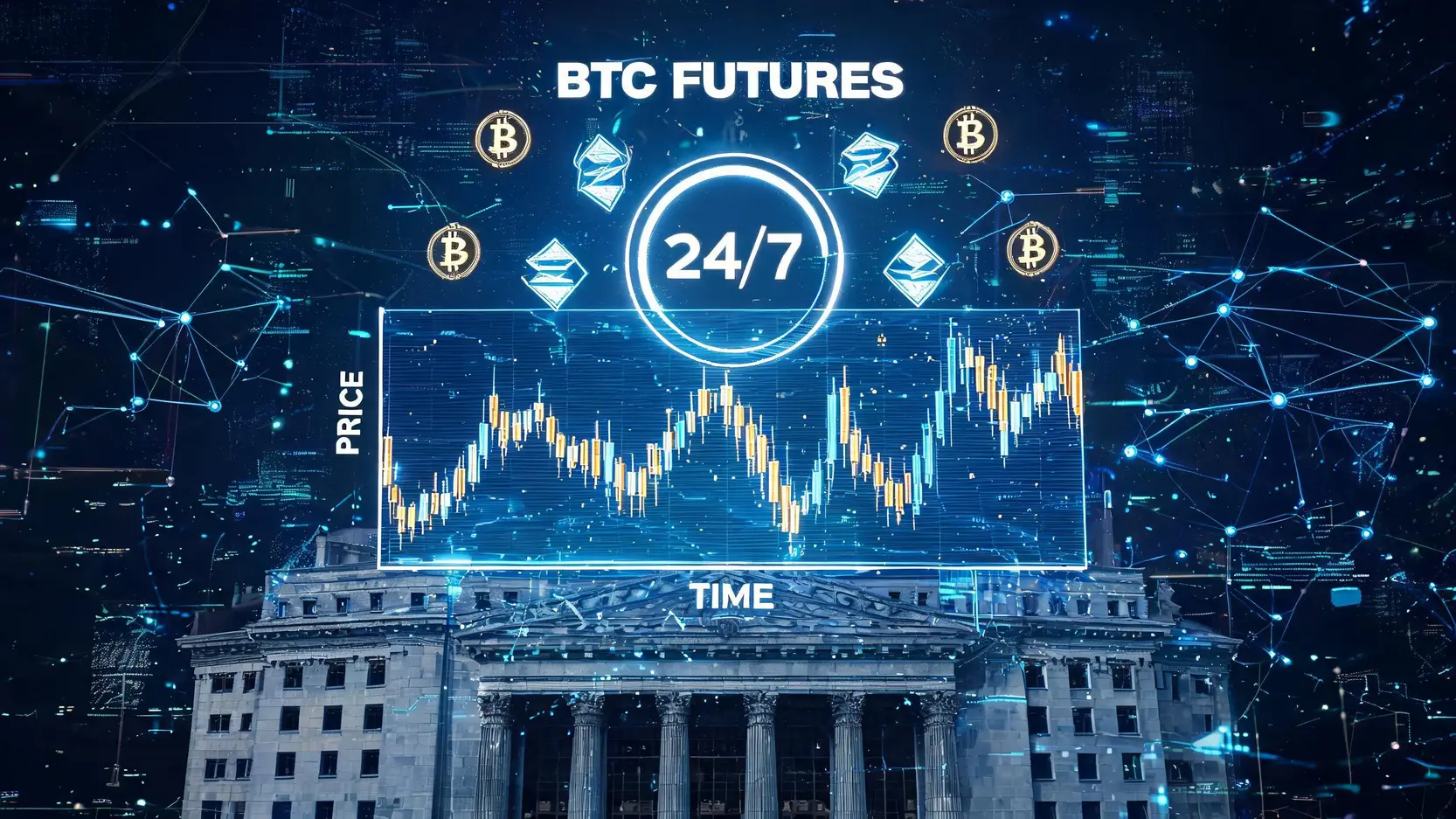
Simply put, CME 24/7 crypto trading refers to the Chicago Mercantile Exchange (CME) extending the trading hours of its cryptocurrency derivatives products from the traditional five-day, limited-session schedule to uninterrupted trading, 24 hours a day, 7 days a week. This means institutional investors can enter the market and hedge their crypto positions at any time, whether it is morning in New York, late night in London, or trading hours in Asia.
Core Policy Change: Breaking Traditional Trading Hour Limitations
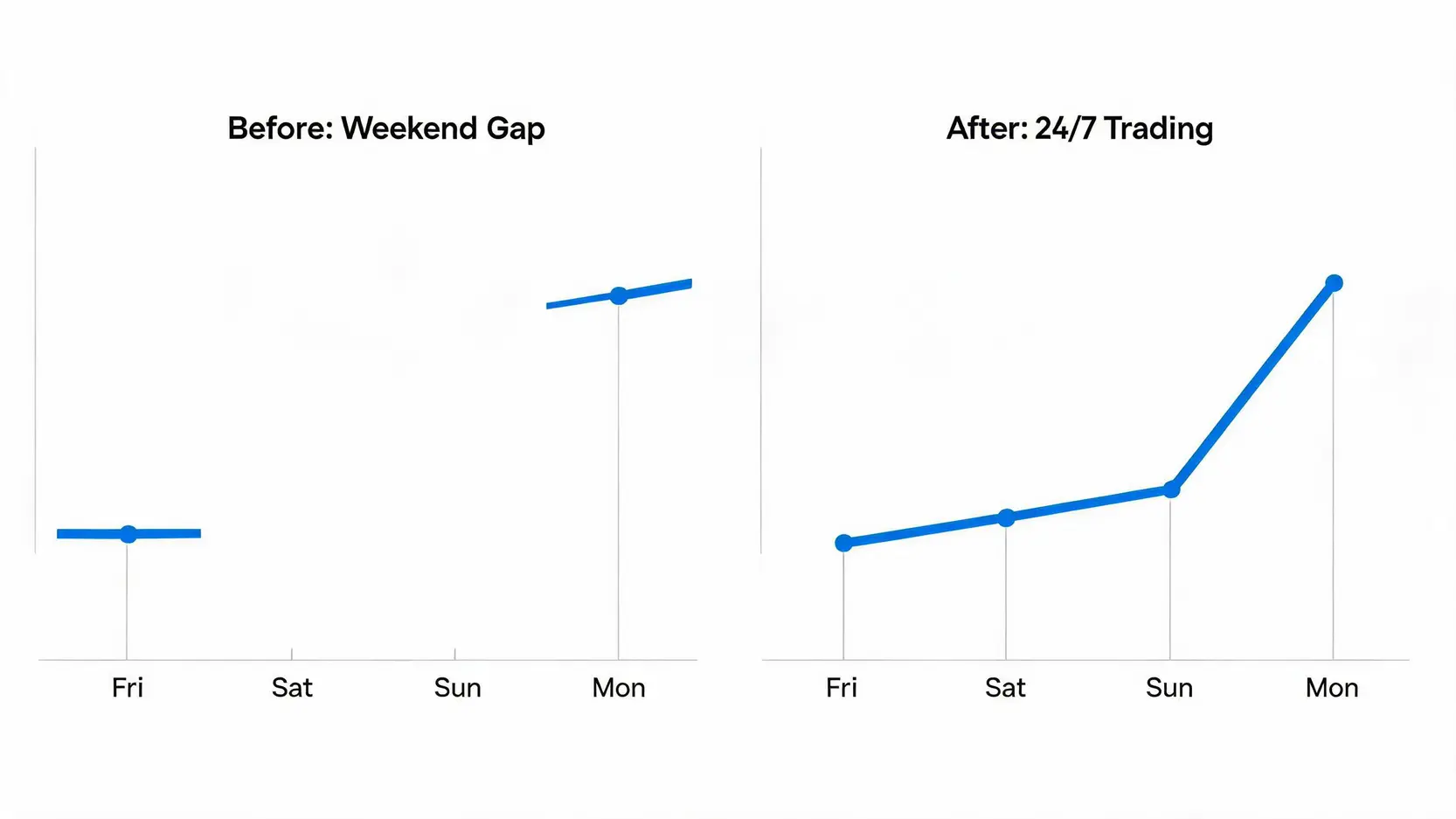
Previously, CME’s Bitcoin and Ethereum derivatives followed traditional financial market schedules, resulting in a “trading vacuum” lasting dozens of hours from Friday market close to Sunday reopening. During this period, the global cryptocurrency spot market remained active. Any major news or price movement could lead to a significant price “gap” when CME derivatives reopened on Monday, commonly known as the “CME gap”. The core purpose of this policy is to eliminate that limitation, allowing derivatives markets to stay synchronized with continuously operating spot markets and remove pricing risks caused by time differences.
Products Covered: Bitcoin and Ethereum Futures and Options
CME’s new around-the-clock trading service will initially focus on its most popular and liquid cryptocurrency products, mainly including:
Bitcoin Futures
Ether Futures
Options on Bitcoin Futures
Options on Ether Futures
These products are core tools for institutional investors participating in the crypto market and executing complex arbitrage and hedging strategies. Including them in 24/7 trading significantly enhances their practicality and efficiency.
Launch Timeline and Implementation Details
According to CME’s official announcement, the 24/7 trading service officially launched in May 2026 after receiving regulatory approval. Trading hours will run from Sunday 6 PM Eastern Time through Friday 5 PM Eastern Time, with almost no interruptions in between. This change is designed to provide clients across all global time zones with a seamless and continuous trading environment, allowing investors in Asia, Europe, and the Americas to fully utilize CME’s platform during their primary market hours.
Why Did CME Launch 24/7 Trading Now? Market Demand as the Driving Force
CME’s decision to launch 24/7 trading at this moment is not accidental. It is the result of multiple market forces converging. This not only reflects the increasing mainstream adoption of crypto assets, but also shows how traditional financial giants are actively adapting to the unique rhythm of the digital asset era.
Responding to Institutional Demand for Risk Hedging
As more hedge funds, asset management firms, and even traditional banks allocate Bitcoin and Ethereum into their portfolios, weekend risk exposure has become a critical issue. During weekends, markets can experience severe volatility triggered by news events, regulatory developments, or whale activity. Institutions holding large crypto positions were previously unable to hedge spot downside risk through futures or options while CME markets were closed, leaving them exposed to losses. The launch of around-the-clock trading is a direct response to this urgent demand, providing institutions with full-time cryptocurrency risk management tools.
The Maturation of the Crypto Market and Growing Trading Volume
In recent years, the total market capitalization and average daily trading volume of cryptocurrencies have grown exponentially. Especially after the approval of Bitcoin spot ETFs, massive inflows of traditional capital have significantly increased market depth and breadth. As a tightly regulated exchange, CME has also seen its crypto derivatives trading volume repeatedly hit record highs. This demonstrates that the market is now mature enough to support uninterrupted 24/7 trading activity, and CME has sufficient confidence in its ability to maintain stable liquidity.
Seamless Integration With the Global Cryptocurrency Spot Market
The native nature of cryptocurrencies is decentralization and globalization, and spot trading has never stopped. In the crypto world, the traditional concept of “business hours” for exchanges has become a limitation. CME’s launch of around-the-clock trading aims to align its derivatives market operations with the rhythm of hundreds of global crypto spot exchanges, achieving true seamless integration. This will not only attract more traders native to the crypto industry, but also allow traditional financial institutions to more smoothly integrate cross-market strategies involving both spot and derivatives trading.
Five Major Market Impacts of CME Around-the-Clock Trading
The launch of CME 24/7 trading is far more than just an extension of trading hours. It will have profound effects on the structure, efficiency, and participant behavior of the entire institutional crypto market.
Impact 1: Completely Eliminating the “CME Gap” and Reducing Weekend Price Risk
The “CME gap” refers to the price gap formed between the Friday closing price and Monday opening price of CME Bitcoin futures. This gap reflects price movements in the spot market during the weekend market closure. For a long time, many traders even developed trading strategies around “gap filling.” With the implementation of 24/7 trading, prices will now update continuously, allowing weekend price movements to be absorbed more smoothly. This fundamentally removes a long-standing market anomaly and significantly reduces the overnight risk faced by institutional investors due to weekend events.
CME 24/7 trading eliminates weekend “price gaps”
Impact 2: Significantly Improving Institutional Liquidity and Global Capital Efficiency
Around-the-clock trading means capital no longer has “idle time”. Previously, institutions were unable to adjust their CME positions over the weekend, causing capital to remain locked. Now, whenever market opportunities or risks emerge, capital can be deployed immediately for opening positions, closing positions, or hedging. This greatly improves the efficiency of global capital flows. For quantitative funds engaging in cross-time-zone and cross-market arbitrage, strategy execution will become far more flexible and efficient.
Impact 3: Providing Institutions With More Flexible, 24/7 Risk Management Tools
For institutions holding large amounts of Bitcoin or Ether spot assets (such as Bitcoin ETF issuers, mining companies, or major custodians), CME’s 24/7 derivatives market becomes an ideal risk management partner. They can use futures at any time to lock in profits or hedge downside risks, and use options to build more complex protective strategies. This makes balance sheet management more stable and also paves the way for more conservative traditional capital to enter the crypto market.
Impact 4: Accelerating the Deep Integration Between Traditional Finance (TradFi) and the Crypto Market
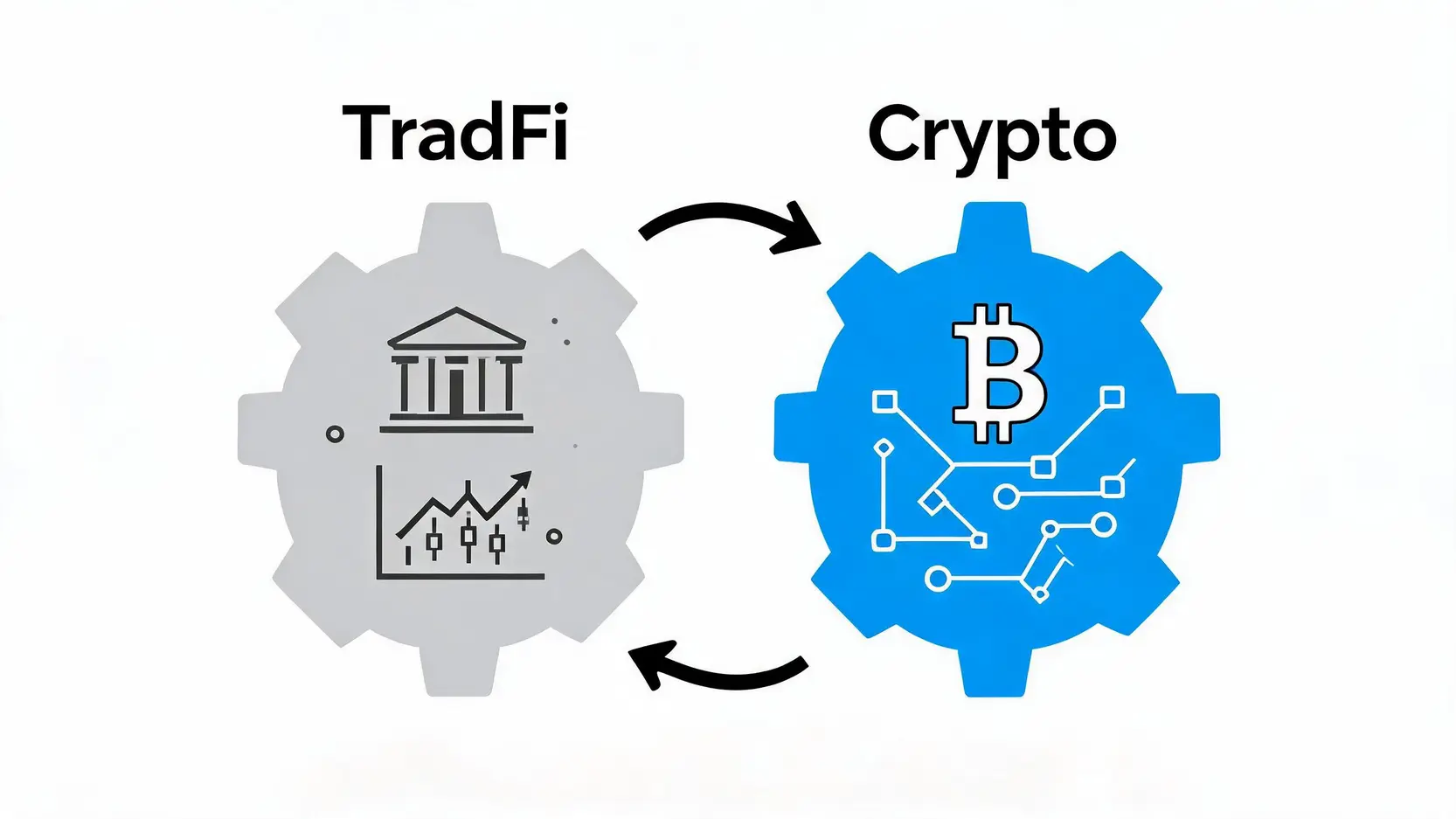
This move by CME is another major signal that traditional financial giants are fully embracing crypto assets. It demonstrates that the TradFi world is actively transforming its infrastructure to adapt to the unique nature of the crypto market, rather than attempting to constrain new assets using old rules. This deep infrastructure integration will further blur the boundaries between traditional finance and digital assets, attracting more mainstream financial institutions and bringing greater legitimacy, capital, and innovation to the market.
The infrastructure integration between traditional finance and the crypto market is accelerating
Impact 5: Indirect Impact and Strategic Implications for Retail Investors
Although CME mainly serves institutions, these changes will indirectly affect retail investors. First, large weekend price gaps may become less common, and short-term market volatility may become smoother. Second, the “CME gap” strategy may lose effectiveness, requiring traders who relied on this signal to adjust their strategies. More importantly, around-the-clock institutional participation will improve overall market pricing efficiency, accelerating the price discovery process and creating a fairer and more transparent environment for all market participants.
How Should Investors Respond to Changes in CME Trading Rules?
Facing this new “never-closing” market environment, both institutions and experienced individual investors should reassess and adjust their trading strategies accordingly.
Adjustment and Deployment of Institutional Trading Strategies
For institutions, the top priority is upgrading trading and monitoring systems to adapt to a 24/7 operating environment. This may require additional overnight and weekend trading staff or the deployment of more advanced automated trading algorithms. In addition, strategy models previously based on “weekend effects” or “gap trading” will need to be reassessed or abandoned. New strategic priorities may shift toward:
Intraday volatility trading: Capturing liquidity peaks during overlapping Asian, European, and American trading sessions.
Event-driven strategies: Responding immediately to breaking news over weekends instead of waiting for the Monday market to open.
Cross-exchange arbitrage: More efficiently exploiting small price differences between CME and other global spot or derivatives exchanges.
Analysis of New Arbitrage and Hedging Opportunities
The 24/7 trading environment also creates new opportunities. For example, traders can execute “cash and carry arbitrage” more precisely by profiting from changes in the basis between CME futures prices and spot prices, since this basis is now continuously tradable. In addition, for options traders, being able to manage Gamma and Vega risks over weekends will significantly improve portfolio performance. Developing a deeper understanding of cryptocurrency derivatives fundamentals will be the key to capturing these new opportunities.
A: The “CME gap” refers to the significant price gap between the Friday closing price and Monday opening price of CME Bitcoin futures. It exists because CME closes over the weekend while the global cryptocurrency spot market continues trading. This gap reflects all price movements that occur during the weekend, making it an important indicator for many traders analyzing market sentiment and developing short-term trading strategies. The launch of 24/7 trading will fundamentally eliminate this gap.
Q: When exactly did CME’s 24/7 trading service begin?
A: According to CME Group’s official announcement, after receiving regulatory approval, its around-the-clock cryptocurrency derivatives trading service officially launched in May 2026.
Q: Besides Bitcoin and Ethereum, will more crypto products be added in the future?
A: At present, CME’s 24/7 trading service mainly focuses on Bitcoin and Ethereum futures and options products, which have the strongest liquidity and highest market demand. Although no official expansion plans have been announced yet, the industry generally expects that as the market matures further and more crypto assets gain broader institutional acceptance, CME may consider including additional cryptocurrency derivatives that meet its listing standards into the around-the-clock trading framework.
Q: What special advantages does CME around-the-clock trading bring to Asian investors?
A: This is a major positive development for investors in Asia. Previously, many key market movements occurred during Asia’s daytime hours (which corresponded to nighttime in the US), forcing investors to wait until US market hours to trade on CME. Now, Asian institutional and retail investors can directly and efficiently participate in the world’s most liquid regulated derivatives market during their own primary working hours, without staying up late waiting for markets to open. This significantly improves both trading convenience and risk management efficiency.
Conclusion
In summary, CME’s launch of 24/7 around-the-clock cryptocurrency trading is not only a natural extension of its own business operations, but also a critical milestone in the maturation and globalization of the institutional crypto market. By eliminating the long-standing market risk known as the “CME gap”, it provides institutional participants with unprecedented flexibility, capital efficiency, and continuous risk management capabilities. This transformation signals that the integration between traditional finance and digital assets is accelerating, while a more efficient, continuous, and globally integrated crypto derivatives market structure is taking shape. For all market participants, adapting to this new “never-closing” market environment will be the key to capturing future opportunities.
How to Get Started with Bitcoin? The Complete 2026 Bitcoin Buying Guide for Beginners After watching Bitcoin repeatedly reach new highs in recent years and successfully pass spot ETF reviews in the US and Hong Kong in 2024, officially entering mainstream financial markets, many investors have turned their attention to...
Is Gold’s V-Shaped Rebound a Bottom-Fishing Signal? A Complete Guide to Trading Strategies Amid “$100 Price Swings” What Is a Gold V-Shaped Rebound? More Than Just a Technical Pattern The gold market has recently experienced sharp rises and falls, with prices frequently displaying dramatic “gold V-shaped rebounds”. Single-day “$100 price...
What Is PPI Data? 2026 Latest Analysis: Understand the Differences from CPI and How It Affects Stock Market Trends With market information constantly changing, do you always hold your breath while waiting for CPI data to be released? But did you know that a more forward-looking inflation indicator, PPI data...