Why Hong Kong Stocks Are Under Pressure: 3 Key Factors

Surging Bond Yields Explained: Why Are They Called the “Tech Stock Killer”?
Recently, the continued surge in the US 10-year Treasury yield (commonly referred to as bond yields), has been like a massive rock thrown into a calm lake, creating ripples across global financial markets. This seemingly distant financial term is no longer relevant only to Wall Street traders. Its influence has quietly spread into every investor’s portfolio. Technology stocks, in particular, have come under intense pressure, as rising bond yields directly challenge their elevated valuations. What is driving higher US Treasury yields? How do rising yields affect technology stock valuations, earning them the title of the “Tech Stock Killer”? This article breaks down the mechanics of bond yields in a simple and practical way, helping you understand one of the most important forces shaping today’s global capital markets.
The Basics: What Are Bond Yields (Treasury Yields)?
To understand the impact of surging bond yields, we first need to start with the basics. A government bond can be thought of as an “IOU” issued by the government when it borrows money from investors. Bond yields, also known as government bond yields, refer to the annualized rate of return an investor expects to earn by purchasing and holding that IOU until maturity.
What Is Yield and How Is It Calculated?
The core concept of yield is straightforward: “how much return your investment generates based on the amount you pay”. The simplified formula is:
Yield = Annual Interest Payment ÷ Current Bond Price
For example, imagine a 10-year government bond with a face value of $1,000 and a coupon rate of 3%. It pays $30 in interest each year. If you purchase the bond for $1,000, your yield is: 30 ÷ 1,000 = 3%
Why Do Higher Bond Yields Mean Lower Bond Prices?
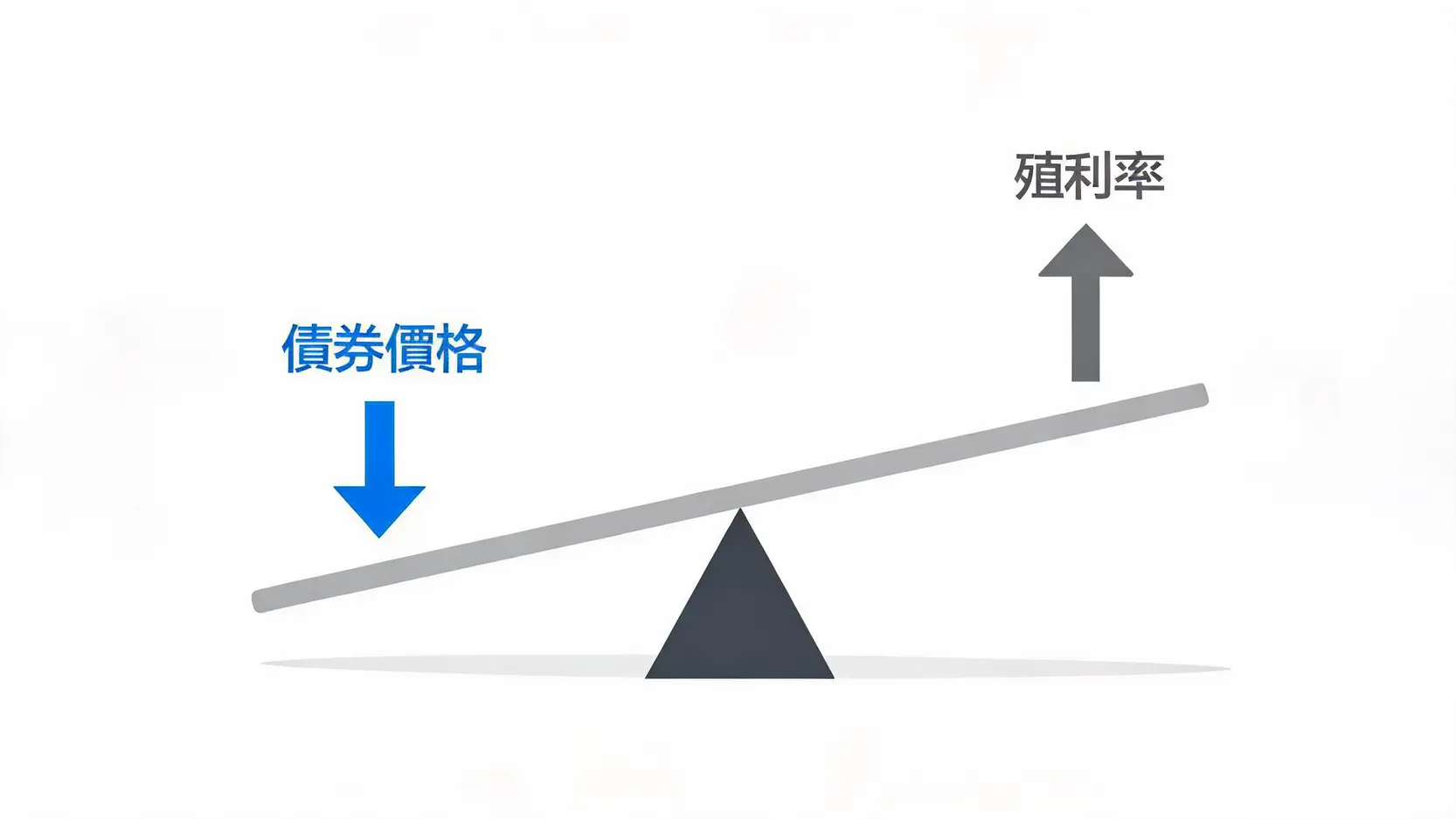
This is the most fundamental “seesaw” relationship in the bond market. While a bond’s coupon rate is fixed when it is issued, its market price fluctuates as investors trade it. Imagine that newly issued bonds now offer a coupon rate of 4%. Your existing bond paying only 3% becomes less attractive. To sell it, you may have to “offer it at a discount”, perhaps for $950 instead of its original $1,000. For the new buyer, paying $950 while still receiving the same annual $30 interest payment results in a higher yield: 30 ÷ 950 ≈ 3.16%
As you can see, when the bond’s price falls (from $1,000 to $950), its yield rises (from 3% to approximately 3.16%). This is why “surging bond yields” and “falling bond prices” are simply two sides of the same coin.
The Core Seesaw Relationship Between Bond Prices and Yields
10-Year Treasury Yield: The “Anchor” of Global Asset Pricing
Among all government bonds, the US 10-year Treasury yield holds a uniquely important position. As the US government is widely regarded as having the highest creditworthiness in the world, US Treasuries are considered a “risk-free asset”. As a result, the 10-year Treasury yield is commonly referred to as the “risk-free rate” and serves as the benchmark for pricing financial assets around the world, acting as the global “pricing anchor”.
Whether valuing equities, determining corporate borrowing costs, setting mortgage rates, or assessing borrowing costs for emerging market economies, investors typically start with the US 10-year Treasury yield before adding an appropriate “risk premium”. Once this benchmark moves higher, the valuation foundation for virtually every asset class shifts higher as well, triggering widespread market repricing.
What Is Driving the Recent Rise in US Treasury Yields?
Every major market move has underlying causes. The recent increase in US Treasury yields is the result of several macroeconomic forces working together, which can largely be summarized into three key factors:
Rising Inflation Expectations: The Side Effect of Strong Economic Data
When economic data (such as employment reports and the Consumer Price Index (CPI)), comes in stronger than expected, markets anticipate continued economic expansion, which is often accompanied by higher inflation. Inflation is the enemy of fixed-income investments because it erodes the real purchasing power of future interest payments and principal repayments. To compensate for this loss of purchasing power, bond investors demand higher yields, prompting them to sell existing bonds. This causes bond prices to fall and yields to rise. Understanding how inflation affects investments is therefore essential for every investor.
Federal Reserve Policy Expectations: Rate Hike Expectations Push Short-Term Rates Higher
The Federal Reserve (Fed) combats elevated inflation through tighter monetary policy, including raising interest rates. Although the Fed directly controls short-term interest rates (through the federal funds rate), its policy stance and forward guidance strongly influence market expectations for future interest rates. When investors broadly expect the Fed to continue raising rates or keep interest rates elevated for an extended period, those expectations spread across the Treasury market, pushing medium- and long-term Treasury yields higher.
Supply and Demand Imbalance: The Impact of Increased Government Bond Issuance
When the government increases fiscal spending (such as on infrastructure projects or defense), it often finances those expenditures by issuing more Treasury securities. This increases the supply of bonds available in the market. According to basic supply and demand principles, if demand does not increase at the same pace, greater supply leads to lower bond prices. As bond prices decline, yields naturally rise. This is why every announcement from the US Treasury regarding future bond issuance receives such close attention from financial markets.
Further Reading (Highly Recommended)
How Do Surging Bond Yields Affect Different Asset Classes?
When the global “pricing benchmark” moves, its impact is far from uniform across different asset classes. Instead, the effects are highly structural, which explains why surging bond yields often trigger sharp sector rotation across financial markets.
The Impact on Growth and Technology Stocks: Understanding the Discounted Cash Flow (DCF) Valuation Model
Technology and growth stocks are hit the hardest because of the way they are valued. Investors commonly use the “Discounted Cash Flow (DCF)” valuation model to determine the intrinsic value of these companies. Simply put, the logic of this model is that a company’s value equals the sum of the “present value” of all its expected future cash flows.
The key lies in the “discounting” process. As money received in the future is worth less than money received today, future cash flows must be discounted back to their present value using a “discount rate”. The foundation of this discount rate is the “risk-free rate”, (namely the 10-year Treasury yield).
- Bond yields rise → The discount rate rises
- The discount rate rises → The present value of future cash flows falls
- Company valuation declines
Most of a technology company’s value is based on earnings expected many years into the future (perhaps five or even ten years ahead). When those future cash flows are discounted using a higher discount rate, their present value declines significantly. It is similar to dividing the same numerator by a larger denominator, naturally producing a smaller result. This is the fundamental reason why surging bond yields have earned the nickname the “Tech Stock Killer”.

How Rising Bond Yields Reduce Technology Stock Valuations Through the DCF Model
The Impact on Value Stocks and Financial Stocks: Why Do Bank Stocks Benefit?
Compared with growth stocks, value stocks (such as traditional industrial, energy, and financial companies) are affected differently. These businesses generally generate stable cash flow today, making their valuations less dependent on earnings far into the future. As a result, higher discount rates have a relatively smaller impact on their valuations. This is one reason why the principles of value investing are often discussed during periods of rising interest rates.
Banks may even benefit from higher bond yields. Their core business model is to “earn the spread between borrowing and lending rates”. Banks raise deposits at relatively low short-term interest rates and lend money at higher long-term interest rates. When long-term bond yields rise faster than short-term yields, the yield curve steepens, expanding banks’ net interest margin (NIM) and improving profitability.
The Impact on Real Estate and Mortgage Rates
The property market is also affected by surging bond yields. The pricing of 30-year fixed mortgage rates is closely linked to the 10-year Treasury yield. As Treasury yields rise, banks’ funding costs increase, and these higher costs are passed on to borrowers through higher mortgage rates. Higher mortgage rates increase monthly repayments for homebuyers, reducing housing demand and potentially cooling the real estate market or even leading to price declines.
Differentiating Insight: What Is a Yield Curve Inversion, and Why Is It Considered a Leading Indicator of Economic Recession?
When discussing bond yields, one phenomenon that cannot be overlooked is the “yield curve inversion”. It is one of the market’s most important warning signals and has repeatedly provided early indications of economic recessions throughout history.
Understanding the Relationship Between Short-Term and Long-Term Bond Yields
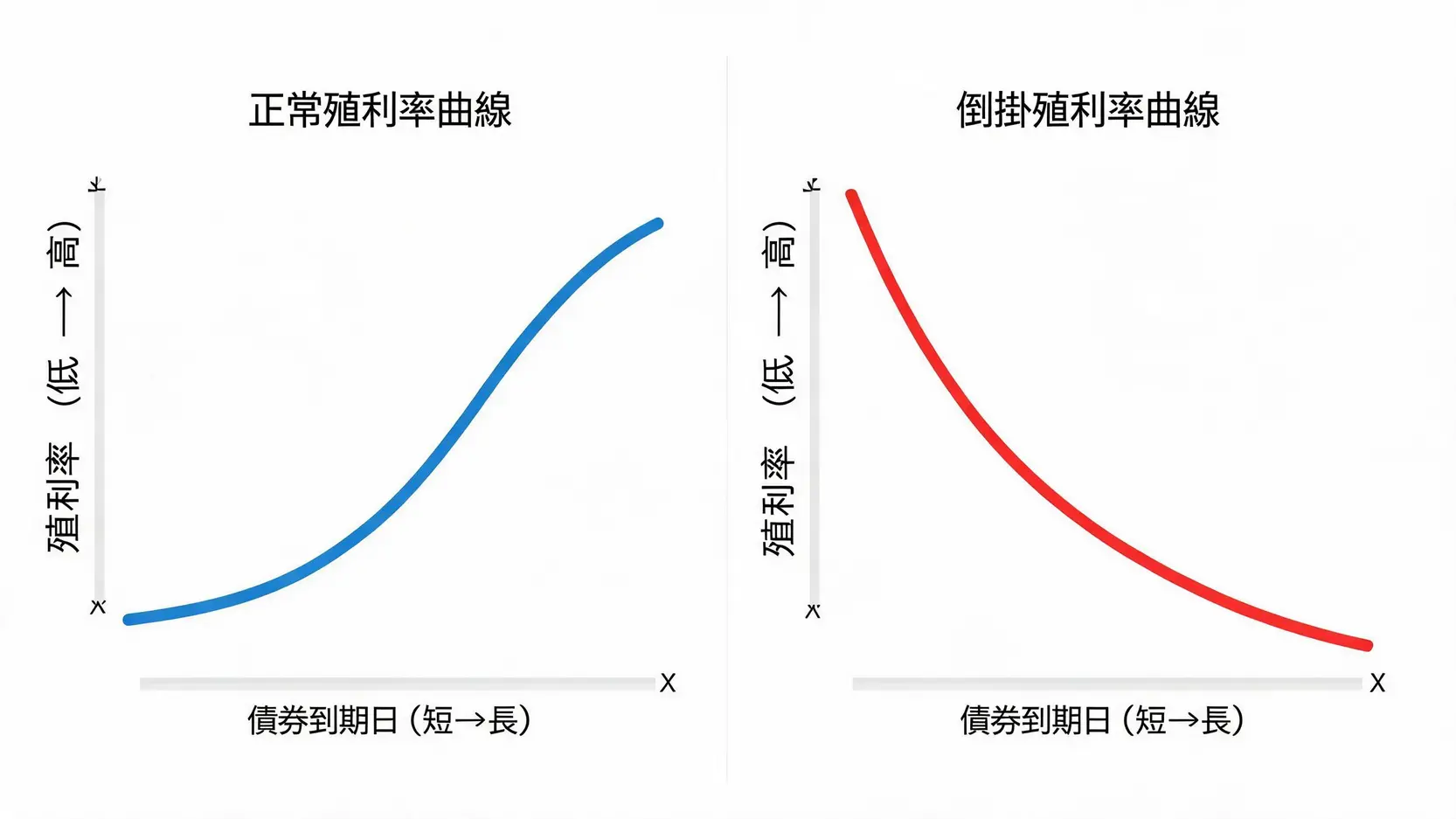
Under normal conditions, the yield curve “slopes upward”, meaning longer-term bonds (such as 10-year Treasuries), offer higher yields than shorter-term bonds (such as two-year or three-month Treasuries). This makes intuitive sense because investors require greater compensation for locking up their capital over longer periods, given the higher uncertainty, (including inflation risk).
However, when short-term yields exceed long-term yields, a “yield curve inversion” occurs. This indicates that investors expect economic conditions to weaken in the future and anticipate that the Federal Reserve will eventually need to cut interest rates significantly to support the economy. As a result, investors rush to lock in relatively attractive long-term yields by buying longer-term bonds, driving bond prices higher and yields lower, ultimately producing the inversion.

Normal vs. Inverted Yield Curves
Historical Yield Curve Inversions and Economic Cycles
Historically, yield curve inversions have demonstrated remarkable predictive power. According to research by Investopedia, nearly every US recession since World War II has been preceded by an inverted yield curve. Although recessions have typically occurred between six and twenty-four months after the inversion first appeared, the yield curve has become widely recognized as one of the market’s most reliable leading indicators. As a result, when investors observe a yield curve inversion, they often begin adopting more defensive asset allocation strategies.
Frequently Asked Questions (FAQ)
Q: Bond Yields Are Surging. Should I Sell My Stocks?
A: This is not a simple “yes” or “no” question. The first step is to assess the type of stocks you own. As discussed above, high-valuation growth stocks and technology stocks are particularly sensitive to interest rates and therefore carry greater risk. In contrast, value stocks, financial stocks, and companies with stable cash flows and strong pricing power may prove more resilient. The key is not whether to sell, but whether to review and adjust your portfolio so that its structure is better suited to a rising interest rate environment, avoiding excessive concentration in high-risk growth stocks.
Q: Is Now a Good Time to Buy Bonds?
A: When bond yields surge (and bond prices fall), investors seeking fixed income may indeed have an opportunity to lock in higher yields by buying bonds at lower prices. However, the risk is that if interest rates continue to rise, the value of the bonds you purchase today may decline even further. One strategy is to buy in stages, or consider investing in short-term bonds or bond funds, which are less sensitive to interest rate changes (have a shorter duration) and therefore carry relatively lower risk.
Q: How High Can Bond Yields Rise?
A: Predicting the peak of interest rates is extremely difficult. The future direction of bond yields depends on many variables, including inflation trends, Federal Reserve policy decisions, and the overall health of the global economy. Investors should closely monitor these macroeconomic indicators, particularly the monthly Consumer Price Index (CPI) and employment reports, as they play a critical role in shaping Federal Reserve policy. Rather than trying to predict the peak, it is generally more prudent to prepare a well-balanced portfolio that can perform under different interest rate scenarios.
Q: How Can I Protect My Investment Portfolio During a Period of Surging Bond Yields?
A: Diversification remains one of the most effective ways to manage market volatility. Beyond rotating from growth stocks into value stocks, investors may also consider allocating part of their portfolio to assets that are less sensitive to interest rate movements. These may include: 1) Commodities (such as gold and crude oil), which often perform well during inflationary periods; 2) Real Estate Investment Trusts (REITs), whose rental income can potentially rise with inflation; and 3) Defensive sectors that are less affected by interest rates, such as utilities and consumer staples. Building a diversified portfolio remains one of the most reliable approaches to navigating changing interest rate cycles.
Conclusion
Understanding the causes and implications of surging bond yields is an essential lesson for modern investors. Bond yields are not only a key indicator of macroeconomic conditions but also a central factor driving the repricing of global assets. From valuation adjustments in technology stocks and the relative strength of bank stocks to the warning signal provided by yield curve inversions, each market development follows a clear transmission mechanism. In today’s rapidly changing interest rate environment, rather than becoming distracted by short-term market fluctuations, investors should return to fundamentals by closely monitoring bond yields and understanding their far-reaching impact on different asset classes. Doing so will provide one of the most reliable guides for navigating market volatility and making informed investment decisions.
Related Articles
-
Essential Reading on Japan Investment Risks: Five Potential Risks You May Not Know Besides Yen Depreciation Driven by the historic depreciation of the yen, global capital is flowing into Japan with unprecedented enthusiasm. Both the stock market and the real estate market are showing a thriving picture. The market is...2026 年 6 月 23 日
-
Will the Gold Price Bull Market Continue? 2026 XAUUSD Trend Analysis, Experts Reveal Three Key Drivers Recently, gold prices have repeatedly hit new highs, and the market is actively debating whether gold has entered a new historic gold price bull market. Many investors are both excited and concerned, wondering how...2026 年 6 月 23 日
-
Ultimate Guide to Trading XAUUSD Trends: From Candlestick Teaching to Practical Strategies for Stable Profits for Beginners XAUUSD (spot gold against the US dollar), as one of the world’s most popular trading instruments, offers abundant profit opportunities through its sharp price fluctuations, but also comes with considerable risk. Many beginners...2026 年 6 月 23 日