XRP Price Analysis 2026: Trends, ATH & Forecast

Updated: 2026/03/18  |  CashbackIsland

xrp-price-analysis-guide

XRP Price Trend Analysis: XRP K-Line Analysis, Historical Highs, and 2026 Price Movement Predictions

The price trend of Ripple (XRP) has long been a focal point for cryptocurrency investors. Its sharp volatility, combined with the unresolved SEC lawsuit, has left many people both hopeful and cautious. Do you also feel uncertain about the future of XRP and wonder whether now is the right time to invest? This article will provide an in-depth analysis of Ripple’s historical prices, offer practical XRP K-line analysis tutorials, and reveal the key factors influencing XRP price movements. By understanding these critical elements before making a move, you can make more informed investment decisions. 


Understanding Ripple (XRP): More Than a Cryptocurrency, a Payment Revolution

Before analyzing the price trend of Ripple, it is important to understand the essence of XRP. It is not merely a speculative digital asset. Behind it lies an ambitious vision to transform the global payment system. Many new investors only focus on price fluctuations and overlook its underlying value.


The Core Value of XRP: Why It Enables Fast and Low-Cost Cross-Border Payments?

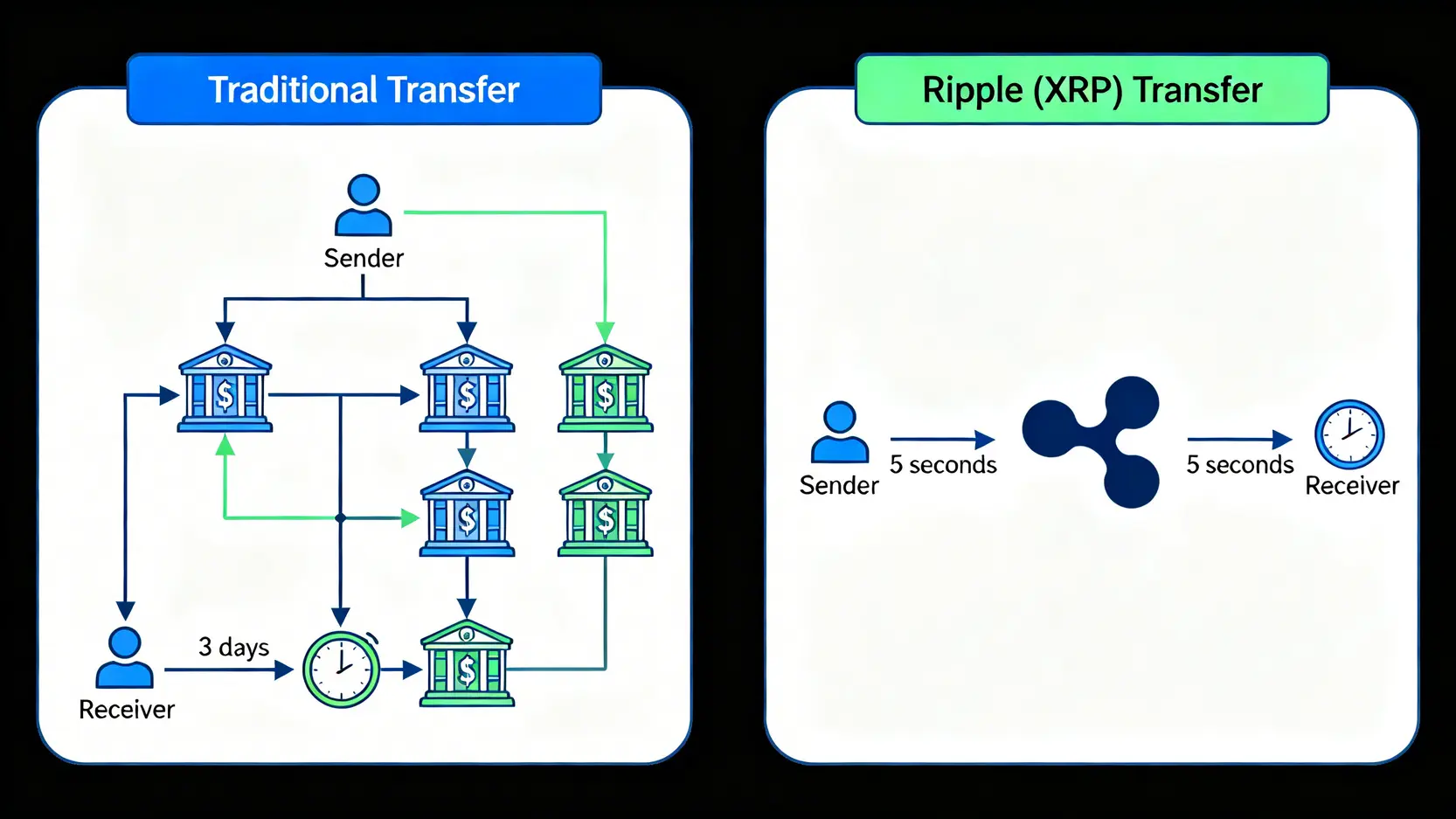
Traditional international remittances often require multiple intermediary banks. The process can take several days and involves high fees. The Ripple network and its native token XRP were designed specifically to address this problem. Its core value is reflected in the following aspects:

  • Ultra-Fast Transactions: XRP transactions are confirmed within 3-5 seconds. By comparison, Bitcoin transactions typically require around 10 minutes, while Ethereum transactions can take several minutes. This near-instant settlement speed is critical for financial operations that demand efficiency.
  • Extremely Low Cost: The transaction fee for each XRP transfer is as low as 0.00001 XRP, which is almost negligible. This makes small cross-border payments feasible and significantly reduces the barrier to global capital flows.
  • Scalability: The XRP Ledger (XRPL) can process up to 1,500 transactions per second (TPS), with the potential to scale to tens of thousands of transactions comparable to Visa. This capability lays the foundation for XRP to become a mainstream payment solution.

傳統國際匯款與使用瑞波幣 (XRP) 進行跨境支付的流程對比圖,突顯 XRP 的速度與低成本優勢。

Ripple (XRP) simplifies the traditionally complex international remittance process.


How Is XRP Different From Bitcoin and Ethereum? The Unique Characteristics of XRP

Although XRP is also a cryptocurrency, its underlying technology and market positioning differ significantly from Bitcoin (BTC) and Ethereum (ETH):

Comparison Item Ripple (XRP) Bitcoin (BTC) Ethereum (ETH)
Core Positioning Global Payments, Cross-Border Settlement Bridge Currency Digital Gold, Store of Value Smart Contract Platform, Decentralized Applications (DApps)
Consensus Mechanism Ripple Protocol Consensus Algorithm (RPCA) Proof of Work (PoW) Proof of Stake (PoS)
Transaction Speed 3–5 Seconds Approximately 10 Minutes Approximately 1–3 Minutes
Token Supply Total Supply of 100 Billion, Fully Pre-Mined Total Supply of 21 Million, Generated Through Mining No Maximum Supply, Generated Through Mining or Staking

In simple terms, Bitcoin is the pioneer of cryptocurrencies and is positioned primarily as a store of value. Ethereum functions more like a global computer built on blockchain technology, focusing on smart contracts. However, XRP was designed from the very beginning with a clear objective: to serve as an efficient and low-cost “liquidity bridge” between financial institutions.


Further Reading (Highly Recommended)

[Buying and Selling Cryptocurrency in Hong Kong] Crypto Investment Beginner’s Guide: Learn How to Buy and Sell Ethereum in 5 Steps

The Ultimate Guide to the RSI Indicator: From RSI Formula and Calculation Methods to Optimal Parameter Settings


Reviewing Ripple’s Historical Price Trend: Key Turning Points From Peak to Bottom

To forecast the future, it is essential to understand the past. The historical price of XRP has been highly dramatic, featuring both explosive bull markets and painful bear markets. These fluctuations are rarely random and are often driven by major events.


Chart Analysis: Major Bull and Bear Cycles in XRP History

Looking back at XRP’s price chart, several key moments stand out clearly:

  • The explosive bull market of 2017 to early 2018: Driven by the overall frenzy in the cryptocurrency market, XRP surged by hundreds of times within just a few months. In January 2018, it reached an all-time high (ATH) of approximately 3.84 US dollars. At the time, the market was filled with optimism about its vision for cross-border payments.
  • The prolonged bear market from 2018 to 2020: As the cryptocurrency bubble burst, XRP’s price collapsed and entered a nearly three-year period of weakness. Prices once fell below 0.2 US dollars, severely damaging market confidence.
  • The recovery and challenges of 2021: With the arrival of a new bull cycle, XRP briefly climbed above 1.9 US dollars. However, the SEC lawsuit acted like a dark cloud over the market, limiting its upside potential and causing it to underperform compared with many other mainstream cryptocurrencies.


How Major Events Impact XRP Prices (SEC Lawsuit, Exchange Delistings, Partnership Changes)

Compared with purely technical analysis, major events and news developments often have a more immediate and dramatic impact on the price of XRP:

  • SEC Lawsuit (December 2020): This was the most significant turning point in XRP’s history. The US Securities and Exchange Commission accused Ripple Labs of conducting an unregistered securities offering, causing XRP’s price to drop by more than 50 percent within a short period.
  • Exchange Delistings: After the SEC lawsuit was filed, several major exchanges, including Coinbase and Binance.US, suspended or delisted XRP trading. This significantly affected liquidity and investor confidence.
  • Partnership Developments: Ripple’s partnerships with financial institutions around the world have always been a key factor supporting XRP’s value. News of new collaborations or the termination of existing partnerships (such as the change in its relationship with MoneyGram) often triggers price volatility.


Practical XRP K-Line Analysis for Beginners

After understanding the fundamentals, learning technical analysis becomes an important skill for determining entry and exit timing. Candlestick charts are the foundation of technical analysis because they clearly reflect the balance of power between buyers and sellers. For beginners, mastering basic XRP K-line analysis techniques is essential.


Understanding K-Line Basics: How to Read Candlesticks, Support, and Resistance?

A K line (candlestick chart) consists of a body and shadows:

  • Bullish Candle (Green or White): The closing price is higher than the opening price, indicating upward movement and positive market sentiment.
  • Bearish Candle (Red or Black): The closing price is lower than the opening price, indicating downward movement and negative market sentiment.
  • Upper Shadow: The highest price reached during the period.
  • Lower Shadow: The lowest price reached during the period.

Two key concepts in candlestick analysis are:

  • Support Level: A price level where buying pressure increases and prevents the price from falling further. This often corresponds to previous clusters of price lows.
  • Resistance Level: A price level where selling pressure increases and prevents the price from rising further. This often corresponds to previous clusters of price highs.

一張解釋 K 線圖中支撐位與壓力位的示意圖,圖中標示了價格高點形成的壓力線和價格低點形成的支撐線。

Support and resistance levels in candlestick charts are critical for identifying trends and trading opportunities.


Three Common Technical Indicators: MA, RSI, and MACD for XRP

Observing candlesticks alone may not be sufficient. Combining them with technical indicators provides deeper insights into market behavior:

  1. Moving Average (MA): MA smooths price fluctuations and reveals long-term trends. For example, when a short-term MA such as the 20MA crosses above a long-term MA (such as the 50MA), it is called a “golden cross” and is generally considered a bullish signal. The opposite situation is known as a “death cross”, which indicates bearish momentum.
  2. Relative Strength Index (RSI): RSI is a momentum indicator ranging from 0 to 100 and is used to determine whether the market is “overbought” or “oversold”. Generally, an RSI above 70 suggests overbought conditions and a potential pullback, while an RSI below 30 indicates oversold conditions and a possible rebound.
  3. Moving Average Convergence Divergence (MACD): MACD consists of a fast line (DIF), a slow line (DEM), and a histogram (OSC). It is used to identify trend strength and potential reversal points. When the fast line crosses above the slow line and the histogram turns from negative to positive, it is considered a buy signal. The opposite situation signals a potential sell opportunity.


The Four Core Factors Driving XRP Price Movements

Overall, many variables influence the price trend of XRP. However, the key drivers can generally be summarized into four major factors that collectively determine its potential and risk profile.


Factor One: The Latest Developments in the SEC Lawsuit

This remains the biggest uncertainty affecting XRP’s price trend. The central issue of the lawsuit between the SEC and Ripple is “whether XRP should be classified as a security”. Any development in this case, including judicial rulings, evidence submissions, or settlement rumors, tends to trigger immediate price reactions.

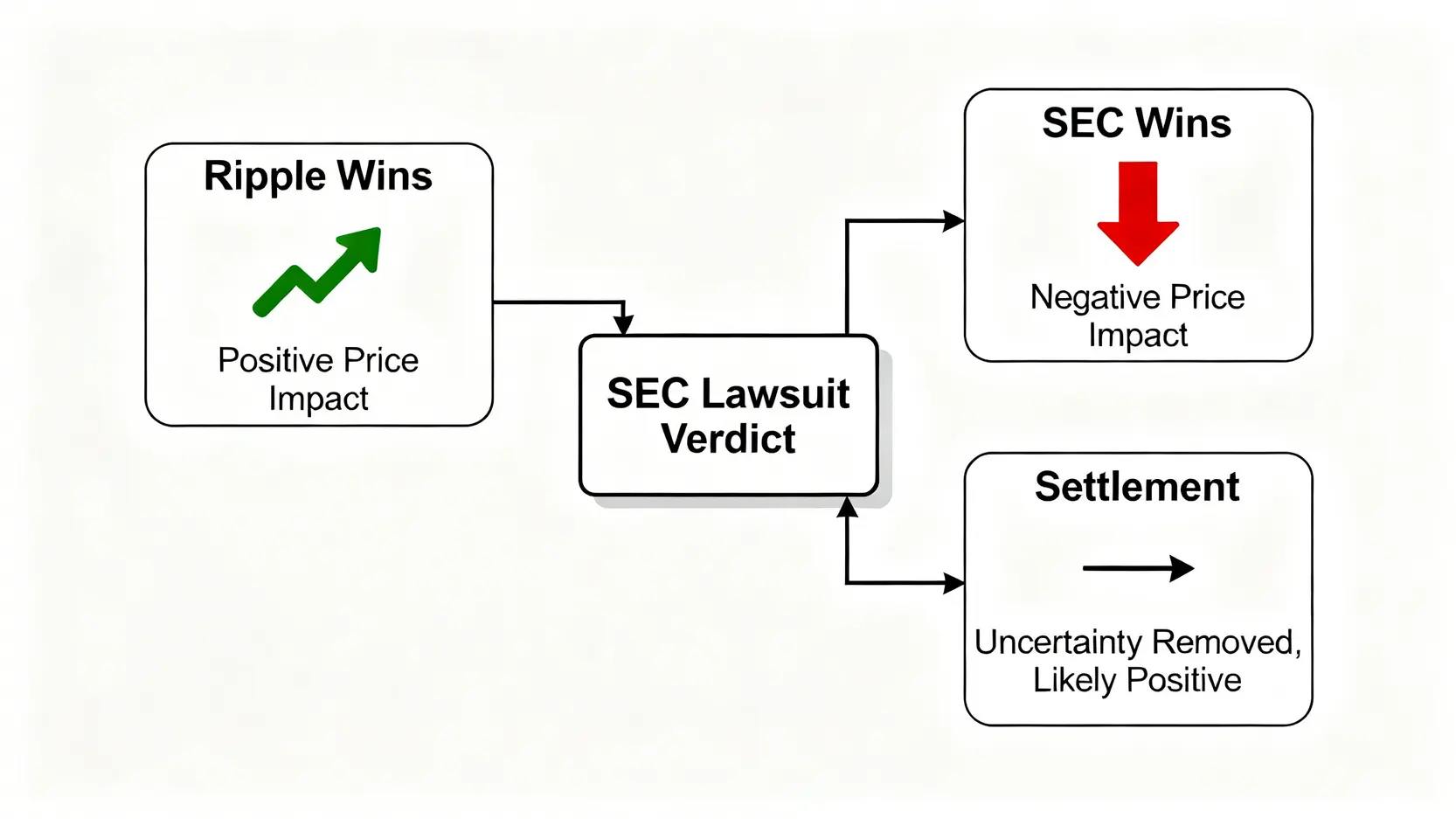
  • If Ripple Wins: It would likely be viewed as a major victory for the entire cryptocurrency industry. XRP could experience a strong rebound as legal uncertainty disappears.
  • If the SEC Wins: It could deal a severe blow to XRP, particularly in the US market, potentially placing significant downward pressure on its price.
  • If Both Parties Reach a Settlement: The market impact will depend on the settlement terms, but removing uncertainty is generally considered positive for market sentiment.

一張流程圖,展示美國 SEC 對瑞波公司訴訟案的三種可能結果及其對瑞波幣價格的潛在影響。

The outcome of the SEC lawsuit remains the most significant variable influencing XRP’s future trend.


Factor Two: Overall Cryptocurrency Market Sentiment and Bitcoin Correlation

As the saying goes, “the same tide that lifts a boat can also sink it”. Regardless of XRP’s fundamentals, it cannot fully detach from the broader cryptocurrency market environment. Bitcoin, as the market leader, often influences the price movements of most altcoins, including XRP. Therefore, analyzing Bitcoin trends and overall market sentiment (such as the Fear and Greed Index) is essential when evaluating XRP.


Factor Three: Expansion of Ripple’s Global Partnership Network

The intrinsic value of XRP ultimately depends on the level of real-world adoption. Ripple’s partnerships with banks, payment providers, and financial institutions worldwide form a crucial part of its fundamental value. The market closely monitors the expansion of RippleNet and its On-Demand Liquidity (ODL) services. Announcements of new partnerships with major financial institutions are typically interpreted as bullish signals that strengthen investor confidence.


Factor Four: XRP Token Supply and the Burn Mechanism

XRP has a maximum supply of 100 billion tokens, all of which were pre-mined. A significant portion is held by Ripple and released into the market periodically through escrow accounts. This supply mechanism can influence market dynamics. Additionally, a very small amount of XRP is permanently destroyed with each transaction as a network fee. This creates a gradual deflationary model. Although the short-term impact may be limited, over the long term the balance between token supply and burn mechanisms plays an important role in determining scarcity and value.


Further Reading (Highly Recommended)

[Buying and Selling Cryptocurrency in Hong Kong] Crypto Investment Beginner’s Guide: Learn How to Buy and Sell Ethereum in 5 Steps


FAQ Frequently Asked Questions About XRP Price Trends

Q: What is the difference between XRP and Ripple?

A: This is a concept many beginners often confuse. Ripple is a financial technology company focused on developing global payment solutions. XRP is a digital asset that can be used within the RippleNet payment network and exists as an independent open-source cryptocurrency. A simple analogy is that Ripple is like a company that builds highways, while XRP is the most efficient “vehicle” that can travel on that highway. Although they are closely related, they are legally and operationally separate entities.

Q: If the SEC ultimately wins the lawsuit, will XRP’s price drop to zero?

A: Although an SEC victory would deal a significant blow to XRP, the likelihood of the price dropping to zero is extremely low. XRP is a global decentralized digital asset whose value does not depend solely on the US market. Ripple operates extensively in other regions (such as Europe and Asia) with numerous partnerships. Even if XRP were classified as a security in the US, it could still continue to trade and be used in other compliant markets worldwide. However, it is undeniable that its price and liquidity could be significantly affected.

Q: Which compliant platforms in Hong Kong allow trading XRP?

A: In Hong Kong, investors should choose exchanges that have obtained a virtual asset trading platform license from the Securities and Futures Commission (SFC) or are currently on the application list to ensure asset security. For example, OSL and HashKey Exchange are currently licensed platforms. Additionally, some globally recognized exchanges such as Binance and OKX offer XRP trading pairs. However, investors should pay close attention to their compliance status and regulatory developments in Hong Kong when choosing a platform.

Q: What are the price predictions for XRP in 2026? Could it return to its historical high?

A: Predictions for XRP’s price in 2026 vary significantly and largely depend on the outcome of the SEC lawsuit. If Ripple wins the case, many analysts believe XRP could potentially challenge or even surpass its historical high of 3.84 US dollars because the largest source of uncertainty suppressing its price would be removed. Conversely, if Ripple loses, the price may remain at lower levels for an extended period. Investors should treat XRP as a high-risk investment and closely monitor substantive developments in the case rather than relying solely on price forecasts.


Conclusion

In summary, XRP is an asset that combines significant potential with substantial risk. Its future price trajectory will largely depend on the final outcome of the SEC lawsuit, which remains the most critical variable in all analyses. Before making any investment decisions, investors should fully understand the factors influencing XRP’s price movements, including macro market sentiment, corporate fundamentals, and token economic models, while also considering their own risk tolerance. This comprehensive XRP K-line analysis and historical price review aims to provide valuable insights to support more informed investment decisions.

编者
Evan Lin

Evan Lin

我是Evan Lin,从大学时期开始接触外汇交易,至今已有多年实战经验,熟悉技术分析与EA策略,热衷于研究市场脉动与风险管控,喜欢分享实战经验和交易技巧,和大家一起学习、一起进步!

If you liked this article, please share it!

Related Articles

  • Order Flow Analysis Tools: Track Institutional Activity
    In-Depth Review of Intelligent Order Flow Detection Tools: Understanding Institutional Activity and Identifying Real Market Buying and Selling Pressure What Is Order Flow, and Why Is It a “Leading Indicator” for Price Prediction? Candlestick charts and technical indicators can be misleading, but the real-money "Order Flow" within the market cannot....
    2026 年 6 月 4 日
  • Social Sentiment Indicators: Predicting Stock Trends
    Social Sentiment Quantitative Indicators: Mining PTT and Dcard Discussions to Predict Stock Prices What Are Social Sentiment Quantitative Indicators, and Why Are They Becoming Increasingly Important? In an era of information overload, financial markets are no longer driven solely by cold financial statements and macroeconomic data. The "Shipping King" phenomenon...
    2026 年 6 月 4 日
  • Taiwan FSC Futures Broker Verification Guide
    Avoid Fraudulent Platforms! A Visual Guide to Taiwan FSC Licensed Futures Merchant Verification and Scam Prevention In recent years, driven by heightened volatility in global financial markets and the impact of monetary easing policies worldwide, more investors have begun seeking diversified investment instruments. However, underground futures operators and overseas fraudulent...
    2026 年 6 月 4 日
返回顶部