Is XRP Worth Buying? 2026 Outlook & Price Forecast

Updated: 2026/03/18  |  CashbackIsland

xrp-investment-prospects-and-risks-guide

Is Ripple (XRP) Still Worth Investing In? The Ultimate Guide to the 2026 Outlook, Risks, and Price Predictions

Ripple (XRP) has long attracted attention for its potential in efficient cross-border payments, yet it has also been surrounded by controversy due to its legal battle with the US Securities and Exchange Commission (SEC). The partial victory in this lawsuit has prompted many investors to reconsider: after analyzing the outlook for XRP, is it still worth investing in now? This article will provide an in-depth analysis of the future development of Ripple, covering its core technology, the risks of investing in XRP, and its future potential, offering a comprehensive investment evaluation guide to help you make a more informed decision before positioning your investment.


Understanding Ripple (XRP): It Is More Than Just a Cryptocurrency

To evaluate the future development of Ripple, it is first necessary to understand its fundamental value. Unlike Bitcoin, which is regarded as “digital gold”, XRP has carried a clear commercial mission since its inception. Its goal is not to replace traditional finance, but to optimize it.


The Core Mission of XRP: Solving the Delays and High Costs of Global Cross-Border Payments

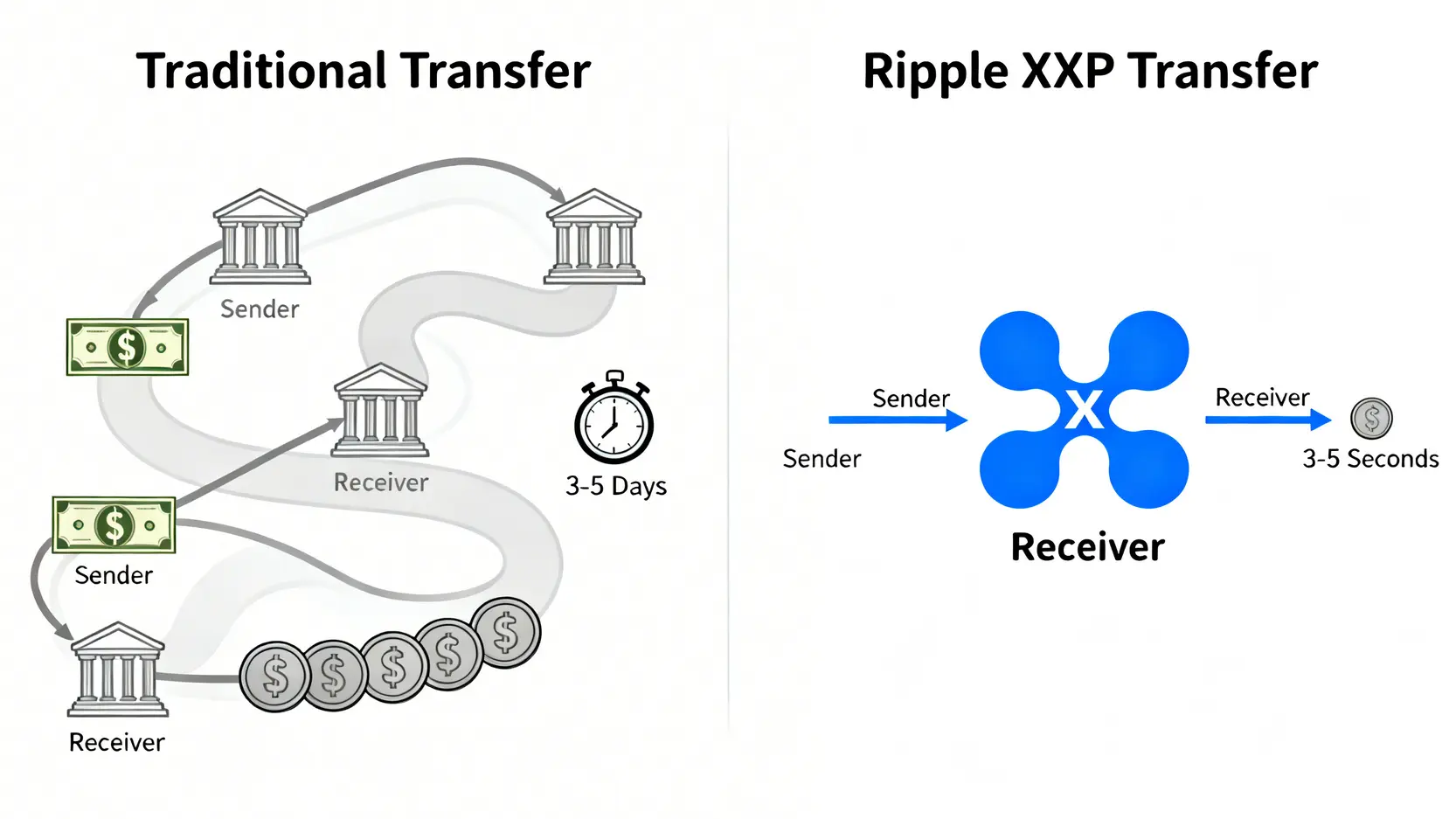
Traditional international remittances are an expensive and time-consuming process. Funds must pass through multiple intermediary banks, each of which charges a processing fee, and the entire process may take 3–5 business days. This inefficient system is precisely what Ripple and its native token XRP aim to disrupt.

傳統跨境匯款與瑞波幣(XRP)支付流程的對比圖,突顯 XRP 在速度和成本上的優勢。

Ripple (XRP) significantly simplifies the complex process of traditional international remittances, enabling near-instant settlement.

XRP is designed as a “bridge currency”, intended to:

  • Reduce costs: Bypass the traditional correspondent banking network, significantly lowering transaction fees.
  • Increase speed: Transaction confirmation takes only 3–5 seconds, enabling near-instant fund settlement.
  • Enhance transparency: Blockchain technology allows every step of fund movement to be traceable, reducing errors and delays.

Simply put, XRP aims to make international payments as simple, fast, and inexpensive as sending an email.


RippleNet and the XRP Ledger: How Do They Work Together to Enable Instant Settlement?

To achieve the goals mentioned above, two core components must work together:

  1. RippleNet: This is a global network composed of financial institutions such as banks and payment providers. It provides a standardized communication protocol that allows members within the network to easily conduct payment clearing. One of RippleNet’s core products is ODL (On-Demand Liquidity), which directly uses XRP as a bridge asset to complete cross-border transactions without the need to pre-fund accounts in the destination country.
  2. XRP Ledger (XRPL): This is an open-source, decentralized blockchain on which XRP operates. XRPL uses a unique consensus mechanism that enables extremely fast transaction speeds (reaching up to 1,500 transactions per second), while maintaining very low transaction costs (about USD 0.0002). Its efficiency and scalability form the technological foundation supporting RippleNet’s services.

When financial institutions use the ODL service, the system converts the sender’s fiat currency into XRP, transfers it within seconds to a partner exchange in the destination country, and then converts the XRP into the recipient’s fiat currency. The entire process is fast and seamless, effectively solving the pain points of the traditional model.

Ripple 的 ODL (On-Demand Liquidity) 服務工作流程圖,展示 XRP 如何作為橋樑貨幣實現法幣間的快速兌換與結算。

RippleNet’s ODL service uses XRP as a bridge to transfer value between different fiat currencies within seconds.


Further Reading (Highly Recommended)

2026 Hong Kong Cryptocurrency Beginner’s Guide: Start From Zero and Safely Enter the Virtual Asset World!

What Are ETF Risks? A Comprehensive Analysis of ETF Risk Levels and Investment Management Strategies


Potential Returns From Investing in XRP: What Supports Its Future Development?

Despite ongoing controversy, the future development potential of Ripple continues to attract a large number of investors. Its potential returns are mainly supported by several key pillars, which are also important highlights that cannot be ignored when conducting an XRP outlook analysis.


Partnership Network With Financial Institutions: Adoption Potential Across Hundreds of Banks

One of Ripple’s greatest competitive advantages is its global financial partnership network built over many years. Currently, hundreds of financial institutions have joined RippleNet, spanning more than 55 countries worldwide. Although not all partners are currently using XRP for liquidity management, this extensive network has laid a solid foundation for the future expansion of ODL services. Once more banks begin adopting XRP, it could significantly drive demand and increase its value.


Positive Impact of the SEC Lawsuit Victory: Reduced Regulatory Uncertainty

The multi-year SEC lawsuit was undoubtedly a heavy weight pressing on the price of XRP. In 2023, the court ruled that the programmatic sale of XRP on secondary markets does not constitute security, marking a milestone victory. This ruling clarified the legal status of XRP in the US, significantly reducing regulatory uncertainty and prompting several exchanges to relist XRP for trading. This removed one of the largest obstacles to XRP’s future development and paved the way for its acceptance by mainstream financial institutions.


Technological Advantages: Fast Transaction Speed, Low Fees, and High Scalability

From a technical perspective, the performance of the XRP Ledger (XRPL) ranks among the top across many blockchains.

  • Transaction Speed: Settlement times of 3–5 seconds are far faster than Bitcoin (about 60 minutes) and Ethereum (about 13–15 seconds).
  • Transaction Cost: Its transaction fees are almost negligible, making it especially suitable for small, high-frequency payment scenarios.
  • Scalability: The ability to process 1,500 transactions per second enables it to support large-scale commercial applications.
  • Energy Efficiency: Compared with Bitcoin’s Proof-of-Work (PoW) mechanism, XRPL’s consensus mechanism consumes extremely low energy, aligning with the current global emphasis on environmental sustainability (ESG).

These technological advantages make it a powerful tool for solving real-world business problems rather than merely a speculative asset.


Risk Assessment of Investing in XRP: Three Pitfalls You Must Be Aware Of

While recognizing its significant potential, rational investors must also have a clear understanding of the risks involved in investing in XRP. Ignoring these potential pitfalls may expose your investment portfolio to substantial losses. The following three points are key risks that must be carefully considered before making an investment decision.


Centralization Controversy: Ripple’s Influence Over Token Supply

This has long been a point of criticism within the community regarding XRP. Although the XRP Ledger itself is decentralized, Ripple still holds a large amount of unreleased XRP tokens. These tokens are locked in escrow accounts, with a portion released into the market each month. Critics argue that this structure gives Ripple potential control over market supply, which contradicts the “decentralization” principle of cryptocurrencies. Although Ripple states that this arrangement is intended to maintain market stability, this concentration of power remains a potential investment risk.


Intense Market Competition: Challenges From Stablecoins and Other Blockchains

The cross-border payment problem that Ripple aims to solve is also a key battleground for other blockchain projects. Market competition is becoming increasingly intense:

瑞波幣(XRP)面臨的市場競爭環境示意圖,顯示其與穩定幣、其他公鏈和央行數位貨幣的競爭關係。

Ripple faces challenges in the cross-border payment sector from stablecoins, high-performance public blockchains, and future central bank digital currencies (CBDCs).

  • Stablecoins: Stablecoins such as USDT and USDC, which are pegged to the US dollar, are already widely used for cross-border settlement and value transfer. Because they do not carry price volatility risk, they are more attractive to financial institutions.
  • Other Layer-1 Blockchains: Many emerging high-performance blockchains, such as Solana and Aptos, also offer high speed and low cost. They are actively expanding into the payments sector, creating direct technological competition.
  • Central Bank Digital Currencies (CBDCs): Central banks around the world are researching and piloting their own digital currencies. Once CBDCs become widely adopted, they may directly replace the role of third-party solutions such as XRP.

Whether Ripple can stand out in this intense competition remains uncertain.


Lingering Regulatory Risk: Potential for Future Legal Challenges

Although the SEC lawsuit achieved a partial victory, this does not mean that regulatory risk has completely disappeared. First, the SEC may still appeal or raise new allegations on other aspects (such as sales to institutional investors). Second, cryptocurrency regulations around the world continue to evolve, and any new rules in the future could affect XRP’s business model and market positioning. This regulatory uncertainty remains a long-term risk that all cryptocurrency investors must face.


XRP Outlook Analysis and Price Predictions (2026–2030)

After considering both the potential returns and risks, we now examine the long-term price outlook for XRP. It must be emphasized that any price prediction involves significant uncertainty and should be used only as a reference rather than as investment advice.


Technical Analysis: XRP’s Current Price Trend and Key Support and Resistance Levels

From a long-term price chart perspective, XRP has experienced multiple dramatic bull and bear cycles. Under the shadow of the SEC lawsuit, its price performance has long lagged behind major crypto assets such as Bitcoin and Ethereum. Although the price surged briefly after the legal victory, it failed to break through its historical high, indicating that the market is still digesting its long-term value.

Currently, investors should closely monitor several key price zones:

  • Key Support Levels: Locations corresponding to historical lows and long-term trendlines. If the price falls below these levels, it may signal the beginning of a deeper bear market.
  • Key Resistance Levels: Historical highs and zones where multiple rebounds have previously failed to break through. Successfully breaking these resistance levels is often viewed as a signal of the start of a new bull market.

Technical indicators such as moving averages (MA) and the Relative Strength Index (RSI) can help assess market sentiment and momentum. 

Expert Opinions: Long-Term Value Forecasts for XRP by Major Analysis Institutions

There is a wide divergence in long-term price forecasts for XRP in the market, reflecting its high-risk, high-reward nature.

  • Optimistic View: Some analysts believe that with the broader adoption of RippleNet and the expansion of ODL services, demand for XRP could experience explosive growth. They argue that if XRP truly becomes one of the standard settlement tools used among global financial institutions, its price could potentially reach USD 5, USD 10, or even higher.
  • Conservative View: Others focus more on the competitive and regulatory risks it faces. They believe that even if Ripple’s business succeeds, the large token supply could limit XRP’s price growth. Their expectation is that XRP may fluctuate within the USD 1 to USD 3 range over the long term.

The common point among these forecasts is that the future price of XRP is highly correlated with its real-world adoption.


Comprehensive Assessment: What Role Should XRP Play in Your Investment Portfolio?

So, is XRP worth investing in? The answer depends on your investment goals and risk tolerance. For most investors, treating XRP as a “satellite asset” within a broader investment portfolio may be a more reasonable approach.

This means:

  • Position Control: Limit the proportion of funds allocated to XRP to a relatively small range (For example, no more than 1–5% of the total portfolio).
  • Long-Term Holding: The realization of XRP’s value takes time, making it unsuitable for investors seeking quick short-term returns.
  • Be Prepared for a Total Loss: Considering the various risks it faces, investors must be able to accept the possibility of losing their entire invested capital.

Combining it with more established core assets such as Bitcoin and Ethereum can help pursue higher returns while effectively diversifying risk.


Frequently Asked Questions (FAQ) About Investing in Ripple (XRP)

Q: What Is the Biggest Difference Between Ripple (XRP) and Bitcoin (BTC)?

A: The biggest difference lies in their design purpose and core technology. Bitcoin was designed as a decentralized peer-to-peer electronic cash system that emphasizes censorship resistance and value storage, and it is often compared to “digital gold”. On the other hand, Ripple (XRP) was designed specifically for cross-border payments by financial institutions, emphasizing speed, efficiency, and low cost, functioning as a “bridge currency”. In addition, their consensus mechanisms and token distribution models are completely different.

Q: What Legal Risks Should Be Considered When Investing in XRP?

A: Although the SEC lawsuit resulted in a favorable ruling, legal risks have not been completely eliminated. Investors should still monitor the following: 1. The SEC may continue to appeal other aspects of the case. 2. Regulatory authorities in other regions around the world (such as the European Union and major Asian economies) may introduce regulations that differ from those in the US and affect XRP’s global operations. 3. The US Congress may pass new cryptocurrency regulatory legislation in the future that could redefine the legal status of XRP.

Q: What Long-Term Impact Could the Final Outcome of the SEC Lawsuit Have on the Price of XRP?

A: In the long term, a final resolution that fully concludes the case and favors Ripple would be the strongest catalyst for XRP’s price growth. It would completely remove the largest uncertainty in the market, pave the way for large-scale adoption by financial institutions in the US, and potentially trigger a positive chain reaction worldwide. Conversely, an unfavorable outcome could severely impact XRP’s future development and investor confidence.

Q: Where Can You Buy and Store Ripple (XRP)?

A: After the SEC lawsuit achieved a partial victory, the vast majority of major global cryptocurrency exchanges have relisted XRP, including Binance, Coinbase, and Kraken. You can easily purchase XRP through these platforms. For storage, in addition to keeping XRP on an exchange, a safer option is to use a hardware wallet (such as Ledger or Trezor) or a reputable software wallet (such as Trust Wallet) to store your private keys independently.


Conclusion

In summary, the future development of Ripple (XRP) is filled with both opportunities and challenges. On one hand, it has significant application potential in addressing the pain points of global cross-border payments, and its extensive cooperation with financial institutions, along with favorable progress in its legal case, has added optimism to its outlook. On the other hand, investors must also recognize the ongoing concerns surrounding centralization, intense market competition, and persistent regulatory risks. Before deciding whether “XRP is worth investing in”, it is essential to carefully assess your own risk tolerance and consider it as part of your overall investment strategy. It is hoped that this comprehensive XRP outlook analysis will help you make a more informed decision.

编者
Evan Lin

Evan Lin

我是Evan Lin,从大学时期开始接触外汇交易,至今已有多年实战经验,熟悉技术分析与EA策略,热衷于研究市场脉动与风险管控,喜欢分享实战经验和交易技巧,和大家一起学习、一起进步!

If you liked this article, please share it!

Related Articles

  • Order Flow Analysis Tools: Track Institutional Activity
    In-Depth Review of Intelligent Order Flow Detection Tools: Understanding Institutional Activity and Identifying Real Market Buying and Selling Pressure What Is Order Flow, and Why Is It a “Leading Indicator” for Price Prediction? Candlestick charts and technical indicators can be misleading, but the real-money "Order Flow" within the market cannot....
    2026 年 6 月 4 日
  • Social Sentiment Indicators: Predicting Stock Trends
    Social Sentiment Quantitative Indicators: Mining PTT and Dcard Discussions to Predict Stock Prices What Are Social Sentiment Quantitative Indicators, and Why Are They Becoming Increasingly Important? In an era of information overload, financial markets are no longer driven solely by cold financial statements and macroeconomic data. The "Shipping King" phenomenon...
    2026 年 6 月 4 日
  • Taiwan FSC Futures Broker Verification Guide
    Avoid Fraudulent Platforms! A Visual Guide to Taiwan FSC Licensed Futures Merchant Verification and Scam Prevention In recent years, driven by heightened volatility in global financial markets and the impact of monetary easing policies worldwide, more investors have begun seeking diversified investment instruments. However, underground futures operators and overseas fraudulent...
    2026 年 6 月 4 日
返回顶部