The Double-Edged Sword of REER Changes: Impacting Export Competitiveness and Import Costs.
Rising REER: Indicates Real Taiwan Dollar Appreciation, Negative for Exports but Positive for Imports
An increase in the Taiwan dollar’s REER index is typically caused by one of the following factors, or a combination of both:
- Nominal exchange rate appreciation: The Taiwan dollar strengthens against major foreign currencies.
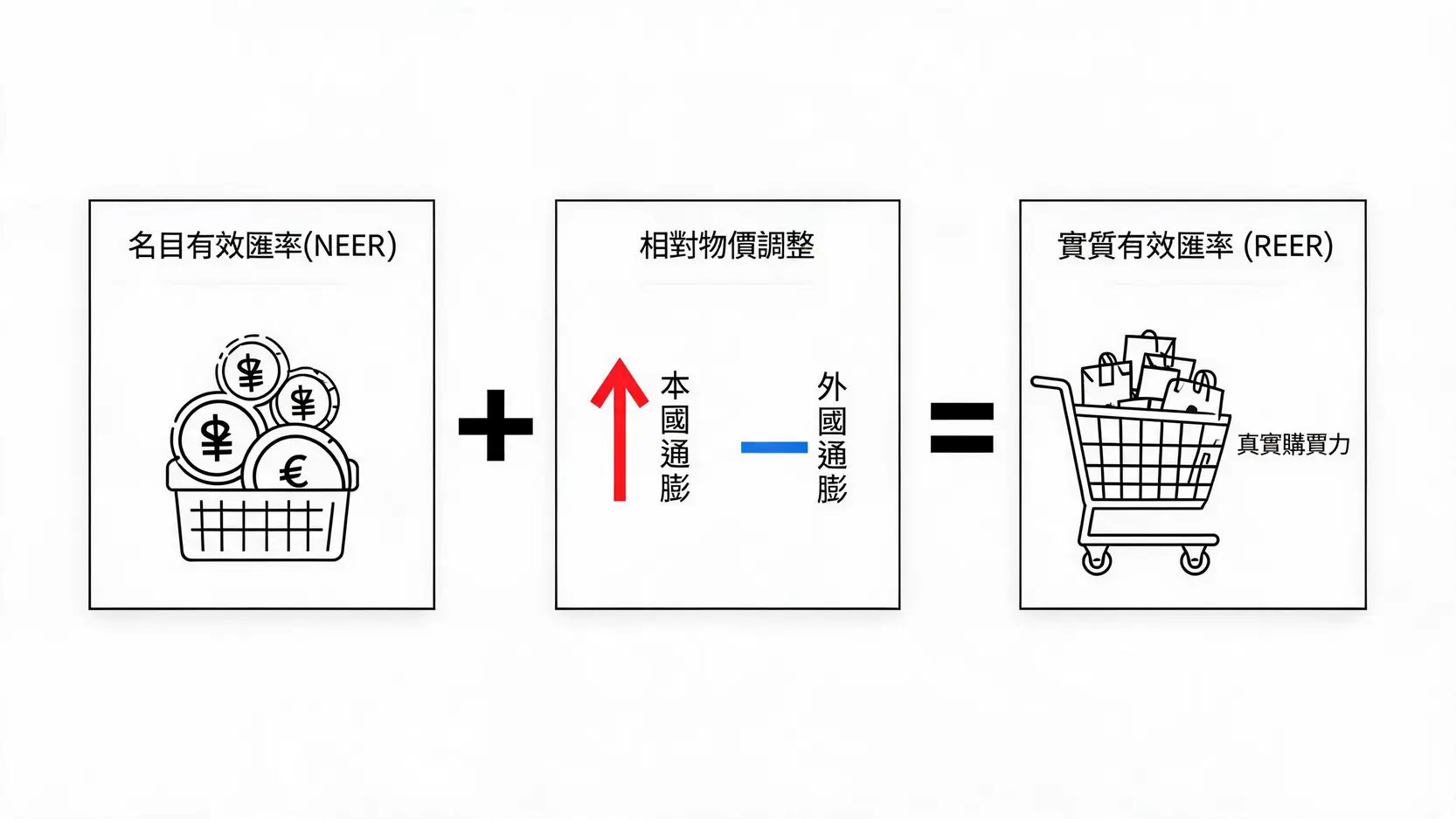
- Higher relative inflation: Taiwan’s prices rise faster than those of its major trading partners.
Regardless of the cause, the result of a rising REER is the same: goods produced in Taiwan become more expensive when converted into foreign currencies. This has two major economic effects:
- Negative for exports: For Taiwan’s export-oriented industries (such as the electronics and machine tool sectors), higher product prices reduce international price competitiveness, potentially leading to fewer orders and affecting corporate profitability and economic growth.
- Positive for imports: For importers and consumers, a higher REER is good news. It means the same amount of Taiwan dollars can purchase more imported goods, and the cost of importing raw materials from abroad decreases. Overseas travel and cross-border online shopping become more affordable.
Falling REER: Indicates Real Taiwan Dollar Depreciation, Beneficial for Exports but Unfavorable for Imports
Conversely, when the Taiwan dollar’s REER index declines, it means the Taiwan dollar’s real purchasing power has weakened relative to other currencies. This is usually caused by:
- Nominal exchange rate depreciation: The Taiwan dollar weakens against major foreign currencies.
- Lower relative inflation: Taiwan’s prices rise more slowly than those of its major trading partners.
The effects of a falling REER are exactly the opposite of those of a rising REER:
- Beneficial for exports: Taiwanese products become cheaper in international markets, creating a price advantage that helps secure more overseas orders, providing a significant boost to export industries. Many countries tend to guide their currencies lower during economic downturns in order to stimulate exports through this effect.
- Unfavorable for imports: Imported goods and services become more expensive, causing consumers to feel that “everything is getting more expensive”, potentially triggering “imported inflation”. The cost of overseas travel and spending also rises significantly.
Case Study: Comparing REER Trends and Export Performance Between Taiwan and South Korea
Taiwan and South Korea share many similarities in industrial structure and export markets, making them each other’s strongest competitors. As a result, comparing their REER trends provides valuable insight into changes in their relative export competitiveness.
For a long time, the market has generally observed a phenomenon of “higher REER in Taiwan, lower REER in South Korea”. According to recent financial data analysis, this gap has shown signs of widening in recent years. The reasons behind this are quite complex:
- Differences in monetary policy: Taiwan’s central bank tends to maintain dynamic stability in the Taiwan dollar exchange rate, avoiding excessive volatility that could disrupt financial markets. South Korea’s financial markets are more volatile, and when facing external shocks, the Bank of Korea more frequently guides the Korean won to depreciate significantly (lowering REER) to maintain the competitiveness of export pricing.
- Different industrial strategies: In recent years, Taiwan’s exports have increasingly shifted toward high value-added, customized semiconductors and information and communications technology products. These products are relatively less sensitive to price and place greater emphasis on technology and quality. Some South Korean export products, on the other hand, rely more heavily on price competition and are therefore more dependent on exchange rate movements.
As a result, even though the Taiwan dollar’s REER has remained higher than the Korean won’s in recent years, Taiwan’s export performance has remained strong, benefiting from the global surge in demand for AI and high-performance computing. This demonstrates the success of Taiwan’s industrial upgrading. However, for traditional industries or products with high price sensitivity, a higher REER remains a clear challenge.
REER and Everyday Consumers
Although we have discussed a great deal of macroeconomics, this seemingly distant indicator is actually closely connected to our daily lives. Understanding its movements can help us make more informed decisions regarding spending and personal finance.
How Does REER Affect the Cost of Overseas Shopping and Travel?
This is the most direct way REER affects ordinary people. When planning an overseas trip or shopping on foreign websites, what you really care about is “how many foreign goods or services your Taiwan dollars can buy”.
- When REER rises: It means the Taiwan dollar’s “real overseas purchasing power” has increased. Traveling to Japan or Europe, or shopping on Amazon in the US, becomes more rewarding because the same budget allows you to enjoy more and buy more. This is a favorable time for overseas spending.
- When REER falls: The Taiwan dollar’s overseas purchasing power declines. Transportation, accommodation, and dining expenses abroad become more expensive when converted into Taiwan dollars, and the appeal of overseas shopping diminishes.
Although we cannot directly obtain REER data for a specific country, the overall REER trend can serve as a useful macro-level reference when evaluating whether overseas spending is currently cost-effective.
Why Is the Central Bank So Concerned About REER Stability?
Taiwan is a small, open economy, and foreign trade is the lifeblood of its economic growth. Therefore, maintaining export competitiveness is one of the core objectives of Taiwan’s monetary policy. The central bank closely monitors REER for two main reasons:
- Supporting export industries: If REER rises sharply or continues to appreciate in one direction for an extended period, it could severely impact Taiwanese exporters, potentially leading to business closures and rising unemployment. The central bank must ensure that exchange rate movements do not cause excessive damage to the real economy.
- Controlling inflationary pressure: If REER continues to decline (real depreciation), it may benefit exports, but it will also increase the cost of imported goods, driving domestic inflation higher and reducing consumers’ real purchasing power and quality of life.
Therefore, the central bank’s goal is not to push REER as low as possible, but rather to strike a delicate balance between maintaining export competitiveness and keeping domestic prices stable. This is also why the central bank frequently intervenes in the foreign exchange market through “leaning against the wind” operations.
How Can You Access the Latest Taiwan Dollar REER Data?
If you want to track Taiwan’s REER trends yourself, there are several authoritative public sources available:
- Bank for International Settlements (BIS): This is one of the world’s most authoritative sources for REER data. BIS updates effective exchange rate data for member economies on a monthly basis. Its broad coverage and rigorous methodology make it the preferred source for professional researchers.
- Taiwan Central Bank Website: The statistical data section of the Taiwan central bank’s website periodically publishes exchange rate analyses and charts. Although updates may be less frequent than those from BIS, they often include interpretations specific to Taiwan’s economic conditions.
- Financial Data Platforms: Websites such as MacroMicro and TradingEconomics present BIS data in chart form, allowing investors to observe long-term REER trends more intuitively.
Further Reading (Highly Recommended)
The Ultimate Guide to Chaos Trading: Bill Williams Indicators and Practical Applications
FAQ
Q: What is the difference between REER and the Taiwan dollar to US dollar exchange rate?
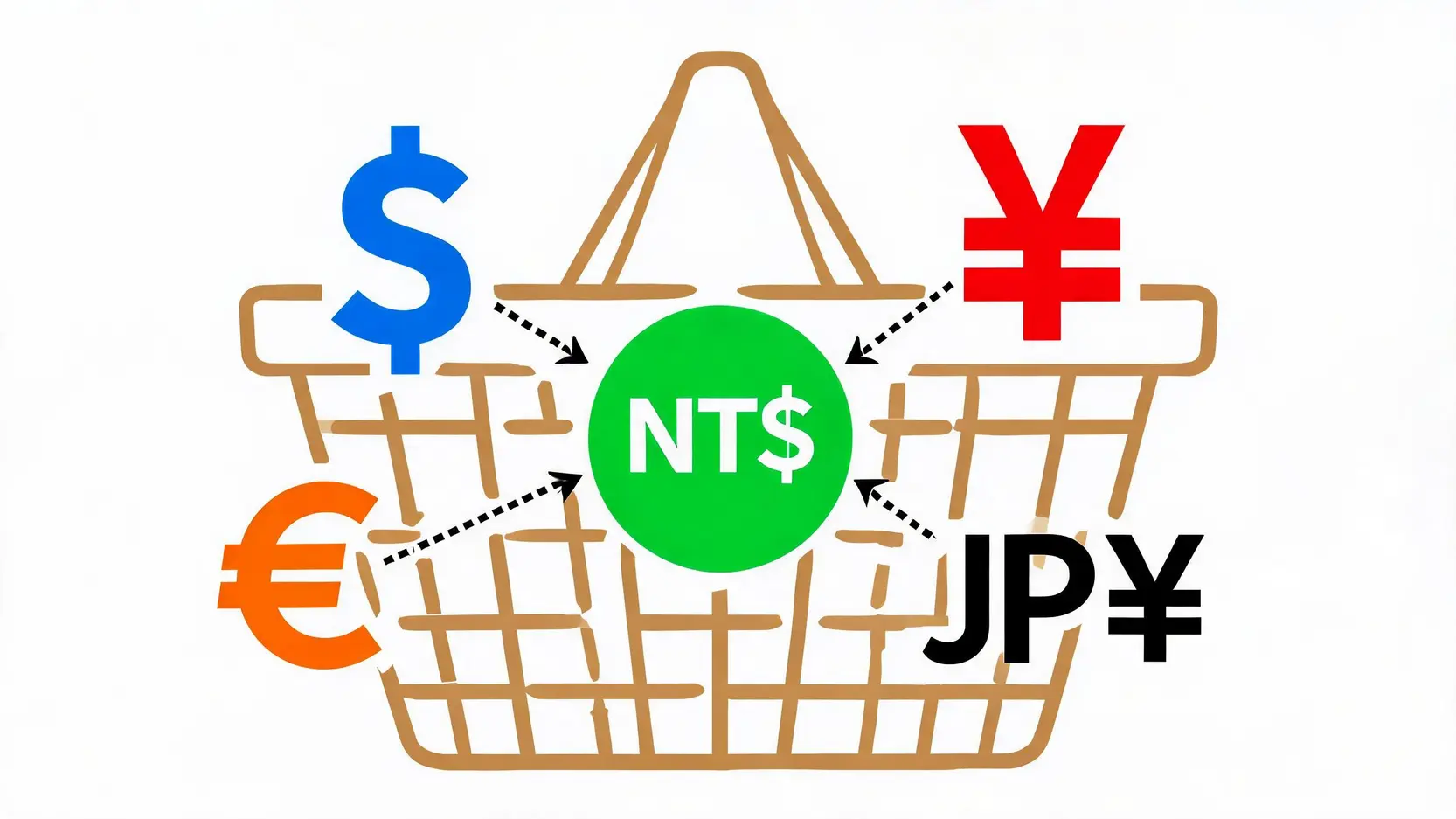
A: There are two main differences. First, the scope differs: the Taiwan dollar to US dollar exchange rate is a “bilateral exchange rate”, focusing only on the relationship between the Taiwan dollar and the US dollar; REER is a “multilateral exchange rate”, measuring the weighted average relationship between the Taiwan dollar and a basket of major trading partner currencies. Second, the factors considered differ: the Taiwan dollar to US dollar exchange rate is a “nominal exchange rate” that does not account for prices; REER is a “real exchange rate” that already incorporates relative inflation between Taiwan and its trading partners, making it a better reflection of actual purchasing power and trade competitiveness.
Q: Should investors focus on the absolute value of the REER index or its trend?
A: Trend changes are far more important than absolute values. REER is an index, and the choice of its base period (typically set at 100) involves a degree of arbitrariness. Therefore, comparing the absolute REER values of different countries (such as Taiwan’s 105 versus South Korea’s 98) has limited meaning. The real insight comes from observing a country’s long-term REER trend: Is it in an upward trend (real appreciation), a downward trend (real depreciation), or moving sideways within a range? Comparing this trend with the country’s export data and GDP growth can reveal valuable economic insights.
Q: Who are Taiwan’s major trading partners? (REER weighting economies)
A: In calculating the Taiwan dollar’s REER, the trading partners included in the weighting are primarily determined by total bilateral trade volume. Based on the latest trade data, Taiwan’s largest trading partners (which also carry the highest REER weightings) typically include Mainland China (including Hong Kong), the US, Japan, ASEAN countries (such as Singapore, Malaysia, and Vietnam), and the Eurozone (represented primarily by Germany). Exchange rate movements and price changes in these economies have the greatest impact on the Taiwan dollar’s REER index.
Q: Is a higher REER index always a bad thing?
A: Not necessarily. While a lower REER is generally more favorable from the perspective of export price competitiveness, a continuously rising REER may also reflect strong economic fundamentals, higher labor productivity, and high value-added exports. In such cases, products can still enjoy strong international demand despite higher prices (as seen in Taiwan in recent years). Conversely, a persistently low REER may indicate economic stagnation, with the country relying heavily on price competition to sustain exports. Therefore, REER should not be interpreted in isolation and must be assessed alongside the country’s industrial structure and broader economic environment.
Conclusion
In summary, the Taiwan Dollar Real Effective Exchange Rate (REER) is a key indicator that provides a much broader and more accurate reflection of Taiwan’s overall trade competitiveness and the true value of its currency than any single exchange rate. By filtering out short-term market noise and price distortions, it reveals a country’s actual position within the global trading system. Understanding the rise and fall of REER not only helps us assess the health of Taiwan’s export industries and the broader direction of the economy, but also provides deeper insight into the trade-offs and objectives behind the central bank’s monetary policy. For any investor seeking a comprehensive macroeconomic perspective, learning to interpret REER is undoubtedly a crucial step toward more advanced analysis.