Why Gold Keeps Rising: 5 Drivers of 2026 Record Highs

Why Does Gold Keep Rising? Experts Reveal the 5 Key Reasons Behind Gold’s Record High Prices in 2026
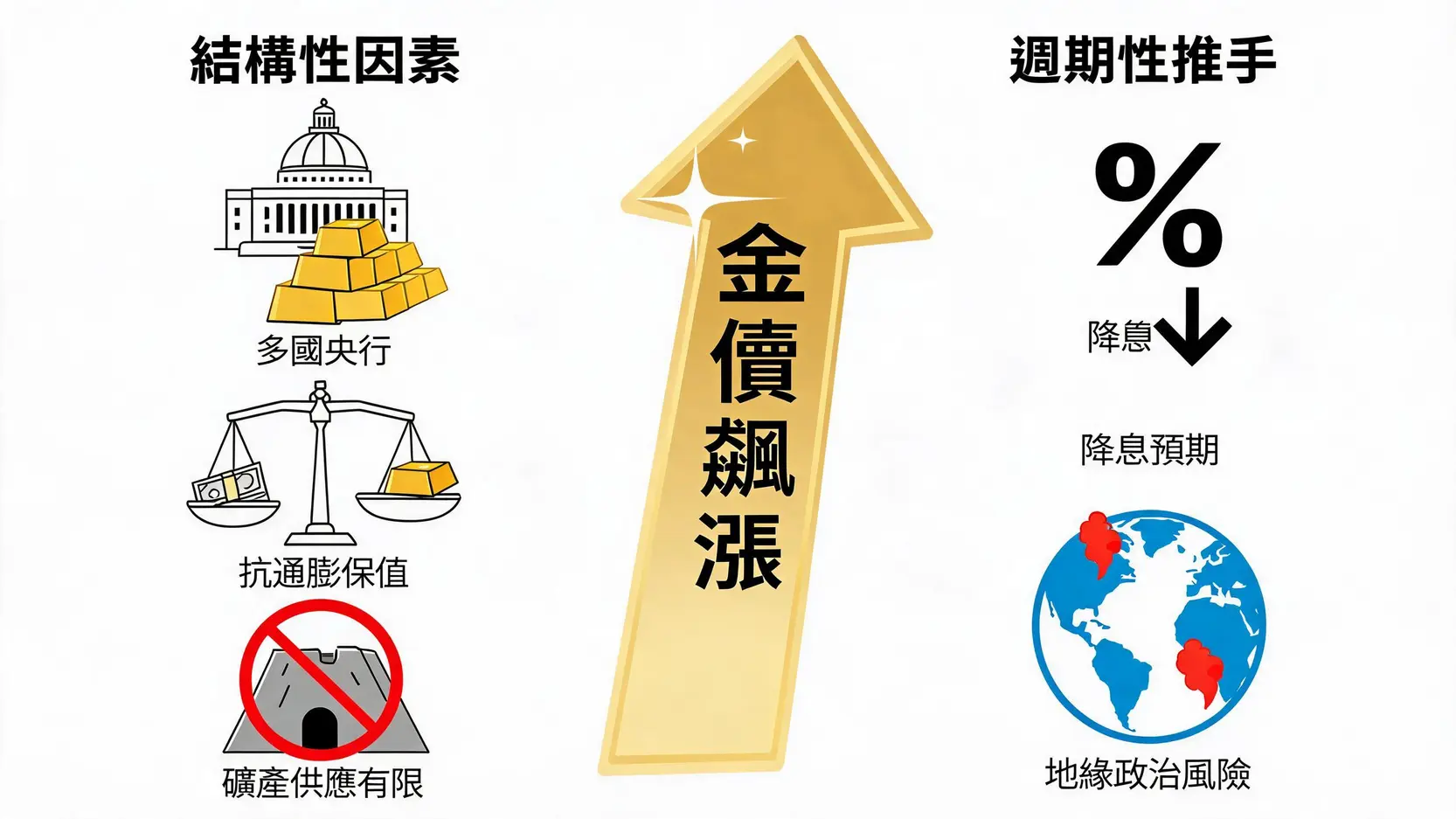
Have you also been puzzled by the recent surge in gold prices? Not only has gold repeatedly broken through historical highs, but it has continued to deliver astonishing gains throughout 2026, leaving many investors both excited and anxious. Why does gold keep rising? What is fueling this bull market? After gold has reached record highs, should investors chase the rally or remain on the sidelines? In reality, this unprecedented surge is no coincidence. It is the result of a perfect storm driven by three structural factors and two short-term catalysts. This article will break down the five core drivers behind gold’s soaring prices, helping you understand market dynamics and identify future investment opportunities.

The Five Core Drivers Behind Gold’s Surge
Structural Factors: The Foundation of Gold’s Long-Term Bull Market
To understand why gold continues to rise, we must first examine the long-term structural forces supporting it. Unlike short-term news events that generate temporary excitement, these factors form the solid foundation of gold’s long-term value and explain why many experienced investors view gold as an indispensable part of asset allocation.
Continued Central Bank Buying: The New Reserve Favorite Amid De-Dollarization
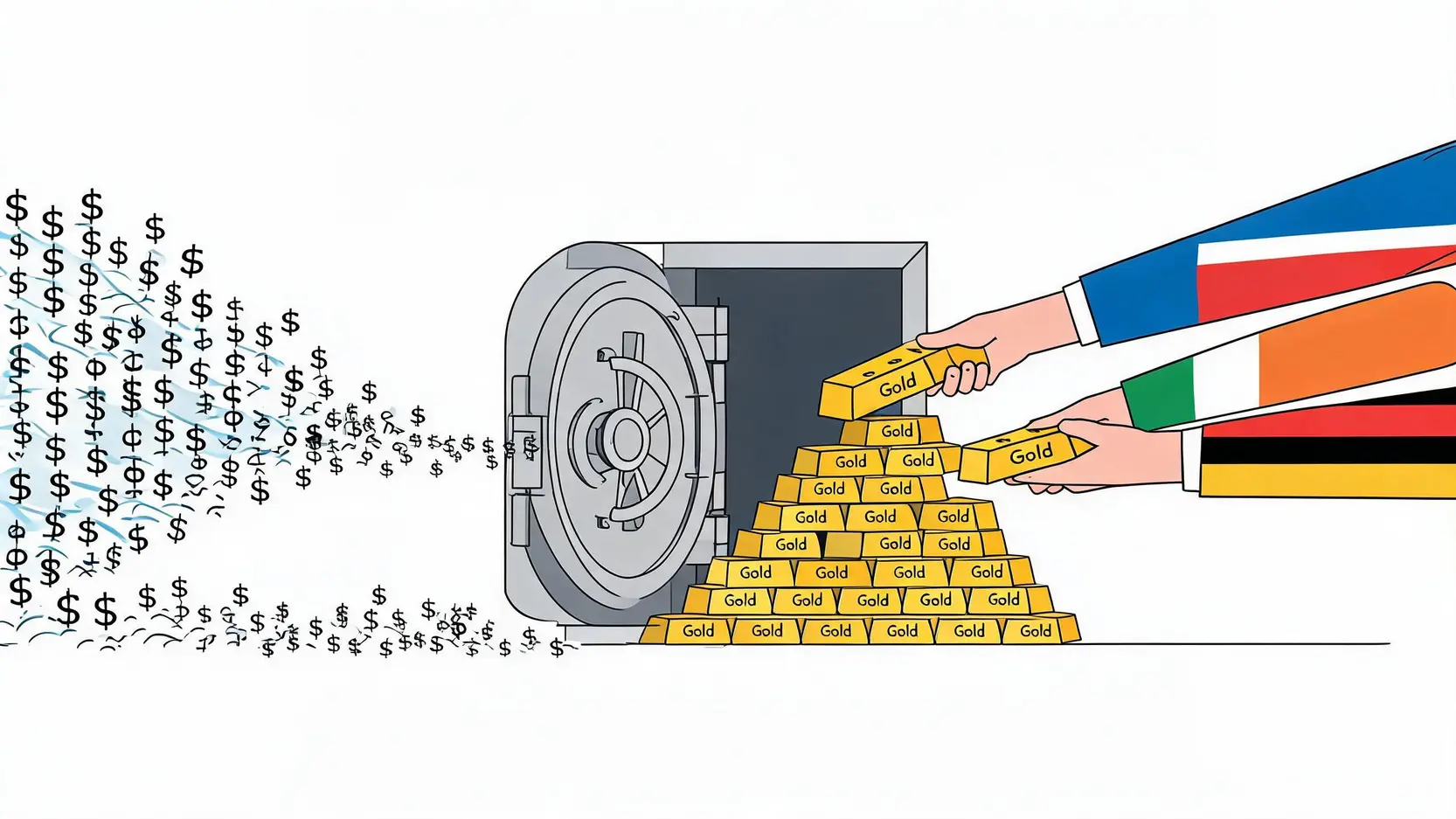
One of the most significant trends in global financial markets in recent years has been the “gold buying spree” by central banks. According to reports from the World Gold Council, after global central banks recorded the second-highest annual gold purchases in history during 2025, they bought another 244 metric tons of gold in the first quarter of 2026, demonstrating strong demand. Behind this trend lies a deeper “de-dollarization” strategy. Many countries, particularly emerging markets, are actively diversifying their foreign exchange reserves to reduce reliance on a single currency (the US dollar) as a way to mitigate potential financial sanctions and geopolitical risks. Against this backdrop, gold, with its borderless nature and lack of credit risk, has naturally become the preferred reserve asset for central banks. When the world’s largest buyers continue accumulating gold, it provides powerful support for prices.

A Global Central Bank “Gold Rush”: Gold Becomes the New Reserve Favorite
Global Inflation and Debt Concerns: A Preferred Store of Value Amid Fiat Currency Depreciation
Since the pandemic, governments around the world have implemented large-scale monetary easing policies to stimulate their economies, resulting in a sharp rise in global debt levels. Mounting debt burdens and persistent inflationary pressures continue to erode the purchasing power of fiat currencies, making the cash in your wallet feel increasingly “thinner”. In this macroeconomic environment, gold’s role as a tangible asset and “store of value” becomes particularly important. Unlike paper currencies that can be printed without limit, gold has a finite supply, making it a natural hedge against currency depreciation. When investors become concerned about the global economic outlook and governments’ ability to manage their debt burdens, they often shift capital into gold to preserve wealth and reduce risk, driving prices higher.
Limited Mining Supply: The Value of Gold’s Scarcity
The saying “scarcity creates value” perfectly captures gold’s intrinsic worth. The Earth’s total gold reserves are finite, and after thousands of years of mining, easily accessible deposits have become increasingly rare. Today, discovering new gold mines is becoming more difficult, while extraction costs continue to rise. Many experts have even introduced the concept of “Peak Gold”, suggesting that global annual gold production may struggle to achieve significant growth and could eventually begin to decline. This rigid supply constraint means gold’s scarcity will only become more pronounced over time. With demand continuing to rise (from central banks, investors, and industrial applications) while supply remains constrained, prices naturally tend to rise more easily than they fall.
Further Reading (Highly Recommended)
Best US Stock ETFs for 2026: A Complete Guide to Broad Market and Gold ETFs With Risk Analysis
Cyclical Drivers: The Spark Igniting Gold’s Short-Term Rally
If structural factors are the slow-burning fire beneath the pot, cyclical drivers are the flames that ignite the market. These factors are often closely linked to global economic cycles and market sentiment, capable of triggering explosive moves in gold prices within a short period. The recent record highs in gold have been fueled by these catalysts.
Federal Reserve Rate Cut Expectations: Lower Opportunity Cost of Holding Gold
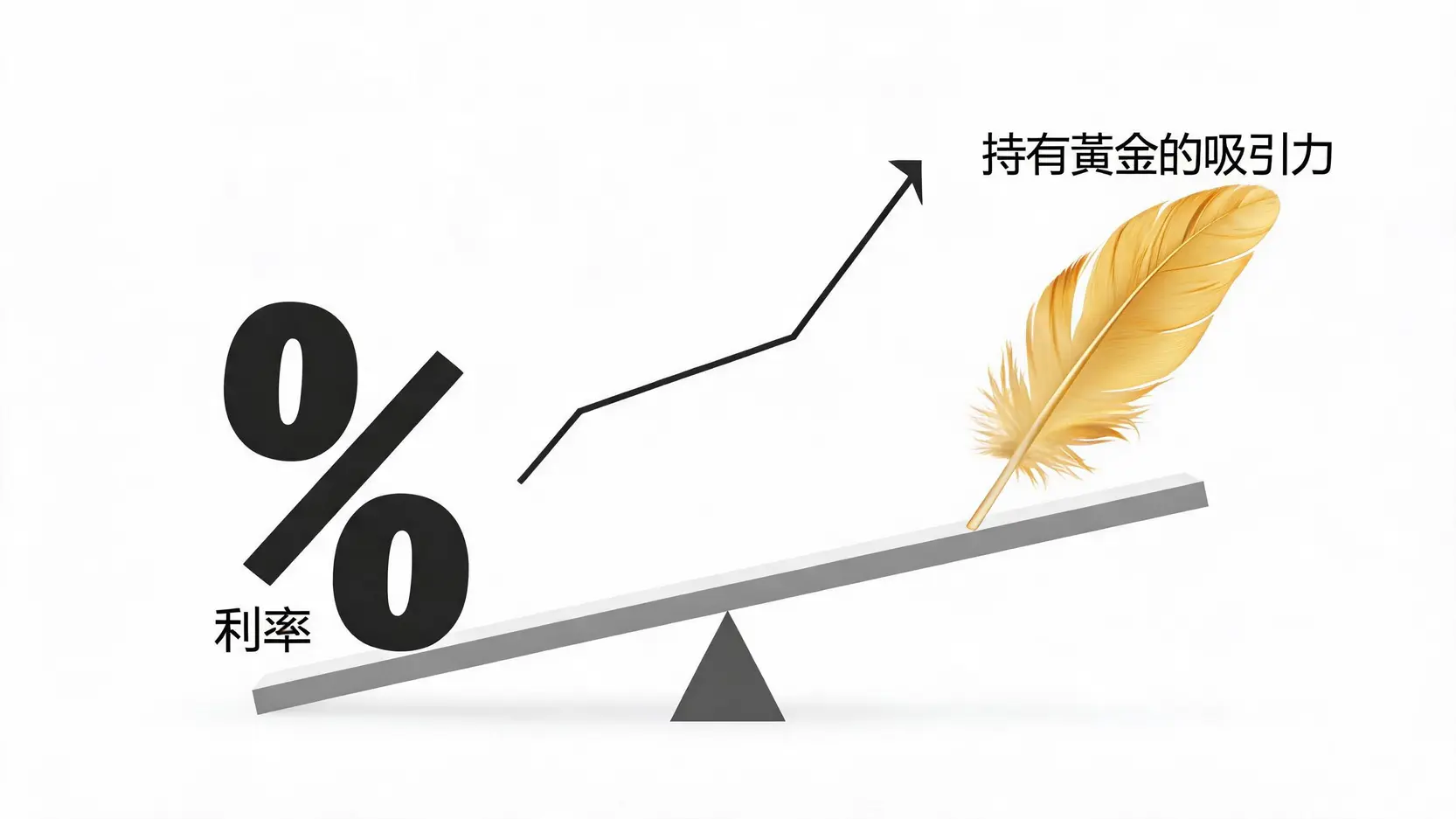
Markets widely expect the US Federal Reserve (Fed) to begin a rate-cutting cycle in the second half of 2026 or early 2027, which is highly bullish for gold. Why? The key lies in “opportunity cost”. Gold is a non-yielding asset. Unlike time deposits or bonds, it does not generate interest income. Therefore, when interest rates are high, investors tend to favor interest-bearing US dollar assets, increasing the opportunity cost of holding gold. However, once markets anticipate falling interest rates, the appeal of US dollar assets weakens, reducing the opportunity cost of holding gold. Capital then flows out of dollar-denominated assets and into alternatives such as gold. This expectation is often reflected in prices well before actual rate cuts occur, making it a major driver of gold’s rise. To learn more about the relationship between rate cuts and asset prices, you may refer to this guide on hot money inflows and investor strategies.

The Seesaw Effect Between Interest Rates and Gold’s Attractiveness
Rising Geopolitical Risks: Safe-Haven Demand Driven by Middle East Conflicts and Trade Tensions
Whenever international conditions become unstable, gold’s safe-haven appeal shines once again. Whether it is escalating conflicts in the Middle East, tensions between the West and Russia, or recurring trade frictions between China and the US, these uncertainties sharply increase market risk aversion. During such periods, investors seek assets capable of maintaining value amid turmoil, and gold, with its long history and global recognition as a final settlement asset, remains one of the preferred choices. Geopolitical risks act as catalysts, prompting large inflows of safe-haven capital into the gold market whenever tensions escalate, often causing gold prices to rise rapidly within a short timeframe.
The Catalytic Role of Market Sentiment and Speculative Activity
Beyond macroeconomic and political factors, the behavior and sentiment of market participants are also powerful forces influencing gold prices. At times, market enthusiasm can exceed rational analysis and generate extraordinary price momentum.
The Frenzy of Retail Investor Buying
In Asian markets, particularly China and India, gold holds deep cultural significance and enjoys strong investor preference. When gold demonstrates a powerful upward trend, it often triggers momentum buying, creating a formidable force from retail investors. For example, Chinese investors (sometimes referred to as “Chinese aunties”), have increasingly viewed gold as a more reliable store of wealth amid weakness in the domestic property market and underperforming stock markets. Their substantial purchasing power plays a significant role in the global gold market. This retail-driven buying frenzy further reinforces bullish market sentiment.
How Wall Street Hedge Funds Position Themselves in Gold
At the same time, professional institutional investors on Wall Street, including hedge funds and asset management firms, have not missed out on the rally. Their rationale for investing in gold is more sophisticated, often based on quantitative models, risk hedging, and asset allocation strategies. Institutional investors gain exposure to gold through various financial instruments, including gold futures, options, and gold ETFs. When market volatility increases or inflation expectations rise, they typically increase their gold allocations to hedge risks in their stock and bond portfolios. These large capital inflows not only push prices higher directly but also send a strong bullish signal to the market, attracting additional participants.
Further Reading (Highly Recommended)
Gold Outlook and Frequently Asked Questions
Based on the analysis above, gold’s strong upward trend appears unlikely to reverse in the short term. However, after reaching record highs, market volatility may also intensify. Below are some of the questions investors are most concerned about.
Q: What is the most important factor affecting gold prices right now?
A: The two most important factors currently affecting gold prices are continued central bank purchases and market expectations for Federal Reserve rate cuts. The former provides strong long-term demand support, while the latter drives short-term market sentiment and capital flows. As long as these two trends remain unchanged, gold prices are unlikely to experience significant declines.
Q: Is it normal for gold prices and stock markets to rise at the same time?
A: Yes, although this is not common, it is normal under certain conditions. Traditionally, gold and stock markets have been negatively correlated (with gold rising when stocks fall). However, when market liquidity is exceptionally abundant, or when the factors driving each asset class differ, both gold and stocks can rise simultaneously. For example, stocks may advance due to stronger corporate earnings, while gold rises because of inflation expectations or geopolitical risks. This reflects the complexity of the current market environment.
Q: Besides the US dollar, which other currencies can influence gold prices?
A: Although gold is priced in US dollars, making the strength of the US dollar the most direct influence on gold prices, the movements of other major currencies such as the euro and Japanese yen should not be overlooked. When the euro or yen appreciates against the US dollar, gold becomes relatively cheaper in local currency terms for European and Japanese investors, potentially stimulating local demand for gold and indirectly supporting US dollar-denominated gold prices.
Q: Gold prices are already at record highs. Is it still a good time to invest?
A: There is no standard answer to this question, as it depends on your investment objectives and risk tolerance. For investors seeking long-term wealth preservation and portfolio diversification, gradually accumulating positions or investing regularly in gold can still be a reasonable strategy, as the long-term structural drivers remain intact. However, for short-term traders, chasing prices at record highs clearly carries greater risk. Careful position management and close monitoring of shifts in market sentiment are essential to avoid losses during sharp price corrections.
Conclusion
In summary, gold’s record-high prices are not the result of a bubble driven by a single event. Rather, they are the product of long-term structural factors, including shifts in global central bank strategies, declining confidence in fiat currencies, and supply-side scarcity, combined with short-term catalysts such as Federal Reserve policy expectations and geopolitical instability. Understanding the deeper reasons behind gold’s continued rise helps investors maintain a clear perspective in what may appear to be a chaotic market. Looking ahead, as the global economic and political landscape continues to evolve, gold’s status as the ultimate safe-haven asset is likely to become even more firmly established, and its strategic value within an investment portfolio should not be underestimated.
Related Articles
-
Does Gold Always Rise When the Fed Cuts Rates? Understanding the Complete Relationship Between Interest Rates and Gold Prices Through 3 Key Perspectives A popular market saying goes: "When the Fed cuts rates, gold rises." This phrase has become almost a standard answer for gold investors. But what is the...2026 年 6 月 16 日
-
Has Gold Reached Its Peak? Can You Still Buy Gold in 2026? 3 Key Risks and a Decision-Making Framework Every Investor Must Understand Before Investing As gold prices continue to hit new highs, are you also struggling with the age-old question: "Can you still buy gold?" Market sentiment is running...2026 年 6 月 16 日
-
Gold Short-Term Trading Strategies: Illustrated Guide to 3 High-Probability Techniques Used by Professional Traders Faced with gold's intense price volatility, short-term trading has become a popular choice for those seeking quick profits. However, without a solid gold short-term trading strategy, trading is little more than gambling. The market is flooded...2026 年 6 月 15 日