Standard Chartered Forex: Online Remittance & Bank Account Comparison

Updated: 2026/03/24  |  CashbackIsland

sc-forex-account-comparison

[Standard Chartered Forex Guide] Online Banking Remittance Tutorial + Comparison of Foreign Exchange Accounts Among 3 Major Banks

Planning to travel or make overseas investments, but exchanging foreign currency always feels like a hassle? Faced with a wide variety of bank foreign exchange accounts, not knowing where to start, and worried about high fees that could mean “overpaying” on exchange rates? To handle foreign exchange with ease, choosing a reliable platform is crucial. This article provides an in-depth analysis of Standard Chartered Bank foreign exchange services, offers a detailed online banking currency exchange tutorial, and compares mainstream bank foreign exchange accounts in the market, helping you clearly understand all the details in one go, so you can exchange more intelligently, saving both money and time. Whether you are a frequent traveler or a beginner investor, this guide will help you find the most cost-effective exchange solution. 


Why Use Online Banking for Currency Exchange? 3 Key Advantages You Should Know

In the past, people would usually think of going to a bank branch or money changer to queue for currency exchange. However, with the rise of digital banking, online banking has become a smarter and more efficient choice. Especially for users who frequently exchange foreign currencies, the advantages of online banking are highly evident, mainly reflected in exchange rates, time, and convenience.


Advantage 1: More Favorable Exchange Rates (Telegraphic Transfer Rate vs Notes Rate)

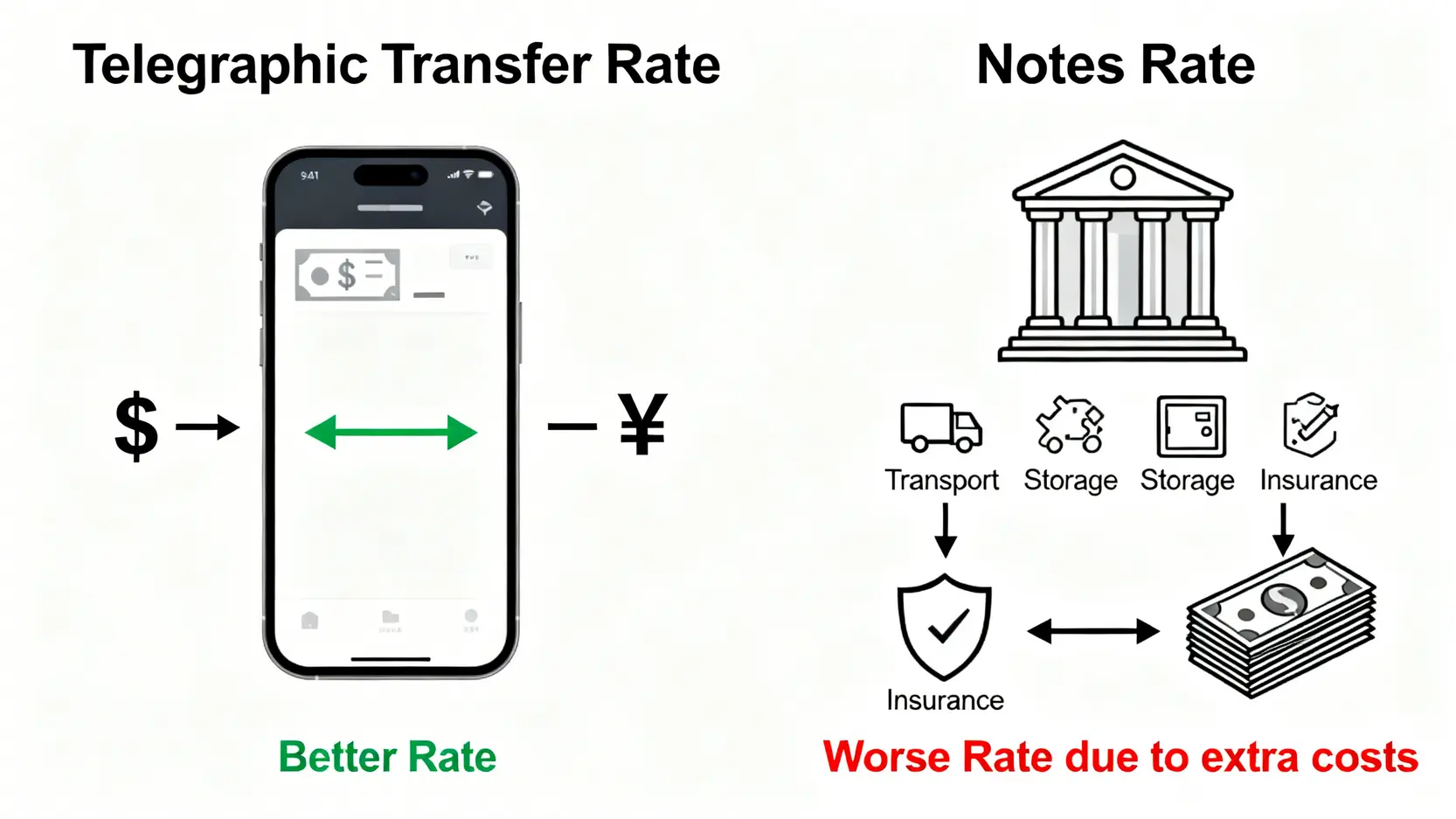
When discussing exchange rates, you must understand the difference between the “Telegraphic Transfer Rate” (T/T Rate) and the “Notes Rate”. In simple terms:

  • Telegraphic Transfer Rate (T/T Rate): This is the rate used for electronic transfers or transactions conducted through bank accounts. As it does not involve the transportation, storage, and management costs of physical cash, banks incur lower costs, and therefore the rates offered to customers are usually more “favorable”. Online banking currency exchange uses the Telegraphic Transfer Rate.
  • Notes Rate: This is the rate used when you exchange physical foreign currency cash at a bank branch counter. Because banks need to handle physical banknotes, which involves additional costs such as transportation, insurance, and storage, these costs are passed on to the exchange rate, making the Notes Rate usually less favorable than the Telegraphic Transfer Rate.

電匯價與現鈔價的對比圖,解釋網上銀行換錢匯率更優惠的原因。

Telegraphic Transfer Rate vs. Notes Rate: the secret behind more “favorable” online banking rates.

The conclusion is that using online banking to exchange currency at the Telegraphic Transfer Rate can save you a considerable amount in the long run, especially for large transactions. For a deeper understanding of the differences, you may refer to [Bank vs Money Changer Exchange Rates] 2026 Hong Kong Currency Exchange Guide

Advantage 2: Exchange Anytime 24/7 Without Branch Time Restrictions

Traditional bank branches have operating hours and are closed on weekends and public holidays. For busy urban professionals, taking time out to visit a branch for currency exchange is time-consuming and inconvenient. Online banking foreign exchange services, on the other hand, operate year-round, 24/7. Whether you notice a favorable exchange rate late at night or decide on a last-minute trip over the weekend, you can log in to the mobile app or online banking anytime, lock in the rate instantly, and complete the exchange with ease, completely free from time constraints.


Advantage 3: Simple and Convenient Operation via Mobile App

Modern banking apps are designed to be increasingly user-friendly, and the foreign currency exchange process is extremely straightforward. Typically, it only requires a few steps: log in to the app, select the currency, enter the amount, and confirm the exchange rate to complete the transaction. The entire process may take only one to two minutes, with no need to queue or fill out complicated forms. Funds are instantly converted within your multi-currency account, making it convenient for overseas online shopping, transfers, or investments, significantly enhancing financial management efficiency.


In-Depth Analysis of Standard Chartered Bank Foreign Exchange Services

Among the many banks offering foreign exchange services, Standard Chartered Bank stands out as a top choice for many due to its well-developed digital platform and competitive services. Next, we will explore its foreign exchange services in detail, including features, supported currencies, and fee structure.


Overview of SC Mobile App and Online Banking Features

Standard Chartered’s core digital banking platforms, the SC Mobile App and online banking, provide users with powerful and comprehensive foreign exchange management tools:

  • Real-time exchange rate inquiry: Users can check real-time Telegraphic Transfer Rates for up to 14 major currencies at any time, with clear and accessible information.
  • Instant foreign currency exchange: Conduct immediate currency exchanges directly within the app, with a smooth and fast transaction process.
  • FX Rate Alert: Set your desired exchange rate, and when the market reaches that level, the system will notify you via email or app push notifications, helping you capture the best exchange opportunity.
  • FX Order Watch: This is a more advanced feature where you can preset a target exchange rate and amount. When the market reaches the specified rate, the system will automatically execute the transaction for you, eliminating the need to constantly monitor the market.
  • Clear transaction records: All foreign exchange transactions are clearly recorded in detail, allowing you to review and manage your personal finances at any time.


Supported Currencies and Key Features

Standard Chartered Bank supports a wide range of major global currencies, meeting most needs for travel, overseas study, and investment. Its “multi-currency Mastercard debit card” is a notable feature, allowing you to pre-convert and store up to 11 designated currencies in your account. When making overseas purchases or withdrawing cash from ATMs, the corresponding foreign currency account will be directly debited, avoiding additional fees and exchange rate losses, making it especially suitable for frequent travelers.


Transparent Fees and Charges

Regarding the most concerning issue of fees, Standard Chartered’s fee structure is quite clear. Currency exchange conducted through the SC Mobile App or online banking does not incur any service fees. The bank’s revenue mainly comes from the bid-ask spread within the exchange rate, which is standard practice in the industry. Compared to other platforms that may charge fixed service fees, Standard Chartered’s model is more transparent. However, if telegraphic transfers to overseas accounts are involved, a transfer fee will be charged per transaction, which should be noted. 

[Step-by-Step Tutorial] How to Exchange Currency Using Standard Chartered Online Banking?

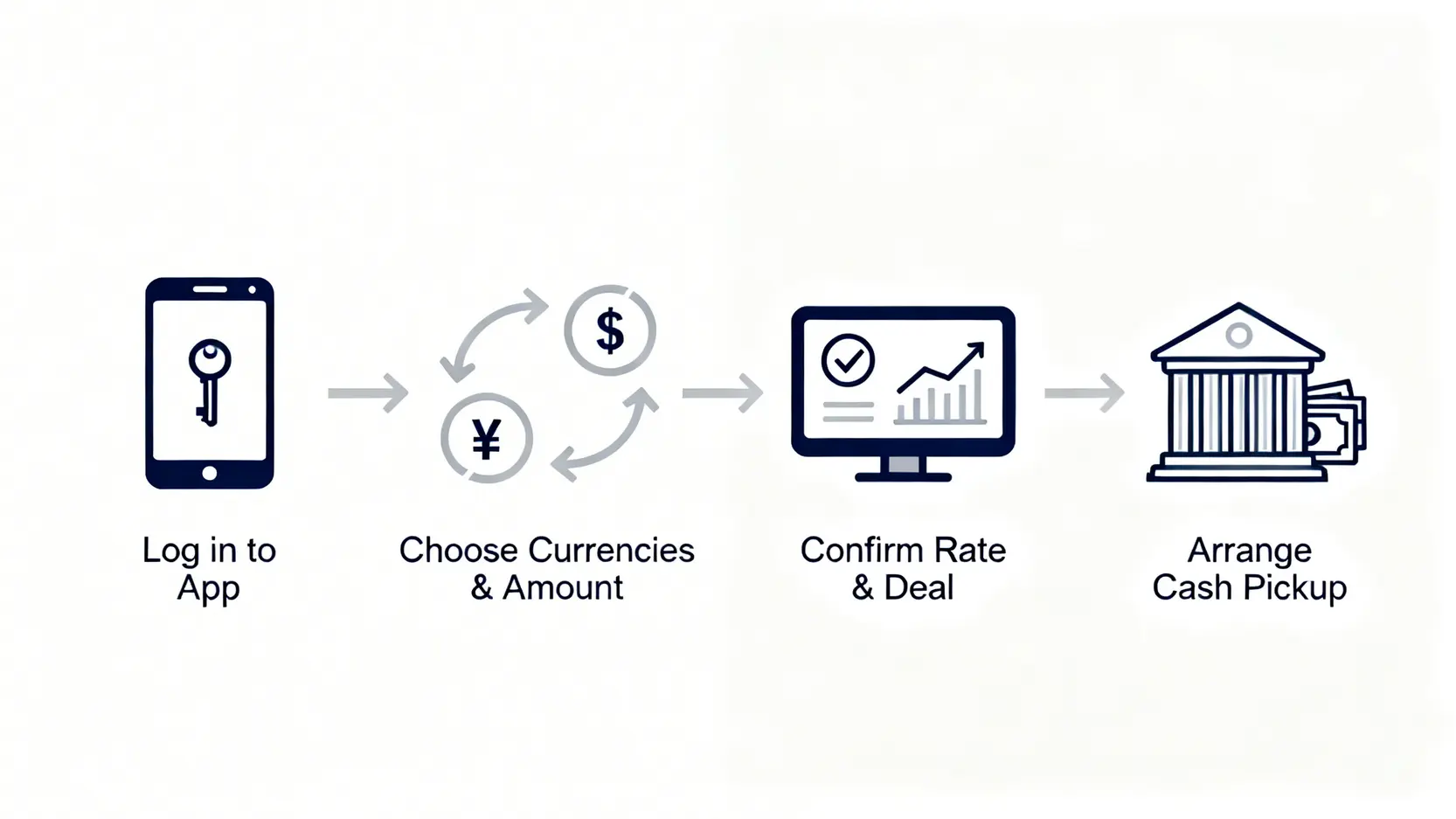
After understanding the advantages of Standard Chartered foreign exchange services, the following provides a highly detailed online banking currency exchange tutorial to help you get started with ease. The entire process is simple and intuitive, and can be completed in just four steps.

渣打銀行網上換錢四步驟流程圖,包括登入、選擇貨幣、確認交易和提取現金。

Complete Online Currency Exchange in Four Steps, Easily Done via Mobile App.


Step 1: Log in to SC Mobile App or Online Banking

First, open the SC Mobile App on your phone, or use a computer browser to access the Standard Chartered online banking page. Enter your username and password to log in. For account security, the system may require two-factor authentication.


Step 2: Select “Foreign Currency Exchange” and Enter Amount

After logging in, locate options related to “Transfers and Payments” or “Foreign Exchange” on the main page or in the function menu. Click to enter, then select “Foreign Currency Exchange”. Next, choose the currency you want to sell (for example: HKD) and the currency you want to buy (for example: JPY), then enter the amount you wish to exchange.


Step 3: Confirm Real-Time Exchange Rate and Complete the Transaction

After entering the amount, the system will immediately display the current real-time exchange rate and the estimated amount of foreign currency you will receive. This rate is usually locked for a short period (for example, 60 seconds) for your confirmation. Carefully review all details, including the exchange rate, amount, and transaction account. Once confirmed correct, click the “Confirm” button. The transaction will be completed instantly, and funds will be transferred between your different currency accounts.


Step 4: How to Withdraw Foreign Currency Cash at a Branch

After completing the online exchange, the foreign currency will be stored in your foreign currency savings account. If you need to withdraw physical cash, you can do so through the following methods:

  1. Appointment for withdrawal: to ensure the branch has sufficient cash, especially for large amounts or less common currencies, it is strongly recommended to call the branch in advance or make an appointment through customer service to reserve the required amount and currency.
  2. Visit the branch: at the scheduled time, bring your identification documents and bank card/passbook to the designated branch to complete the withdrawal process.

Please note that when withdrawing foreign currency cash from your account, the bank may charge a small handling fee. It is recommended to confirm the details during the appointment.


2026 Comparison of Foreign Exchange Accounts Among 3 Major Banks (Standard Chartered / HSBC / Citi)

With many options available in the market, to help you gain a more comprehensive understanding of the advantages and disadvantages of different bank foreign exchange accounts, we have selected three major banks in Hong Kong, Standard Chartered Bank, HSBC, and Citibank, for a horizontal comparison. These three banks are all global institutions, each with its own strengths in foreign exchange services.


Feature Comparison Table: Spread, Fees, Supported Currencies, Withdrawal Convenience

For easier comparison, we have compiled the following table to give you a clear overview of the foreign exchange account services offered by each bank:

Comparison Items Standard Chartered Bank 

HSBC

Citibank
Exchange Rate Spread Competitive, especially for priority banking clients Moderate spread, HSBC One clients receive relatively favorable rates Narrow spread, better rates for Citigold clients
Online Exchange Fees Waived Waived Waived
Supported Currency Types Up to 14 major currencies Supports 12 major currencies Supports up to 14 currencies, with a wide selection
Withdrawal Convenience Extensive branch network, but appointment recommended Extensive branch and foreign currency ATM network, some major currencies available for instant withdrawal Fewer branches, advance appointment required for large cash withdrawals
Key Features FX Rate Alert, FX Order Watch, multi-currency debit card Global Transfer service, foreign currency ATM Global View, strong international network


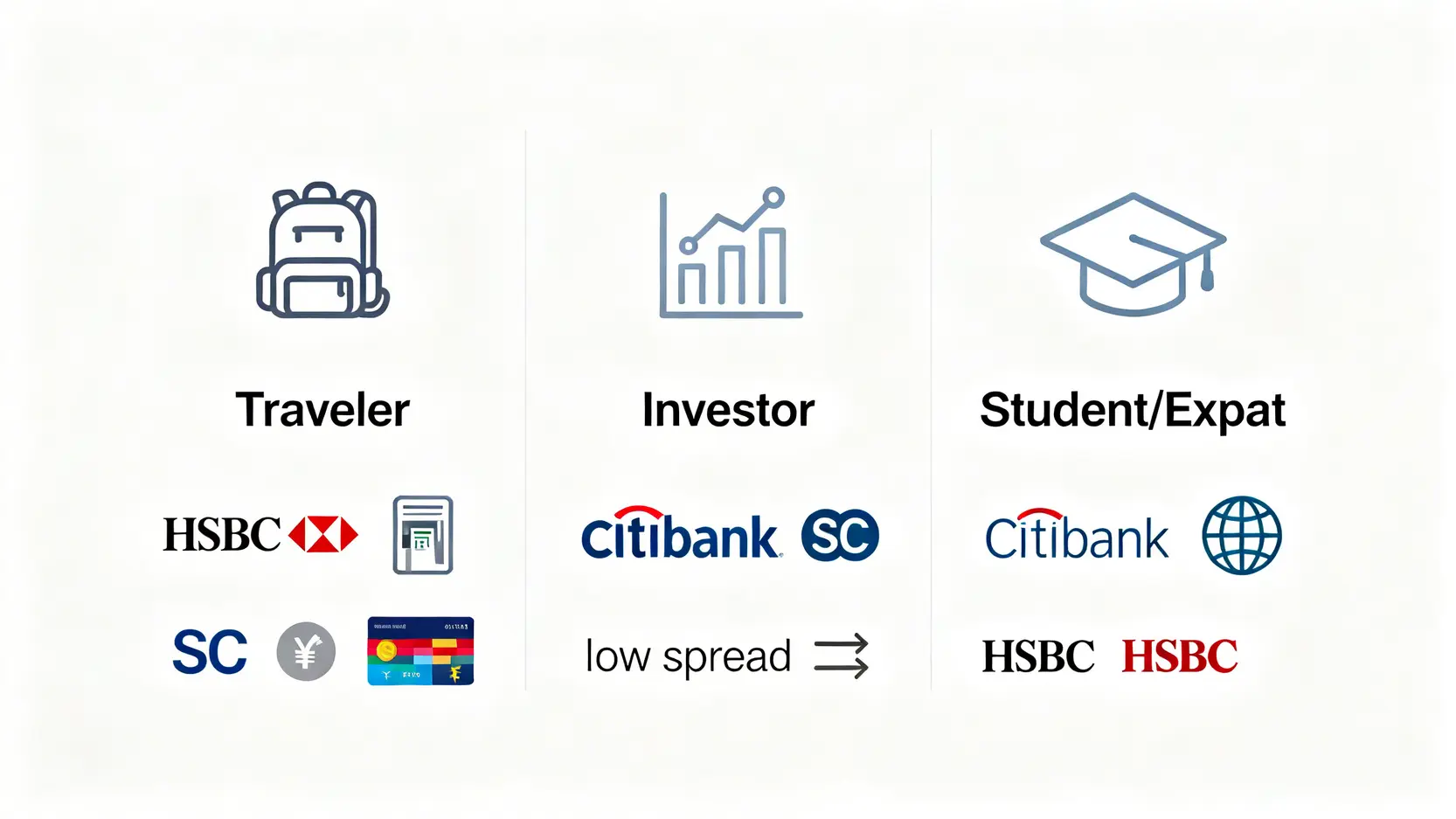
Which Bank Is Best for You? Analysis of Travel, Investment, and Study Needs

根據旅遊、投資、留學等不同需求推薦最合適銀行的比較圖。

Travel, investment, or study abroad? See at a glance which bank foreign exchange account suits you best.

The choice of bank ultimately depends on your personal needs:

  • Travel enthusiasts: if you prioritize withdrawal convenience and frequently need to withdraw small amounts of foreign currency cash, HSBC, with its extensive foreign currency ATM network, is undoubtedly the most advantageous. Meanwhile, Standard Chartered’s multi-currency debit card is highly suitable for direct overseas spending, helping you avoid exchange rate risks when using credit cards.
  • Investment-oriented users: if you need to conduct frequent or large foreign exchange transactions, Citibank and Standard Chartered, with their narrower spreads and professional features (such as FX Order Watch), are more suitable. Especially if you are a premium banking client, you can enjoy more favorable exchange rates.
  • Students studying abroad or overseas workers: for users who need to make regular overseas transfers, the global transfer services of all three banks are highly important. Citibank and HSBC have broader international network coverage, and their global account management features make fund transfers more convenient, particularly suitable for users with assets allocated across multiple countries.


FAQ: Common Questions About Currency Exchange With Standard Chartered Bank

Q: Are there any fees for exchanging currency through Standard Chartered online banking?

A: No. When exchanging between different currencies via the SC Mobile App or online banking platform, the bank does not charge any additional service fees. The bank’s profit mainly comes from the spread between bid and ask prices.

Q: Should I use the Telegraphic Transfer Rate (T/T Rate) or the Notes Rate for currency exchange at banks?

A: The Telegraphic Transfer Rate is definitely better. Since it does not involve the handling costs of physical cash, the exchange rate is far more favorable than the Notes Rate. As long as you exchange through online banking or a mobile app, the rate used is the Telegraphic Transfer Rate. Unless you have an urgent need for physical cash, it is recommended to exchange online first and withdraw as needed.

Q: After exchanging foreign currency online, can I immediately withdraw it at a branch?

A: This is not recommended. Although online transactions are instant, branches may not have sufficient stock of the foreign currency you need, especially for less common currencies or large amounts. To avoid unnecessary trips, the best practice is to complete the online exchange and then call the branch one to two working days in advance to make a withdrawal appointment.

Q: Who is the “FX Order Watch” feature suitable for?

A: The “FX Order Watch” feature is particularly suitable for investors who have a specific target exchange rate but do not have time to constantly monitor the market, or for users with large exchange needs. For example, if you expect the Japanese yen to fall to a desired level, you can preset an instruction, and when the market reaches that rate, the system will automatically execute the purchase, helping you lock in your ideal cost.

Q: Besides Standard Chartered, which other bank foreign exchange accounts are recommended?

A: In addition to HSBC and Citibank mentioned in this article, there are other options in the market. For example, the Bank of China (Hong Kong) has advantages in foreign currency services (especially RMB). Meanwhile, emerging virtual banks such as ZA Bank and Mox Bank have also started offering foreign exchange services, and their rates and fees may be more competitive. However, they do not have physical branches and cannot provide cash withdrawal services, which should be noted.


Conclusion

In summary, choosing a suitable bank foreign exchange account can save you significant time and money for travel, investment, or overseas living. Standard Chartered Bank foreign exchange services, with their convenient and user-friendly online platform, competitive exchange rates, and practical features such as “FX Rate Alert” and multi-currency debit cards, are undoubtedly an excellent choice in the market. With the detailed online banking currency exchange tutorial and the comparison of foreign exchange accounts among the three major banks provided in this article, you should now be able to select the most suitable foreign exchange partner based on your personal needs. For more details and the latest offers on Standard Chartered Bank foreign exchange services, you may visit its official website.

编者
Evan Lin

Evan Lin

我是Evan Lin,从大学时期开始接触外汇交易,至今已有多年实战经验,熟悉技术分析与EA策略,热衷于研究市场脉动与风险管控,喜欢分享实战经验和交易技巧,和大家一起学习、一起进步!

If you liked this article, please share it!

Related Articles

  • 2026 RM to TWD Exchange Rate Guide & Currency Tips
    [2026 RM Exchange Rate Full Analysis] Malaysian Ringgit to New Taiwan Dollar Trends and Best Currency Exchange Tips Planning to travel to Kuala Lumpur or do business in Malaysia, but confused by the current “RM exchange rate”? If you do not understand the hidden costs of different currency exchange channels,...
    2026 年 7 月 9 日
  • ECB Hawkish Stance: EUR/USD Outlook & Strategy
    How to Interpret the ECB’s Hawkish Stance? Lagarde’s Signals, Key EUR/USD Levels, and Investment Strategies Explained in One Go The ECB’s hawkish stance has once again become the main theme in the foreign exchange market. This is especially true when the market had originally bet that “the European Central Bank...
    2026 年 7 月 9 日
  • Can You Buy Gold? 5 Gold Investment Methods Compared
    A Must-Read for Beginners: Can You Buy Gold? A Comprehensive Comparison of 5 Gold Investment Methods and Their Pros and Cons Facing ongoing changes in global inflation and market uncertainty in 2026, many people who are new to the market are asking: “Can you buy gold?” In fact, gold has...
    2026 年 7 月 9 日
返回顶部