2026 JPY Exchange Guide: Best Yen to HKD Rates

Updated: 2026/05/14  |  CashbackIsland

jpy-to-hkd-exchange-guide

[2026 Japanese Yen Exchange Guide] Japanese Yen Exchange Rate Trend Analysis! Compare 10+ Exchange Shops and Banks, and Learn the Most Cost-Effective Way to Exchange Japanese Yen to Hong Kong Dollar

As the Japanese yen exchange rate continues to weaken, it is undoubtedly the perfect opportunity for many “locals” planning a trip back to Japan! However, with so many different ways to exchange yen available, should you go to a bank or a money changer? Where can you get the best Japanese yen to Hong Kong dollar exchange rate? This yen exchange guide will provide a comprehensive analysis of the latest Japanese yen exchange rate trends, along with a detailed comparison of the pros and cons of multiple popular money changers and banks, helping you easily lock in the best exchange timing and location so you can save more and enjoy more! 


Understanding the Latest Japanese Yen Exchange Rate Trend: Is Now a Good Time to Exchange Yen?

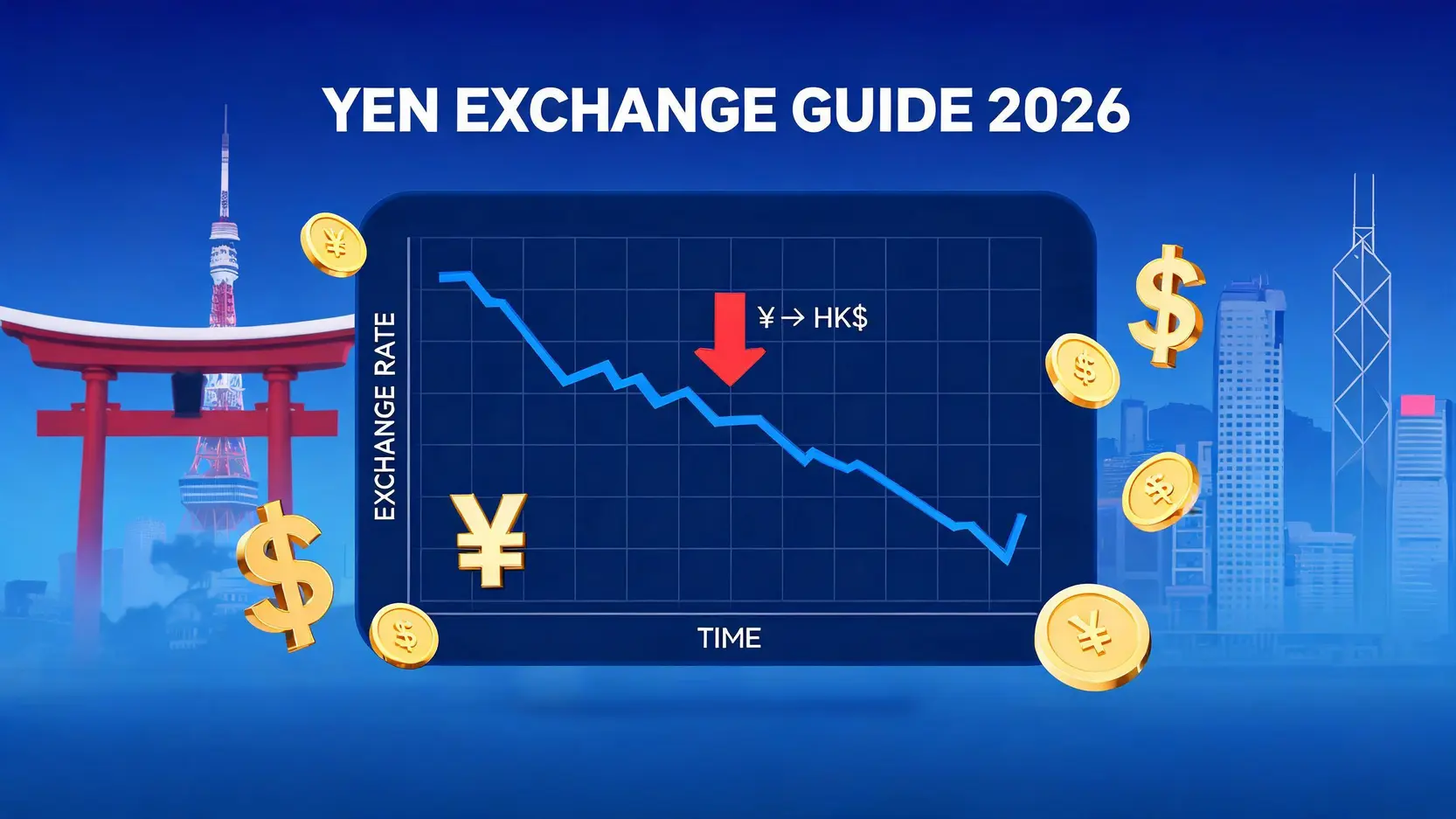
In recent years, the Japanese yen exchange rate has been as volatile as a roller coaster ride. For travelers or investors preparing to head to Japan, understanding its movement trends is crucial. Determining whether now is the ideal time to exchange Japanese yen requires analyzing both recent trends and future forecasts.


Review and Analysis of the 2026 Japanese Yen to Hong Kong Dollar Exchange Rate Trend

Looking back from the beginning of 2026 until now, the Japanese yen to Hong Kong dollar exchange rate has continued hovering at low levels and even once fell below the important psychological 5.0 mark, hitting a multi-year low. The primary driving force behind this is the significant monetary policy divergence between the Bank of Japan (BOJ) and major global central banks (especially the US Federal Reserve).

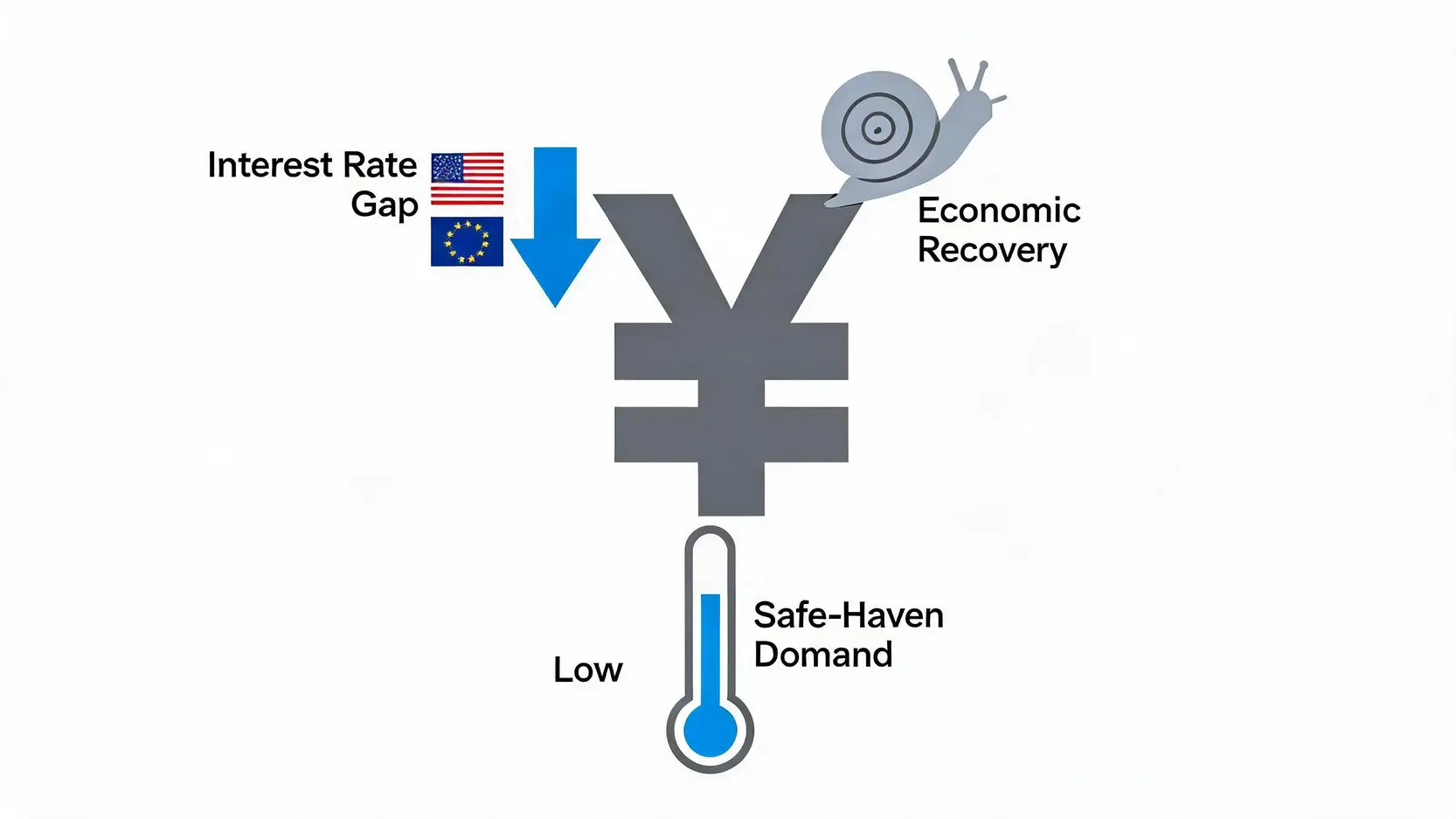
  • Interest Rate Gap: While central banks in the US and Europe continued raising interest rates to combat inflation, the Bank of Japan maintained its ultra-loose monetary policy and even negative interest rates. This widened the interest rate gap between the Japanese yen and higher-yielding currencies such as the US dollar and euro, naturally driving capital toward high-yield assets and placing heavy downward pressure on the yen.
  • Economic Fundamentals: Japan’s economic recovery has remained relatively moderate, and inflationary pressure has been less severe compared with Europe and the US. This has given the Bank of Japan room to maintain loose monetary policies.
  • Cooling Safe-Haven Sentiment: When global financial markets remain relatively stable, the Japanese yen, traditionally viewed as a safe-haven currency, becomes less attractive. Investors tend to pursue higher-risk assets instead, further weakening the yen exchange rate.

一張概念圖解釋日圓匯率走弱的三大原因:日本與歐美的利率差距、溫和的經濟復以及避險情緒降溫。

The Three Main Reasons Behind the Weak Japanese Yen Exchange Rate

For Hong Kong travelers planning a trip to Japan, the continued weakness of the yen is undoubtedly good news, as it means the same Hong Kong dollar budget can exchange for more yen, effectively increasing purchasing power in Japan.


Expert Forecasts: Will the Japanese Yen Rise or Fall in the Future?

Looking ahead, market opinions remain divided regarding the future direction of the Japanese yen exchange rate, although most believe a major rebound is unlikely in the short term. According to analyses from major financial media outlets, the key turning point will depend on the following factors:

  1. Shift in Bank of Japan Policies: The market is closely watching when the Bank of Japan will end its negative interest rate policy and begin raising rates. Only when officials release clear “hawkish” signals is the yen likely to see a genuine turnaround. However, any overly aggressive policy shift could negatively impact Japan’s fragile economy, making authorities extremely cautious.
  2. Timing of US Rate Cuts: Once the US Federal Reserve ends its rate hike cycle and begins cutting rates, the interest rate gap between the US and Japan will narrow, helping ease depreciation pressure on the yen.
  3. Global Economic Outlook: If the global economy shows signs of recession or a financial crisis emerges in the future, rising safe-haven sentiment may drive capital back into the yen, pushing its exchange rate higher.

In summary, although the Japanese yen is currently trading near historical lows, the foreign exchange market remains highly unpredictable. For ordinary travelers, rather than trying to catch the elusive “absolute bottom”, adopting a strategy of exchanging in batches to spread risk and exchanging whenever favorable rates appear may be a more practical yen exchange strategy

Further Reading (Highly Recommended)

[Bank vs Money Changer Exchange Rates] 2026 Hong Kong Currency Exchange Guide: Compare 10 Major Banks and Money Changers, and Learn How to Get the Best Rates! | Cashback Island

[Standard Chartered Foreign Exchange Complete Guide] Online Banking Currency Exchange Tutorial + Comparison of 3 Major Bank Foreign Currency Accounts


Comparison of Yen Exchange Methods: Which One Suits You Best?

After understanding the Japanese yen exchange rate trend, the next step is choosing the exchange method that best suits your needs. The market mainly offers four methods: money changers, banks, credit cards, and overseas ATM withdrawals. Each has its own advantages and disadvantages, and the best choice depends entirely on your personal needs: are you looking for the most favorable exchange rate, or do you prioritize convenience and speed? 

Overview of the Pros and Cons of the Four Major Japanese Yen Exchange Methods

To help you understand at a glance, we have summarized the characteristics of the four major methods in the table below, allowing you to quickly compare which money changer offers the best Japanese yen rates, or whether other methods may provide greater advantages.

Exchange Method Exchange Rate Attractiveness Handling Fees

Convenience

Suitable Users
Pak Ngan Heung Money Changer ⭐⭐⭐⭐⭐ (Highest) Usually None ⭐⭐ (Requires Visiting in Person, May Require Queuing or Reservation) Those Seeking the Most Favorable Exchange Rate and Exchanging Larger Amounts
Local Banks ⭐⭐⭐ May Apply Depending on Account Tier ⭐⭐⭐⭐ (Many Branches, Can Be Handled via App) Those Seeking Convenience and Trusting Traditional Financial Institutions
Credit Card Spending ⭐⭐⭐⭐ 1.95% or Higher (Foreign Currency Transaction Fee) ⭐⭐⭐⭐⭐ (Most Convenient) Those Making Small Purchases and Enjoying Credit Card Rewards
Overseas ATM Withdrawals ⭐⭐⭐ Charged by Both Local and Overseas Banks ⭐⭐⭐ (Emergency Option) An Emergency Backup Option When Cash Is Insufficient


Which Money Changer Offers the Best Japanese Yen Rates? A Guide to Hong Kong’s Popular Money Changers

If you are looking for the best Japanese yen to Hong Kong dollar exchange rate, money changers are undoubtedly the top choice. Competition among money changers in Hong Kong is intense, with Pak Ngan Heung Exchange in Central, Birdy Exchange in Sham Shui Po, and Pacific Exchange branches across various districts being among the most well-known. Their exchange rates are usually better than banks, and they generally do not charge handling fees.

  • Ngau Kee Money Changer Limited (Pak Ngan Heung Exchange): Located in Central, it is widely recognized as one of the money changers offering the best exchange rates, though it also tends to have the longest queues. It is recommended to check exchange rates on its website in advance and be prepared to queue.
  • Birdy Exchange: Located in Sham Shui Po, it is also famous for offering highly competitive rates. One key feature is its online reservation service, which allows customers to lock in exchange rates in advance and avoid queuing on-site, making the process very convenient.
  • Pacific Exchange: With multiple branches across Hong Kong Island, Kowloon, and the New Territories, its exchange rates may not always match the top competitors, but it offers greater convenience, making it suitable for those who do not want to travel across districts to exchange money.

Friendly Reminder: Money changers have limited Japanese yen cash reserves, especially during peak travel seasons. For larger exchanges, it is best to call ahead or make an online reservation to avoid wasted trips. Before heading out, always check the latest exchange rates on their official website or Facebook page.


Bank Yen Exchange Guide: Comparing Telegraphic Transfer Rates and Cash Rates

Although banks generally offer less attractive rates compared with money changers, their greatest advantages are convenience and security. Exchanging yen through banks mainly involves two types of exchange rates: the “Telegraphic Transfer Rate (T/T Rate)” and the “Notes Rate”. Understanding the difference between the two is the foundation of smart yen exchange.

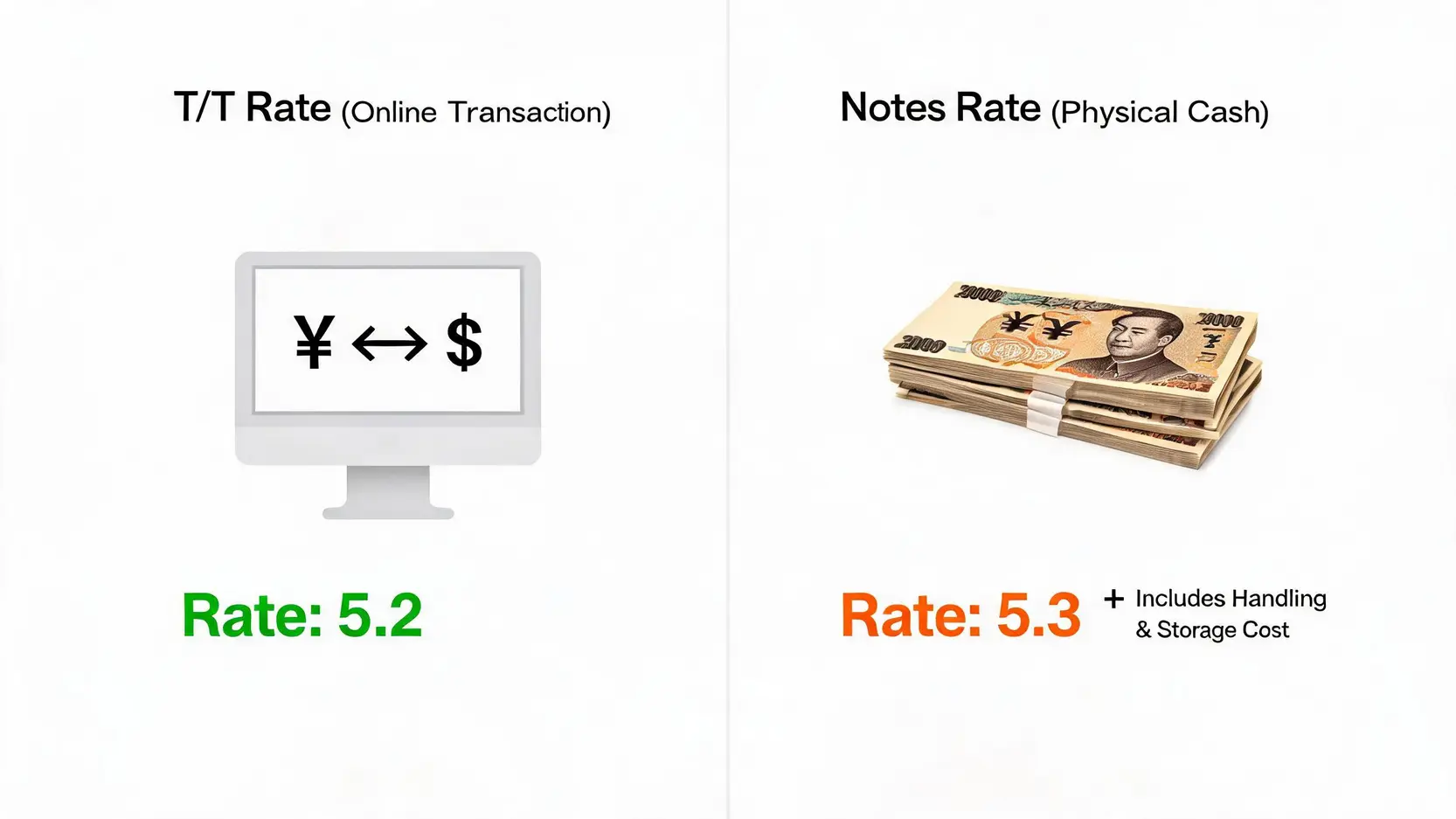
  • Telegraphic Transfer Rate (T/T Rate): Refers to transactions that do not involve physical cash, such as foreign currency transfers or exchanges conducted through online banking or banking apps. The exchange rate is usually more favorable.
  • Notes Rate: Refers to the exchange rate used when exchanging physical foreign currency banknotes. Since banks must bear costs related to storage, transportation, and counterfeit prevention, the cash selling rate is generally “more expensive” than the telegraphic transfer selling rate.

一張對比圖解釋銀行電匯價與現鈔價的分別,顯示電匯價因沒有實體鈔票成本而匯率更優。

Telegraphic Transfer Rate vs Notes Rate: Understand the Cost Difference at a Glance

If you want to save money when exchanging yen through banks, the best approach is to first purchase Japanese yen at the telegraphic transfer rate via online banking and store it in a foreign currency account, then make an appointment to withdraw physical cash from a branch later. Although a small cash withdrawal fee may apply (depending on the bank and account tier), the overall cost is often still more cost-effective than exchanging directly at the cash rate. For a deeper understanding of the difference between telegraphic transfer rates and cash rates, please refer to the further reading section. 

Credit Cards and ATM Withdrawals: Backup Options for Maximum Convenience

When traveling in Japan, a credit card offering overseas spending benefits is essential. Although most credit cards charge around 1.95% in overseas transaction fees, choosing a travel credit card with high cashback or mileage rewards may offset the fees completely, or even generate additional benefits. However, when paying by card in Japan, always choose settlement in “Japanese Yen (JPY)” instead of “Hong Kong Dollar (HKD)”, otherwise you may fall into the DCC (Dynamic Currency Conversion) trap, which typically offers much worse exchange rates.

As for ATM withdrawals overseas, they should only be treated as a last-resort emergency option. This is because, in addition to local bank handling fees (which are usually around HK$50-100 per transaction), Japanese ATM operators also charge service fees. Unless absolutely necessary, the costs are extremely high, making this the least recommended regular method in this yen exchange guide. If needed, you may refer to overseas ATM withdrawal tutorials and fee details. 

Further Reading (Highly Recommended)

[Hong Kong Cryptocurrency Credit Card Comparison] Crypto.com Card vs Binance Card Ultimate Comparison (Including Application Guide and Fee Analysis)

[Fubon Japanese Yen Exchange 2025] Everything You Need to Know! Complete Guide to Online Exchange, Counter Services, and Foreign Currency Withdrawal Fees and Procedures


Frequently Asked Questions (FAQ) About Japanese Yen Exchange

Q: Should I Refer to the Telegraphic Transfer Rate or the Cash Rate When Exchanging Yen?

A: It depends on your exchange method. If you are buying or selling foreign currency through online banking or a mobile banking app without withdrawing physical cash, you should refer to the “Telegraphic Transfer Rate”. If you need to exchange Japanese yen cash for travel purposes, you should refer to the “Notes Rate”. Generally, the cash selling rate will be higher than the telegraphic transfer selling rate.

Q: Is It Cost-Effective to Withdraw Cash From ATMs in Japan?

A: It is very cost-inefficient and should only be treated as an emergency backup option. Using a Hong Kong ATM card to withdraw cash from Japanese ATMs requires paying handling fees charged by both the Hong Kong issuing bank (usually around HK$50-100 per transaction) and the Japanese ATM operator. The exchange rate may also not be favorable, making the overall cost quite high.

Q: Do I Need to Make a Reservation at Money Changers in Advance?

A: Advance reservations are strongly recommended, especially during peak travel seasons or for larger exchange amounts. There are two main benefits to making a reservation: first, it ensures the money changer has sufficient Japanese yen cash available for you; second, some money changers (such as Birdy Exchange), allow customers to reserve online and lock in the exchange rate for the day, helping avoid budget issues caused by exchange rate fluctuations.

Q: Will the Japanese Yen Rebound in the Short Term?

A: The market generally expects that before the US Federal Reserve clearly shifts toward rate cuts and the Bank of Japan ends its ultra-loose monetary policy, the Japanese yen is unlikely to have strong momentum for a sustained rebound. In the short term, the Japanese yen to Hong Kong dollar exchange rate is expected to continue fluctuating within a low range.


Conclusion

In summary, although the Japanese yen exchange rate trend remains volatile, as long as you have the right information, you can find the yen exchange strategy that best suits your needs. If you are seeking the absolute best Japanese yen to Hong Kong dollar exchange rate and are willing to spend extra time and transportation costs, carefully comparing exchange rates among money changers across different districts and making reservations in advance can definitely help you save a considerable amount on travel expenses. If convenience is your top priority and you do not mind slight differences in exchange rates, using banks’ online foreign exchange services or making good use of high-reward credit cards will be a more effortless and convenient choice. No matter which method you choose, preparing in advance before departure will allow you to enjoy your trip to Japan with greater peace of mind!

编者
Evan Lin

Evan Lin

我是Evan Lin,从大学时期开始接触外汇交易,至今已有多年实战经验,熟悉技术分析与EA策略,热衷于研究市场脉动与风险管控,喜欢分享实战经验和交易技巧,和大家一起学习、一起进步!

If you liked this article, please share it!

Related Articles

  • 2026 RM to TWD Exchange Rate Guide & Currency Tips
    [2026 RM Exchange Rate Full Analysis] Malaysian Ringgit to New Taiwan Dollar Trends and Best Currency Exchange Tips Planning to travel to Kuala Lumpur or do business in Malaysia, but confused by the current “RM exchange rate”? If you do not understand the hidden costs of different currency exchange channels,...
    2026 年 7 月 9 日
  • ECB Hawkish Stance: EUR/USD Outlook & Strategy
    How to Interpret the ECB’s Hawkish Stance? Lagarde’s Signals, Key EUR/USD Levels, and Investment Strategies Explained in One Go The ECB’s hawkish stance has once again become the main theme in the foreign exchange market. This is especially true when the market had originally bet that “the European Central Bank...
    2026 年 7 月 9 日
  • Can You Buy Gold? 5 Gold Investment Methods Compared
    A Must-Read for Beginners: Can You Buy Gold? A Comprehensive Comparison of 5 Gold Investment Methods and Their Pros and Cons Facing ongoing changes in global inflation and market uncertainty in 2026, many people who are new to the market are asking: “Can you buy gold?” In fact, gold has...
    2026 年 7 月 9 日
返回顶部