JPY Forecast 2026: USD/JPY Above 160 Outlook

Updated: 2026/05/14  |  CashbackIsland

usdjpy-160-yen-intervention-forecast

Japanese Yen Exchange Rate Forecast 2026: USD/JPY Breaks Above 160! A Complete Analysis of Japanese Government Intervention Triggers and Investment Strategies

Recently, the USD/JPY exchange rate briefly broke above the 160 level, hitting a multi-decade low and triggering significant market tension. Whether you are an investor closely monitoring the market, a traveler preparing for a trip to Japan, or a professional concerned about global economic trends, you are probably wondering: what exactly does the USD/JPY 160 level mean? Will the Japanese government step in to intervene? What bullish and bearish views exist in the market regarding future Japanese yen exchange rate forecasts? This article will provide a comprehensive analysis of the deeper meaning behind the USD/JPY 160 level, explore the rumored trigger points for Japanese yen intervention, and compile expert opinions to offer clear investment and defensive strategies. 


Why Is USD/JPY 160 a “Fear and Greed” Indicator for the Market?

When a currency pair reaches levels not seen in decades, it no longer represents just a number. Instead, it becomes a reflection of market sentiment, national policy, and global capital battles. The USD/JPY 160 level is precisely such a symbolic threshold, influencing the fear and greed of countless traders.


Historical Psychological Levels: Looking Back at Major Exchange Rate Battles

Looking back at history, major round-number levels have often been battlefields of psychological warfare between central banks and speculators. For example, during the 1998 Asian Financial Crisis, the Japanese yen once weakened close to the 150 level, triggering joint intervention by the Japanese government and the US. For the market, 160 is not only the weakest level since 1990, but also represents “uncharted territory”. Once broken, there are virtually no obvious technical resistance levels above it, potentially triggering panic selling and causing the exchange rate to spiral out of control. As a result, this level has become a key “stress test point” for measuring the tolerance limit of Japanese authorities.


The Double-Edged Sword for Japan’s Economy at the 160 Level: Import Inflation vs Export Benefits

A sharply weakening Japanese yen acts as a double-edged sword for Japan’s economy:

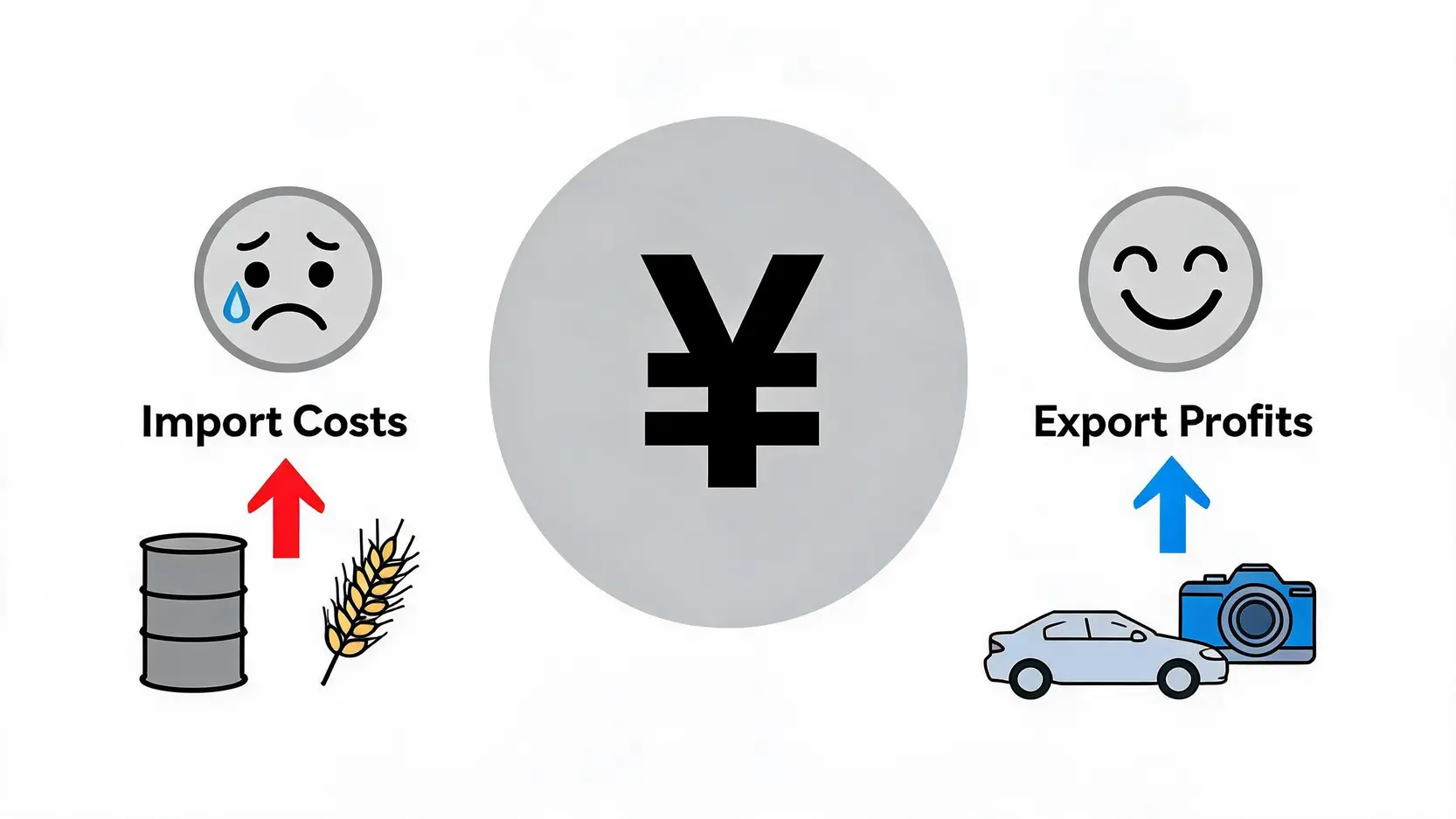
  • Import Inflation Pressure: Japan is a country heavily dependent on imports, especially for energy (such as oil and natural gas), as well as food. A weaker yen means significantly higher costs for purchasing these necessities, directly pushing up domestic inflation and eroding consumers’ real purchasing power, placing heavy pressure on support for Prime Minister Kishida’s administration.
  • Benefits for Export Industries: On the other hand, a weaker yen significantly boosts the overseas competitiveness of Japanese exporters. Large multinational companies such as Toyota and Sony see substantial increases in overseas profits when converted back into yen, supporting corporate earnings and Japanese stock market performance.

The USD/JPY 160 level is precisely the critical point where these two forces collide most intensely. Once the pain caused by import inflation outweighs the benefits from exports, pressure for government intervention reaches its peak.日圓貶值對日本經濟的雙重影響示意圖,左邊是進口成本上升的壓力,右邊是出口企業獲利的利好。

The weakening yen acts like a double-edged sword, simultaneously hurting imports while boosting exports.


Japan Government’s Bottom Line: Breaking Down the Three Major Trigger Signals for “Japanese Yen Intervention”

The market generally expects Japan’s Ministry of Finance and the Bank of Japan (BOJ) to step in to support the yen, but when exactly will they pull the trigger? Rather than guessing a specific exchange rate level, it is more useful to identify the following three key signals, which can more accurately indicate the arrival of Japanese yen intervention trigger points.


Further Reading (Highly Recommended)

Complete Guide to Japanese Yen Deposit Interest Rates: Master Japanese Yen Fixed Deposit Recommendations and Exchange Rate Trends for Smarter Yen Savings!

[Forex Beginner Tutorial] From 0 to 1 for New Investors: Understanding the Basics of Foreign Exchange Trading!


Signal One: The Severity of Officials’ “Verbal Intervention” Language and Its Hidden Meaning

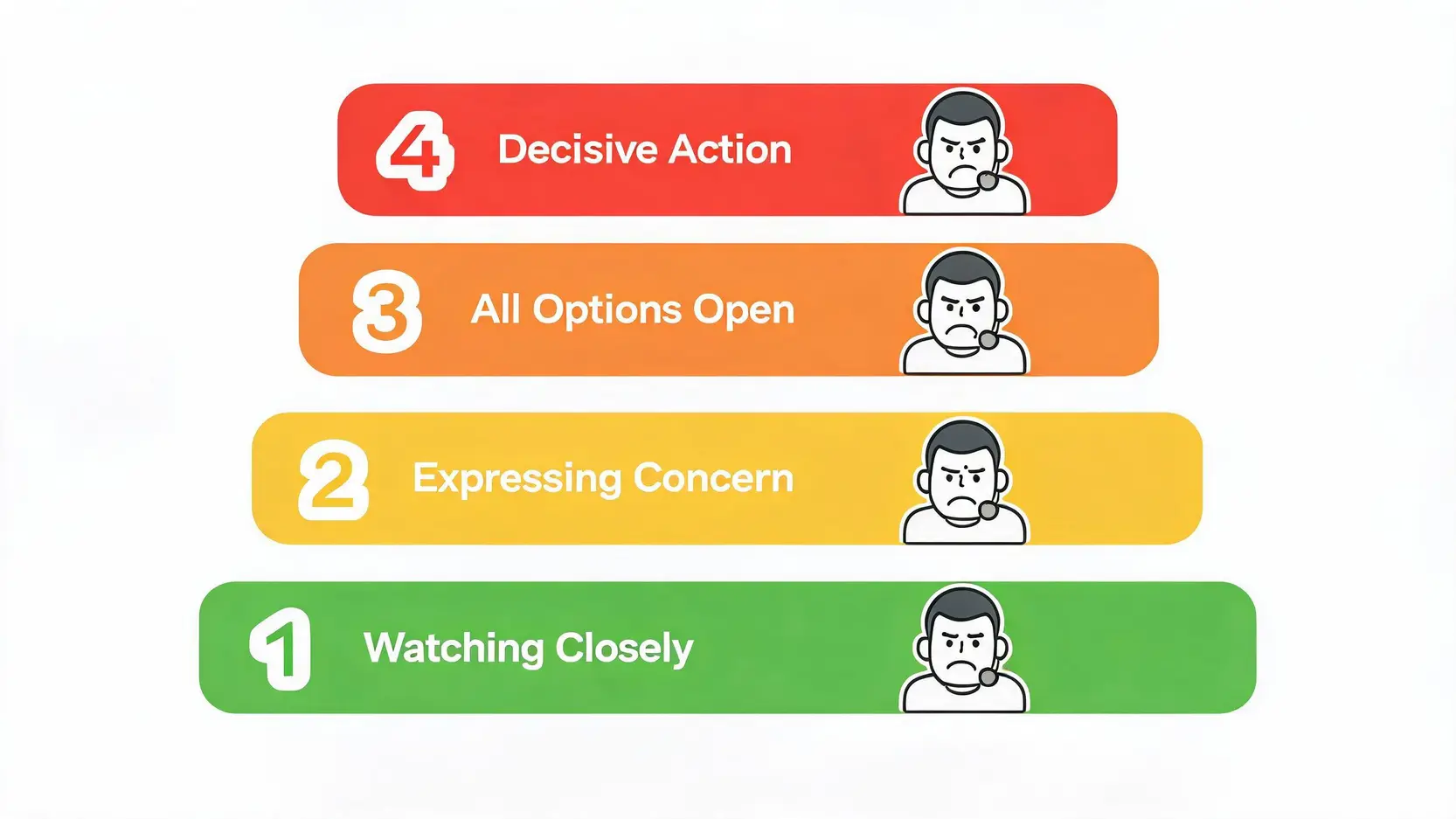
Before actually using foreign exchange reserves for intervention, officials often begin with “verbal intervention” in an attempt to influence market expectations through public statements. These verbal warnings come in different levels:

日本官員口頭干預的四個等級示意圖,從密切關注到採取果斷行動,顯示警告強度逐步升級。

Warning Levels of Japan’s Official “Verbal Intervention” and Their Potential Action Signals

  • Level 1 (Closely Monitoring): “We will closely monitor exchange rate movements.” (Hidden meaning: We are watching, but not planning to act yet.)
  • Level 2 (Expressing Concern): “We are concerned about the recent one-sided depreciation of the yen.” (Hidden meaning: Something is becoming problematic, and the market should pay attention.)
  • Level 3 (Hinting at Action): “We will not rule out any options.” (Hidden meaning: Our toolbox is open, and we are ready to act at any time.)
  • Level 4 (Strongest Warning): “We will take decisive action against excessive volatility.” (Hidden meaning: The bullets are loaded. If the market continues speculative behavior, consequences will follow.)

When the wording used by the Finance Minister or top foreign exchange official Masato Kanda escalates to Level 4, actual intervention is usually imminent.


Signal Two: The “Speed” of Depreciation Is More Important Than the “Price Level”

For Japanese authorities, the “speed” of yen depreciation matters far more than the “absolute exchange rate level”. A market that slowly and orderly weakens toward 160 may still fall within acceptable tolerance levels. However, if speculative forces cause the exchange rate to plunge by 3-5 yen within a short period (such as one or two days), this kind of “excessive volatility” would almost certainly trigger intervention.

Monitoring intraday volatility is an effective way to assess intervention risk. When USD/JPY rises more than 1.5% in a single day or experiences rapid gains over several consecutive days, caution should increase. The purpose of intervention is not to reverse the trend entirely, but to “punish speculators”, increase market uncertainty, and slow the pace of depreciation.


Is 160 the Final Defense Line? Market Predictions on Intervention Trigger Points

Although 160 is a powerful psychological threshold, most analysts believe the Japanese government has not established a hard “red line” that cannot be crossed. Setting intervention levels too clearly would instead provide speculators with a target to attack. Therefore, authorities are more likely to adopt a “hit-and-run” surprise intervention strategy by entering the market unexpectedly (such as during low-liquidity periods in the New York afternoon session or early Asian trading hours) to maximize the deterrent effect. The market generally speculates that 160, 162, or even 165 could become potential intervention zones, but the core criteria remain the previously mentioned “official statements” and the “speed of depreciation”.


2026 Japanese Yen Exchange Rate Forecast: A Complete Summary of Bullish and Bearish Views

Looking ahead, the market remains divided on the Japanese yen’s long-term direction. What factors are driving this battle between bulls and bears? Below is a summary of the core arguments from both sides.

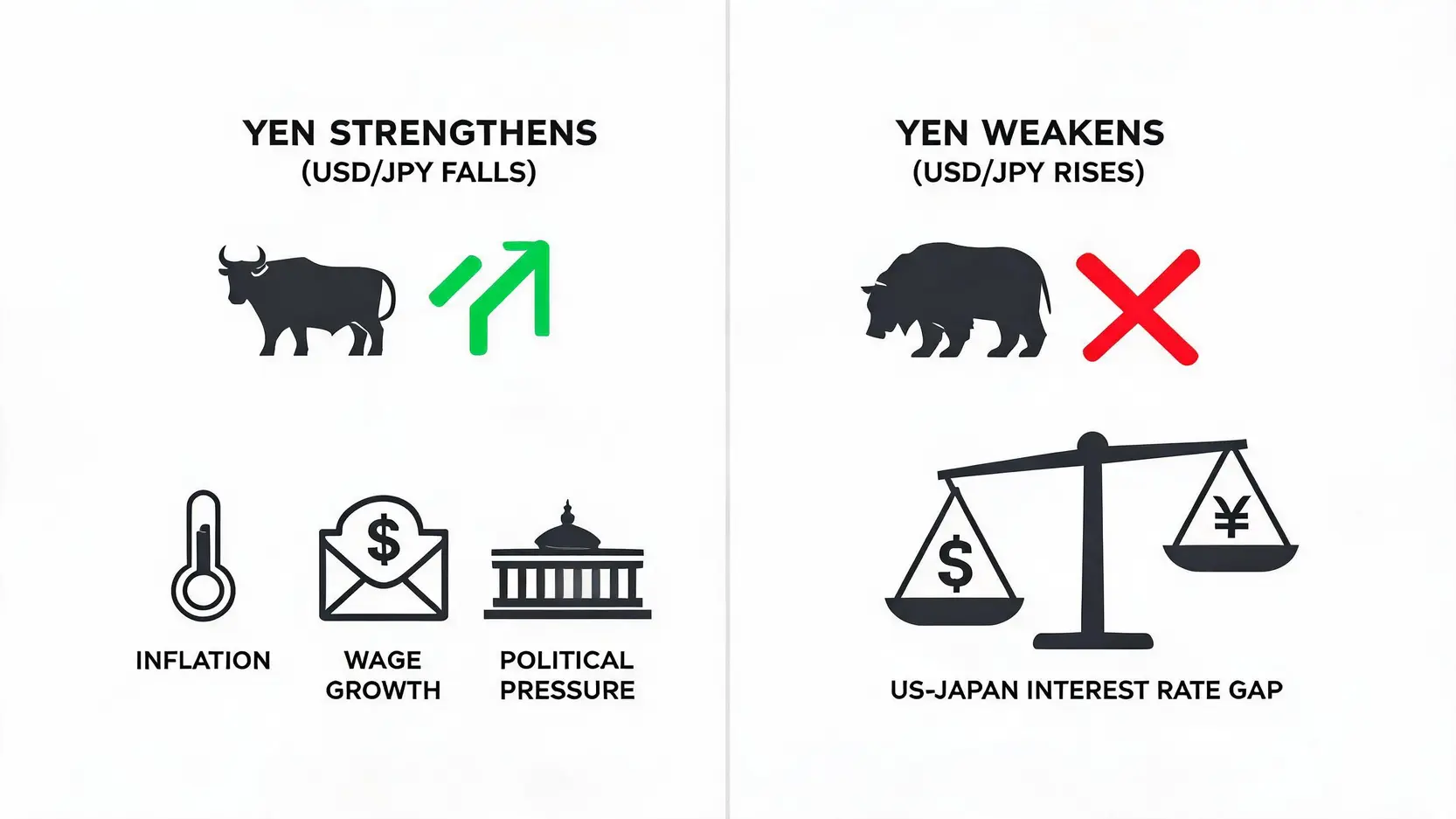
日圓匯率多空觀點對比圖,看升方理由包括通膨和薪資成長,看貶方核心理由是美日利差。

The Bullish vs Bearish Debate on the Future Direction of the Japanese Yen: Japan’s Domestic Factors vs the US-Japan Interest Rate Gap.


Bullish View: Three Reasons for Betting on a Bank of Japan Policy Shift

Investors who believe the Japanese yen will rebound from the bottom (meaning USD/JPY declines) are mainly basing their view on expectations of monetary policy normalization by the Bank of Japan:

  1. Persistent Inflationary Pressure: If Japan’s inflation rate can remain steadily above 2%, the Bank of Japan will have stronger justification for further interest rate hikes, narrowing the interest rate gap with the US.
  2. Achieving Wage Growth: If the annual “Shunto” spring wage negotiations can deliver sustained wage growth, this could create a healthy “wage-price” cycle and provide the foundation for tighter monetary policy.
  3. Political Pressure: Pressure from both the public and the government to combat inflation may force the central bank to adopt more aggressive rate hikes in order to stabilize the exchange rate.


Bearish View: Why the US-Japan Interest Rate Gap Remains the Key Driver of the Japanese Yen?

Those who believe the Japanese yen will continue weakening (meaning USD/JPY rises further), focus on structural factors that are difficult to reverse, with the most important being the “US-Japan interest rate gap”.

As long as the US Federal Reserve maintains high interest rates while the Bank of Japan only raises rates slowly and marginally, the substantial interest rate gap between the two countries will remain. This makes “carry trades” highly attractive, where investors borrow low-interest-rate Japanese yen to purchase higher-yield US dollars and profit from the interest rate differential. This trading behavior itself continuously creates demand for selling yen and buying US dollars, placing long-term pressure on the Japanese yen exchange rate. Unless the US economy experiences significant slowing that forces the Federal Reserve into aggressive rate cuts, the Bank of Japan alone will struggle to completely reverse the situation. This remains the core variable influencing Japanese yen exchange rate forecasts.

Comprehensive Analysis: Possible Japanese Yen Exchange Rate Range Over the Next Six Months

Overall, the Japanese yen’s movement over the next six months will likely become a tug-of-war between “expectations of Bank of Japan rate hikes” and the “timing of US Federal Reserve rate cuts”. Under the deterrence effect of intervention risks, USD/JPY may continue fluctuating at elevated levels within the 155-162 range in the short term. If US economic data remains strong and rate cut expectations continue to be delayed, the exchange rate may test the 165 level. Conversely, if Japan’s inflation data significantly exceeds expectations or the US economy cools, the exchange rate may fall back into the 150-155 range.

Investment Strategies: How to Position Yourself Amid the USD/JPY 160 Market Shift?

In such a highly volatile market environment, participants with different needs should adopt different strategies. Blindly chasing higher prices or attempting to catch the bottom both involve substantial risks.


Further Reading (Highly Recommended)

Complete Guide to Japanese Yen Deposit Interest Rates: Master Japanese Yen Fixed Deposit Recommendations and Exchange Rate Trends for Smarter Yen Savings!

[Forex Beginner Tutorial] From 0 to 1 for New Investors: Understanding the Basics of Foreign Exchange Trading!


Forex Traders: Risks and Opportunities in Short-Term Trading

For professional forex traders, the current market offers abundant short-term trading opportunities, but the risks are extremely high.

  • Trend-Following Strategies: When intervention signals remain unclear, going long USD/JPY in line with the broader carry trade trend may offer higher probability opportunities. However, strict stop-loss management is essential to guard against sudden intervention.
  • Counter-Trend Positioning: When the exchange rate surges rapidly and officials escalate verbal warnings, traders may attempt small short positions to capture the sharp pullbacks, often several hundred pips, triggered by intervention. This type of trading carries extremely high risk and is unsuitable for beginners.


Travelers and International Students Going to Japan: Best Timing Suggestions for Exchanging Currency in Batches

For individuals with practical Japanese yen needs, trying to catch the absolute bottom in the exchange rate is unrealistic. A more stable strategy is “batch currency exchange”, similar to dollar-cost averaging in fund investing.

You may divide your planned exchange amount into 3-5 batches and purchase gradually over the coming months. For example, exchanges can be made at different levels such as 158, 160, and 162. The advantage of this approach is that regardless of how the exchange rate moves, your average cost becomes relatively smoother, avoiding the risk of exchanging everything at the worst possible level while still benefiting from relatively cheap yen.


FAQ: Common Questions About the Japanese Yen Exchange Rate and Intervention

Q: Will the Japanese government really spend money to intervene in the forex market?

A: Yes. Japan’s Ministry of Finance holds massive foreign exchange reserves. When authorities believe exchange rate fluctuations have become excessively severe and may damage the national economy, they authorize the Bank of Japan to enter the market and buy yen while selling US dollars in order to support the yen exchange rate. The last major intervention occurred in 2022, involving several trillion yen.

Q: If I buy Japanese yen now, could I be buying at the highest point?

A: This is a classic market timing question. Although the Japanese yen is historically very cheap at present, the bottom of the exchange rate will ultimately be determined by future macroeconomic decisions (especially US and Japanese interest rate policies). If the US-Japan interest rate gap persists, the yen may theoretically continue depreciating. Therefore, for non-professional investors, buying in batches is an effective strategy to reduce the risk of “buying at the top”.

Q: Besides the US dollar, what are the exchange rate forecasts for the Japanese yen against the Hong Kong dollar and Taiwan dollar?

A: Since the Hong Kong dollar is pegged to the US dollar through the Linked Exchange Rate System, the movement of JPY/HKD is highly correlated with USD/JPY. In other words, when the yen depreciates against the US dollar, it also weakens against the Hong Kong dollar. The Taiwan dollar exchange rate is relatively more flexible, but it is also influenced by the strength of the US dollar. Overall, if USD/JPY continues rising, the Japanese yen to Taiwan dollar exchange rate, JPY/TWD, will likely remain at relatively low levels as well.

Q: Who leads forex market intervention, the Bank of Japan or the Ministry of Finance?

A: This is a common misunderstanding. In Japan, exchange rate policy decisions are controlled by the “Ministry of Finance” while the “Bank of Japan” acts as the executor. The Finance Minister decides whether to intervene, when to intervene, and the scale of intervention, then instructs the Bank of Japan to execute transactions through Japan’s foreign exchange reserve accounts.


Conclusion

In summary, the USD/JPY 160 level is not merely a cold numerical figure, but rather the intersection point of global macroeconomic forces, central bank policy battles, and market sentiment. Although future Japanese yen exchange rate forecasts remain filled with uncertainty and variables, understanding the historical background and identifying the key signals behind intervention trigger points can help both professional investors and ordinary individuals make wiser decisions in this currency market battle. Going forward, closely monitoring inflation data and interest rate policy developments in both the US and Japan will remain the most important strategy for understanding the direction of the Japanese yen and avoiding unnecessary risks.

编者
Evan Lin

Evan Lin

我是Evan Lin,从大学时期开始接触外汇交易,至今已有多年实战经验,熟悉技术分析与EA策略,热衷于研究市场脉动与风险管控,喜欢分享实战经验和交易技巧,和大家一起学习、一起进步!

If you liked this article, please share it!

Related Articles

  • Inflation Explained: Protecting Your Wealth in Taiwan
    Your Money Is Losing Value! Understanding How Inflation Affects the Purchasing Power of the Taiwan Dollar and Wealth Preservation in One Article Have you ever felt that NT$1,000 doesn't buy as much as it used to? A lunch box that once cost NT$80 now costs NT$120, and movie tickets have...
    2026 年 6 月 12 日
  • Trading Drawdown Recovery: Psychological Adjustment Guide
    The Taiwan Dollar Surges Past 31.5! With Hot Money and Foreign Capital Inflows, Is This an Opportunity or a Risk? An In-Depth Analysis The Capital Frenzy: The Three Major Drivers Behind the Taiwan Dollar Breaking Above 31.5 The New Taiwan dollar has recently become the absolute focal point of the...
    2026 年 6 月 10 日
  • Taiwan Dollar Surge: Stocks, Bonds, or USD?
    Taiwan Dollar Appreciation and Hot Money Inflows! An Investor's Action Guide: Should You Buy Stocks, Bonds, or Exchange for US Dollars at This Stage? One of the hottest topics in the market recently has been the capital-driven rally fueled by foreign investors' consecutive net buying of Taiwan stocks, pushing the...
    2026 年 6 月 10 日
返回顶部