Ethereum Smart Contracts: Beginner’s Complete Guide

Ethereum Smart Contract Tutorial: Understanding How ETH Smart Contracts Work and Their Practical Applications from Scratch
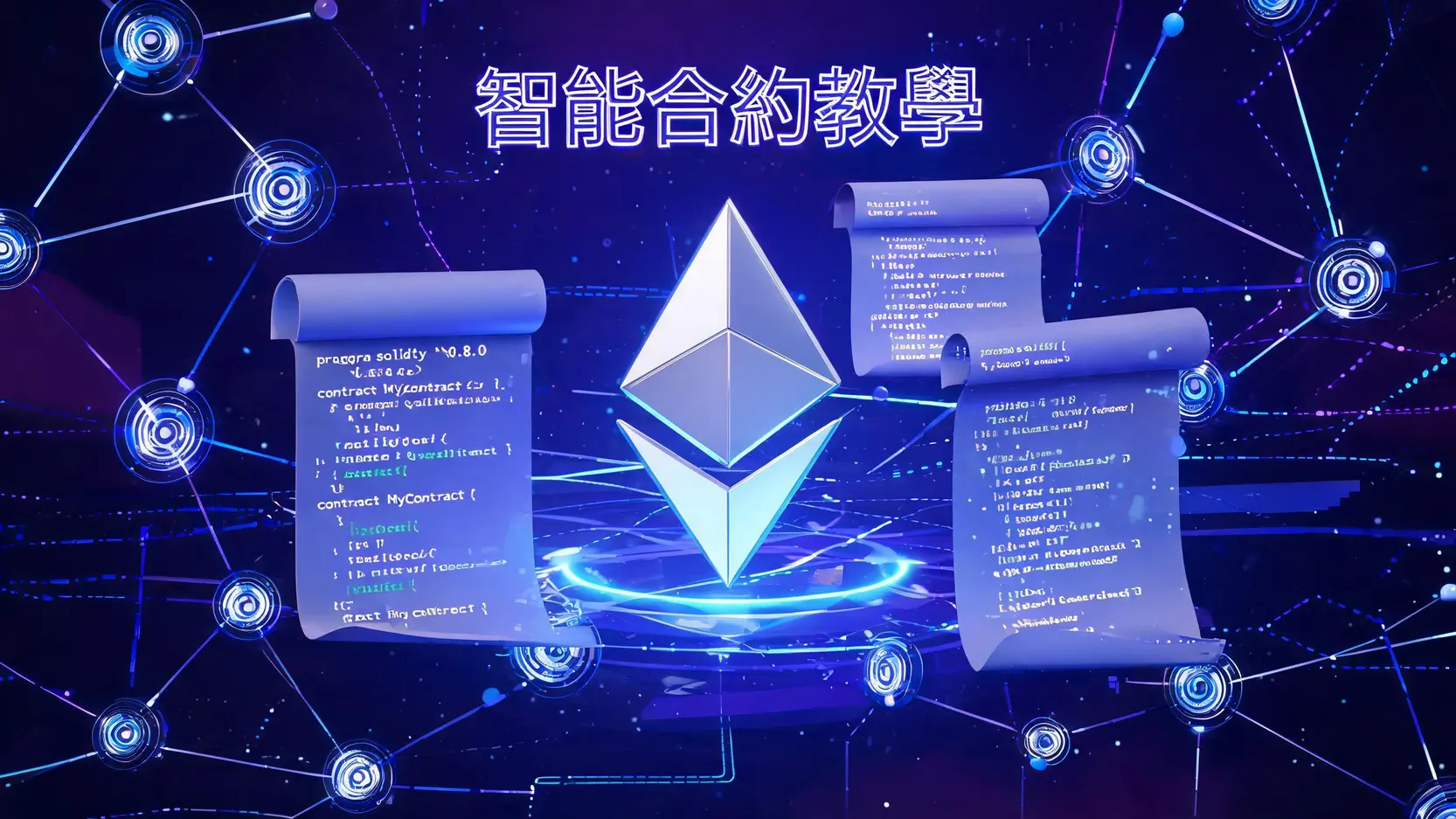
In the Web3 world, smart contracts are at the core of blockchain technology, giving Ethereum powerful programmability and limitless possibilities. If you want to understand the underlying logic of blockchain, this Ethereum smart contract tutorial will guide you through how ETH smart contracts work and teach you step by step how to develop and deploy them, helping you progress from a beginner to a developer with practical skills. In the following sections, we will explore the basic concepts and operating principles of smart contracts and explain the fundamentals of the Solidity programming language.
What Are Ethereum Smart Contracts and How Do They Work?
To understand the value of Ethereum, it is essential to first clarify the nature of smart contracts. Unlike traditional financial systems, which require trusted third-party institutions, blockchain technology creates a “trustless” transaction environment through source code.
Definition and Automatic Execution Features of Smart Contracts
A smart contract is essentially a piece of source code deployed on a blockchain. When predefined conditions are triggered, the source code automatically executes the corresponding instructions without any human intervention or third-party intermediary. This mechanism not only significantly reduces transaction costs but also eliminates the risk of human default. On the Ethereum network, these contracts are immutable. Once deployed on-chain, no one can arbitrarily change their rules.
The Role of the Ethereum Virtual Machine (EVM) in Smart Contracts
The Ethereum Virtual Machine (EVM) is the runtime environment for executing smart contracts. You can think of the EVM as a globally shared supercomputer, with every Ethereum node running this virtual machine. After developers write and compile an ETH smart contract, the source code is converted into bytecode that the EVM can understand. This ensures that regardless of the hardware environment, the contract can execute correctly and consistently across the global network.
Analysis of Practical ETH Smart Contract Use Cases
After understanding the underlying technology, investors and developers are most concerned about its practical applications. Ethereum has become the largest public blockchain ecosystem today largely because of the widespread use of smart contracts across multiple fields.
Decentralized Finance (DeFi) and Decentralized Exchanges (DEXs)
DeFi is currently one of the most successful applications of ETH smart contracts. Investment tools traditionally offered by banks, such as lending and fixed deposits, can now be implemented on the blockchain through smart contracts. For example, decentralized exchanges (DEXs) such as Uniswap use an automated market maker (AMM) model, allowing users to exchange tokens directly through contracts while keeping their funds in their own wallets at all times, fundamentally transforming the operating model of traditional finance.
Issuance and Trading of Non-Fungible Tokens (NFTs)
Beyond the financial sector, the rapid growth of NFTs is also made possible by smart contracts (particularly the ERC-721 and ERC-1155 standards). Every piece of digital art, in-game item, or virtual land can establish its unique digital ownership through a smart contract and be traded peer to peer without requiring guarantees from a third-party platform.
How to Deploy Smart Contracts on Ethereum: Development Tutorial and Risk Prevention
For those aspiring to enter the Web3 sector, writing a line of source code yourself is worth more than a thousand words. The following provides basic guidance on how to deploy smart contracts on Ethereum.

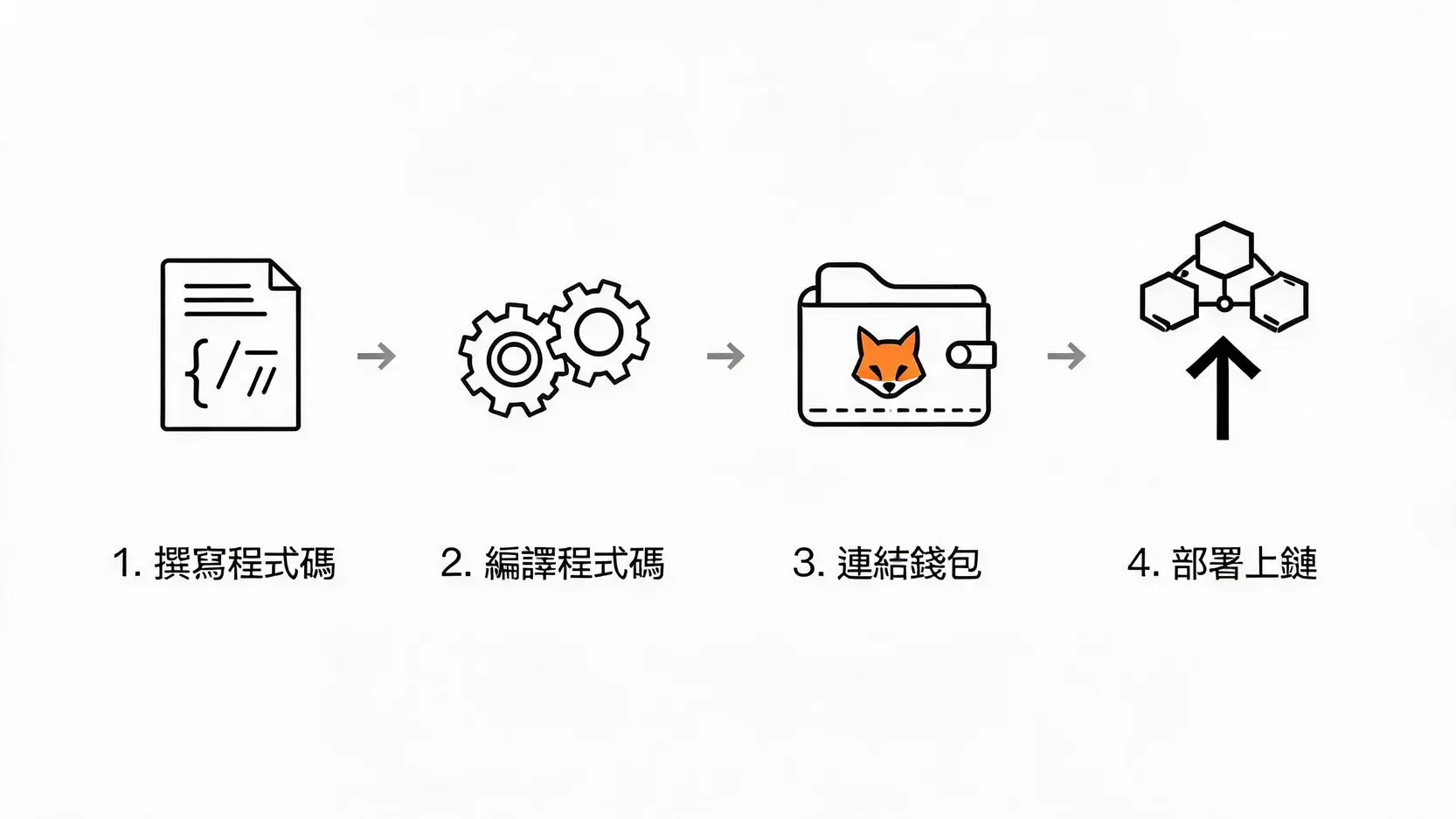
Four Steps to Deploy a Smart Contract with Remix
Essential Knowledge for Getting Started with Solidity
Solidity is currently the most widely used programming language for developing Ethereum smart contracts. Its syntax is similar to JavaScript and C++, and it is a high-level, object-oriented language. When learning Solidity, beginners must become familiar with its data types (such as uint and address), global variables (such as msg.sender and msg.value) and the use of modifiers. It is strongly recommended to read the official Solidity documentation thoroughly before development to understand the latest syntax and security standards.
Using Remix to Test and Deploy Your First Contract
For beginners, Remix IDE is the most user-friendly development tool. It is a web-based integrated development environment that allows you to start writing source code without installing any complex software on your computer.
- Step 1: Open the Remix website and create a new file with the .sol extension.
- Step 2: Write basic smart contract source code (such as a simple value storage contract).
- Step 3: Select the corresponding Solidity compiler version from the left panel and compile the contract.
- Step 4: Switch to the deployment panel, select a testnet (such as Sepolia), and connect your Web3 wallet (such as MetaMask) to deploy the contract with one click.
Smart Contract Security and Common Vulnerability Prevention Guide
In the blockchain world, “Code Is Law”. Once a contract is deployed on-chain, any vulnerability could result in millions of dollars in losses. Common vulnerabilities include reentrancy attacks, integer overflow (although built-in protection has been included since Solidity 0.8.0) and improper access control. Before deploying a contract to the mainnet, rigorous unit testing must be conducted, and a professional security audit firm may even be engaged.
Frequently Asked Questions (FAQ)
How Much Does It Cost in Gas to Deploy a Smart Contract?
Gas fees depend on the complexity of the contract’s source code and the level of congestion on the Ethereum network at the time. The larger and more complex the contract logic, the more Gas it consumes. As of 2026, with the growing maturity of Layer 2 scaling solutions, developers can also choose to deploy contracts on networks such as Arbitrum or Optimism to significantly reduce transaction fees.
Can a Smart Contract Be Modified After Deployment?
Traditionally, smart contracts deployed on Ethereum are immutable. However, developers can use the “Proxy Contract” design pattern to separate the logic contract from the data contract, allowing business logic to be upgraded without changing the contract address.
How Can the Source Code of a Deployed Smart Contract Be Verified?
You can verify a contract through an Ethereum blockchain explorer (such as Etherscan). Simply upload your Solidity source code and compilation parameters. If the generated Bytecode matches the version deployed on-chain, the contract will be displayed as “Verified”, which helps increase users’ trust in the contract.
What Basic Knowledge Is Required to Learn Solidity?
If you already have a foundation in JavaScript, C++, or Python, you will be able to learn Solidity very quickly. If you have no programming background, it is recommended to first understand basic programming logic structures (such as loops and conditional statements) as well as the fundamental operating principles of blockchain, before gradually beginning practical Ethereum smart contract development.
Conclusion
Learning Ethereum smart contract development is undoubtedly the key to opening the door to the Web3 world. From understanding how the EVM works and mastering the Solidity language to becoming familiar with DeFi and NFT use cases, every step is essential for building a solid technical foundation. Remember that while pursuing innovation, security must always remain the top priority. Before deploying any contract to the mainnet, rigorous testing and auditing are the final lines of defence for protecting assets. Only by continuously improving your development skills can you remain competitive in this rapidly evolving blockchain ecosystem.
Related Articles
-
Binance Margin Trading Guide: Differences Between Cross and Isolated Margin Modes and Illustrated Borrowing Instructions Short on funds but expect a particular cryptocurrency to surge? Besides the commonly used futures trading, you can also use “Binance Margin” to borrow funds and purchase spot assets, amplifying your investment returns. This Binance...2026 年 7 月 14 日
-
2026 Euro Exchange Rate Forecast: Is Now the Best Time to Buy Euros? Planning a trip to Europe or considering foreign currency investments? As the world’s second-largest reserve currency, fluctuations in the euro directly affect your currency exchange costs and investment returns. As we enter 2026 and face changes in...2026 年 7 月 14 日
-
【2026 In-Depth Analysis】Trump’s Major Shift in Middle East Policy: How Will It Trigger a New Round of Correlated Oil and Gold Price Movements? In 2026, global markets are once again focusing on the Middle East. As the Trump administration makes a significant shift in foreign policy, from maximum pressure on...2026 年 7 月 14 日