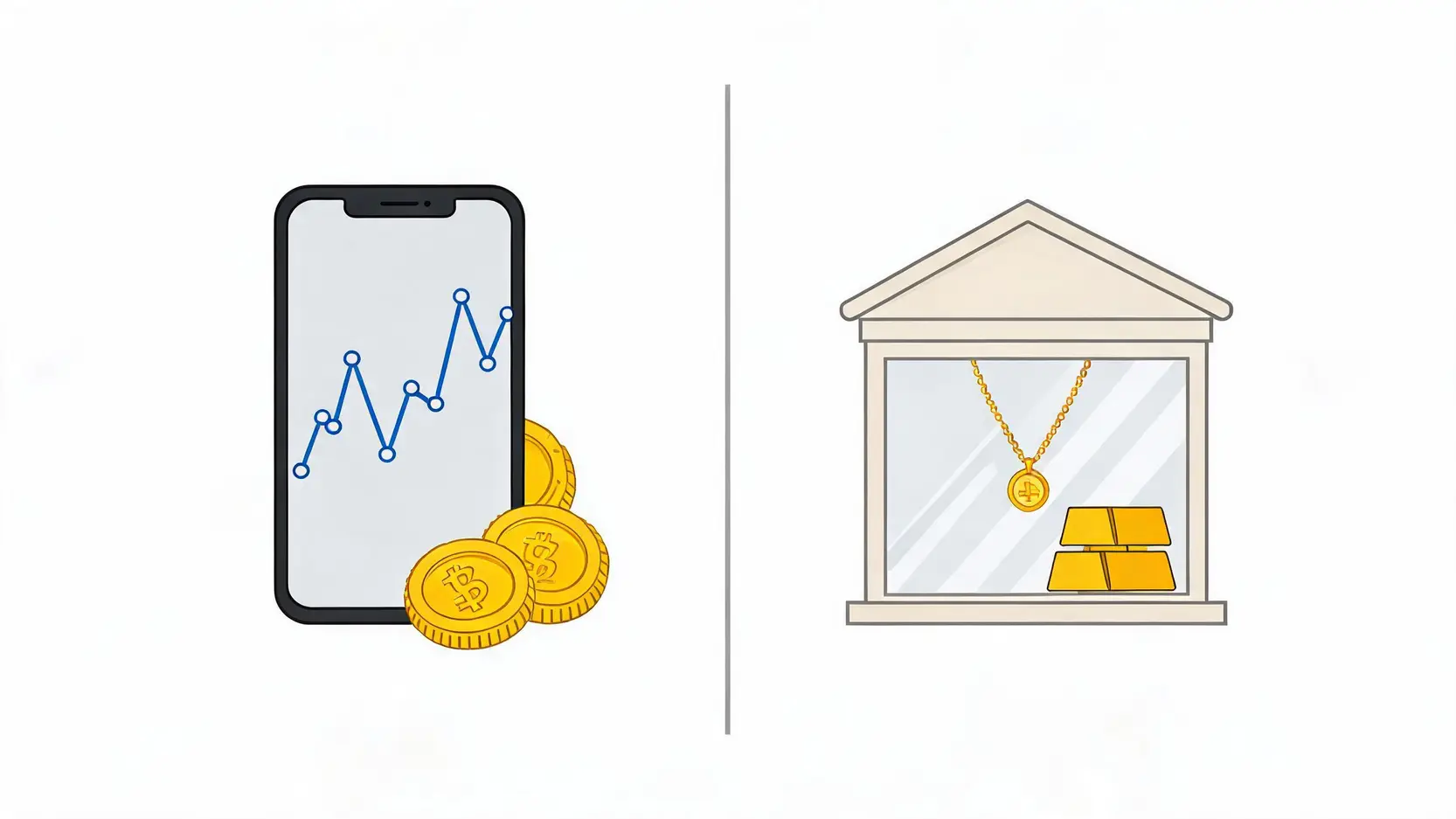
The Hidden Cost Structure Behind Gold Bid-Ask Spreads
- Operating and Hedging Costs: Stores must bear the inventory risk of gold prices falling after purchasing gold. They must also pay rent for physical premises, personnel expenses, and high security costs.
- Refining and Wastage Costs: When jewelry stores purchase used gold jewelry, they usually need to remelt and refine it, which results in weight loss during the process, (commonly known as a weight deduction). The typical market deduction for wastage when purchasing gold jewelry is currently around 5%. However, in recent years, many jewelry stores have promoted “no wastage deduction”. They usually absorb this cost by directly offering a lower buying price per unit.
- Advantages of Non-Physical Transactions: If you invest in a gold passbook or ETF, the bid-ask spread is much narrower than that of physical channels because there are no physical storage or refining issues.
Further Reading (Highly Recommended)
Gold Allocation Recommendations: Experts Explain 7 Gold Investment Tools to Strengthen Your Asset Safe Haven
Advantages, Disadvantages, and Cost Comparison of Five Major Channels, Including Physical Gold, Gold Passbooks, ETFs, and Futures
Gold Price Comparison Across Major Channels: Key Differences Between Jewelry Store and Bank Quotations
To compare gold prices across major channels, we must clearly understand the characteristics and applicable scenarios of each channel. Below is a guide to the latest quotation differences and selection criteria among common channels in 2026.
Price Differences Between Chain Jewelers and Traditional Jewelry Stores
Gold prices at major chain jewelers (such as Chow Tai Fook and Chow Sang Sang), usually include higher brand premiums and design charges. Their quotation mechanisms are highly transparent, their gold jewelry designs are stylish, and their after-sales services are comprehensive. If you are purchasing gold for a wedding or as a gift and value craftsmanship and brand assurance, these stores are the preferred choice. However, from a purely investment perspective, their high labor charges significantly reduce future profit potential.
In comparison, traditional local jewelry stores offer greater flexibility. Many long-established jewelry stores provide more room for negotiation on labor charges and often offer better repurchase terms for gold jewelry originally sold by their own stores. For cost-conscious investors, comparing prices at several traditional jewelry stores can often save a considerable amount of money.
Recommended Real-Time Online Quotation Tools and Usage Guide
In the digital era, checking real-time gold quotations through online tools before leaving home is a fundamental skill:
- Bank Mobile Apps: If you have opened a gold passbook account, you can log in to the bank’s app to view the latest quoted prices. You can even set price alerts, making it easier to buy at lower prices during volatile market conditions.
- Financial Information Websites: Websites such as Anue and TradingView allow you to check the real-time movements and technical charts of international spot gold (XAU/USD), making them suitable for investors who prefer technical analysis.
- Jewelry Trade Association Websites and Quotation Platforms: Many integrated websites retrieve the quoted prices announced by regional associations at scheduled times each day. You can use them to quickly browse the approximate market prices offered by jewelry stores across different cities and counties in Taiwan.
Three Practical Tips for Avoiding Gold Quotation Traps
- Confirm That the Weight Units Are Consistent: Before buying or selling, make sure whether the other party is using “ounces”, “grams”, or “maces/taels”. In Taiwan, 1 tael equals 10 maces, or approximately 37.5 grams. Quotations in different units can easily create the illusion that a price is cheaper.
- Clarify “Labor Charges” and “Weight Deductions”: When viewing gold jewelry, do not look only at the quoted price on the display board. Always ask, “How much is the labor charge?”. When selling gold, also ask in advance, “Is there a wastage deduction? What percentage will be deducted?”. Sometimes the quoted repurchase price may appear high, but after a substantial weight deduction, the actual amount of cash received may be lower.
- Physical Inspection of Banknotes and Scales: When conducting transactions at a physical jewelry store, confirm that the store uses an electronic scale certified by the Bureau of Standards, Metrology and Inspection, and personally verify the displayed weight to protect your rights.
Further Reading (Highly Recommended)
Gold Investment Risks Revealed: Four Potential Risks You Should Know Amid Short-Term Rate Hike Pressure
Beginner’s Guide to Gold Investment: A Complete Analysis of the Advantages and Disadvantages of Five Major Channels, Investment Benefits, and Risks
Frequently Asked Questions: Historical Gold Price Trends and Practical Trading
Below are the practical issues investors most commonly encounter when checking historical gold price trends and conducting daily physical gold transactions.
Q: Why Is the Gold Price at Jewelry Stores Different From the International Gold Price Reported on Television?
A: Television news usually reports the US dollar price of “international spot gold” or “gold futures”, measured in ounces. Jewelry store quotations convert the international gold price into New Taiwan dollars and then into “maces” or “grams”, while also incorporating the costs of importing, minting, transporting, and operating physical stores. Therefore, the two prices will never be exactly the same, and physical gold prices at jewelry stores will always include a higher premium.
Q: How Many Times Does the Gold Price Change Each Day?
A: International gold prices fluctuate almost every second during trading days. Bank gold passbook prices, however, are adjusted dynamically every few minutes during business hours based on international market movements and exchange rates. Traditional jewelry stores generally follow the benchmark prices announced by local trade associations each morning, so their prices usually change only once or twice a day. Jewelry stores will make emergency adjustments to their quoted prices only when an international financial black swan event causes gold prices to plunge or surge during the trading session.
Q: How Are Gold Prices Calculated on Weekends or Public Holidays?
A: The international gold market is closed on weekends, so banks generally do not provide real-time after-hours trading (or they may use the final quotation before the market closed as a reference benchmark). Although jewelry stores remain open on weekends, their weekend quotations usually continue to use the trade association price published after Friday’s close, or individual stores may widen the bid-ask spread to protect themselves against price risks arising from unexpected international events over the weekend. Unless urgently required, large transactions are best conducted during regular weekday trading hours.
Q: Will an Invoice Be Issued When Purchasing Physical Gold? Is It Taxable?
A: In Taiwan, purchases of pure gold bars and gold coins are currently exempt from business tax. However, if you purchase “gold jewelry”, the processing charges are subject to business tax and require a uniform invoice. As for income tax on property transactions, individuals who profit from selling gold should report the income in accordance with the law. Particular attention should be paid to gold passbook transactions, as banks maintain clear transaction records, and any profits must be included in the individual’s consolidated income tax return in accordance with the law.
Conclusion
Understanding how to check today’s gold price and how bid-ask spreads work can help you make more favorable decisions when buying and selling. Whether you prefer the reassurance of holding physical gold or the convenience of trading through a gold passbook, your decision should be based on a thorough understanding of the cost structure. Before making a transaction, compare quotations across multiple channels, make effective use of digital tools to track market movements, and select the trading channel best suited to your capital size and risk tolerance. In today’s rapidly changing financial environment, remaining rational and maintaining strict discipline are essential for allowing gold to fully perform its powerful role in stabilizing an investment portfolio.