The Seesaw Effect of a Strong US Dollar and Pressure on Gold Prices
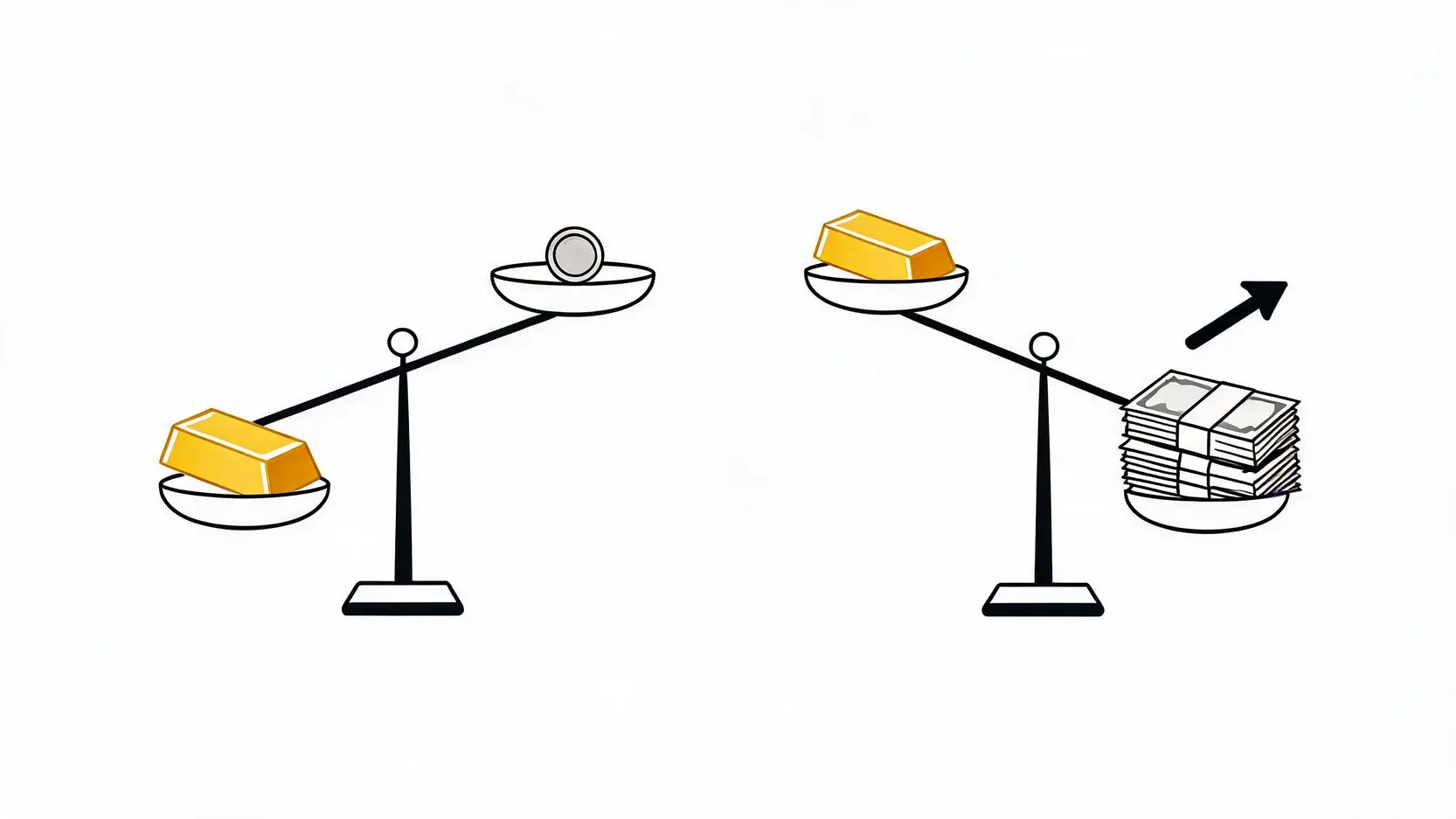
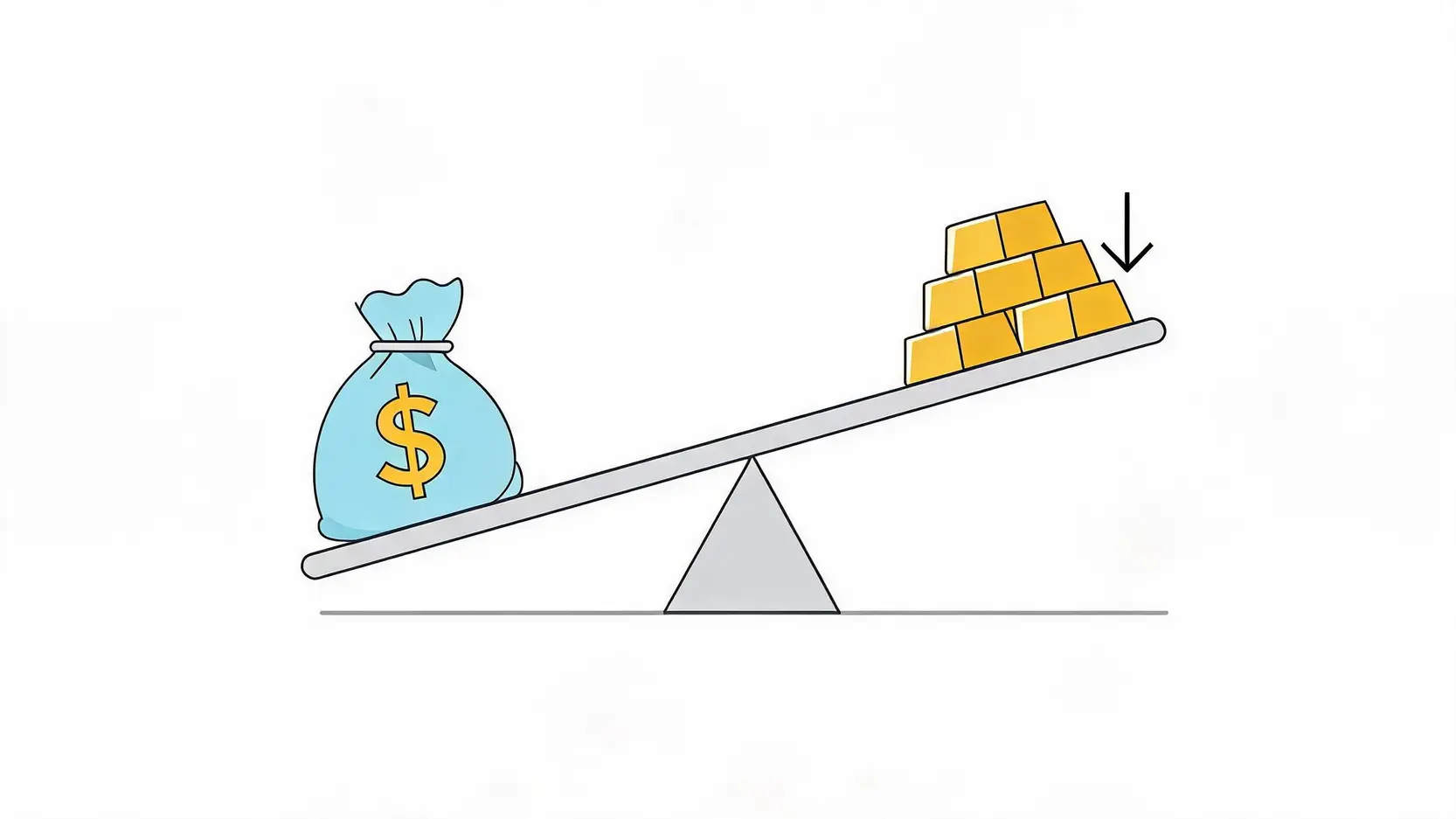
Therefore, a strong US dollar is usually a bearish factor for gold prices.
Why Do Rate Hikes Usually Push the US Dollar Higher?
A rate hike is when a central bank raises its benchmark interest rate. When the US Federal Reserve raises interest rates, it means US dollar deposits and US dollar-denominated assets (such as US Treasuries) can offer higher returns. This attracts global capital into the US in search of better yields. The inflow of capital increases demand for the US dollar, causing it to appreciate. This chain reaction explains why the US Dollar Index often performs strongly during rate hike cycles.
Assessing the Impact of the Current US Dollar Trend on Gold Prices
As of mid-2026, although the market remains divided over the pace of Fed rate hikes, interest rates are still expected to remain relatively high in the short term in order to curb stubborn inflation. This provides solid support for the US Dollar Index. As long as the US dollar remains strong, gold prices will face multiple obstacles in achieving a major breakout. Before investing in gold, be sure to include the movement of the US Dollar Index (DXY) in your analysis framework.
Core Risk 3: Volatility Risk From Market Sentiment and Speculative Activity
Gold has both commodity and financial attributes, meaning its price is influenced not only by supply and demand fundamentals but also highly susceptible to market sentiment and speculative activity. This is also one of the disadvantages of gold investment.
Risk of Capital Outflows After Safe-Haven Sentiment Fades
Gold’s “safe-haven” function is activated during geopolitical conflicts, financial crises, or economic recessions. When market panic sets in, capital flows into gold in search of protection, pushing gold prices higher. However, rallies driven by fear often come quickly and fade just as fast.
Once the crisis eases and market sentiment turns optimistic again, known as “risk-on” mode, capital can quickly flow out of safe-haven assets such as gold and into higher-risk assets such as stocks in pursuit of higher returns. This rapid outflow of capital often causes gold prices to pull back sharply. Therefore, if investors chase gold higher purely because of short-term safe-haven demand, they may face the risk of being trapped after market sentiment reverses.
Changes in Speculative Positions in the Futures Market and Their Impact
The gold futures market is the main battleground where professional investors and speculators compete. The US Commodity Futures Trading Commission (CFTC) publishes the Commitments of Traders (COT) report every week, which reveals the net long or net short positions of large speculators (such as hedge funds).
- Increase in Net Long Positions: This indicates strong bullish market sentiment.
- Increase in Net Short Positions: This indicates that bearish sentiment is dominating the market.
When speculative net long positions accumulate to extreme levels, it often suggests that the market may be overheated and that the risk of a price reversal is rising. Conversely, when net short positions reach extreme levels, it may indicate oversold conditions and the possibility of a price rebound. For ordinary investors, although there is no need to participate in futures trading directly, monitoring this data can help you better understand the current speculative atmosphere in the market.
Key Differentiator: Practical Gold Investment Risk Management Checklist
Once you understand the risks, the next step is learning how to manage them. In the complex environment of short-term rate hike pressure, a clear risk management checklist can help you invest in gold with greater discipline.
Asset Allocation: What Is a Reasonable Percentage of Gold in a Portfolio?
Gold’s core value lies in its low correlation with mainstream assets such as stocks and bonds, allowing it to effectively diversify the overall risk of a portfolio. So, how much allocation is appropriate?
- Conservative Investors: Consider allocating 5% to 10% to gold. The main purpose is to use its safe-haven attributes to provide a buffer for the overall portfolio during market downturns.
- Balanced or Aggressive Investors: The allocation can be slightly higher, but it is generally not recommended to exceed 15%. An excessively high gold allocation may drag down the portfolio’s long-term returns in a high-interest-rate environment due to gold’s non-interest-bearing nature.
Remember, gold is a “stabilizer” and “insurance” within a portfolio, not a tool for making heavy bets in pursuit of windfall profits.
Choosing the Right Investment Vehicle: Risk Differences Among Gold Investment Options
Choosing different investment vehicles also means taking on different levels of risk. You must make your choice based on your own circumstances.
| Investment Vehicle |
Main Risks |
Suitable For |
| Physical Gold (Gold Bars/Jewelry) |
Storage risk, low liquidity, wide bid-ask spreads |
Investors seeking maximum security for wealth preservation or long-term inheritance |
| Gold Passbook |
Gold cannot be physically withdrawn, transaction fees |
Beginners who prefer not to hold physical gold and want to invest small amounts regularly |
| Gold ETF (e.g., GLD) |
Market price volatility, management fees (expense ratio) |
Investors familiar with stock trading who seek low transaction costs and high liquidity |
| Gold Futures |
High leverage risk, margin calls, contract expiration risk |
Professional traders with high risk tolerance and extensive market experience |
For most retail investors, gold ETFs offer the best balance between cost, liquidity, and convenience. To learn more, refer to this complete comparison of gold investment vehicles.
Risk Monitoring: Key Economic Indicators You Need to Watch
To assess gold investment risks, you need to regularly monitor the following key economic indicators like a professional:
- Consumer Price Index (CPI): The core inflation data in the US, which directly affects the Fed’s interest rate decisions. If inflation remains high, rate hike pressure will be difficult to remove.
- Non-Farm Payrolls (NFP): Reflects the health of the US labor market. Strong employment data supports the Fed in maintaining tight monetary policy.
- Fed Interest Rate Decision (FOMC Meeting): Held eight times a year, these meetings are a major focus for global markets. You need to pay attention to the post-meeting statement and Chair Powell’s remarks to assess any shift in its “hawkish” or “dovish” stance.
- US Dollar Index (DXY): As mentioned earlier, this is one of the most direct indicators for judging pressure on gold prices.
Frequently Asked Questions (FAQ)
Q: If the Fed stops raising interest rates, will gold’s risks disappear?
A: No, they will not disappear completely. A pause in rate hikes only means that opportunity cost is no longer “continuously increasing”, but interest rates may still remain high (higher for longer), which still puts pressure on gold. In addition, if economic data remains strong, safe-haven sentiment cools, or the US dollar strengthens due to other factors, gold prices may still fall. A pause in rate hikes is bullish, but it is not a cure for all risks.
Q: Gold prices fluctuate sharply. Is this considered a risk?
A: Yes. Price volatility itself is a risk, especially for short-term traders. Gold prices are easily affected by news events and market rumors, leading to sharp short-term fluctuations. However, for long-term asset allocators, the importance of short-term volatility is reduced. They place greater emphasis on gold’s long-term value in fighting inflation and diversifying risk over five years, ten years, or even longer.
Q: Can geopolitical risk fully offset the pressure from rate hikes?
A: Usually, it cannot “fully” offset it. Geopolitical conflicts (such as wars or terrorist attacks), can indeed instantly ignite safe-haven sentiment, causing funds to flow into gold and pushing gold prices higher in the short term. They may even temporarily override the impact of interest rates. However, the impact of such events is often short-lived and pulse-like. Once the market gets used to the risk or the conflict cools down, price trends will eventually return to a path dominated by more fundamental macroeconomic factors such as interest rates and the US dollar.
Q: For small investors in Taiwan or Malaysia, what is the biggest hidden risk of investing in gold?
A: In addition to the common risks mentioned above, the biggest hidden risks may come from two areas. The first is “exchange rate risk”, because international gold prices are denominated in US dollars. If the US dollar appreciates sharply against the New Taiwan dollar or Malaysian ringgit, even if gold prices themselves remain unchanged, your currency conversion cost will increase. The second is “transaction cost”, especially when buying physical gold, where high bid-ask spreads and storage fees may erode most of your profits. Choosing standardized, low-cost tools such as gold ETFs is an effective way to avoid such risks.
Conclusion
In summary, while gold remains an essential safe-haven asset in a well-diversified portfolio, its investment risks should not be underestimated under the current environment of short-term rate hike pressure. Investors must clearly recognize that the higher opportunity cost created by elevated interest rates, the suppressive effect of a strong US dollar, and capital outflows as safe-haven sentiment fades are all potential headwinds for gold. Only by building a comprehensive risk management framework, maintaining an appropriate asset allocation, choosing investment tools that suit your needs, and continuously monitoring key economic indicators can you benefit from gold’s safe-haven qualities while avoiding its potential investment pitfalls in a volatile market.