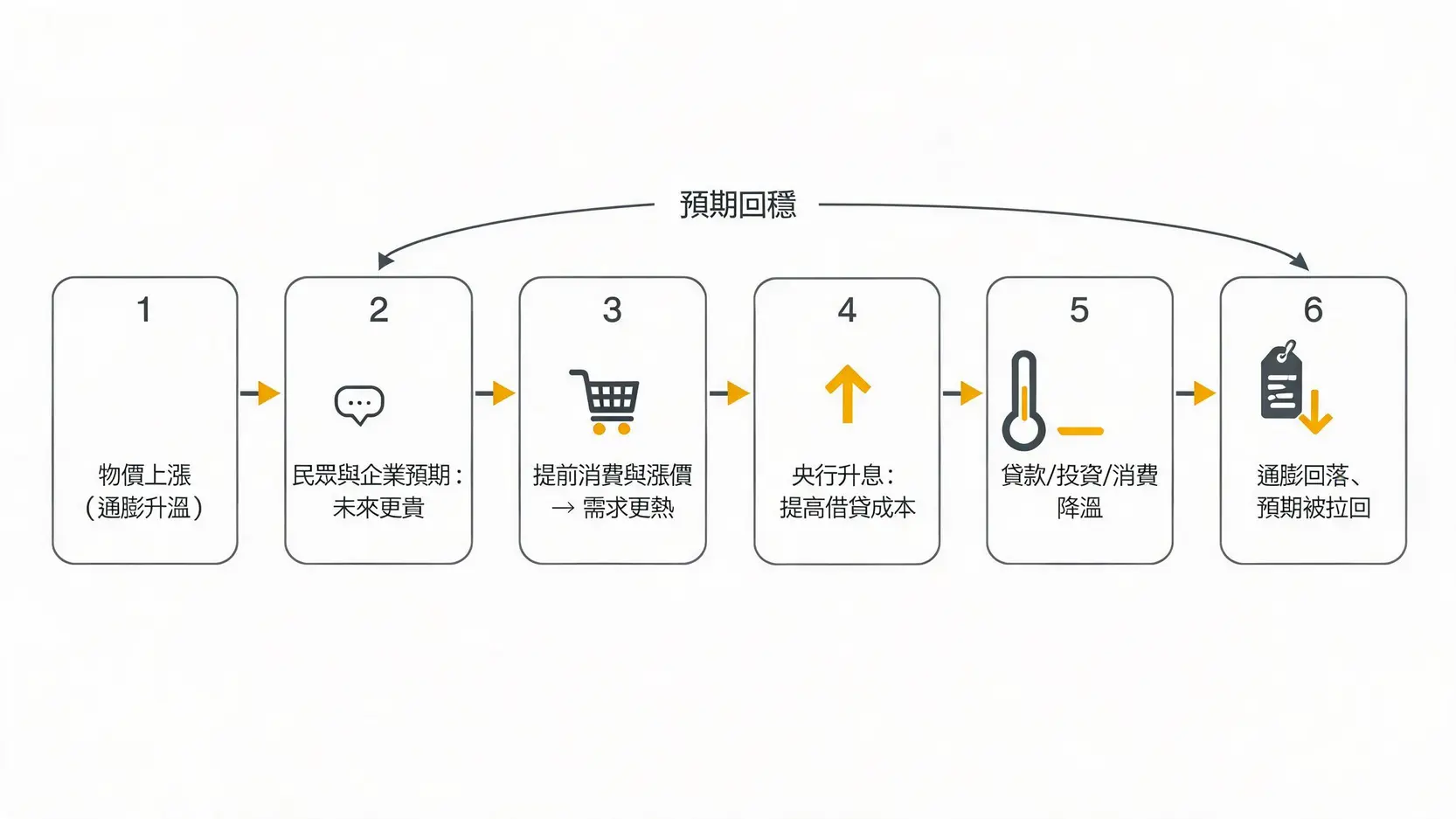
Rising Inflation → Central Bank Rate Hikes → Cooling Demand: The Key Transmission Path
The Chain Reaction of Surging Global Inflation: Why Central Banks Have to Step In
For central banks, inflation is not simply “prices getting more expensive”, but something that can evolve into runaway inflation expectations: companies raise prices first, workers demand pay raises, costs then push prices higher again, and it eventually becomes self-fulfilling. When inflation becomes more sticky, central banks tend to use higher interest rates to suppress demand and cool borrowing and consumption.
This is also why the global central bank rate hike wave is often accompanied by the market narrative of “higher for longer”: what central banks care about is not a short-term pullback in inflation, but whether medium-term inflation can return to a controllable range.
The Fed’s Rate Hike Spillover Effects: Pressure from the US Dollar and Capital Repatriation
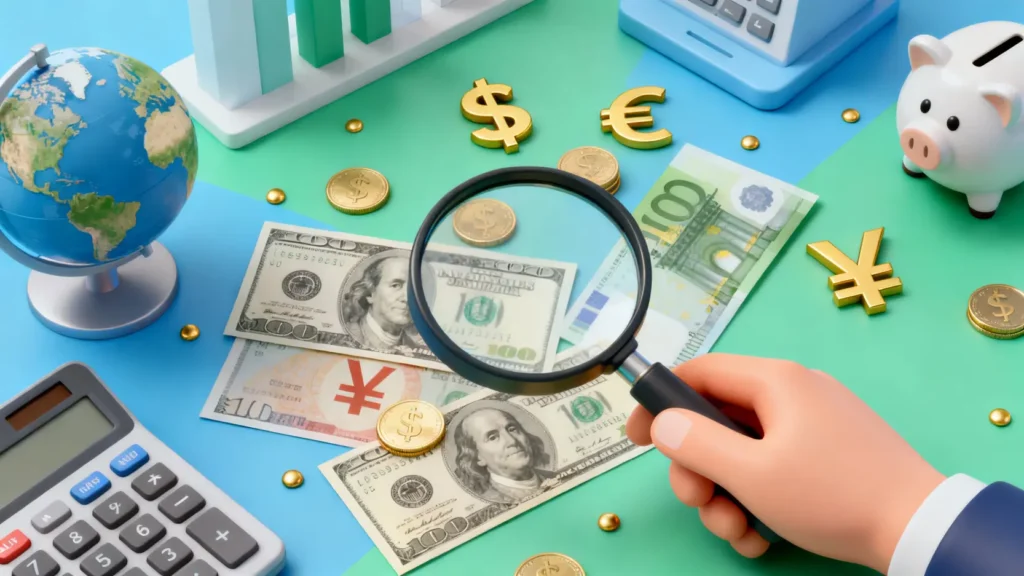
The anchor of global interest rates is still often tied to the US. When the Fed raises rates and US dollar interest rates become more attractive, international capital may flow back into US dollar assets, causing other markets to face dual pressure from exchange rates and funding conditions. For emerging markets, common side effects include local currency depreciation, a heavier external debt burden, and simultaneous pressure on stocks and bonds.
To understand how rate hikes affect exchange rates from a more everyday perspective, you can read further: The Seesaw Game of Exchange Rates: How Central Banks Stabilize Taiwan’s Economy Through “Dual-Rate Policy”?, which explains interest rates, exchange rates, and capital flows in very accessible language.
A Review of Rate Hike Conditions among Major Global Central Banks: Policy Differences across the US, Europe, the UK, and Asia
To understand the impact of the global central bank rate hike wave on asset prices, it is recommended to divide central banks into two types: those facing higher inflation pressure and placing greater emphasis on price stability (which tend to lean more toward tightening) and those under greater pressure from economic growth or financial stability (which tend to be more cautious on rate hikes or follow later). This divergence is directly reflected in exchange rate trends, bond yield curves, and regional stock market style rotations.
What the market truly trades is the “policy gap”: you hike while I do not, you pause while I continue hiking, you are preparing to cut while I still do not dare to cut. These gaps are often more important than the level of interest rates in any single country.
The US and European Central Banks: How Tightening Signals Affect Global Pricing
US policy rates and forward guidance directly affect US dollar liquidity and global risk appetite. To verify the Fed’s monetary policy framework and latest statements, an authoritative source is: Federal Reserve Board – Monetary Policy (the official summary page, including FOMC statements and policy strategy documents).
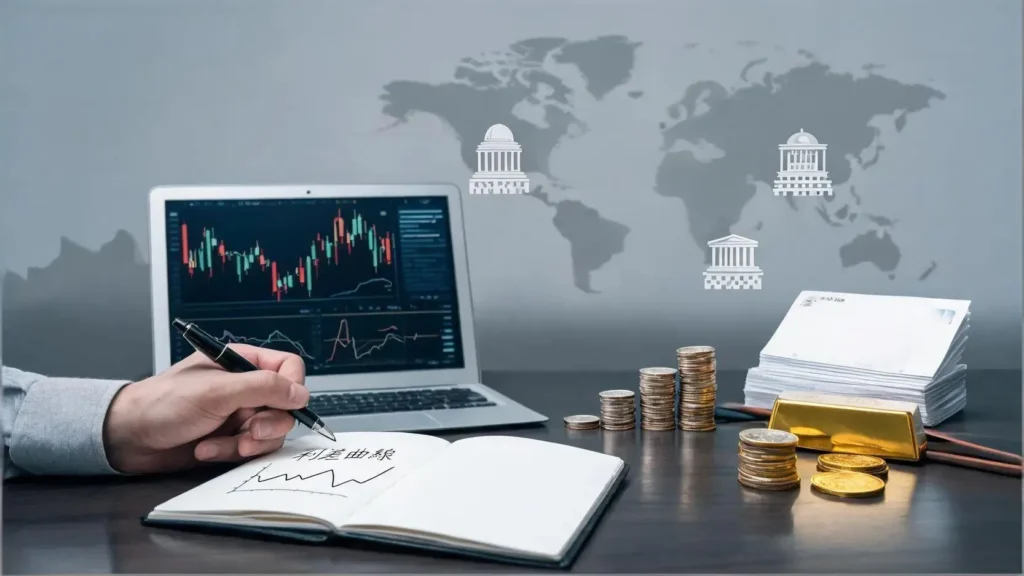
A more practical investment approach is to divide the “rate hike cycle” into three stages: the rapid rate hike period (valuation compression); the high-rate consolidation period, (divergence in corporate earnings); and the turning point period (when bonds and growth stocks often react first). Whether the global central bank rate hike wave has entered its second half usually depends on which stage the market begins to trade.
Policy Divergence among Asian Central Banks: The Dilemma Between Following Tightening and Maintaining Easing
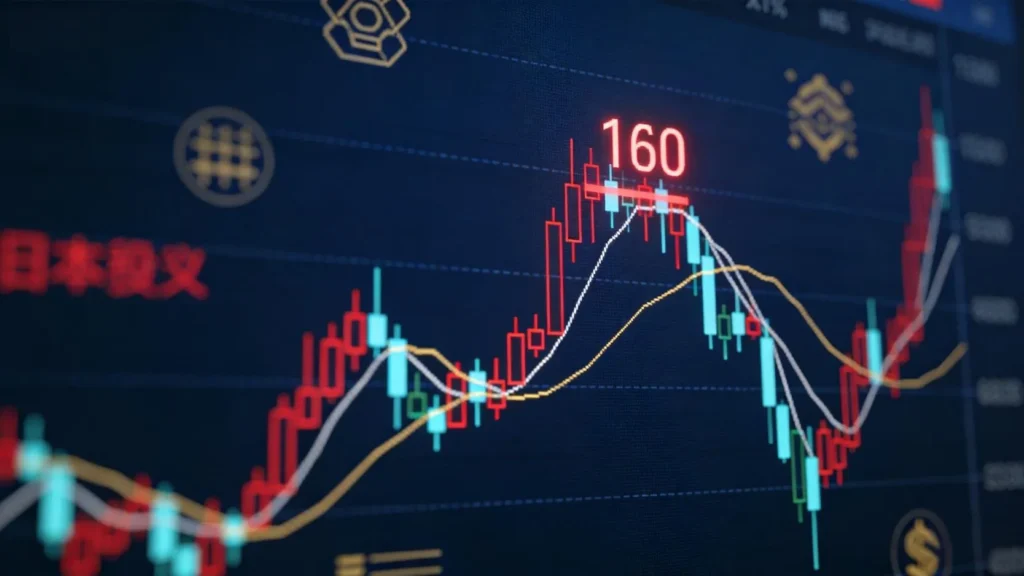
The difficulty for Asian economies lies in this: raising rates can defend exchange rates and curb inflation, but it may also pressure domestic demand and the housing market; not raising rates can support growth, but if the local currency weakens excessively, imported inflation may flare up again. This dilemma makes Asia more prone to a situation where “nominal interest rates are not necessarily the highest, but exchange rate volatility feels greater”.
For issues that Taiwan readers often focus on, such as how central bank board meetings decide on rate hikes and how rate hikes are transmitted to mortgages and corporate financing, refer to: A Complete Guide to Central Bank Board Meetings: How Rate Hikes and Cuts Are Decided and How They Affect You.
The Impact of the Global Central Bank Rate Hike Wave on Stock and Bond Markets: Valuation Repricing, Capital Rotation, and Risk Events
The two core lines behind “the impact of the global central bank rate hike wave on stock and bond markets” are: rising discount rates and rising funding costs. Higher discount rates compress high P/E assets (typically growth stocks); higher funding costs affect corporate financing, housing market transaction volume, and the overall economic cycle.
At the same time, it is important to note that rate hikes do not only affect prices, but also market structure. For example, when the risk-free rate rises, investors also demand higher returns from risk assets, credit spreads may widen, leveraged strategies become less tolerable, and liquidity is more likely to break down under stress.
The Double Shock to Stock and Bond Markets: Why “Stocks and Bonds Fall Together”
Many people assume that when stocks fall, bonds will rise, but in the early stage of rate hikes or when inflation remains high, it is common to see “stocks and bonds fall together”: stocks fall due to valuation compression, while bonds also weaken as yields rise (and prices fall). This is the most uncomfortable part of the global central bank rate hike wave, as the traditional 60/40 portfolio may lose its cushioning effect for a period of time.
To more fully understand the transmission path of “rate hikes → economy → stock and housing markets → personal finances”, you can also read: The Impact of Rate Hikes on the Economy: Understanding Stock Markets, Housing Markets, and Personal Finances.
Capital Outflows from Emerging Markets and Currency Depreciation Pressure: What Taiwan and Malaysia Readers Should Watch
In a rate hike environment, the most common sources of pressure for emerging markets are “interest rate differentials” and “US dollar liquidity”. When yields on US dollar assets rise, foreign capital may withdraw from higher-risk markets, intensifying stock market volatility. If the local currency depreciates, it may also push up the cost of US dollar-denominated imports or external debt pressure.
For ordinary investors, rather than guessing short-term exchange rates, it is better to focus on: asset currency diversification, cash flow stability, and interest rate risk on the liability side (such as mortgages, car loans, and corporate loans). If these three things are handled properly, the damage will be reduced even if the global central bank rate hike wave continues to cause turbulence.
Asset Allocation Strategies in a Rate Hike Environment: Fixed Deposits, US Treasuries, Gold, and Diversification
The key to asset allocation strategies in a rate hike environment is to shift investing from “chasing capital gains” back to “capturing cash flow and risk-reward”. When interest rates rise, many previously overlooked tools (such as fixed deposits, short-term bonds, and high-grade bonds) become attractive again, while high-volatility assets require more discipline in entry and exit timing and position control.
Here is a practical approach: handle the liability side first (to ensure interest rate risk is controllable), then allocate to defensive assets, and only then move on to offensive assets. This sequence is especially important under the global central bank rate hike wave.
Safe-Haven Asset Choices in a High-Interest-Rate Era: Fixed Deposits, Investment-Grade Bonds, and Gold
- Fixed deposits/money market tools: the advantages are low volatility and the ability to serve as dry powder; the drawback is that they may fail to beat inflation over the long term. They are suitable for building a “safety cushion”.
- Government bonds/investment-grade bonds: in a high-interest-rate range, the yield itself provides a cushion. If the future enters a rate cut or policy shift phase, there may also be room for price gains (but duration risk still needs to be noted).
- Gold: this is more like a hedge against “monetary credibility” and “geopolitical risk”. It does not necessarily rise during every rate hike, but it is often used for diversification when uncertainty increases.
Key reminder: safe-haven allocation is not about maximizing returns, but about making the overall asset curve smoother. As long as you are not forced to sell during a sharp market drop, you have already outperformed most people.
How to Find the Turning Point at the End of a Rate Hike Cycle: Watch Three Signals
To judge whether the global central bank rate hike wave is nearing its end, the key is usually not guessing, but watching “signals”. In practice, you can track three things:
- Inflation structure: is core inflation continuing to fall? Is services inflation cooling?
- Employment and wages: is the labor market cooling significantly? Has wage growth returned to a healthier range?
- Financial conditions: are credit spreads widening? Are banks tightening lending? Is market liquidity deteriorating?
When you see “rate hikes stop”, it does not necessarily mean a positive catalyst, because the high-rate consolidation period may still drag on corporate earnings. The real turning point often comes when the market begins to trade “when rate cuts will happen, how much rates will be cut, and whether there will be a recession”.
Further Reading (Highly Recommended)
What Is a Monetary Policy Shift? Understand Hawkish and Dovish Signals and Position Ahead of the Market
What Is a Hawkish Rate Hike Pause? Understand Central Bank Language and Grasp Future Market Trends in One Read
Common FAQ: When the Global Central Bank Rate Hike Wave Will End, Its Impact on Mortgages, and Policy Divergence
Q: When will the global central bank rate hike wave officially end?
A: Usually, two conditions must be seen at the same time: inflation returning to a range acceptable to central banks, and future inflation expectations being anchored. The market often treats “the end of rate hikes” as the final stage, but the true end often comes after a “policy shift”, when interest rates begin to enter a clear downtrend and divergence among major central banks narrows.
Q: What practical impact do central bank rate hikes have on ordinary people’s mortgages and car loans?
A: If the loan interest rate is variable or adjusts with market rates, rate hikes will increase monthly repayments and reduce disposable income. At the same time, they may also lower housing market transaction volume, making asset prices place greater emphasis on cash flow and affordability. The key is to first understand whether your loan has a fixed rate or a floating rate, as well as how often the rate is reset.
Q: Why do some countries’ central banks choose not to follow rate hikes?
A: Because different countries face different problems. Some economies are more concerned about slowing growth or pressure on the financial system, and would rather accept exchange rate volatility. In some countries, inflation mainly comes from the supply side (such as energy and food), meaning rate hikes have limited effect in curbing prices and may instead hurt domestic demand.
Q: Do bonds definitely lose money during rate hikes?
A: Not necessarily. Rate hikes are unfavorable to bond prices in the short term, but if bond yields have already reached a relatively high level, the coupon income from holding bonds to maturity will increase, which may instead be more favorable for long-term investors. The difference lies in whether you are buying short-term or long-term bonds, how high the credit risk is, and whether you need to sell midway.
Q: What is the most common mistake in asset allocation strategies under a rate hike environment?
A: The two most common mistakes are: putting all funds into a single scenario at once (such as betting only on rapid rate cuts or only on continuous rate hikes) and ignoring liability-side risk (where rising loan rates crush cash flow). A more stable approach is to invest in batches, allocate across layers and currencies, and maintain sufficient liquidity.
Conclusion
The global central bank rate hike wave is essentially “repricing” global assets: interest rates move higher, discount rates rise, funding costs become more expensive, and everyone has to use a new benchmark to measure risk and return. When facing a rate hike cycle, rather than chasing short-term news, it is better to focus on three things: cash flow, diversification, and turning point signals. When you can maintain your rhythm in a high-interest-rate environment, real opportunities often emerge when the market is at its most impatient.