Geopolitical Risk Premium & Safe-Haven Assets

Geopolitical Risk Premium Explained: A Full Analysis, Comparison of 5 Major Safe-Haven Asset Types, and the Ultimate Guide to Navigating Market Volatility
With global conflicts continuing to escalate, from the smoke of the Russia-Ukraine war to ongoing tensions in the Middle East, geopolitical risk has become a key variable affecting everyone’s financial position. When markets turn volatile and prices of stocks and other risk assets fluctuate sharply, do you feel uncertain about how to protect your hard-earned money? This article, from the perspective of an experienced investor, breaks down the nature of geopolitical risk, provides a full overview of major safe-haven asset types, and teaches you how to interpret geopolitical risk premium analysis, so you can stay steady and composed even in turbulent markets.
What Is Geopolitical Risk? Why Is It Impacting Your Investment Portfolio?
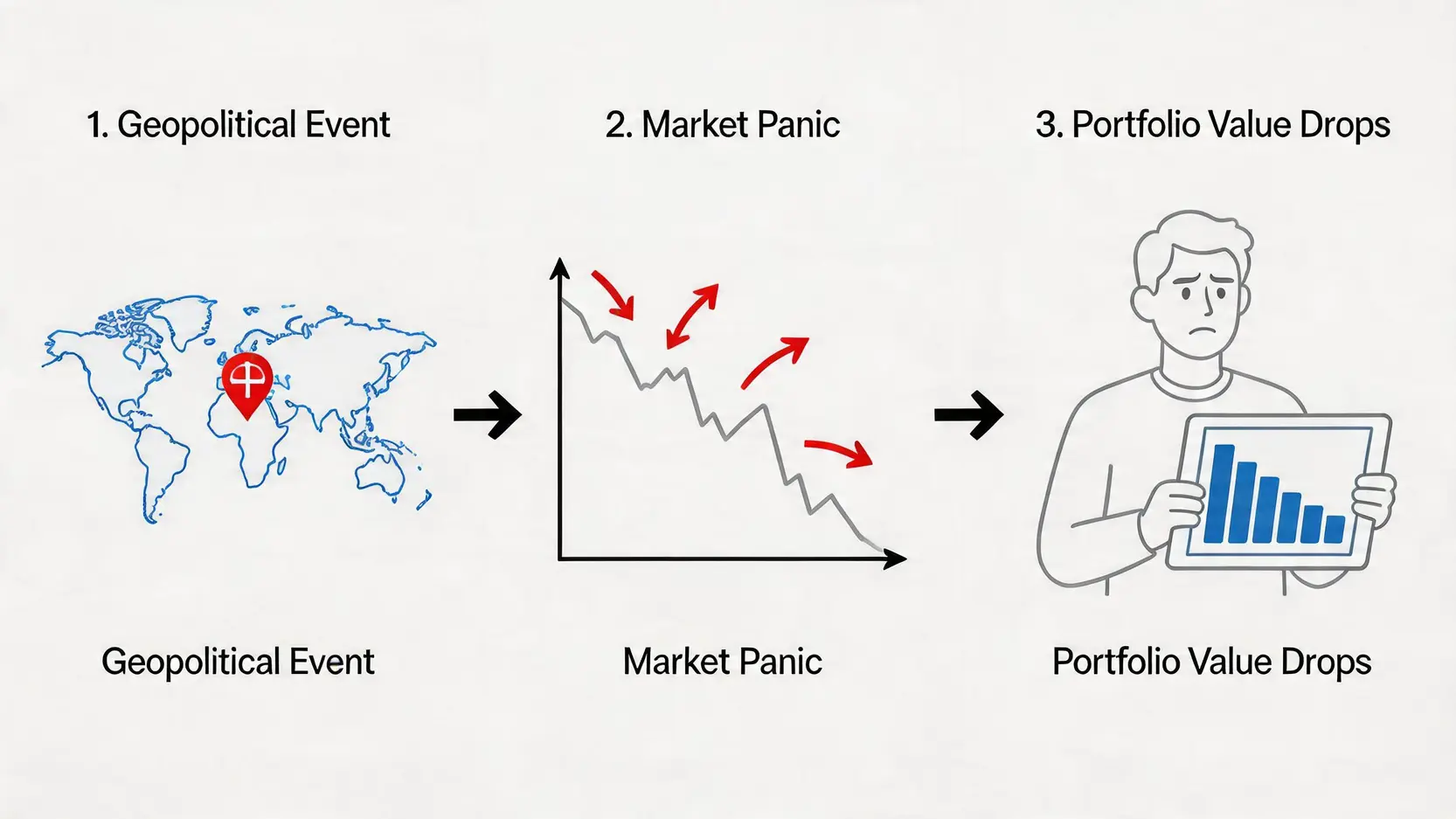
Geopolitical risk refers to the threat to financial market stability caused by international political, military, or diplomatic conflicts. Unlike economic data releases that follow a fixed schedule, these events are often sudden and unpredictable black swan or grey rhino events. Once they occur, they quickly trigger market panic, causing capital to flow out of high-risk assets such as equities and emerging market currencies into safe-haven assets, resulting in significant portfolio volatility.

How Geopolitical Risk Gradually Impacts Your Finances
Definition of Geopolitical Risk and Major Recent Events
Here are a few recent and familiar examples:
- Russia-Ukraine War (2022–present): This conflict directly drove global energy prices higher, especially natural gas and crude oil, intensifying global inflationary pressure. At the same time, sanctions on Russia disrupted global supply chains, from food to industrial metals, triggering widespread risk-off selling in global equity markets.
- Middle East Conflicts (ongoing): Conflicts involving Israel and Palestine, as well as the Red Sea crisis, continuously affect one of the world’s most important energy routes. Any escalation immediately impacts oil prices, which in turn affects transportation costs and global economic activity.
- US-China Trade Tensions (2018–present): Although primarily economic on the surface, this deeper geopolitical rivalry has had a lasting impact on global technology and manufacturing supply chains, forcing companies to reassess their global positioning and keeping investors alert to tariff escalation risks.
The common thread among these events is uncertainty. Uncertainty is the greatest enemy of financial markets. It erodes investor confidence, increases corporate costs, and ultimately reflects in the value of investment portfolios.
GPR Index Introduction: How to Quantify Global Risk Levels
Is there a way to objectively measure geopolitical risk? The answer is yes. The Geopolitical Risk Index (GPR), developed by Federal Reserve economists Dario Caldara and Matteo Iacoviello, is a widely used tool.
This index uses automated text analysis to track the frequency of geopolitical risk-related terms (such as “war threats” and “terror attacks”) across ten major global English-language newspapers and converts them into a numerical index. When the GPR index spikes, it usually signals rising global geopolitical tension. Historical data shows that it surged during events such as the World Wars, the 9/11 attacks, and the Gulf War.
For everyday investors, you do not need to understand the complex methodology. You can think of it as a “market fear thermometer.” Regularly monitoring the GPR index helps you assess market sentiment and consider whether adjustments to your asset allocation are necessary, especially increasing safe-haven exposure.
Further Reading (Strongly Recommended)
Gold Investment Beginner Guide: 5 Major Channels Explained with Pros and Cons
US 20-Year Treasury Bonds Full Guide: Yield, Strategy, and Risk Analysis
Safe Havens in Turbulent Times: Full Breakdown of 5 Major Safe-Haven Asset Types
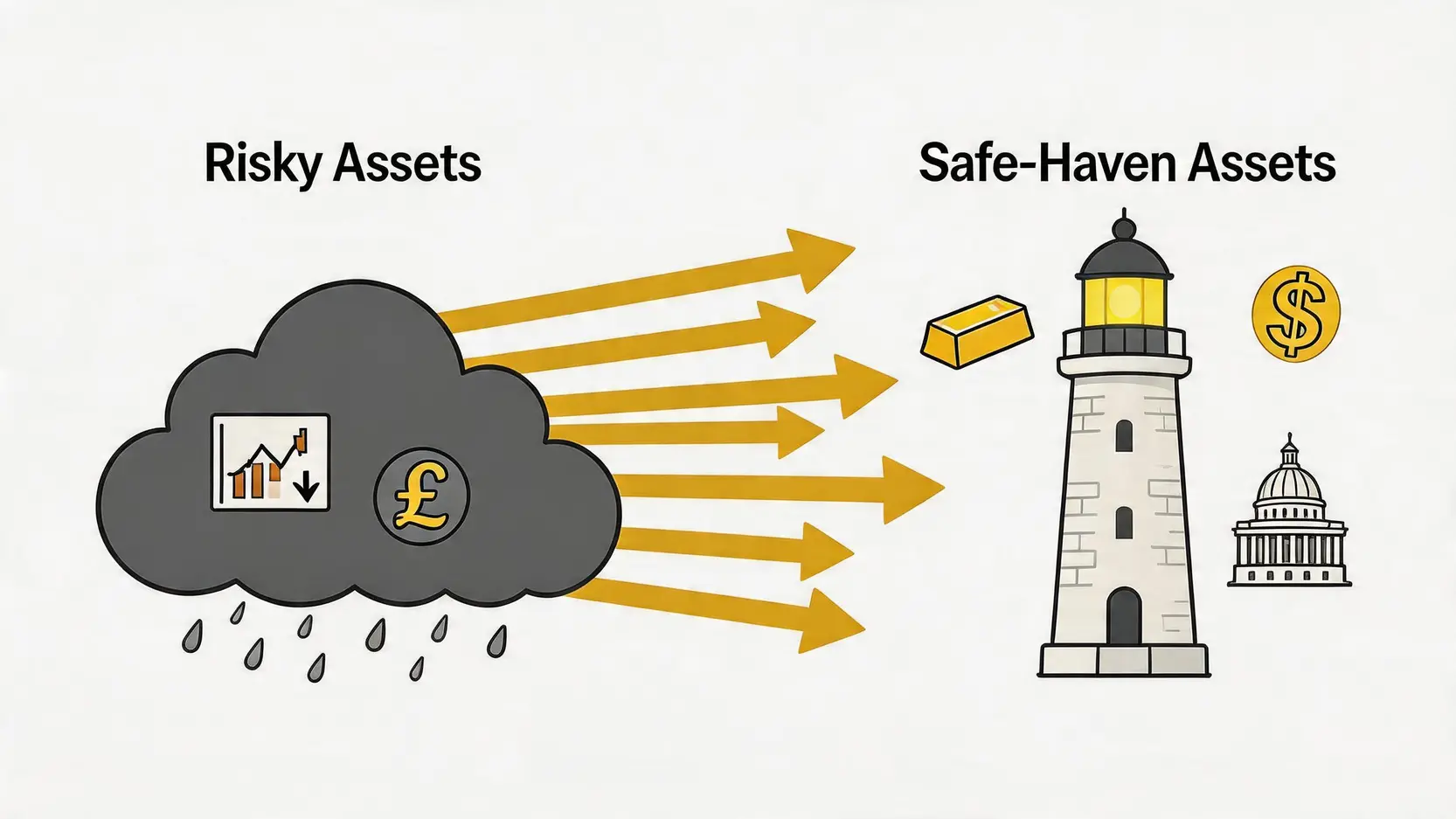
When panic spreads, where does capital flow? Understanding major safe-haven asset types is essential for protecting your portfolio. These assets typically maintain value or even appreciate during market turmoil.

Capital “Safe Migration” Flow During Market Turbulence
Precious Metals: Gold’s Traditional Role and Price Drivers
Gold has long been regarded as the ultimate store of value and the “king of safe havens.” It is not tied to any single country’s credit or policy and carries globally recognized intrinsic value. In gold investment, key price drivers include:
- Market fear: During wars or terrorist attacks, investors tend to buy gold for capital preservation.
- Inflation hedging: When fiat currencies lose value due to excessive money printing, gold’s scarcity makes it an effective inflation hedge.
- Lower real interest rates: When nominal interest rates fall below inflation (negative real rates), the opportunity cost of holding non-yielding gold decreases, increasing its attractiveness.
- Central bank demand: Global central banks continue to increase gold reserves to diversify foreign exchange holdings.
Strong Currencies: The Safe-Haven Logic of USD, JPY, and CHF
Besides gold, certain currencies also serve as safe havens due to their unique positions, most notably the US dollar, Japanese yen, and Swiss franc.
- US Dollar (USD): As the world’s primary reserve and settlement currency, backed by the strongest military and economic power, global demand for USD liquidity surges during crises, pushing the dollar higher.
- Japanese Yen (JPY): Japan is the world’s largest net creditor nation. During periods of global risk, Japanese institutions and investors tend to repatriate overseas capital, increasing demand for the yen.
- Swiss Franc (CHF): Switzerland’s long-standing political neutrality, stable financial system, and low-inflation environment have made its currency a traditional safe-haven currency. The Swiss franc’s status as a safe haven is deeply ingrained in investor sentiment.
Government Bonds: Why Are US Treasuries the Ultimate Safe Haven?
Among all bonds, US Treasury securities issued by the US Department of the Treasury (U.S. Treasury Bonds), commonly referred to as “US Treasuries,” are widely regarded as one of the safest assets in the world. The reason is simple: they are backed by the credit of the US government, and the market generally considers the risk of US government default to be close to zero.
When geopolitical risks escalate and trigger a broad stock market sell-off, large volumes of safe-haven capital flow into the US Treasury market, driving bond prices higher (and yields lower). Therefore, allocating a portion of US government bonds within an investment portfolio can act as a “shock absorber” during equity market downturns, helping to achieve effective stock-bond balance.
Comparison Table: Overview of Pros, Cons, and Suitable Timing of Major Safe-Haven Assets
To help you compare more clearly, the following summarizes the key characteristics of five major safe-haven asset types:
| Asset Class | Advantages | Disadvantages | Suitable Timing |
| Gold | Strong traditional safe-haven status, inflation hedge, no sovereign credit risk | Does not generate yield, higher storage and transaction costs, price can be volatile | Outbreak of war, hyperinflation, global systemic financial crisis |
| US Dollar | Excellent liquidity, global reserve currency status | Highly affected by US monetary policy, long-term depreciation pressure possible | Global economic recession, emerging market financial crises |
| Japanese Yen | Carry trade unwinding can boost currency, net creditor nation position |
Subject to Bank of Japan intervention, prolonged domestic economic weakness |
Sharp global equity market declines, rising risk-off sentiment |
| Swiss Franc | Political neutrality, stable financial system | Smaller market size, more sensitive to European economic conditions | Political or economic instability in Europe |
| US Treasury Bonds | Extremely low credit risk, high liquidity, provides fixed income | Highly sensitive to interest rate changes (bond prices fall when interest rates rise) | Recession expectations, equity market corrections, deflationary environment |
Understanding Market Sentiment: Introduction to Geopolitical Risk Premium Analysis
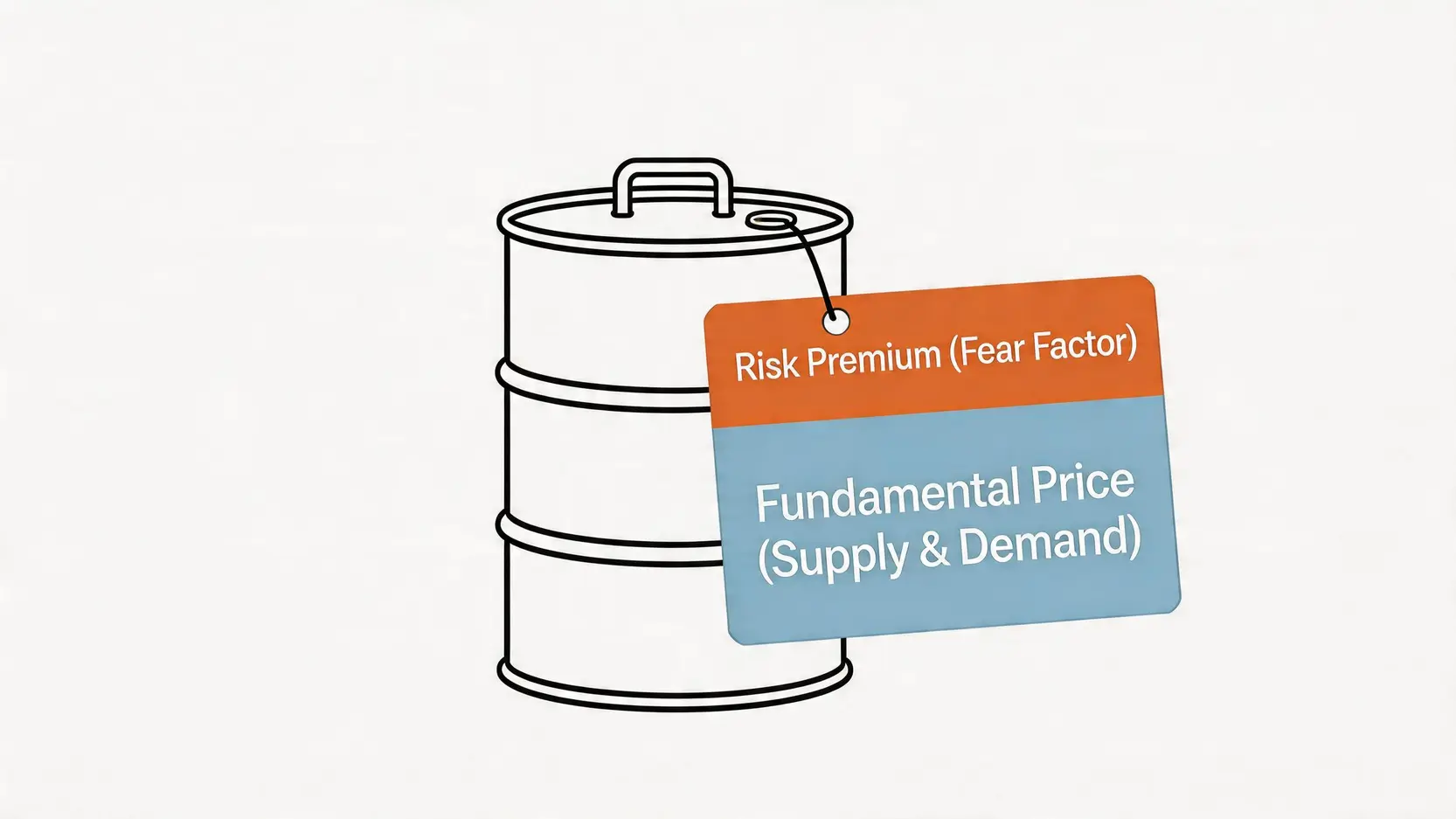
When geopolitical events occur, the prices of certain assets rise beyond what is justified by fundamentals (such as supply and demand). This excess increase is known as the “geopolitical risk premium.” Learning basic geopolitical risk premium analysis can help you determine whether the market is overreacting and identify potential trading opportunities.
What Is Geopolitical Risk Premium? Using the Oil Market as an Example
The oil market is one of the most classic examples of geopolitical risk premium. About one-third of global crude oil is transported through the Strait of Hormuz, which is located near several politically unstable countries in the Middle East. When any conflict is reported in this region, even if global oil supply and demand remain unchanged, traders may rush to buy crude oil futures due to fears of potential supply disruption, causing oil prices to surge in the short term.

Understanding the “Fear Premium” Behind Oil Prices
This price increase driven by fear and expectations is the geopolitical risk premium. Once tensions ease, this premium may quickly disappear, causing oil prices to fall back. Understanding this can help you avoid chasing prices at their peak during periods of extreme fear, especially in instruments such as crude oil CFDs.
How to Determine Whether an Asset Has Already Priced in Risk Premium
Determining risk premium is not easy, but it can be assessed through several approaches:
- Historical event comparison: Compare how related assets (such as gold and oil) reacted during similar past geopolitical crises, including price magnitude and duration.
- Volatility Index (VIX): The VIX index, also known as the “fear index,” rises sharply when market uncertainty increases. If the VIX is at historically high levels, it suggests that a significant risk premium may already be priced in.
- News and sentiment analysis: Track event developments. If worst-case scenarios are already widely reported and absorbed by the market, the risk premium may be near its peak. Conversely, if the situation continues to escalate, the premium may still expand.
- Capital flow analysis: Monitor ETF fund flows and other data to determine whether safe-haven capital is flowing into or out of specific assets, which directly reflects market sentiment.
Frequently Asked Questions (FAQ)
When geopolitical risk increases, should I immediately sell stocks?
It depends on your investment strategy and risk tolerance. Liquidating all positions immediately is often not the best approach, as historical evidence shows that geopolitical shocks are usually short-term. Unless the event fundamentally changes the long-term economic outlook, panic selling often leads to selling at the bottom. A more balanced approach is to review your portfolio, ensure proper diversification, and consider adding safe-haven assets for hedging rather than fully exiting the market.
Besides gold and US Treasuries, what are other alternative safe-haven assets?
In addition to mainstream safe-haven assets, there are also so-called “defensive assets” that may perform relatively well during downturns. For example, defensive stocks such as utilities and consumer staples (food, pharmaceuticals) tend to remain stable because demand for their products and services is less affected by economic cycles. In certain situations, commodities such as agricultural products and base metals may also act as short-term hedges due to supply chain disruptions.
Is cryptocurrency (e.g. Bitcoin) an effective safe-haven asset?
This remains highly debated in the investment community. Supporters argue that Bitcoin has a fixed supply and is not controlled by central banks, earning it the nickname “digital gold.” However, critics point out that its price volatility is extremely high, and during several major geopolitical crises, Bitcoin has shown strong correlation with risk assets such as tech stocks rather than behaving like a stable safe haven. At present, it is more appropriate to treat Bitcoin as a high-risk speculative asset rather than a reliable hedge.
How does geopolitical risk affect my retirement account?
Geopolitical risk affects the value of your retirement account through its impact on both equity and bond markets. Since retirement investing is long-term in nature, short-term volatility should not cause excessive panic. The key is maintaining a well-diversified portfolio that includes global equities and high-quality bonds across different regions and sectors. Such diversification helps smooth out short-term shocks from geopolitical events and protects long-term retirement goals.
Conclusion
In summary, geopolitical risk is an unavoidable issue for modern investors. It is like an undercurrent in financial markets that can shift direction at any time. However, risk itself is not the problem—lack of understanding is. By understanding how it works, familiarizing yourself with different types of safe-haven assets, and learning basic geopolitical risk premium analysis, you can respond more calmly to market turbulence. Investing is a long-distance journey. Start reviewing your portfolio today, incorporate appropriate hedging assets, and prepare for future challenges to achieve long-term stability.
Related Articles
-
Does Gold Always Rise When the Fed Cuts Rates? Understanding the Complete Relationship Between Interest Rates and Gold Prices Through 3 Key Perspectives A popular market saying goes: "When the Fed cuts rates, gold rises." This phrase has become almost a standard answer for gold investors. But what is the...2026 年 6 月 16 日
-
Has Gold Reached Its Peak? Can You Still Buy Gold in 2026? 3 Key Risks and a Decision-Making Framework Every Investor Must Understand Before Investing As gold prices continue to hit new highs, are you also struggling with the age-old question: "Can you still buy gold?" Market sentiment is running...2026 年 6 月 16 日
-
Gold Short-Term Trading Strategies: Illustrated Guide to 3 High-Probability Techniques Used by Professional Traders Faced with gold's intense price volatility, short-term trading has become a popular choice for those seeking quick profits. However, without a solid gold short-term trading strategy, trading is little more than gambling. The market is flooded...2026 年 6 月 15 日