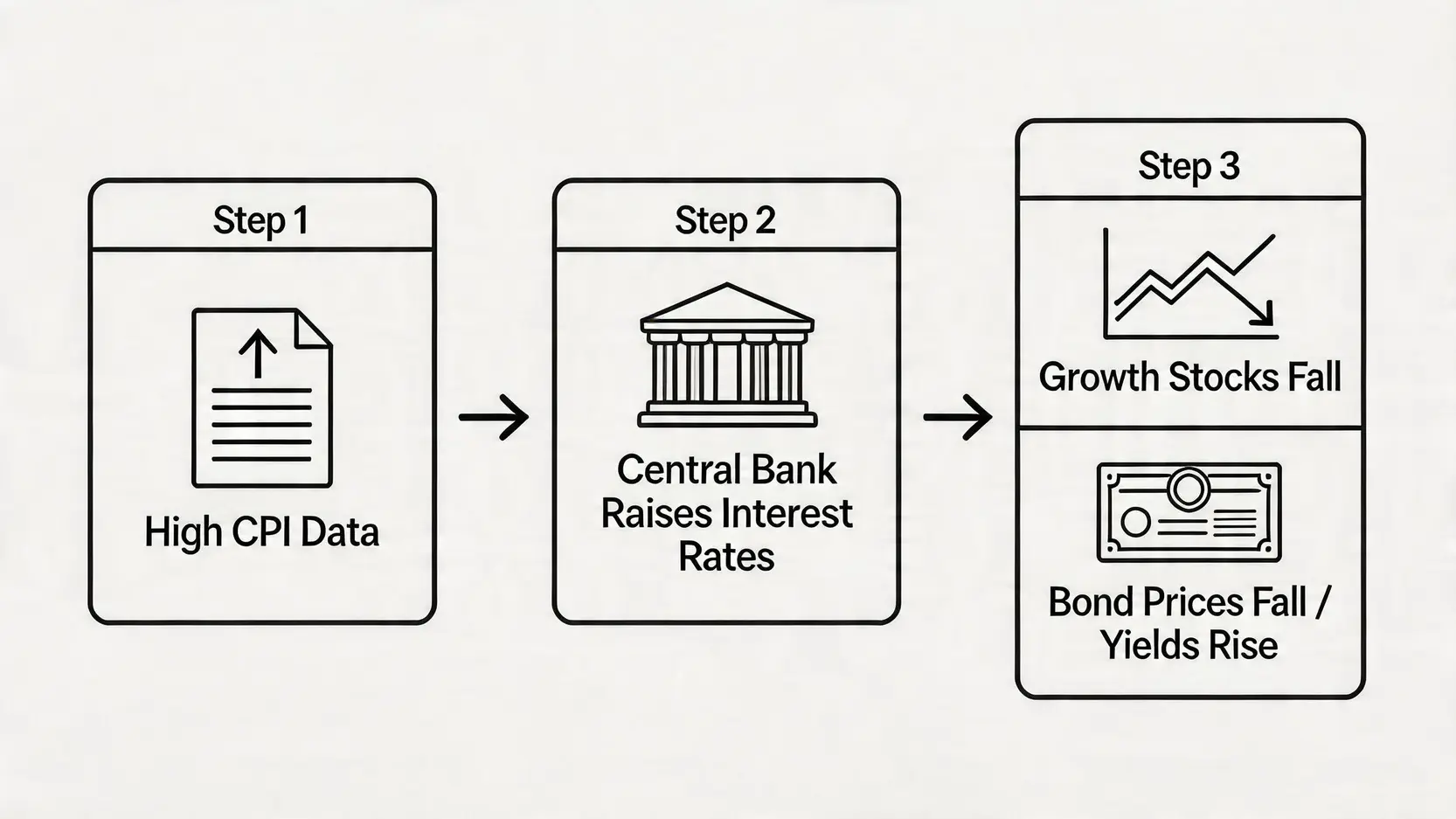
Transmission Path of CPI Impact on Markets
Impact on the Stock Market: How Do Inflation Trends Affect Growth and Value Stocks?
High inflation is generally seen as a headwind for equities, but its impact varies across different types of stocks:
- Technology/Growth stocks: The value of these companies is largely based on expectations of future cash flows. In a high-inflation environment, central banks tend to raise interest rates, which reduces the “present value” of future cash flows, leading to valuation pressure on tech stocks.
- Value/Cyclical stocks: Companies in sectors such as energy, materials, financials, and consumer staples often benefit from inflation, as their products and services can be repriced upward. They may even possess “pricing power”, allowing them to pass costs on to consumers.
Impact on Bonds and Interest Rates: Understanding Fed Rate Decisions
The relationship between CPI and monetary policy is direct. When CPI consistently exceeds the central bank’s target level (usually around 2%), the Federal Reserve will adopt tighter monetary policy, such as raising interest rates, to control inflation. Conversely, if CPI is too low, it may cut rates to stimulate the economy. This expectation strongly influences bond markets.
- CPI above expectations: Markets expect a more “hawkish” Fed stance, potentially accelerating rate hikes. This leads to bond prices falling (as newly issued bonds offer higher yields, making existing bonds less attractive) and yields rising.
- CPI below expectations: Markets expect a more “dovish” Fed stance, reducing pressure for rate hikes. This typically pushes bond prices higher and yields lower.
In essence, every CPI release is a battleground of expectations between the market and the Federal Reserve, and the impact of Fed rate hikes directly determines capital flows.
Impact on Daily Life: Understanding Real Purchasing Power
Beyond financial markets, CPI data has the most direct impact on your daily living expenses. Rising inflation means:
- Higher shopping costs: Prices of groceries such as eggs, milk, and bread increase.
- Higher transportation costs: Whether driving or using public transport, expenses rise.
- Eroding savings value: If your salary growth does not keep up with CPI increases, your real purchasing power declines, and the money in your bank account becomes less valuable over time.
Three Investment Strategy Suggestions for an Inflationary Environment
Since inflation is difficult to avoid, learning how to protect or even grow your assets through investment strategies becomes especially important. Below are three strategies worth considering in an inflationary environment.
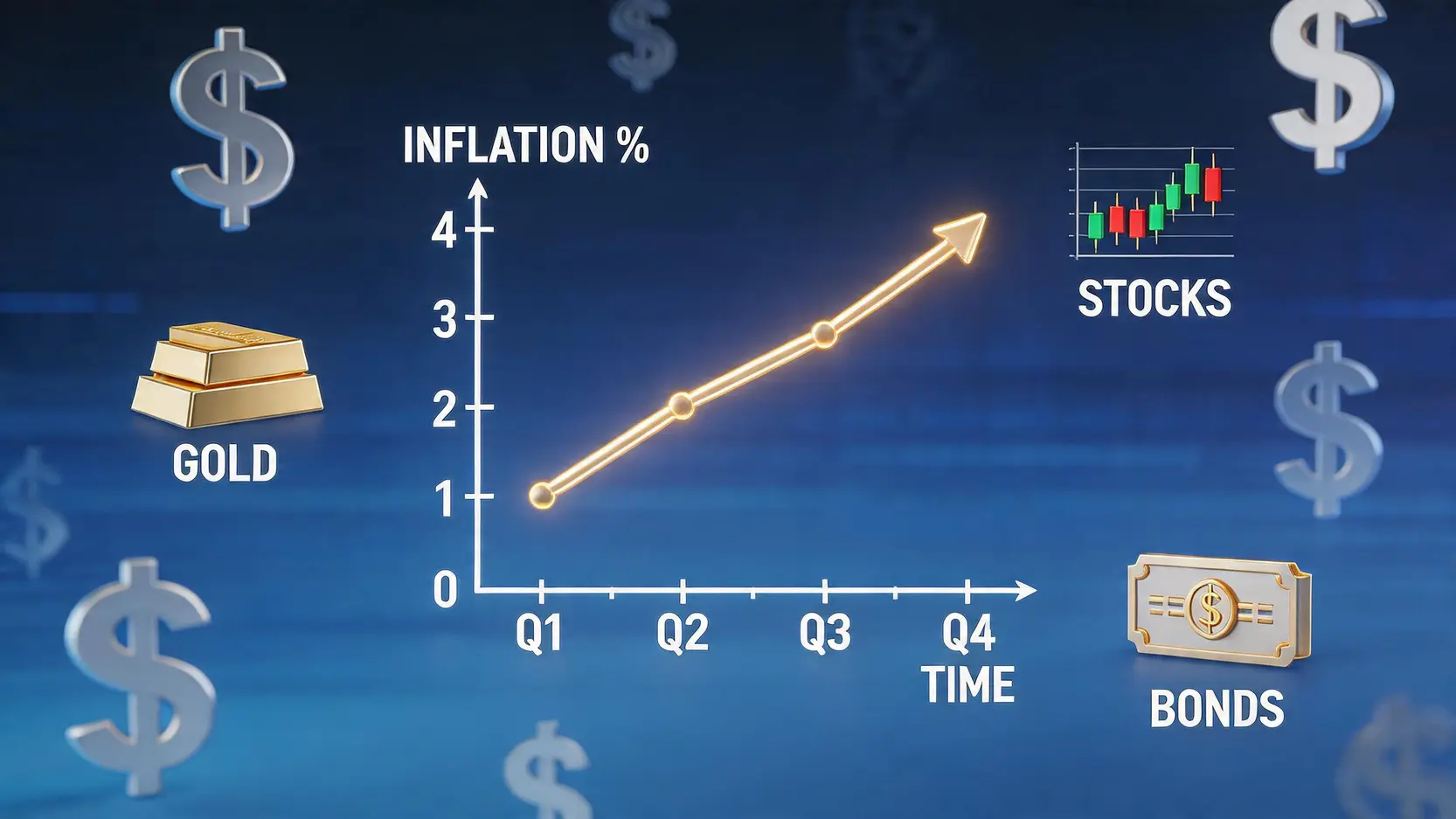
Strategy 1: Allocate Inflation-Hedging Assets (e.g., Real Estate, Gold)
Certain real assets naturally hedge against inflation and are known as “inflation-resistant assets”.
- Real estate: During inflation, rents and property prices often rise. Real Estate Investment Trusts (REITs) offer a more liquid way to gain exposure.
- Gold: As a traditional safe-haven asset, gold often retains or increases its value during currency depreciation, serving as a key hedge against inflation and uncertainty.
- Commodities: Raw materials such as oil and base metals are key components of CPI and tend to rise in price during inflationary periods.
Strategy 2: Select High-Quality Companies with Pricing Power
Not all stocks suffer from inflation. Companies with strong brand moats, loyal customer bases, and “pricing power” can pass rising costs on to consumers without significant loss of demand. These companies may even see stable or improving profits in inflationary environments, such as leading consumer brands, major software companies, or essential infrastructure firms.
Strategy 3: Use TIPS (Treasury Inflation-Protected Securities) to Balance Risk
For conservative investors, US Treasury Inflation-Protected Securities (TIPS) are worth considering. The principal of TIPS is adjusted according to changes in CPI, meaning that when inflation rises, both your principal and interest income increase, directly hedging inflation risk.
FAQ: Common Questions About US CPI Data
Q: When is US CPI data released each month? Where can it be found?
A: US CPI data is typically released in the middle of each month (around the 13th to 15th), covering the previous month’s data. The most authoritative official source is the US Bureau of Labor Statistics (U.S. Bureau of Labor Statistics) website. Many financial news platforms also report and interpret the data immediately upon release.
Q: Which is more important, CPI Year-over-Year (YoY) or Month-over-Month (MoM)?
A: Both are important, but they serve different perspectives. YoY reflects the long-term inflation trend and helps assess the overall economic direction. MoM captures more recent price changes and potential turning points in inflation momentum. Markets usually focus on both figures and their deviation from expectations.
Q: Besides CPI, what other important inflation indicators exist (e.g., PCE)?
A: In addition to CPI, another key inflation indicator is the Personal Consumption Expenditures (PCE) price index. PCE has a broader coverage than CPI and dynamically adjusts weights to reflect consumer substitution behavior (for example, when pork prices rise, consumers may switch to chicken). In fact, the Federal Reserve has stated that it prefers core PCE as its primary policy inflation gauge. However, CPI is still widely watched because it is released earlier and receives strong market attention.
Conclusion
In summary, understanding US CPI data and the meaning of Core CPI is an essential skill for modern investors. It is not only a key measure of inflation but also an important signal for predicting central bank policy and market trends. When you understand the full impact of inflation data, you will be better equipped to navigate stock market volatility, interest rate changes, and even daily living costs with greater confidence. We hope this article helps you make more informed financial decisions in a complex economic environment. Start reviewing your investment portfolio today to better prepare for inflation challenges!